Lessons in manliness from Atticus Finch

If Atticus had one dominating virtue, it was his nearly superhuman empathy. Whenever his children felt angry at the misbehavior or ignorance of the individuals in their town, he would encourage their tolerance and respect by urging them to see the other person’s side of things:

“If you can learn a simple trick, Scout, you’ll get along a lot better with all kinds of folks. You never really understand a person until you consider things from his point of view—until you climb into his skin and walk around in it.”

Atticus understood that people could only be held responsible for what they knew, that not everyone had an ideal upbringing, that folks were doing they best they could in the circumstances in which they found themselves. Atticus strove above all to see the good in folks and to figure out why they did the things they did.

~ Brett McKay from, Life Lessons From Atticus Finch | The Art of Manliness

slip:4uaole1.

ɕ


US fructose consumption trends

This entry is part 2 of 12 in the series Stephan Guyenet's "Whole Health Source"

1970: 42.5 lb/year of added fructose.
2007: 50.6 lb/year of added fructose.
At 19%, it’s not a staggering increase, but it’s definitely significant. I also think it’s an underestimate, because it doesn’t include fruit juice or total fruit consumption, both of which have increased. Other notable findings: grain intake has increased 41% between 1970 and 2005, due chiefly to rising consumption of processed wheat products. Added fats and oils have increased 63% in the same time period, with the increase coming exclusively from vegetable fats. The use of hydrogenated shortening has more than doubled.

~ Stephan Guyenet from, Whole Health Source: US Fructose Consumption Trends

slip:4ubouu1.

And the amount of average exercise has INCREASED as well since the 70s. We [Americans] have not become sedentary… our diets is killing us, and we’ve been partly stemming the tide through exercise. Reduce your added sugar intake, reduce your processed grains intake. You don’t have to go to extremes… just make small changes. ‘Big ship, small rudder’ but you are still at the helm.

ɕ


Pioneering scientist Erwin Chargaff on the power of being an outsider and what makes a great teacher

If there is such a thing as a great scientist … that greatness can certainly not be transferred by what is commonly called teaching. What the disciples learn are the mannerisms, tricks of the trade, ways to make a career, or perhaps, in the rarest cases, a critical view of the meaning of scientific evidence and its interpretation. A real teacher can teach through his example — this is what the ducklings get from their mothers — or, most infrequently, through the intensity and the originality of his view or vision of nature.

~ Erwin Chargaff from, Pioneering Scientist Erwin Chargaff on the Power of Being an Outsider and What Makes a Great Teacher – The Marginalian

slip:4ubaei4.

ɕ


A generation of men raised by women

Without male mentors, many men of this generation have felt adrift, unsure of how to deal with an indescribable but acute lack in their lives.

How did we get to the point where it is possible, as Edward Abbey put it, “to proceed from infancy into senility without ever knowing manhood?”

~ Brett McKay from, A Generation of Men Raised by Women | The Art of Manliness

slip:4uaoae3.

ɕ


Mental badassery: Becoming aware of the stories we tell ourselves

Now, telling ourselves stories is natural — we all do it, all the time. There’s nothing wrong with it. But if we’re not aware of the stories we tell ourselves, we can’t understand how they shape our happiness, relationships, moods, and more.

~ Leo Babauta from, Mental Badassery: Becoming Aware of the Stories We Tell Ourselves – Zen Habits Website

slip:4uzena1.

ɕ


Overly simple energy-economy models give misleading answers

It is not intuitive, but complexity-related issues create a situation in which economies need to grow, or they will collapse. See my post, The Physics of Energy and the Economy. The popular idea that we extract 50% of a resource before peak, and 50% after peak will be found not to be true–much of the second 50% will stay in the ground.

~ Gail Tverberg from, Overly Simple Energy-Economy Models Give Misleading Answers | Our Finite World

slip:4uouoe1.

ɕ


Hermann Hesse on the three types of readers and why the most transcendent form of reading Is non-reading

For this reader follows the poet not the way a horse obeys his driver but the way a hunter follows his prey, and a glimpse suddenly gained into what lies beyond the apparent freedom of the poet, into the poet’s compulsion and passivity, can enchant him more than all the elegance of good technique and cultivated style.

~ Hermann Hesse from, Hermann Hesse on the Three Types of Readers and the Most Transcendent Form of Reading – The Marginalian

slip:4ubahe4.

ɕ


Photo gallery for this series

This post presents a gallery of ALL images in this series. You can click on any to enlarge; you can even click on the first, sit back, and it’ll run them all as a slide show. The gallery is dynamic so it will automatically grow…


Patience is the master key

Patience is the master key to every situation. One must have sympathy for everything, surrender to everything, but at the same time remain patient and forbearing… There is no such thing as bending or breaking. It’s a question only of overcoming, which begins with overcoming oneself. That cannot be avoided. To abandon that path is always to break in pieces. One must patiently accept everything and let it grow within oneself. The barriers of the fear-ridden I can only be broken by love. One must, in the dead leaves that rustle around one, already see the young fresh green of spring, compose oneself in patience, and wait. Patience is the only true foundation on which to make one’s dreams come true.

~ Franz Kafka from, Kafka on Love and Patience – The Marginalian

slip:4ubaco1.

Patience with myself is a huge hurdle. I’m my own worst critic. One critical comment from me, and I crumble. I regularly beat myself down and out with negativity, self-doubt and unreasonable expectations.

New mantra: Patience is the master key. Patience.

ɕ


Yes you can

Hello there! Welcome!

This post is where I’ve dumped a bunch of things intended to convince YOU that you really can do Parkour.

Why do I think you can do Parkour? Because, basically, everything the general public has heard about Parkour is wrong. You could totally do Parkour because…

I’m too old, over-weight, out of shape…

I did it, so can you.

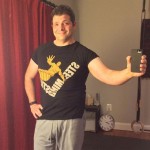
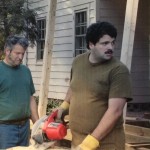
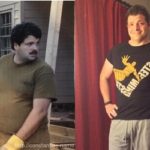
I simply mean that when I started, I was very over-weight (BMI well over 30, definitely “obese”), very out of shape, and I was just over 40 years old. That combination is probably “worse off” than most people who end up reading this.

However, if you are older, in worse shape, or fatter than that, I do still think you can do it . . .

Do you think you can improve yourself?

Parkour is about improving yourself through challenge. So whatever is challenging for you, that’s going to be your practice. Maybe for you, it’s a warmup and then start working on some shoulder strength, but you spend a majority of the time watching class so you’re not over-exherting yourself. Maybe it’s a long talk about nutrition and diet (generally what you eat, not a specific diet fad) combined with your initial Parkour efforts.

What about that crazy stuff on TouYube?

It is NOT about big jumps! Why does everyone see the EXTREME movements, and then assume ALL Parkour has to be like that?

You can drive a car without getting into auto racing. You can do a cart wheel without being an Olympic gymnast. You can go for a jog without running a marathon. You can practice Parkour without jumping between roof-tops across an alley!

There’s nothing wrong with the extremes (in the “ultimate level of performance” sense) in any of those activities, but those extremes are NOT representative of the average activity of “driving”, “cart wheeling”, “running” or “Parkour”.

And anyway, here’s a link to my all-time favorite video of some Parkour. I think it’s spectacular, but not in the “huge jumps”, “extreme movement” sense: Julie Angel’s, Movement of Three (2’33”) Movement of Three – YouTube

But I’m a woman…

The answer is still: Yes. Yes you can.

I do understand that there are issues (not just in Parkour) that only women face. But those issues are either societal norms, or other bullshit caused by men. That has nothing to do with Parkour per se. (It’s about men. Actually it’s about boys. Real men don’t pull misogynistic crap.)

HOWEVER, do not take my word about anything regarding the woman’s point of view. Instead, go read this:

«http://www.risingtraceuse.com/2015/03/5-thoughts-that-keep-women-from-trying.html»

And the question almost no one asks…

How do I figure out where and with whom to train?

This is ACTUALLY the hard part. It’s always the same: finding the right coach is mission critical. And you have to perfom this most-important step BEFORE you know much about the thing you want to learn.

So here’s how you do it: You find the nearest place/people/group that purports to teach the thing. You go there. You put your “vibe radar” on and you don’t go back if anything weirds you out. If anything is high pressure (“Jump this! NOW!”, “Sign up for a year! NOW!”) then you back away slowly, and never return. They should be welcoming, intelligent and you should feel supported by most (if not literally) everyone in the class.

ɕ