CRM’ing your friends and family

This is daft… wacky… but possibly so brilliant, that I want to share it.

I’m seriously considering put all my friends and family into a ‘customer’ relationship management (CRM) system. Wait, don’t block me just yet…
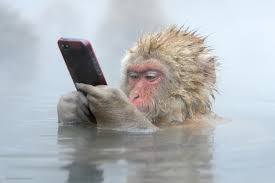
*unfriend*

You see, for many years now, we’ve been sending out Christmas and Holiday greetings to an increasingly large list of our friends and family. Large. List. Growing. It takes days of shopping and stamp obtaining and writing and sealing and then a special trip to the post office for the sub-set of cards that need to go by AirMail overseas…

…and as I do each card, I think, “oh!” And a bunch of stuff I want to share, say, ask, etc. for that person/family/whatever pops into my mind.

So all I really want—the reason I’m considering CRM’ing all these nice people—is a something that will suggest one of these contacts… well, I’m not going to say how many how often I’d need to do… at certain intervals. Then I would be able to write a note or an email or make a phone call…

Because the other option would be to convert the “holiday” cards into “yo wats up” cards and just make a stack and do them throughout the year. :)

É•


Thoughtfully giving and receiving decisions

Decision fatigue is a well-known effect. I’ve long since learned to be mindful of when I am going to encounter this, and to take steps to avoid or reduce it. There’s a paradox where I used to want the option to make decisions, while not having the energy to make good decisions.

Also long ago, I started intentionally reigning in the urge to have an opinion when a decision is available. I now think, “do I want to have an opinion on this?” and I try to steer myself towards, “no.” There are countless examples, but they most often fall into, what I’ll call, refinements. This is when something is happening, and it is happening because I’m following someone’s lead. Our culture encourages that leader to solicit opinions; I’m presented a dinner invitation, but asked, “where would you like to eat?” These refinements come in a huge variety, but usually, that leader had an idea in mind when they set the ball rolling. These days, whenever I can, I don’t add an opinion to the mix.

I’ve gotten really good at not having an opinion. In fact, I’ve realized this is now a problem. Everyone is so used to people complaining—about everything; the movie, the food, the traffic—that they assume I too am going to complain later, after going along with their choice.

Each of us needs to practice giving the gift of making thoughtful choices for others. Each of us needs to practice accepting those gifts graciously, (up front, and during and after without complaint.)

É•


Tis the season

I like paying for my software when I’m buying it from a company that’s responsive, fast and focused. I like being the customer (as opposed to a social network, where I’m the product). I spend most of my day working with tools that weren’t even in science fiction novels twenty-five years ago, and the money I spend on software is a bargain–doing this work without it is impossible.

~ Seth Godin from, On paying for software

slip:4useoa1.

Tis the season… to talk about paying for the things we get value from. Last year Seth wrote that great gem about software and I whole-heartedly agree.

Here’s a short list of a few pieces of software which I gleefully pay for, without which everything I do would be vastly more difficult or outright impossible: Hover, BBEdit, Hindenburg, Overcast, Reeder, Feedbin, Tower, Transmit, OmniFocus, OmniOutliner, iaWriter, Discourse, Basecamp and Front.

As a bonus round, here’s a short list of a few online services or publications which I also gleefully contribute to, because they provide me with magnificent information that makes my world a better place: Brain Pickings, MĂĽvmag, PodNews, Once is Never, and WikiPedia.

My challenge to you for the holiday season: Post your own lists somewhere public, and share the love for the software and services that make your life better throughout the year!

É•


Is movement an integral part of my life?

It certainly is an integral part of life, in general. But the vast majority of my life does not involve movement. I probably move more than the average American my age. I certainly moved a lot more in my 20s when I had a job that involved doing things. (Make this, move that, go over there, etc.) But today, movement is something that—I don’t quite have to make time for it, but I definitely have to be mindful of it. I generally plan to do something every day. Usually that’s a multi-mile walk, a leisurely bike ride, an hour wrestling with firewood, etc..

É•


Yosemite Valley


US Parkour Association (part 3 of 4): Funding model, membership voices, and next steps

What are the challenges, structures, and opportunities involved in building and maintaining a transparent, community-driven national governing body for Parkour?

Membership dues directly support a transparent, nonprofit structure designed to empower the Parkour community.

This conversation goes into the structure, purpose, and vision of the United States Parkour Association (USPK), a nonprofit organization aiming to unify and support the Parkour community. It discusses the unique governance model involving committees and Special Interest Groups (SIGs), emphasizing the grassroots nature of SIGs as member-driven initiatives addressing both internal and community-specific challenges. Transparency is a cornerstone of USPK’s operations, with open financial reporting and an inclusive process for member contributions to decision-making.

The discussion also touches on the challenges of convincing individual practitioners and skeptics to join the organization, highlighting the importance of proactive involvement to ensure Parkour remains community-led. Broader topics include potential external threats, such as legislative actions by industries like CrossFit and Coca-Cola, and the role of public perception in shaping Parkour’s future. The conversation underscores the urgency of building a robust membership base to drive the organization’s efforts and sustain its mission.

(more…)

Before dawn

I’m not sure if it’s the silence, or the darkness. Maybe it’s the fact that pre-dawn there are two kinds of people, those who are sleeping and those who are up attacking their day and I prefer to be the later. (Although, it’s a physical fight with my body every morning.)

There’s a time and place for most everything. Writing, for example, seems best done in the early morning. Vacationing seems best done at the end of summer. Hard labor seems best done in one’s 20s.

I wonder when is the best time for introspection?

É•


What do you do for fun?

It’s the holiday party season! (At least, on my continent it is.) From late November into January, it’s a pleasant parade of parties and fetes.

“What do you do [for work]?”

omfg could we please stop asking each other this question. My stock reply is, “as little as possible.”

Instead, could we start asking each other questions which actually start the process of getting to know each other? …questions whose answers would actually help us remember each other? …questions which elicit some story or some passion or something other than, “I file TPS reports.”

Let’s start asking:

What do you do for fun?

What’s something you’re passionate about?

What’s something new or exciting in your life?

What are you most proud of from the past year?

…and if you want to really get to know people:

What’s something that’s currently challenging you?

É•


§24 – Recovery Days

This entry is part 36 of 37 in the series Study inspired by Pakour & Art du Déplacement by V. Thibault

In certain circles it is said, “what was once your workout will become your warmup.” In my journey of rediscovering activity and play, there was a long period—20 years now, perhaps—where I was able to focus primarily on growth, forward motion, and transformative change. This made for a very long period where my workouts did gradually became my warmups. Certainly I’ve always had rest days; nearly 10 years ago, when I started parkour, it was all I could manage just to recover over the course of the entire week before heading back to the next hard training session. Rest and recovery were always in the mix, simply because I began my journey of transformative work in my 30s.

I’ve found it increasingly challenging to remember the importance of recovery now that I’m no longer shoving the needle of progress ahead day by day. Truth be told, I’m squarely on the mid-life plateau and it is time to take life more freely. Sure, the days of working every day for seven years on the house, climbing mountains, jumping on stuff, and doing things which cause police officers to say, “…and you sir, how old are you? You should know better!” are not over. (As far as I can tell.) But these are also, certainly, the days where spending a couple hours, every day, sitting still reading and writing is truly blissful.

É•


Artificial constraints

A lot of my thinking, and sometimes even my problem solving, revolves around juxtaposition. What would the inverse of the current this be? Can I gain useful perspective from the other position? Big/small, loud/quiet, perfuse/sparse, etc.; there are many obvious qualities that create striking changes in perspective. However, I find particularly rewarding juxtapositions in unusual dimensions, and there’s one dimension in particular that pays off more than all others: Time.

Have a problem? …how would I solve it if I had 100 years? …what would have to be the case if I were going to solve it in 5 minutes?

It’s become common to talk about “minimum viable product” in the entrepreneurial space, and that’s a form of time constraint. (But it’s a useful idea because it also includes other constraints such as resources and people.)

The famous Getting Things Done system has many critical components. One in particular is paying attention to the next action for any given project. (And in GTD everything you do in your entire life is a ‘project’.) This too is a form of time constraint; it’s not, “I’ll move this project forward at some point in time,” (the perspective of unlimited time,) rather it’s, “if I was going to move this project forward in the next minute…”

Where in your life might a shift to expectation of greater or lesser time yield a huge benefit?

É•