Kyle Koch: Training, nature, and tracking →

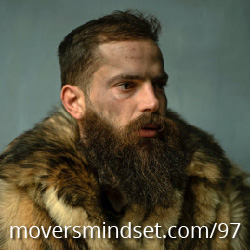
Movers MindsetKyle Koch: Training, nature, and trackingMar 3, 2021 · 46:22How can movement practices and interactions with nature inspire personal growth and improve physical and mental well-being? Going to a gym doesn’t cut it for Kyle Koch; His movement is guided by being in nature and responding to his environment. He re

How can movement practices and interactions with nature inspire personal growth and improve physical and mental well-being?

Going to a gym doesn’t cut it for Kyle Koch; His movement is guided by being in nature and responding to his environment. He recounts his movement journey from beginnings to rediscovery, and explains his current training. Kyle shares his insights on learning to interact with the environment, and seeing others begin to train outside. He discusses the nervous system, the importance of training in nature, and his inspirations.

So I think that the sit spot is exactly that. It’s just going outside and being curious and seeing what draws your attention, and then asking more questions, ‘Oh, that tree is interesting.’ Question I might ask is, could I climb it? And if I can climb it, will I climb it? Or I see all these trees that I can’t yet climb, but that’s the motivation.

~ Kyle Koch (16:15)

Kyle Koch is a former IT software technician turned nature nerd. He has been facilitating transformative experiences in nature for almost a decade: inspiring youth and adults to connect to their gifts through exploration, play, and curiosity. Kyle is always expanding his practice through the study and application of: functional neurology concepts, traditional strength training, martial arts (Systema), and meditation and breathing (Wim Hof Method). When not teaching or facilitating, you can find Kyle exploring ways to deepen his connection with himself, others, and the Earth.

The conversation highlights the importance of movement practices rooted in nature and personal curiosity. Kyle recounts his journey from childhood activities to rediscovering movement through a blend of survival training, parkour, and gym-based conditioning. The discussion includes the benefits of integrating natural and gym environments, emphasizing how training tailored to real-world applications enhances overall performance.

A significant theme is the role of observation and mindfulness in nature, exemplified by practices like sit spots, which encourage curiosity and engagement with the environment. The conversation also examines how vision, both literal and figurative, plays a role in physical training and mental relaxation, alongside the value of fostering connections with mentors to guide personal and physical growth.

(more…)

Solvitur Ambulando: It is solved by walking →

A few years ago, I read an article, Walking, by Steve Kamb about walking to Mordor and I set out to walk the round-trip 3,871 miles.

It’s 1,779 miles to get from Hobbiton to Mt. Doom. Then riding the eagles back to Minas Tirith cuts the return walk to Bag End down to 1625 miles. Plus 467 more miles, roundtrip to Grey Havens. Brings my total goal to 3,871 miles. This is roughly the entire length of the Nile river, or the distance from the surface to the center of the Earth. (Mid 2019 I’m a few hundred miles from Mt. Doom.)

§10 – Walking to Mordor

As best I can tell, in 2014, I had already started walking the ~4-mile round-trip to my office, and I was using walking in general to improve my fitness for some specific parkour events I was planning to attend. When I found this challenge, I looked back through all my journals and estimated how far I’d already walked. In November 2016, when I took up the Mordor challenge, I noted that I had already walked 124 times for a total of 496 miles.

As I mentioned, walk number 500 turned out to be just 8 miles short of Mt Doom. But really, I’ve only been estimating my mileage based on measuring some common walking routes and counting the walks. So this is an amazing confluence of walk-number and mileage. So at this point, I’m going to stop keeping track of the mileage. (I do still keep track of general activity each day, so I still note “walk” when I do so.)

Take-aways?

Well, I think it’s amazing how far you can get—figuratively and literally—with small daily progress. Also, I think it’s very good for me mentally, given where I am at the end of 2019, to stop tracking this goal. It makes for one less thing on my mind.

I’m hoping that walking is now a way of life. I will note that I think absolutely nothing of walking a few miles. I’ve walked miles with a 40-pound backpack, (in minimalist sneakers.) I’ve walked 2 miles carrying 20 pounds of vegetables farmer-carry-style. I’ve fixed my back. I’ve fixed my feet.

Walk on!

ɕ


§12 – Final Thoughts →

Wow.

It took me years longer than I had originally hoped to finish this series of posts. I’ve recently decided to push these posts out the door so that they could possibly be of some use to others. Having them laying around as drafts-in-progress isn’t helpful.

As this series was being written, I took a terrific detour working with two friends who were experimenting with starting their own personal training company. They used me as a guinea pig for testing their coaching and training systems for nutrition, psychology of eating and physical training. During this time working with them I succeeded at some huge improvements in psychology (related to eating) and achieved the best physical condition I’ve been in in recorded history. If you want to do a deep dive, check out, Training for the New Alpinism.

…and a few other disjointed thoughts:

This: From Nerd Fitness, 5 Steps After Failing.

Elsewhere, this is 4unebo4. — slipbox

What do I want? I simply want to be able to move and play. I’m constrained by physical limitations (age, body type, etc.), but mostly just by my total weight. So although I always want to increase my general fitness, the current first order problem—and I’ve linked directly into the Wikipedia article to the section that could be a profound, new way for you to consider when solving problems—for me is simply weight. For me, that is almost entirely driven by psychology—psychosis?—as it applies to food.

What am I tracking? I’ve often heard, “that which you measure gets improved.” Tracking and measuring does focus your attention, but it only gets you data. You have to be motivated to analyze that data and make adjustments to your routine. Am I making progress? Is the rate of progress what I expected when I planned? Is the progress too slow or too fast? What can I change that would affect the progress? What happens if I cycle periods of tracking a lot, and tracking nothing? You have to look at your assumptions, analyze, research, and experiment to figure out what’s true. “Science, bitch!” ~ Jesse.

So long, and thanks for reading!

ɕ


§10 – Walking to Mordor →

Many moons ago I had frequent back problems. There were many things which provided me temporary relief, but this is not an article about temporary relief. This is an article about one of the things which actually fixed my back: Walking.

(Losing weight and fixing my feet are the other two things.)

I recall Ido Portal saying in a podcast with Daniel Vitalis, something to the effect of: Your spine is for orienting yourself in your environment. Your spine’s myriad of joints should be flexible and powerful. At that point in my journey, I wasn’t even really thinking of my spine as joints; It was simply something with an upper and lower portion, both of which were frequently in significant pain. That was the exact moment when I became convinced my spine was weak.

…and then I read _Walking Found to Provide Significant Relief from Back Pain. At the time, I was preparing for a parkour trip to Québec for an event they where having with the Yamakasi. So I was already focused on finding my weaknesses—my back!—and trying to fill them in.

…and then I read Walking, an article by Steve Kamb about walking to Mordor. Yes, that Mordor. It’s a challenge to walk 1,779 miles (but see below.) I took my exercise tracker out on a few of the common walks I like, and noted the mileage. I’ve been keeping track of the total ever since.

It’s 1,779 miles to get from Hobbiton to Mt. Doom. Then riding the eagles back to Minas Tirith cuts the return walk to Bag End down to 1625 miles. Plus 467 more miles, roundtrip to Grey Havens. Brings my total goal to 3,871 miles. This is roughly the entire length of the Nile river, or the distance from the surface to the center of the Earth. (Mid 2019 I’m a few hundred miles from Mt. Doom.)

There’s so much that can be said about walking. But rather than read more about walking, why not go for a walk?

ɕ


§9 – Twenty Minutes a Day →

One of my favorite ideas from Charles Duhigg’s book, The Power of Habit, is the idea of a keystone habit. Keystone habits create a chain reaction; Changing and rearranging your other habits as you integrate the habit into your life. According to Duhigg, “keystone habits influence how we work, eat, play, live, spend, and communicate”, and they “start a process that, over time, transforms everything.”

After self-awareness and self-assessment, my 20 minutes of stretching and recovery work every morning is by far the single most important thing I’ve changed in my journey. (“Every morning” is the goal, not always the reality.) Initially, it was the one critical first little piece of success from which I launched a pile of awesome changes. It continues to be my reliable fallback position when things go off the rails.

Every time I get stuck, fail at sticking to a good habit, or make a mistake with diet, I repeat to myself: Start again tomorrow. Start again tomorrow with one small bit of success first thing in the morning, (and a cup of coffee.)

How my “20 minutes” works:

Declare 20 minutes of “me-time” first thing in the morning. Literally explain to others that you are creating space for yourself to start your day. It’s not leave-me-alone time. If there are others in your household, they are welcome to visit you and interact. You may find they occasionally join you.

Go straight there, as soon as you can. Ok, yes, make a bathroom stop and obtain your beverage of choice on your way to your morning session. But you do not need to arrive at your space awake and ready to exercise. You only need to get there. The stretching and moving will gradually wake you up. It will also wake up your mind; You’re going to have twenty minutes every morning to peacefully review your yesterday, plan your today, or even practice some mindfulness meditation. But only if you want! Your initial goal is to simply get to your space ASAP each morning.

Create (or designate) a space. This is really critical. It cannot be a place that you have to setup; It has to be a place that always exists, that you can simply stumble into first thing in the morning. Find a few square feet and make it your own. A light, a little clock, maybe some music setup ready to go, maybe a yoga mat. Having a physical space (as simple or as complex as you choose to make it) will help your mind shift automatically. “I do this sort of stuff in this space,” becomes automatic.

Music? For a long time, I was really into electronica-esque music for this. (Sometimes I still use the music.) I fanatically groomed a Pandora station with electronic music that has absolutely no vocals—but obviously use whatever works for your, including no music if you prefer. When I use music, I want it to help me zone in on what I’m doing and forget the world.

Props, mats, weights, etc. Start simple. As you go along, you’ll discover things—an article on the Internet, a yoga class, a friend’s ideas—and you’ll take in new moves, stretches and exercises as your own. I started without yoga blocks, then one day found a new stretch I wanted to be able to use when I felt I needed it, and bought two simple yoga blocks for the purpose. This way everything you have in your space, has a purpose rather than being something that nags you, “oh, I should be using that.”

Simply stretching and moving is your first activity. What does your body want to do first? Just learning to be able to answer that question honestly each morning is a great lesson. Then what does it need next? Move when you feel like it. Engage muscles when you feel like it. Engage your brain when you feel like it. Twenty minutes goes by in a blink.

Other tips, tricks and resources

Take some yoga classes. Find a Yin yoga class and spend a few months learning.

No. Right. Now. Oliver Emberton has a great article, How to Debug Your Brain. It’s funny and really exactly what’s wrong with our brains. Emberton’s idea of hijacking a “transition” led me to aim for “first thing in the morning.” I hijack the, “I just got out of bed” transition as many mornings as I can. My rationale is: I was literally just ignoring everything when I was unconscious, so I can continue ignoring everything for a little longer while I put me first.

Focus on what you can control. Iterate. Steve Kamb wrote an article talking about each Avenger’s super power, and Tony Stark’s power specifically, What’s Your Avengers Superpower. Stark is not actually a superhero. Stark simply knows the rule: you can’t edit a blank page, and you can’t improve a machine that hasn’t been built yet. Iterate.

When Life Sucks

Exercise Obstacle

How to Create Habits That Stick

How Lego and Minecraft Will Help You Get in Shape

ɕ


§7 – Exercise →

Exercise is not about weight loss.

Exercise builds physical ability and mental health.

For me, it began when I fell in love– with a bicycle.

The story of a boy and his bicycle

Long after college, way down in my downward death spiral, I bought a cheap mountain bicycle. Today, I don’t recall what possessed me to even want to buy a bike. I guess it just reminded me of the freedom I’d discovered when as a kid I first set out on a bicycle.

At the time, we were living in an apartment a short ride from a long park that followed a meandering creek. The park has long trails—some asphalt, some packed gravel—that follow the creek, and it has a few, short, side trails that almost resemble mountain biking.

I fell in love.

I fell in lust is probably more accurate.

(more…)

Back pain →

Somewhere in my 30’s, slowly, year by year, the frequency of my back problems increased. I’m not talking about, I helped a friend move over the weekend, or, I did climb-ups for an hour at Parkour class, and now my back is “out.” I’m talking about,

I sat down to put socks on — because I cannot hold my foot up to reach it standing — and my lower back “just” gave out.

or,

I was just standing at the sink washing dishes.

For me, these incidents where I was clearly not doing anything amazing and was still somehow injured, became a clear sign that I needed to change something. In hindsight, this is the article I wish I had found first and so I hope it helps someone.

Elsewhere, in my Changes and Results series, I’m laying out all the big things I’ve changed, project by project. But there was never any one thing that I worked on specifically to fix my back. It simply turned out that many of the things I did contributed to — knock on wood — resolving my back problems. Of course my back still gives me trouble when I deserve it. But these days, I know when it’s going to be a problem. I can feel when my back is getting tired, and if I listen to that quiet signal I can avoid the worst of the problems.

My spine and me

Although I had been doing some intentional, general improvement efforts, such as losing weight and getting better sleep, my back-focused improvement journey really began when I heard Ido Portal say something to the effect of:

Your legs are for moving you through your environment. Your arms are for manipulating your environment. Your spine is for orienting yourself within the environment. So your spine should be this incredibly mobile and powerful system with a huge range of dynamic movement.

(That’s not an exact quote because I don’t feel like going through the entire “Rewild Yourself Podcast” episode where Daniel Vitalis interviewed Ido Portal. It’s episode number 8: Ido Portal on the Movement Diet which you should probably go listen to.)

When I heard that, I realized that my spine was nothing at all like Ido’s vision of a human spine. Mine barely moved at all, and when it did, I often felt nervous about impending disaster. After hearing Ido’s way of describing the spine, I had this new perspective where each time I’d do some movement, I could see how much my spine was right at its limit of ability. I realized that my spine should be an incredibly varied mover, and that my spine’s flexibility (the total movement possible) and range of motion (the smaller space of movement where my back is usable, comfortable and strong) are critical, foundational elements to all of my health and movement.

I realized that for years I had tried to “stabilize” and strengthen my spine as a defense against movement causing injury to my back. But I now see that this is an erroneous reaction to weakness. If instead of being immobilized as a defense, my spine is strong, then it can be mobile, able to make all the movements I need, and not be injured.

Awareness and honesty

The first step was to learn to avoid injury. This sounds trivial, but it was not at all obvious to me at the time. When I was so fat and inflexible that putting my socks on regularly endangered my back, it was a terrible, humbling experience to admit that I had to change how I put my on socks.

I had to identify all the landmines, and own up to them. I had to learn that stretching — really just moving around — was mandatory each morning. I had to stop automatically rushing to help everyone move heavy objects. I had to stop trying to be “the strong guy,” and generally dial down all my activities to a level my back could handle. I had to acknowledge those random days when my back felt “off”, and learn to take a rest day for recovery.

All of which forced me to face that I was no longer indestructible and to own up to the deteriorated state of my body. Awareness and honesty were the only way that I could stop taking frequent steps backwards. They were the only way that I could begin to make glacial forward progress.

(I’ve written more about the Philosophy of the changes I’ve made in my Changes and Results series.)

Weight loss

Losing weight is obviously not easy. But every pound that I peeled off paid dividends to my back. It turns out that weight around your middle drastically increases the load on your lower back. “Lost weight” is a woefully inadequate summary for this element of fixing my back, but hopefully I’ll get around to writing out everything I did to lose weight.

Recovery work

What began as endless massage work by my spouse, slowly morphed into self-massage and then into mobility work; Basically, I learned to lay on the floor moving in all the ways my spine was meant to move. I mastered the use of a foam roller and Lacrosse ball for myofascial release and self-massage. As my back got stronger, I was able expand this recovery practice to a more general, whole-body movement, stretching and — much later — general strengthening.

(I’m writing a separate post on my “20 minutes of morning stretching” which is one of the cornerstones upon which I have built the whole new me. It’s not yet published, but will eventually be part of my Changes and Results.)

Finally, chiropractic has saved me countless times. I know many people who believe chiropractic is quackery. But for me, it doesn’t matter how or why, it simply yields results.

Posture

Years of sitting, and progressive weakening of my back, took their toll. Worse, the hunched back, rolled shoulders posture was so common in my environment, that it seemed normal. So I didn’t even realize what was happening to me.

The first baby step to improving my posture was when I learned how to understand, and control, the orientation of my pelvis through learning to sit as part of martial arts training. The traditional Japanese seated posture, seiza where you sit with folded-under knees and pointed toes is great for learning posture. Of course, this type of sitting initially rewards you with agony from the knees and ankles. But once your legs adapt, there is a delightful feeling of peace and centralized weight when you learn to center your pelvis and to balance and align your entire spine. But maintaining this alignment, even in a statically balanced seated position, required a certain muscle tone. A tone which I had lost through endless sitting in a poor posture.

I soon realized that the orientation of the hands as they hang at your sides is indicative of your upper back posture. Palms turned to the back, (the shoulders being in interior rotation,) with that “knuckle-dragger” appearance is a sign of a week upper back and poor scapular position. I began incorporating various exercises, (the ‘Sphinx’ pose from yoga, ‘shoulder dislocations’, and thoracic extension in supine position, etc.) into my daily recovery work. (For a great introduction, read De-Quasimodo Yourself.)

As I’d gained weight, I hadn’t realized that I had also, slowly transitioned to a “dumped” lower abdomen: guts hanging out the front, pelvis tipped forward, and lumbar spine pulled forward into a maximum arch. This led me to lower back agony whenever I spent time on my feet, especially if I over-worked my lower back by strolling and slowly shift my weight from one leg to the other. But as I’ve lost fat from my typical abdominal male pattern, and as running and jumping in the context of parkour have strengthened my glutes, it has become easier to maintain a neutral pelvic position and a neutral curve of my lumbar spine.

Walking

Solvitur Ambulando ~ It is solved by walking

Today, I have a ton of stuff here on my site about walking.

But it all started, long ago, when I read a blog post by Steve Kamb, about Walking to Mordor. “One does not simply walk into Mordor!” Except, that is exactly what Sam and Frodo did. Elsewhere I’m writing an entire post about my efforts and progress related solely to walking; But all of my walking was kick-started by Steve’s Nerd Fitness blog post.

Shoes

This was the least obvious thing which improved my back: The closer I get to living barefoot, the better my back feels.

Long ago, I was wearing “normal” shoes, and then I started taking some parkour classes. Turns out that I want to wear the lightest weight, and thinnest soled, shoes I can; because I want to use my feet and toes. Anyway, roll with me here when I say: I wanted to wear minimal footwear for parkour. So, I started wearing Feiyue shoes to class — not the fancy French brand of shoes, but the el’cheapo, crépe sole, martial arts shoe. They have no structure, no arch, and just some padding and protection from most (not all) things you might step on.

I started to run in Feiyue. I ran 10 feet and my calves cramped up. I kept at it. For years. I relearned how to run. Then I relearned how to walk. Then I relearned how to use my knees. Then I realized that to get things working again, I needed to stop wearing “normal” shoes entirely. So I started wearing Feiyue everywhere.

I went on reading about feet. …and about minimal shoes. …and about barefoot training. Then I learned about the amount of nerves in our feet, (the same as in your hands,) and I had some discussions about sensory input through your feet. …and balance. …and acupressure points.

It is not an exaggeration to say that learning about my feet has changed my life.

Today, I exclusively wear an old-school track running shoe called Bullets, made by Saucony. I remove the insoles, so that from the midsole to the toes there is ZERO padding; just a few millimeters of hard rubber sole between my foot and the world. I wear these same shoes for everything. All surfaces, all activities — everything.

The ah-ha moment

It was at this point — after all of the above changes, and after I had spent about two years full-time in minimalist shoes — that I realized my back was fundamentally different.

Then I set out to write this, over the course of 18 months. :)

Recommended reading

Despite all that I’ve written here, this is still only scratching the surface of information about the back and spine. Take a look at the Human Back and Spine topic over on Hilbert’s Library.

ɕ

You are flawed. And so are your heroes →

We love these flawed superheroes, because it makes them relatable, vulnerable, and REAL. It gives them an identity; as readers of comics or viewers of a movie, we get to look inside these people and know that they feel real pain too, and we see parts of ourselves in them. … Why, then, don’t we do this with our real-life heroes and ourselves?

~ Steve Kamb from, You Are Flawed. And So Are Your Heroes.

Elsewhere, this is 4unebo10. — slipbox

ɕ


§1 – Introduction →

I’ve lost a lot of weight and gotten a lot stronger in the last few years. But how, exactly, did I get to where I am now?

In 2011, I didn’t like where I was, and I don’t mean, “I was embarrassed about being fat.” I mean I was physically uncomfortable being sweaty, physically unable to get comfortable sitting, grumpy all the time, tired all the time, and more. I really wanted to change and I knew I needed to change before the Doctor started one of those, “Let’s talk about these numbers,” conversations.

Around that same time I’d discovered a few blogs…

I’d read a lot over at Nerd Fitness. I read all of Steve Kamb’s inspirational and motivational stuff.

The big take-away from NF was the loud-and-clear message about what does NOT work: Simply getting a gym membership does not work, declaring a New Year’s resolution does not work, and generally trying to “turn over a new leaf” does not work. Fortunately, rather than come away hopeless, I took it as a big comforting confirmation that I am not alone in sucking at changes.

Whatever it is that I’d been doing, that is EXACTLY what was NOT working.

I also read everything from Leo Babauta over at Zen Habits. For example, When Willpower is Trumped By Bad Habits is a great example of Leo-zen. Eventually, I finally teased a few more threads out of the Gordian knot that was my problem:

I am weak in willpower.

I need to stop beating myself up about failures and shortcomings.

I began by slowly making progress on some “health” projects, improving my sleep and more. (I’ll go into all of that in detail in subsequent parts.) As soon as I began taking Parkour classes, it became clear that I needed to ease into actual running. I also concluded that “regular” footwear was going to act as a crutch and slow down my progress in Parkour. (Long story. Just go with it for this discussion.) So I also switched to minimalist shoes for Parkour, for running and daily wear.

The result of running and Parkour? I was stiff, achy and sore literally all the time. It became glaringly obvious that I needed to start doing “recovery work” — stretching, massage, and basic range-of-motion movement if I was to have any hope of keeping up my hard work.

…and on and on.

I built upon each small success, one small step at a time.

Which brings me to today, and this series of posts. Here I’m going to document my journey by spelling out all the things I did. Hopefully, this roadmap will inspire others.

Next up, some Philosophy!

ɕ


Motivation: You’re doing it wrong →

Motivation is going to promise you things, and then leave you when you need it most. When you can capitalize on that motivation by lowering the amount of inertia you have to overcome to take action every day, the more likely you’ll be to succeed.

~ Steve Kamb from, Motivation: You’re Doing It Wrong. | Nerd Fitness

Elsewhere, this is 4unebo19. — slipbox

ɕ