Gee, what could we do in here??
ɕ

Gee, what could we do in here??
ɕ
Natural human movement comprises locomotive skills such as walking, running, balancing, jumping, crawling, climbing, or swimming; manipulative skills such as lifting, carrying, throwing, and catching; and combative skills such as striking and grappling. In today’s comfortable world we are losing sight of the practicality of these skills, yet their value cannot be ignored whenever a life-threatening situation arises. You might have to run for your life, or climb, swim, fight, lift, etc. These abilities can save not only your own life, but that of strangers and loved ones as well. George Hebert said, “Be strong to be useful.” Do you want to be strong and useful? Then prioritize practical ways to move.
~ Brett McKay from, Get Fit Like a Wild Man
slip:4uaoai12.
I’ve been around movement coaches for years — fifteen years of Aikido, then parkour and Art du Déplacement — physical practices that bring you into rooms with people who are good at doing the thing they’re trying to teach you to do. The longer I’ve watched, the more interested I’ve become in what coaches can and can’t actually pass on.
This thread mixes Movers Mindset Field Notes — distillations of conversations with coaches and movement teachers — with my own writing as a long-time student. What students need before they can hear anything. What coaches can set up but can’t manufacture. What gets transmitted in the unstructured time between drills. And the part nobody plans for — what can’t be directly taught and has to be coaxed out instead.
The thread is sequenced for someone curious about what teaching actually does.
(more…)
Movement culture, creator culture, work culture — most of what we celebrate is not stopping. Persist. Endure. Show up. Don’t quit. The people we admire are usually the ones who kept going.
This thread is about the other half. Knowing when to stop. Stopping on purpose. Refusing what you could endure but shouldn’t. Walking away from something good because it’s done.
Mostly my own writing on the practice of finishing — what’s changed about my work-ethic dial, how I think about endings now versus a decade ago, what happens when you stop while you still want more. Two field notes from the movement and podcasting worlds where the same lesson surfaces from different angles. And a closing piece on the only ending we don’t get to choose, and what it tells us about all the others.
(more…)
The tagline at the top of this site is Presence, not pursuit. This thread is the working-out of what those words actually mean — for me, after years of chasing the next thing and finding myself less present, not more.
Presence isn’t a state you arrive at by trying harder; trying harder is the problem. Some of the pieces below are mine — what’s changed about my own attention as I’ve gotten older, what stillness looks like when I let it land, what acceptance has done to my happiness arithmetic. Others are field notes from movement conversations where the same lesson surfaces from radically different angles: standing practice that strips away every distraction, a Camino pilgrim told the meeting with herself comes first, a man recovering from a stroke whose anchor is just “this is what’s happening.”
The thread is sequenced for someone who’s tired of seeking and ready to notice.
(more…)
I started in 2008-ish by cutting refined carbs. Intermittent fasting — 16:8 — came later. I’m still over-weight. I’m not selling anything. The pieces below are the ones I keep pointing to when someone asks me what I think.
This thread is sequenced for someone wondering whether to be more intentional about when they eat. None of it answers that question for you. It just tells you what an honest version of the n=1 looks like over a long timeline, and suggests things you might want to try.
(more…)What does it take to stop avoiding pain and instead use it as a guide for rebuilding the body?
The same movements that caused injury can heal it when performed slowly, partially, and with intention.
What we try to do is get people to understand that if you have pain, if you have a limitation, you don’t stop doing the thing that hurt it. You do the thing that hurt it, slow, partial, light, take it down to the baby amount, the tolerable amount, and then start pushing it back up the scale. And by the time you can do it fast and heavy again, you’re healed. Congratulations.
~ Sean Hannah (9:19)
The conversation explores why most people avoid the slow, deliberate work required to truly rehabilitate injuries rather than just return to basic function. The distinction between physical therapy (designed for baseline recovery) and full joint remodeling (a months-to-years process typically reserved for elite athletes) forms the foundation of the discussion. The key insight is that healing requires doing the same movements that caused injury—but slower, lighter, and more partial—rather than avoiding them entirely.
Pain emerges as a multifaceted phenomenon with three distinct layers: actual tissue damage, neuropathic pain (trauma responses encoded in nerves and fascia), and centralized pain (psychological amplification based on beliefs and language). The conversation addresses how someone might present with a knee problem but actually need a full head-to-toe biomechanical remodel, with the knee simply being where the dysfunction surfaces most visibly. The discussion also touches on the origins of the nickname “Seanobi” (an Irish ninja wordplay), the value of intuitive three-dimensional movement versus linear athletic training, and the importance of having something worth playing for as the motivational spark that makes the difficult rehabilitation process possible.
(more…)I hope you have some way of sitting down and looking back on what you’ve actually accomplished. If you don’t, you’ll never notice what you’ve done; Instead you’ll only be able to stare at your imagined yet-to-do list.
I have a habit of looking back through my old journals to see what I’d written on the same date, years past. That’s the only way I can actually notice how much I’ve done, and how far I’ve come.
December 9, 2016 was the first time I recorded something, which led me directly into podcasting. It was a Skype call—yikes, dated memory—which I recorded for the purpose of getting a transcript.
At the time, I was trying to build a website where I was asking people to answer questions from a set list. But of course, writing is hard and it was a real struggle to get people to engage with doing it. So my friend Nick (who eventually appeared on the Movers Mindset podcast in, Play with Nick Anastasia, in 2022) said, let’s just record a Skype call and I’ll try writing something [answers to my movement related questions] from that. At the time, I tried to do some transcribing, gave up and sent it to rev.com for (I think it was) a $1/minute for human transcription. Yow, time and technology fly. And the rest is history.
ɕ
What new formats and practices best transmit Art du Déplacement’s culture—beyond technique—so practitioners can reflect, connect, and grow together?
Art du Déplacement’s culture is deepened through «partage», reflective practice formats, and distinctive training like vision work and night missions.
Still, I had the fear, but I knew where I was, where I was going, [and] how— I knew myself better, basically. So this very strong experience with my friends, and this strong experience of failure— That was really an in between moment for me. […]There is before that training session at the «Dame du Lac» experiencing all this. And then there is me discovering more about my inner self and being very different in the way I approach fear.
~ Stany Foucher (1:33:00)
The discussion frames Art du Déplacement as a living culture rather than simply a set of techniques. Stany’s recently published, French-language book is highlighted as a deliberate choice, made with the awareness that language shapes who can engage with the ideas. (Craig and Stany hope that an English translation can eventually be created which captures the subtlety and depth of the material.) The strengths of books—slower pacing and deeper digestion—are compared to the reach and immediacy of video. This leads to exploring audio as a practice medium, with the idea of podcast-led movement sessions modeled on audio yoga classes. The conversation also touches on the value of building shared reference points across the community, so practitioners in different places can connect through common experiences.
(more…)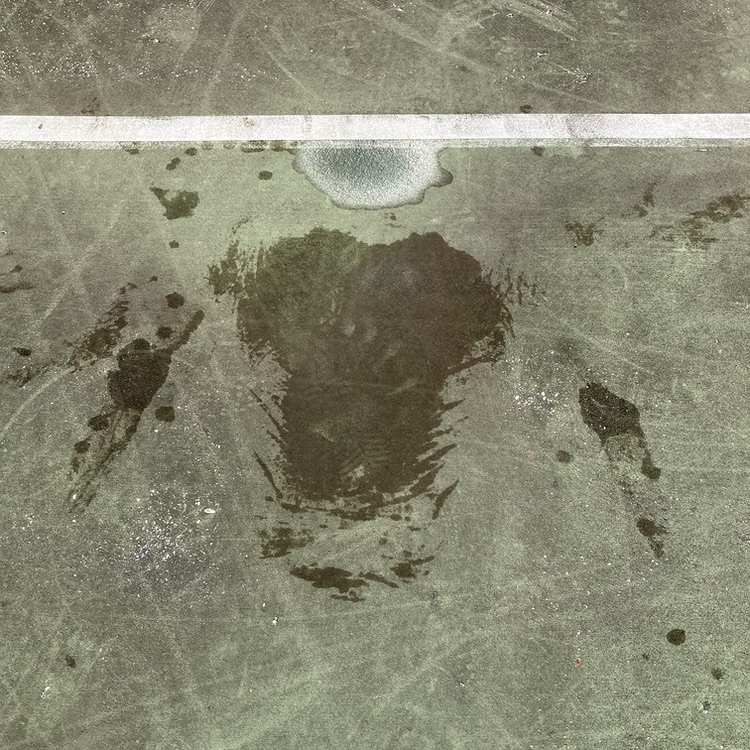
A friend and I recently did a 48-hour fast. (One of the low-lights was going to dinner with people on our way to a concert… everyone’s having burgers and salmon, and I’m drinking black coffee. Anyway.) Our design was to finish the fast by doing one of my usual quadrupedal movement (QM) workouts at my favorite tennis courts, and then a run (as best as possible) around 1.75 mile trail loop. Then break our fasts by eating.
By the end of the QM, I was utterly exhausted. For a cool down I worked on a sweat-angel for about 5 minutes. Left a legit puddle where my head was. And then we did the trail run. Several people joined us for the QM and run, and much fun was had by all.
There’s no real takeaway here. Just a photo and a note to myself: Sometimes I push things. Sometimes I push things too far. Where’s the edge?
ɕ