Returning

I recently returned from a whole bunch of movement. I was at the annual American Rendezvous event in Somerville MA, followed by taking the Level 2 ADAPT Coach Certification course. Immediately followed by some just-for-fun hard work at Vandrar Hem.

This morning I sat down on the concrete for meditation and it was sublime. 10, 15, or maybe even 20 minutes of simply sitting and breathing. Weeks of continuously have a “next thing” on the schedule every minute of every day is its own type of exhausting. This morning I was recharging via stillness. But completely still (like being totally active) is not the correct state.

What I had failed to cultivate in my recent travels was equanimity.

Too often, equanimity is described as a practice or technique that aims at the production of something – usually a state of stillness. Other proposed aims include a ‘countercultural’ refashioning of the self: eg, ‘to disarm the way we define ourselves in terms of achievements, fame, praise, and what we’re told should make us happy’, as the meditation teacher Christina Feldman and the psychologist Willem Kuyken put it in Mindfulness (2019); or being compassionate and caring instead of discriminatory and judgmental.

~ Michael Uebel, from Equanimity is not stillness – it is a mobility of the mind

slip:4upyie23.

ɕ

Connection with Lindsay McMahon

How does a podcast serving millions still make each listener feel personally connected?

Discover why “connection, not perfection” became the north star for one of the world’s most-listened-to language shows.

[Do you ever freak-out thinking about 200,000 people listening?] I think that our vision of the human connection is still so strong inside me, that I think about that. I think about that listener who might feel isolated right now because of language. They’re either living in the US and they’re struggling to get connected in their community, or they’re on a call from Japan to New York and they’re cringing because they think they just said the wrong thing and they’re not building the business relationship.

~ Lindsay McMahon (19:00)

This conversation with Lindsay McMahon explores the strategic structure and guiding values behind one of the most successful podcasts for English language learners. Lindsay discusses how the show’s consistency in structure, length, and tone builds trust and supports learning. The format was intentionally designed from the beginning, and every episode follows a clear template. The recurring message, “connection, not perfection,” drives the brand and resonates deeply with listeners around the world. The show targets global English learners, particularly professionals, and publishes five days a week, delivering a sense of reliability and approachability.

Lindsay shares her team-building strategy, including how co-hosts are hired, trained, and retained. She emphasizes treating podcasting as a business (for example, offering benefits like 401(k) matching), which contributes to long-term team cohesion. The show’s monetization model is also discussed, covering courses, sponsorships, licensing, and Apple+ subscriptions. The team uses lead magnets (like quizzes), and consistent calls to action are embedded in every episode. Additional topics include burnout, managing production buffers, and ambitions to expand into live events and podcast coaching.

(more…)

2,800 weeks of progress

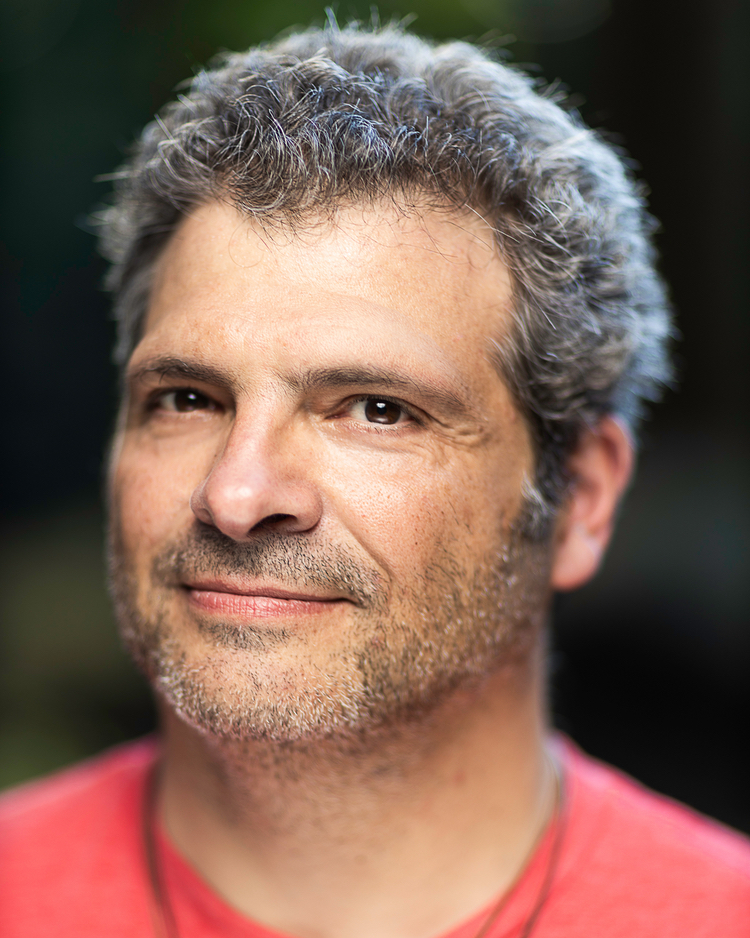
All original parts, some wear. As I’m starting to look for opportunities to coach in movement spaces, a headshot is a requisite.

ɕ


Curiosity with David Wilson

How can older adults reclaim movement as a joyful, empowering part of life despite pervasive cultural narratives about aging?

Letting go of perfectionism opens the door to playfulness and self-compassion.

If I can be more compassionate toward myself, I can let go of this addiction to competence and just let myself try, and suck. So yeah, I have come to embrace the idea that if a thing is worth doing, it is worth doing badly and playfully.

~ David Wilson (48:45)

This conversation with David Wilson explores how movement intersects with aging, self-perception, and cultural narratives. David begins by addressing how deeply internalized ageist beliefs affect people’s willingness to move, take up space, and try new things. The discussion challenges the idea that aging necessitates physical decline, emphasizing instead that variety in movement and awareness of personal stories can lead to growth and transformation at any age. David also critiques societal pressures that promote fear-based motivation, and he encourages a shift toward framing movement as a present-moment gift.

The conversation moves through practical barriers and misconceptions that keep people inactive, such as rigid goals, perfectionism, and the belief that certain types of exercise are required. It emphasizes meeting oneself where one is, using personal values rather than fixed goals as guides. The importance of self-compassion, playfulness, and the willingness to “do things badly” is highlighted as a more sustainable path toward movement. There’s also a critique of mainstream fitness messaging, which often excludes older populations by failing to address their actual lived experiences.

(more…)

Show your work

I return often to Kleon’s matra of “show your work“.

I always fade out from the process. I think the reason is that I’m not necessarily doing something related to podcasting every day. (Which is fine.) Without a strong habit of podcast-specific work (for example, “I do podcast stuff at 9am every day”) I don’t get in the habit of doing the extra little bit of work to capture something showing my work…

I’m convinced, my work would be better—and it would help others too—if I showed my work more. But I can’t seem to crack this nut.

Zooming out, away from podcasting . . .

I keep thinking: I don’t have a clear, single thing that is “my work” — it’s not podcasting, it’s not blog writing, it’s not community building [here], … For example: Here’s some notes I took, over the course of an hour thinking about coaching movement, based on a long conversation I had with a coach I respect. We had a coffee meeting where I wanted to pick his brain…

I post all sorts of things here, on the ‘ol blog. In recent years, my posting grew, become a weekly thing which I cleaved off to be the 7 for Sunday weekly email. Here I continue to post new quotes from my collection, copies of all the podcast episodes I do [all shows, anywhere], and a lot of “this is interesting” links that I find.

This morning, I’m thinking: My blog has long been the place where I work with the garage door up. Maybe I should lean into that?

…develop the habit of showing something (anything, from any project I’m working on) there on my blog. 🤔

ɕ


Simplicity, patience, compassion

As I continue to think about coaching movement, I was recently reminded of this quote, added to my collection long ago:

I have just three things to teach: simplicity, patience, compassion. These three are your greatest treasures.

~ Lao Tzu

slip:4a104.

Those three words struck me as guides— both in the sense of what I want to convey, and how I want to coach.

For myself:

  • Is this simple?
  • Am I being patient?
  • Am I being compassionate?

But also in terms of shaping others’ thinking:

  • What’s the simplest thing which could possibly work?
  • Are your expectations realistic?
  • Are you being compassionate to yourself?

ɕ


Empowering with Nina Ballantyne

What makes parkour jam spaces unique, and how do they shape the experience of movement, community, and accessibility?

A church, a jam space, and a parkour gym—what do they have in common, and why does it matter?

The empowerment, and the kind of liberation to not care what other people think, does have a limit for some folk, I guess. I love it. I think for me, it’s been great and really powerful. I really like not caring anymore about being bad at stuff in particular— that’s so freeing.

~ Nina Ballantyne (14:00)

The conversation explores the concept of parkour jam spaces, emphasizing how they lack defined boundaries, making them more accessible in theory but sometimes intimidating in practice. The discussion touches on the contrast between structured athletic environments and the open, fluid nature of parkour, where new participants must navigate unspoken social norms rather than physical barriers. The conversation also highlights the paradox of accessibility—while jam spaces remove formal entry requirements, social and cultural factors can still create obstacles, especially for marginalized individuals.

The discussion transitions into broader themes of public space, inclusivity, and the intersection of parkour with community projects. A significant portion focuses on an initiative to purchase a historic church in Edinburgh and transform it into a community space. The conversation reflects on how physical spaces carry different meanings based on personal and cultural perspectives. The comparison between parkour jam spaces and community-driven spaces like the church highlights the broader theme of reclaiming and redefining public areas for collective benefit.

(more…)


Insight with Cristina Latici

What makes a great movement coach, and how do they balance structure, intuition, and individual learning styles to help students progress?

Teaching movement is as much about reading people as it is about teaching physical skills.

You have to wait— you just have to wait and see. It’s not always the right time to give feedback.

~ Cristina Latici (15:22)

The conversation explores the nuances of movement coaching, particularly in the context of parkour and dance. The discussion highlights the importance of understanding each student’s background and learning style, emphasizing observation over immediate correction. Cristina describes her approach, which involves assessing a student’s experience, allowing them space to explore, and offering small, precise adjustments when necessary. She reflects on the parallels between her parkour coaching and her past as a dancer, noting how both disciplines require a deep awareness of movement and the ability to convey complex physical concepts to others.

[Yoda and Luke] are having a conversation and Luke’s bitching, as usual. And Yoda says something to the effect of, “we are what they grow beyond.” And the point that’s being made is, if you’re a coach and you don’t make students who are better than you, you’re not a good coach.

~ Craig Constantine (22:04)

Another key theme is the role of community in movement practice. Cristina discusses how the group dynamic influences training, particularly when working with long-term students versus new participants. She also highlights the challenges of coaching adults versus children, explaining how her background in special education informs her patience and adaptability in coaching. The conversation touches on the idea of “touch” as an intuitive sense developed through movement practice, illustrating how familiarity with movement can enhance both safety and creativity.

(more…)


This is how people actually find your show

I’m reading Amy Sillman’s Faux Pas and when I was searching her name in the Podcasts app I came across this conversation with writer Sheila Heti.

~ Austin Kleon, from Getting in and out of trouble

People find your show because they are looking for something, or someone, very specific.

People are not just sitting around thinking, “I feel like a need a new podcast to listen to… maybe something that inspires me to move more…” And then they search for “movement inspiration” . . . and then they land on my Movers Mindset show. No that’s not at all how it works. People do not find our show.

People find ONE, SPECIFIC episode. That’s what Kleon did above.

Think of a guest, or a topic, which you did about a year ago…

Now search for that person or topic in your podcast player, or in a web search engine…

Did you find that one episode you were thinking of?

Because people do that. And only then does our show description, show title, show art, episode art, episode notes, and all our hard work gives them the chance to pick us.

ɕ


Head ramping

Instead of letting your head dangle forward when you’ve logged on, put some strength in your swipe and use a little muscle in your upper back to hold your head and spine up.

~ Katy Bowman, from What Your Phone is Doing to Your Body and How to Fix It

Over in the Movers Mindset project, Bowman is someone who has long been on my to-talk-to list. Some day!

Until then, you’ll just have to read everything she writes. It’s terrific. Large amounts of actionable stuff around bare feet. This article is about what you are doing to yourself through your habitual phone use—uh, it’s horrific. But then, maybe if you were empowered with some knowledge, then you’d change? (I know that worked for me!)

ɕ