Further, then, answer me this: Do you think freedom to be something great and noble and valuable? — “How should I not?” Is it possible, then, that he who acquires anything so great and valuable and noble should be mean-spirited?
Sometimes I take photographs, but usually not many.
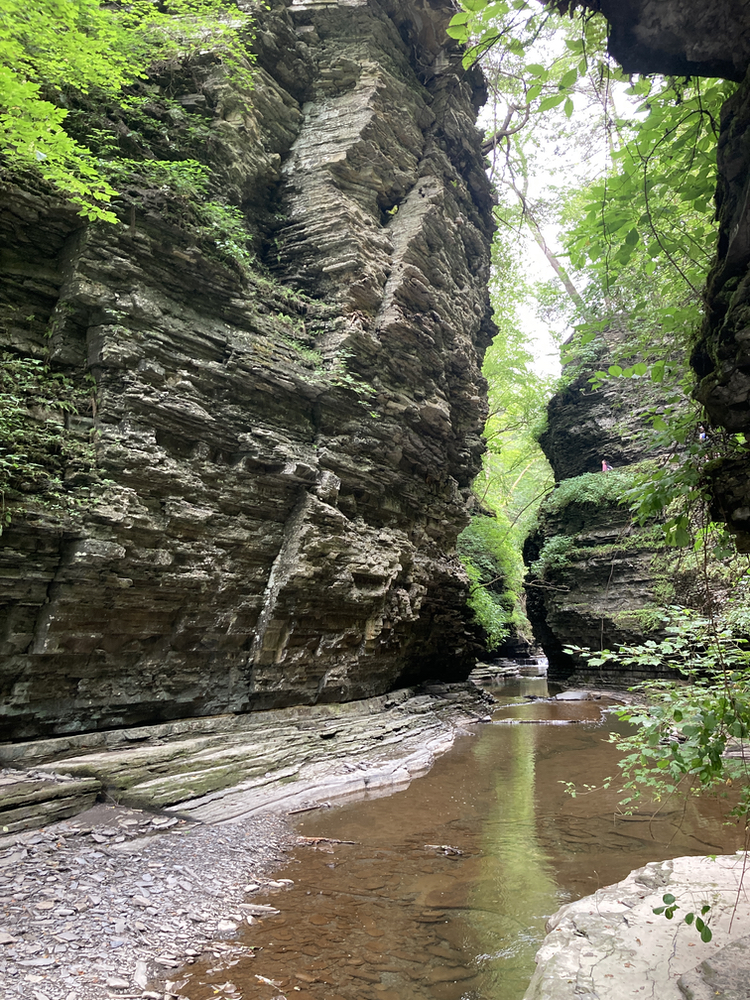
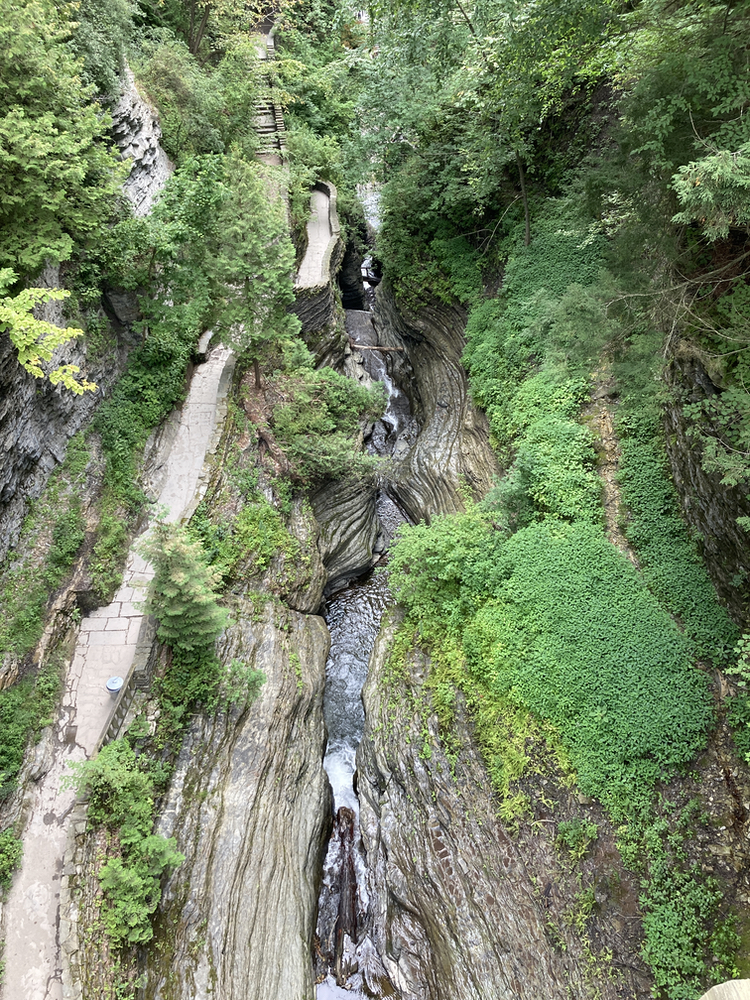
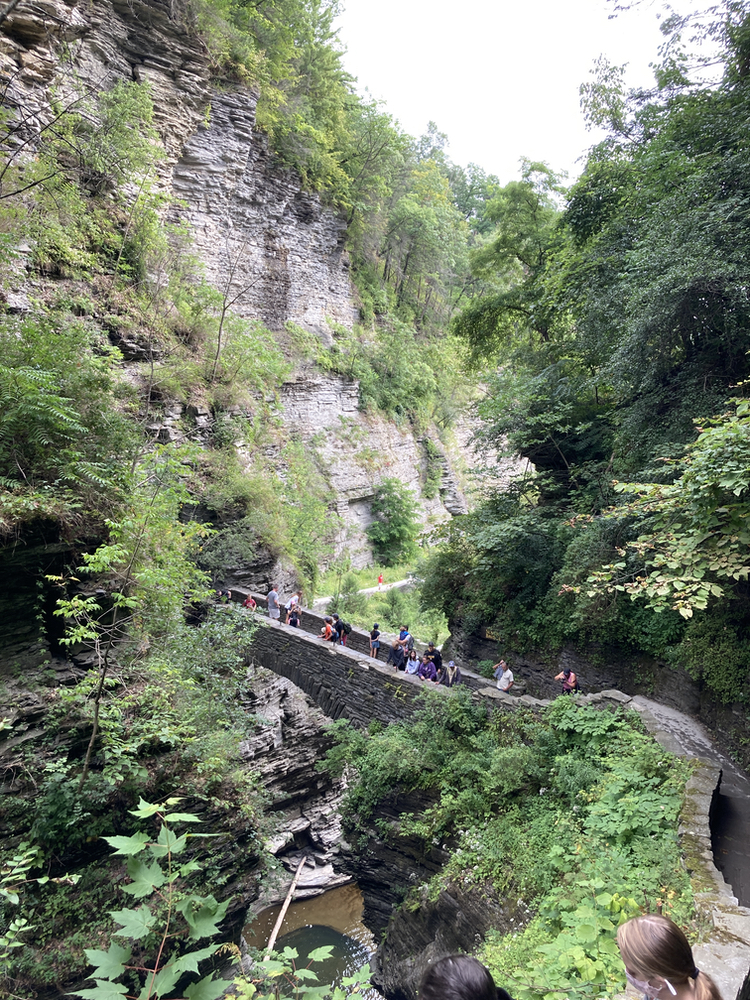
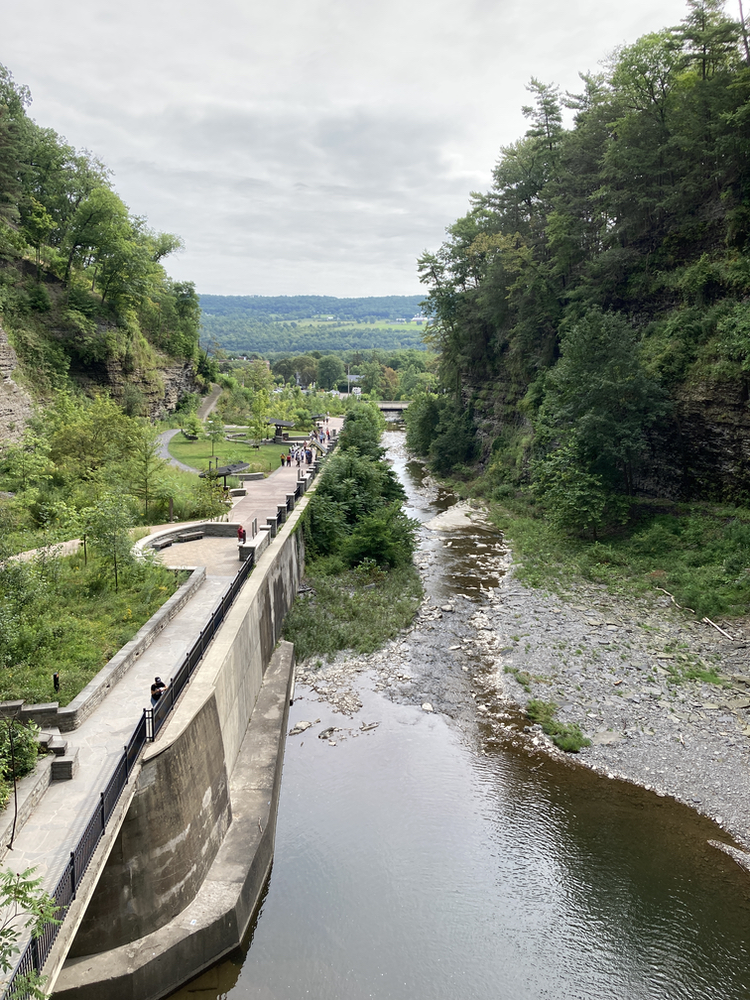
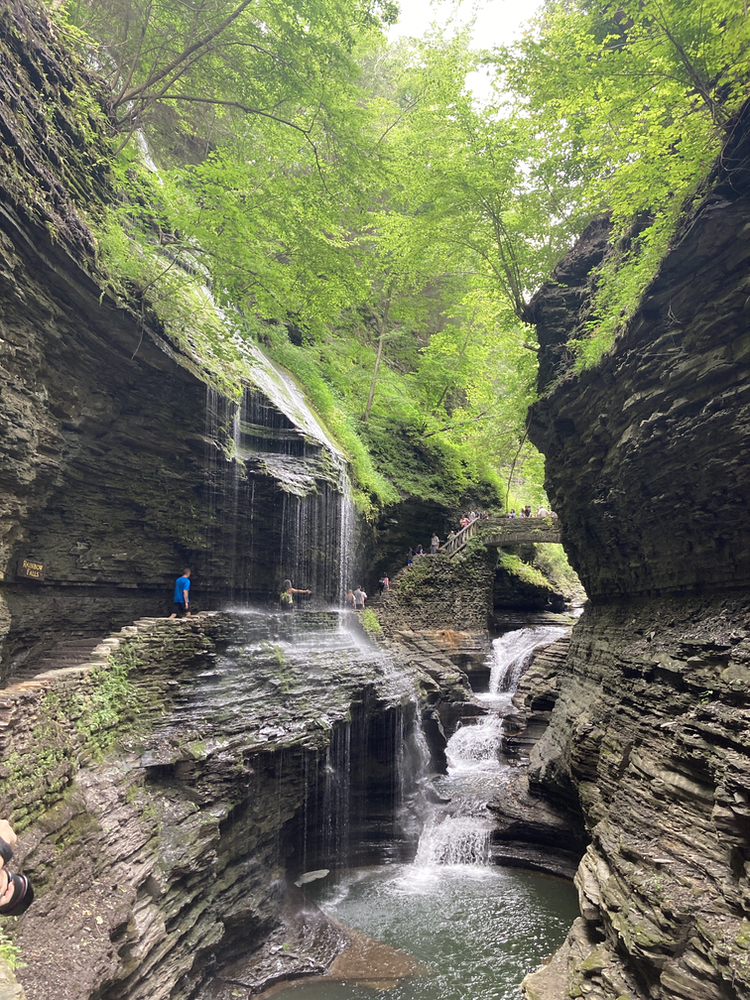
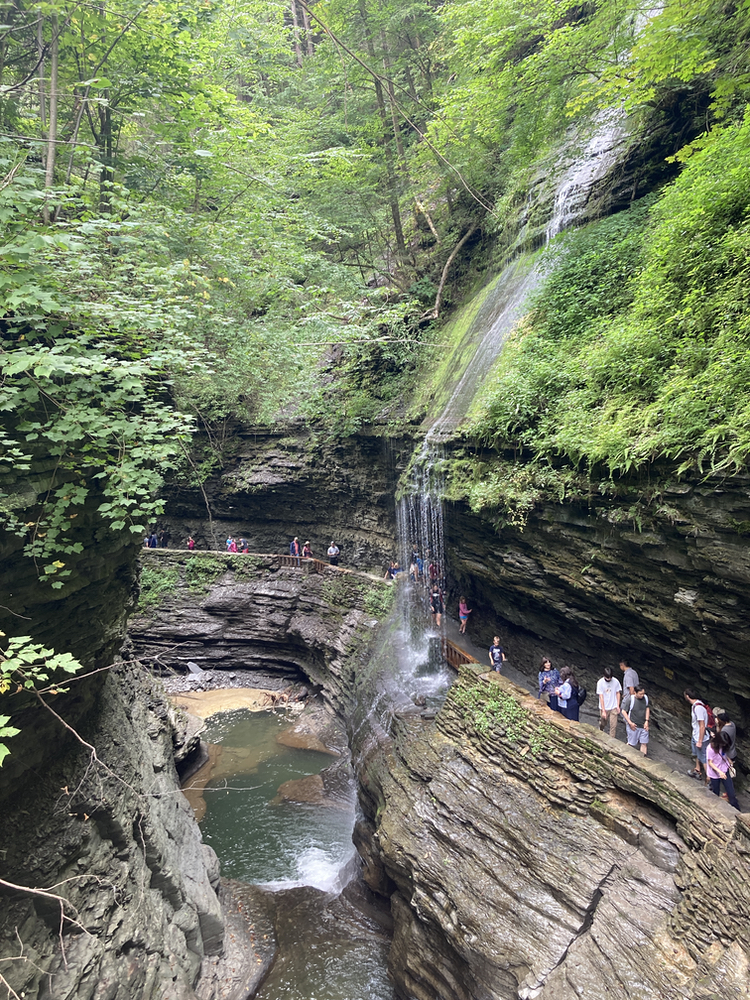
A few photos from Watkins Glen, NY.
I flipped over the way I think about taking photographs: I only take a photograph if I have a plan for doing something with it. When I took these, I was thinking that they would be good to share as a blog post—if you’re far away from Watkins Glen, you’d enjoy a bit of a virtual visit. I’ll also capture a photograph if I know someone would appreciate receiving it; at someone’s 90th birthday party, I corralled 50 people into a group photo—and then had it large-format printed, framed and delivered as a gift. …and I printed smaller copies for others, and one is framed and hanging in our house. I’ve set up multiple digital photo-frames, to which images are added by my emailing them to special addresses. The one in my sight has 500+ images that span my photography as well as selections from my father’s vast slide-film collection. There’s an enormous collection on my blog in the Photos category posts, and the best-of-the-best are on my featured photography page.
I have vast processes for everything related to my images. Custom software for managing them in archives, including automagic duplication and checksumming to protect against data degradation. (Hint: A backup of a corrupted image is also corrupted.) I have backups to the “cloud.” I have a recurring “maintenance” todo item that prompts me to go through the photos I’ve taken and move them through all my processes.
And I’m fully aware, that shortly after I die, this small eddy of organization where I’m pushing away entropy will be swept away. That’s precisely why I work so hard (although not actually that often) at doing something with the images.
It isn’t clear why you’ve been sent back. Maybe it was a cosmic accounting error, or a boon from a playful God. All you know is that you’re here again, walking the earth, having been inexplicably returned to the temporary and mysterious state of Being Alive.
But first, pardon me while I get a song stuck in your head… like, all-day stuck.
She could hear the cars roll by Out on 441 Like waves crashin’ on the beach And for one desperate moment there He crept back in her memory God it’s so painful Something that’s so close And still so far out of reach
~ Tom Petty, but you knew that
Tom Petty died in 2017—I hope that wasn’t a spoiler. It seems, based on my quick search, that his last public performance included this as the last song he performed. omg the feels. Stop, go watch that entire 7-minute video. If that doesn’t move you…
There’s a moment late in the video where the jumbo-screen behind them says, “without YOU, there’d be no US” — or something close to that second part, it’s obscured. I think that points to something exceptional about TPatHB. Forty years, and grateful for the experience of that specific night.
Now, reread the pull-quote and then read Cain’s suggested practice.
For even peace itself will supply more reason for worry. Not even safe circumstances will bring you confidence once your mind has been shocked—once it gets in the habit of blind panic, it can’t provide for its own safety. For it doesn’t really avoid danger, it just runs away. Yet we are exposed to greater danger with our backs turned.
Last week, one of your fellow readers hit reply—replies come directly to my personal email box—and shared some thoughts about connections and interesting juxtapositions in the week’s email. After I pointed out that the patterns they commented on, were simply a byproduct of how I write and how the email is assembled automatically, they rightly observed, “Lol, humans finding patterns where they don’t exist. A timeless classic.” I completely agree, and our power of pattern-finding is an awesome tool.
I was reading, and found a new-to-me Einstein quote. (You’ll find it soon, some time in February.) When I capture a quote from someone already in my collection, I have to check; There are ~800 quotes these days and sometimes I “find” one I’ve forgotten. (Surprisingly though, I can usually tell on sight if it’s in the collection already.) This led me to a search for “einstein” here on the blog. (There’s also a tag for Albert Einstein, but the search nets more posts including those I failed to tag.) I found a quote already on the blog—but not the new one that prompted it all—that was so old, it wasn’t in my collection. I fixed that, leading to a very old blog post, with a very high slipbox address, 4a784: Part of a Whole. And also 4a789: Do You Have a Question? Those were posted in 2013.
Why, do you not reflect, then, that the source of all human evils, and of mean-spiritedness and cowardice, is not death, but rather the fear of death? Discipline yourself, therefore, against this. To this let all your discourses, readings, exercises, tend. And then you will know that in this way alone are men made free.
For as long as I’ve been recording podcasts I’ve wanted to figure out how to learn more, and retain more, from the conversations. An audio recording of a good conversation can be a good experience for the listener; It can be good experiential learning. But the conversations contain so much more—facts sure, but also connections to other people, projects, stories, new perspectives, insights—which I know I’m missing. If something prompts my memory, I can recall the experience of the conversation, but everything else is either never learned, or if it was, I’ve subsequently lost it.
I’m reminded of…
If you remember what an author says, you have learned something from reading him. If what he says is true, you have even learned something about the world. But whether it is a fact about the book or a fact about the world that you have learned, you have gained nothing but information if you have exercised only your memory. You have not been enlightened. Enlightenment is achieved only when, in addition to knowing what an author says, you know what he means and why he says it.
There are multiple levels of understanding and learning, contained in each conversation. At the root of my feeling that I’m missing out is the knowledge that I’m only retaining the most-superficial level of the experience.
Who’s it for?
It’s obviously for me. But by doing the writing in public everyone who finds a specific episode interesting would be able to capture and retain more of those “levels of experience” for themselves.
What makes bike racing a unique and transformative experience for individuals and communities?
Bike racing is Joan Hanscom’s life; from racing for fun, to professionally organizing races, to running an entire bike racing organization, Joan has done it all. She talks about all things bike racing; from how she got started, to organizing, to the challenges facing women in the sport. Joan discusses her work at the Valley Preferred Cycling Center, and the importance of outreach and the larger picture. She shares her insights on passion, training, podcasting, and what a career in the sport means to her.
As a person who’s had a career in bike racing since 2002, I was well versed in knowing what the velodrome was, and it was sort of an honor to be tasked with this role. If there’s one thing that I want the velodrome to be is, it’s fun, because that matters. But I also want it to be a place where little kids Pee Wee Pedalers, Squirts and Weebles Wobbles, all the way up to master’s racers, and everybody in between, elite or not, can come and have fun. To me, it’s a place where we can cultivate this lifelong enjoyment of the bike.
~ Joan Hanscom (20:53)
Joan Hanscom is a cyclist, podcast host, and the Executive Director at Valley Preferred Cycling Center. Her love of the sport helped her build a unique career in race promotion and production, working with organizations such as the US Gran Prix of Cyclocross, Cyclocross World Championships, and USA Cycling. Currently, Joan is the Executive Director of the Valley Preferred Cycling center in Trexlertown, Pa, and hosts the Talk of the T-Town podcast.
It’s the process. It’s the process, no matter what your pursuit is. If you are pursuing excellence in the ballet, it is repetition. It is absolutely repetition. The process of the ballet is every day, there’s a bar, there’s plies, there’s grand plies. There’s jete. It’s a repetition and it’s a process of perfection. Maybe ballet is skewed a little bit more towards perfection than other sports, but it is definitely a repetition and a process and a refinement that you do daily.
~ Joan Hanscom (42:50)
This conversation centers on the multifaceted world of cycling, highlighting its unique sensory and communal experiences. A core theme is the immersive nature of bike racing, from the visceral sounds and sights at the velodrome to the inclusive, community-focused atmosphere it fosters. Joan reflects on her lifelong passion for cycling, tracing it back to her childhood and describing how the sport bridges personal enjoyment and professional achievement. She shares her experiences in organizing races, engaging the local cycling community, and her work at the Valley Preferred Cycling Center, aiming to create an inclusive space for all cyclists, from children to elite athletes.
Another key discussion point is the systemic challenges in the sport, especially regarding women’s participation. Joan outlines how structural gaps, like fewer racing categories and opportunities for women, make progression difficult. She emphasizes the need for investment in underserved groups, stressing that fostering diversity and inclusion can strengthen the sport and grow its community. Alongside these insights, Joan connects cycling to broader values of process, repetition, and community building, drawing parallels to other disciplines like ballet and movement practices.