Jesse Danger: Systems thinking, game design, and novelty

What principles can we learn from integrating movement, play, and systems thinking to foster personal growth and collaborative learning?

Jesse Danger takes time out from teaching parkour to share thoughtful insights on topics such as systems thinking through game design, the role of novelty, and how to work with a group toward a single focus while still honoring the individual. Along the way we also discuss life lessons learned through playing chess.

Nothing will ever be the same as it was. Things are constantly changing. So everything is novel all the time.

~ Jesse Danger (14:00)

The conversation centers on Jesse Danger’s journey from being a parkour practitioner to a facilitator and educator. Topics include his personal experiments with consistency in training, the philosophy behind his organization, and how business serves as a tool for sharing his vision. Jesse highlights the transformative power of systems thinking, particularly through game design, as a method for teaching life skills and movement principles.

Jesse and Craig also discuss the role of novelty in personal and group development, emphasizing how new experiences can level the playing field and foster deeper connections. The conversation touches on broader themes like balancing individual needs with group goals, overcoming the constraints of competition and authority, and cultivating an integrated, holistic approach to learning and living.

Takeaways

The transition from practitioner to facilitator — Jesse reflects on how his consistent personal training evolved into a broader leadership role in the parkour community.

The Movement Creative’s philosophy — A focus on creating a business that aligns with personal values rather than conventional success metrics.

Systems thinking through game design — Teaching movement and life skills through intentional, co-created games that adapt to participants’ goals.

The importance of novelty — Novel experiences can equalize skill levels, spark creativity, and deepen interpersonal connections.

Balancing individual and group needs — Strategies for fostering collaboration without alienating individual autonomy.

Unpacking competition and authority — How overcoming personal challenges with competition and authority shaped Jesse’s teaching philosophy.

The role of play in growth — Play as a tool for exploration, skill-building, and connection.

Life lessons from chess — The shift from finite to infinite games and their impact on personal growth and perspective.

The tribe’s responsibility — Supporting individuals’ unique needs while fostering collective growth.

Resilience, adaptability, and delusion — Key principles in Jesse’s personal and professional practice.

Resources

The Movement Creative — Jesse’s organization focused on movement and education.

Quest to Learn — A school where Jesse first explored systems thinking through teaching parkour.

Institute of Play — An organization partnering with Quest to Learn to implement game-based learning strategies.

Brendon Trombley — A game designer who collaborated with Jesse to design educational games.

Minecraft — A platform used creatively by Brendon to teach biology concepts through interactive simulations.

Rafe Kelley — Referenced for insights on play and movement.

CrossFit — Mentioned as a comparison for physical training methodologies.

International Gathering — A community event showcasing parkour practices.

Fight Club (1999) — Referenced metaphorically for its concept of transient connections.

(Written with help from Chat-GPT.)

ɕ


Interview with Jesse Danger

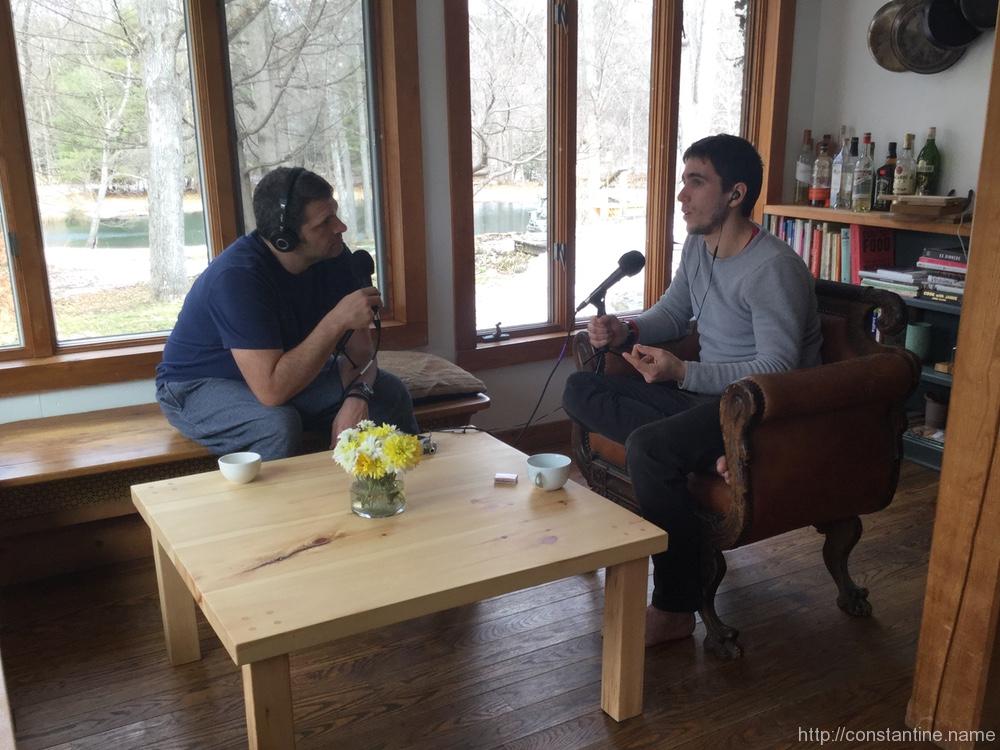
This past weekend I had the opportunity to attend a Winter Immersive retreat hosted by the Movement Creative. There I finally got a chance to sit down with Jesse and record an interview. Be sure to follow the Movers Mindset on the web site, or wherever you prefer to listen to podcasts!

ɕ


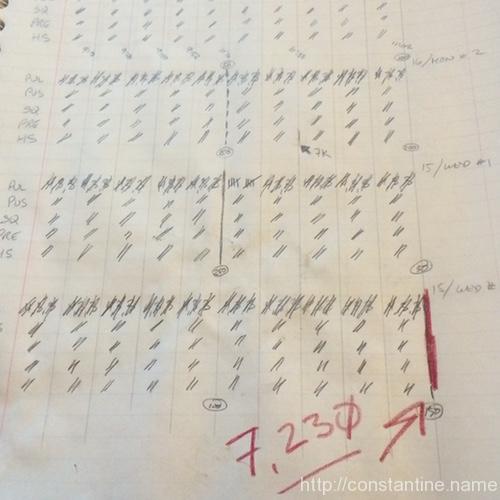
7230: I surrender

This entry is part 36 of 36 in the series 10,000 Reps Project

I surrendered yesterday with a heavy heart.

Since July 20th, 2015, it has been a long year of ups and downs. I’ve made some massive improvements in strength, and form, for the activities I’d chosen. But I still have much work left to do — both in terms of the number of reps left before the 10,000 goal, and in terms of the quality of the activities I had hoped to reach along the way.
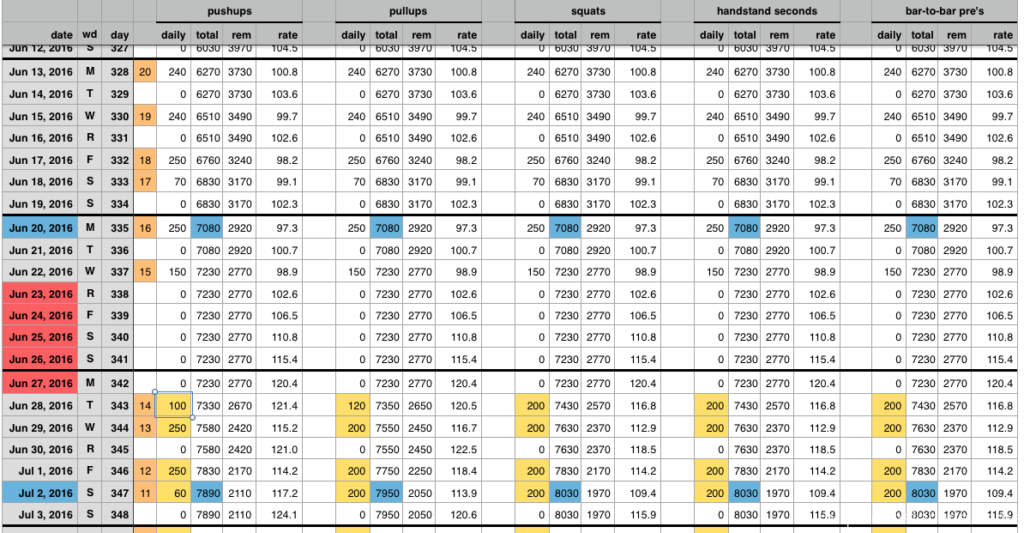
Screen Shot 2016-06-28 at 9.32.48 PM
A few weeks ago, I started a sprint to the finish. In an attempt to make the 10,000 goal within the dwindling days, I would need to do approximately 200 reps of everything every-other-day for several weeks. I started using a resistance band to ease the strain on my shoulder during the pull-ups, but even that was not enough to preserve my shoulder. This past weekend, at a Parkour event in Boston, it became painfully(!) clear that my shoulder injury was returning.

I have a Parkour trip planned in August, and I must begin that with my shoulder at 100%. I am forced to choose between a good shoulder for my trip, or the remaining 2770 pull-ups. I am choosing my shoulder.

Now, I find I have to write the “wrap this series up” post sooner than expected. So, what have I learned?

This entry is part 36 of 36 in the series 10,000 Reps Project

Anyone can put a challenge in front of themselves that they are unable to do. How well do you know what you are capable of? How well do you know how to make yourself capable of more. I train to know who I am and how I can improve.

~ Jesse Danger

slip:4a925.

This 10k project is the largest challenge that I can ever recall attempting. It is the only thing I’ve ever tried to accomplish which spanned the course of one entire year. It was ambitious, huge and has taught me a lot about my ability to stay motivated over a long time frame. (Pro tip: I suck at staying motivated.) I learned (or refined) several new skills involving daily and weekly planning of workouts, planning for road-blocks (winter weather, holidays, trips) and recovering from injury.

It is certainly not the first thing at which I’ve failed. It is certainly not the last thing at which I’ll fail.

Perhaps one day I will do it again and make the goal. But for now, I have other things to do.

ɕ