Battery, spork, iPad in #pelicancase and cafeine (not shown cuz omgyumgone) from @localcoffeesa !
ɕ
Presence, not pursuit.
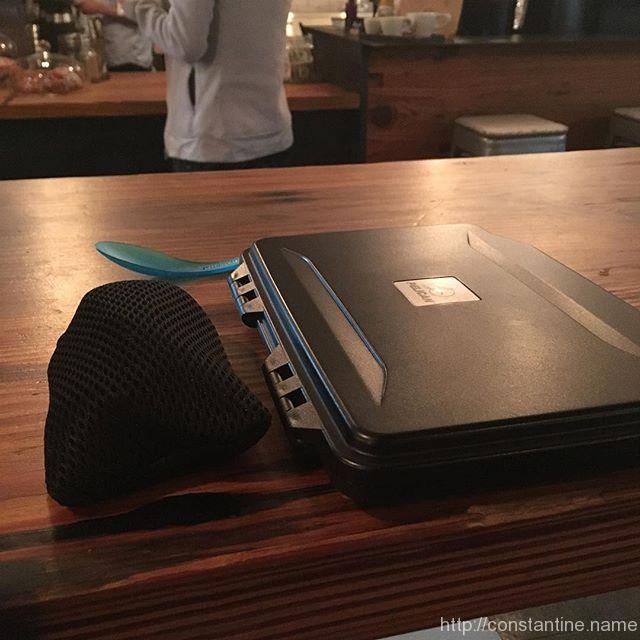
Battery, spork, iPad in #pelicancase and cafeine (not shown cuz omgyumgone) from @localcoffeesa !
ɕ
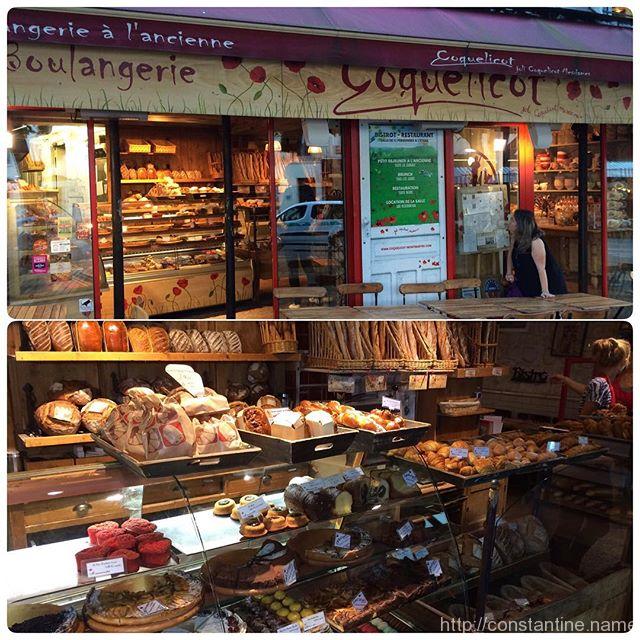
I have, apparently, died and gone to heaven. We were walking, and everyone going the other direction was carrying baguettes… hmmmmm, might be a bakery ahead. carbs. more carbs. ohmagerdCARBS!!
ɕ
Workout catchup…
…ok, so yes, I’ve been sick, but I’m still a slacker. This past week, I went to the doctor and got some good cough medicine to improve my sleep. Friday I was feeling better and coughing less, so I talked myself into going out and trying to finish the 30-reps, second-half of the workout I had split in half the previous week. So I got that done, but, ….brrrrrrrrr CHILLY!
Bar-precisions…
This is challenging again. My latest scaf setup has higher bottom bars. Used to be about 4 inches off the floor — scary as hell when you start out, but at the low height, it’s nearly impossible to hurt yourself if you slip long or short. New setup has the bars about a foot high, so this is again SCA-RY when you slip or don’t have your feet where you want them. Also, the current setup makes the bars rock-solid. So the old setup you could pre-load the bar flex just before jumping and then the landing bar is nice with just a bit of flex. Now, if you don’t do the legs correctly on the landing, it’s a bone-jarring bang when you land. Anyway, just yakking about an exercise that I’ve tweaked just a bit and is suddenly a fresh challenge.
Squats…
Hip ROM is one of my current “projects”. I’ve been working (desk-type work) on the floor in my living room using my coffee table as a desk. It’s like japanese-style living :P I’ve a couple yoga blocks to sit on as a starter-crutch and I cycle through cross-legged, one-straight, seiza, etc to work on hip ROM/flexibility. I usually run a 15 minute or so timer as I work and then shift to a couple of minutes of working on a flat foot squat. So doing body-weight squats is ever-so-slightly easier. I can take a bit-wider-than-shoulder stance and do a full squat to seated, but up into multiple sets numbers it starts to feel tight in the knees and then I let my heels unload… I’m thinking going forward I should keep the heels planted and just not squat all the way down. (Would also increase the difficulty on the descent as I’d have to do more negative work to stop before the movement limit. Probably also a good thing.) As soon as I unload the heels (even the slightest) I can feel that I’m no longer pushing the hip/ankle ROM like I could be. So I think just stopping before the last few inches of squat depth would yield more results in hip ROM. I can take a *wider* stance, but then it seems the knee pull/torque comes to my attention *sooner*.
Pullups…
These are definitely a “can do” exercise now. Getting better velocity/acceleration from the dead hang, and the consistency of height, and height in general are slowly improving. (I don’t dead hang most of them — I prefer to run up and down with the shoulders/lats remaining activated at the bottom.) I’m convinced the next step in my progression is to shave off a bit more dead weight. There’s 5, maybe even 10, pounds I can easily drop just by paying attention to carbs. So I’m off to try and get that in the coming weeks.
Related, two weekends ago I did my first ever “climb up” in perfect form. Basically, a fingers-over-top wall grab, feet on the wall, arms fully extended, pull up to max height and with the last of the momentum, hop your hands up on top of the wall, so the heel of you hand can bear weight. Haul your chest forward (low) over the top of the wall so you center-gravity moves into where you can push up through the dip part of the lift. Never managed the fluid hand transition before as a continuation of the pulling movement. It’s crazy difficult; the transition of hands is pretty easy, but if you do it and end up too low, you’re not able to tricep-push your way out of the dip (because the wall is in your way in front of you) …can make for a smash-your-chin/face train wreck if you mess it up. ANYWAY, my point is, pullups are really paying off in some of the functional movements that have been on my list for years. The grip-strength gains alone are crazy-useful.
Now for the problem: My right forearm is no longer sore/aching in general. Before this two-week-ish sick break, I could make the muscles ache just by making a fist and flexing my wrist pinky-side. That’s healed/gone away. But as soon as I start pullups, that exact muscle/area complains. I did 6×5 on Friday and it was a consistent “you better cut that out”. So again, losing a few pounds would help.
But my workouts require getting 70+ pullups in to make the 10k goal. I have the general strength/stamina to do it in an hour-ish workout, but it’s going to trash that right forearm if I go at it. So I’m going to experiment with a few things: 1) Banking pullups indoors; I have a smaller sized bar indoors versus the 1-1/4″ scaf pipe outside that is way harder to grip. So doing 5 or 10 reps, a few times through the day will allow me to vastly reduce the pullup reps when I do the “main” workouts. (Bonus, reduces how much I have to take my gloves off to do pullups outside… fr-fr-fr-fr-icking cold scaf pipes!) 2) Changing the grip; perhaps switch to the easier chin-up grip on one side. I’m not sure if its better to switch the right grip to not aggravate the muscles, or switch the left grip so I can do more work on the left to lessen the load on the right. I’ll also try removing pinky finger from the right grip since that corresponding side of the forearm muscle is the part that complains. 3) shift the hanging position (eg slight archers) to just load the left side more.
So, lots of work remains with pullups.
Worksheet/workouts…
Snapshot attached with usual-looking plans for next week. Bearing in mind that for the pullups, I’ll be working on banking reps in the day(s) before each workout.

ɕ
He replied that although the drug did dissolve gallstones, it didn’t treat whatever the underlying problem was causing the gallstones in the first place. Patients who took the drug, got rid of their stones, but as soon as they went off the drug, the stones redeveloped. He said the only effective permanent treatment of gallstones was to remove the gallbladder.
Over the next few years of my medical education, I learned this was the common wisdom on dissolving gallstones. It can be done, but what’s the point? The stones will simply come back.
Turns out, however, that there may well be a way to avoid surgery, get rid of gallstones and, most importantly, keep them gone.
~ Michael Eades from, «http://www.proteinpower.com/drmike/low-carb-diets/get-rid-gallstones-without-surgery/»
ɕ
The truth is, that wherever we are in life, we all have pockets of time that we own, and that we could be doing more to actively shape and make the most of. It’s just that so often we default to the path of least resistance. Unbelievably, Americans only use 51% of their paid vacation and paid days off. When we’re not working, and do have free time, rather than pursuing a constructive hobby or side business, we’ll often plop in front of the TV or mindlessly surf the internet. Instead of seeking out good books to read to feed our minds, we default to consuming whatever information happens to pop up in our Facebook feeds. The ironclad rules that governed our childhood are long gone, and yet we still don’t feel fully in control of our lives. We feel swept along by the currents of our responsibilities, so that our lives seem to go by in a unthinking haze – a fog that is ever so often perforated by the question: “Why haven’t things turned out the way I had hoped?”
~ Brett McKay from, Become the Author of Your Own Life | The Art of Manliness
Elsewhere, this is 4uaote1. — slipbox
Say yes whenever you can and overcome the inertia of rigmarole. One of the greatest impediments to adventure as an adult is the number of your responsibilities, and how said responsibilities sap your willpower. Psychologists have shown that we have a limited supply of willpower each day, that if we use it for one thing, we have less it for another, and that when our willpower runs low, our default answer to everything becomes “no.”
~ Brett McKay from, How to Be More Adventurous | The Art of Manliness
Elsewhere, this is 4uaote2. — slipbox
Creating an awesome adulthood involves using your imagination to create a story for yourself, and then taking ceaseless action to bring that narrative to life. It’s like riding a stationary bike that powers a film projector: to create a new world — to project your chosen narrative on the screen of your life — you must pedal continuously.
~ Brett McKay from, Churchill’s Advice on How to Be an Adult | The Art of Manliness
Elsewhere, this is 4uaocu1. — slipbox
This is a rather large, long (and I think, well written) series of posts from Brett over at Art of Manliness. Well worth a read in my opinion.
ɕ
In college, I briefly practiced Taekwondo, and I spent 5 years practicing, and informally teaching, modern fencing. (Epée!) But I didn’t begin martial arts training in earnest until 1998, at age 26, when I began practicing Aikido under the direction of Sensei Michael Wirth. I practiced non-stop, reaching shodan (1st-degree black belt) in 2003 and godan (5th-degree) in 2013.
Sensei Wirth’s Aikido is an unaffiliated, no-nonsense, art; It is built on the bedrock principles of a soft and flowing Aikido, while honestly seeking to be physically functional and practical. On the mat, his Aikido is soft and flowing; It can vary very quickly from a light touch to vigorous atemi. In more recent years, I’ve repeated catch-phrases such as “No this. No that. No delay.” and “Relax beyond any indication of every injury you’ve ever received.” to convey the idea that you can be your most powerful only when you relax and eliminate all the unnecessary thinking and movements.
In the beginning, I had no clue how unique the Aikido group was that I’d stumbled into. It wasn’t until ten years or so into my journey that I realized the incredible luck of my timing: I started training just young enough to survive the tail-end of what I call Sensei Wirth’s “Does this work?” epoch, and was just old enough to thoroughly appreciate the subsequent, “Yes, it works. What can we do with it?” epoch. Those who experienced the former epoch nod knowingly with a serious expression. Those who experience the later epoch have the luxury of following the now more direct path that Sensei Wirth has arrived upon. The later epoch is certainly better, but the few of us who experienced both are indeed, very lucky.
Along the way, as I’ve wandered (physically and mentally), I’ve taken the opportunities to experience a wide range of Aikido styles, groups and teachers. I’ve gone to fundamentally different Aikido groups’ seminars just to honestly try the “when in Rome…” thing. I also made an honest effort of a couple years in Tai Chi. I expanded my practice by reading from a wide range of topics directly, and indirectly, related to Aikido including philosophy, physiology and spirituality. In fact, I would go so far as to say that I did my best to deconstruct and reassemble everything I’ve learned.
On the other hand, I make no claim to the quality of my reassembled puzzle since some pieces are missing, several are chewed on, and many which don’t fit remain to the side. All things considered? I’m delighted to still feel I am a beginner.
ɕ
Instead of berating yourself when you’re not motivated to exercise, or getting mad at yourself when you struggle with eating unhealthy food, take a step back and look at it from a different angle:
“How can you build the habit of success and put your focus there, instead of chasing the motivation to make it happen?
It’s easy to become ensnared – to chase motivation and fail – or rationalize inaction and never try. Every single one of us has fallen into this trap. I’d love to hear about your experience with this, and how you plan to (or already have) overcome it.
~ Steve Kamb from, Is Motivation Useless?
Elsewhere, this is 4unebo8. — slipbox
In a vague sort of way, I found this idea in my own training. As usual, Steve Kamb brings clarity to the party. This idea of incremental actions, of habits, and little processes that make success a foregone conclusion is at the core of my Parkour training.
ɕ
Following “via negativa” may seem like a defensive and risk-averse way to live. But by focusing on what you don’t do, you actually put yourself in a position to be more aggressive with life. The man who has never been arrested, doesn’t have debt, and doesn’t have the drama that comes with bad relationships has more opportunities presented to him and more money, energy, and willpower to capitalize on those opportunities when they appear; the man who has gone though life making stupid mistakes, doesn’t. In other words, you’ll never get a chance to work on the “shalls” if your life’s been wrecked by ignoring the “shall nots.”
~ Brett McKay from, Via Negativa: Adding to Your Life By Subtracting
Elsewhere, this is 4uaovi1. — slipbox
ɕ
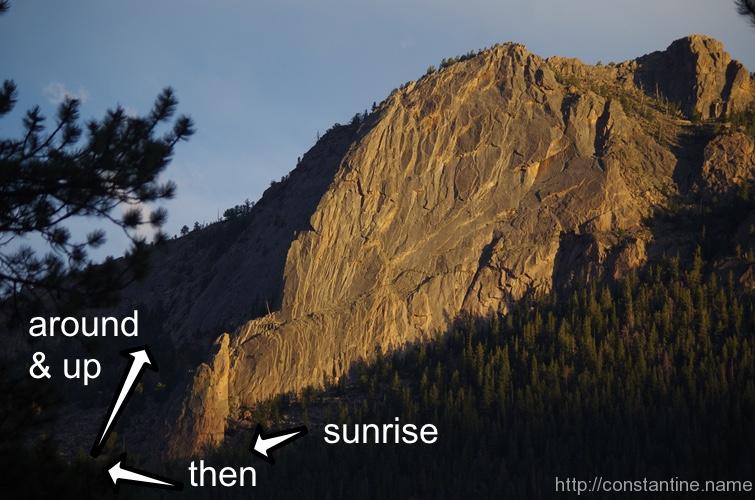
Epic: This was meant to be the first climb as part of our 24 hour challenge. A classic bush-wack approach to the base of the rocks at sunrise. Then 5 pitches of traditional climbing finishing at the overlook on top of the mountain.
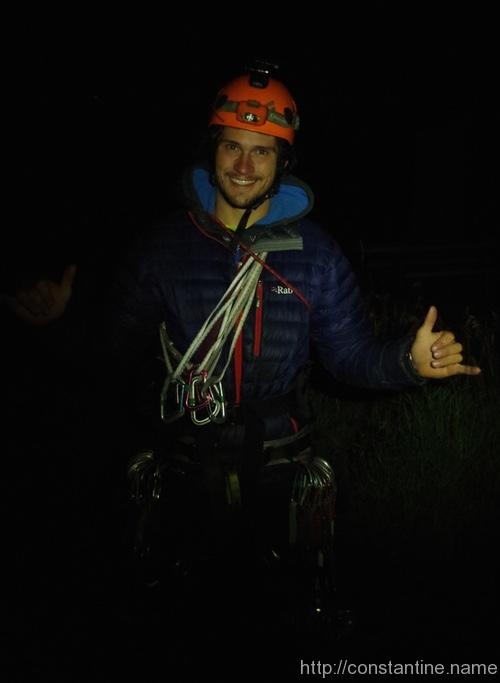
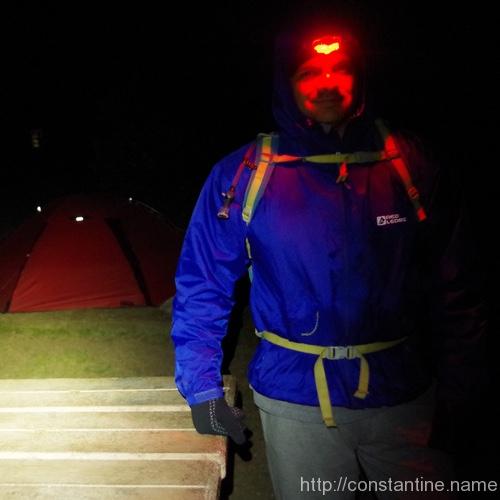
We got up at 4:30am, having packed everything the night before. It was pretty chilly and we were facing a good hour-and-a-half stomp through the woods. Our plan? …walk straight through the campgrounds — literally through camp sites and out the back of the campground. Then, head directly up hill until twilight brought us a good view of the mountain.
Initially, we were walking through grass-carpeted woods, and through a small meadow atop a little hill. But the further we went, the steeper it got. Until it turned into a true “class 3” scramble.
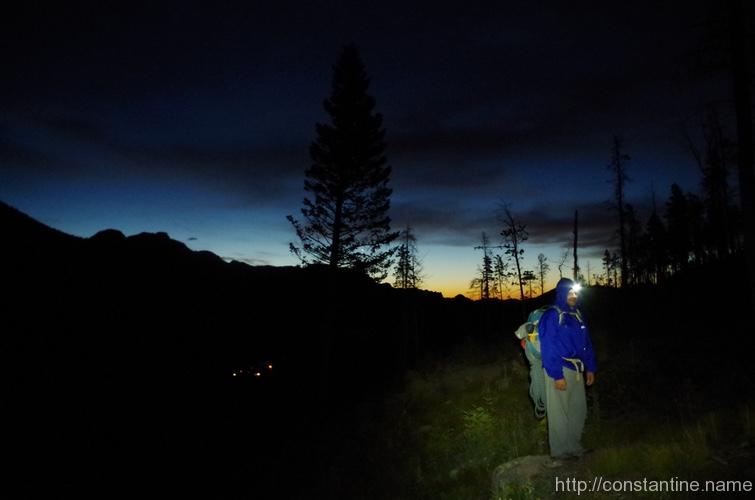

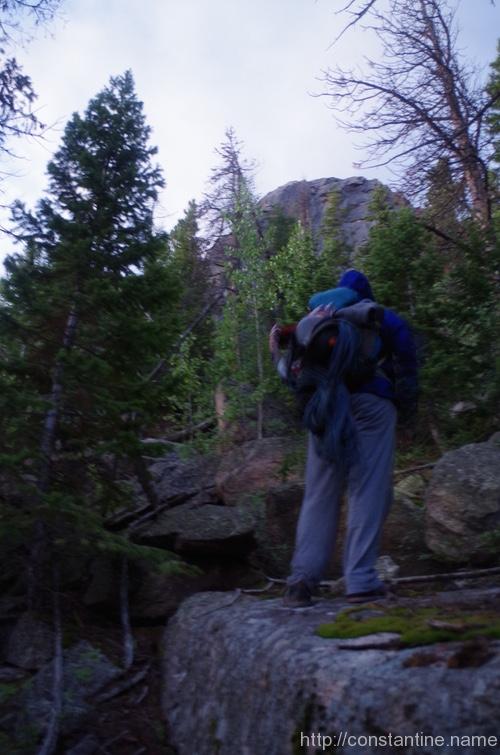
Twilight was upon us as we reached the base of the lowest spire.
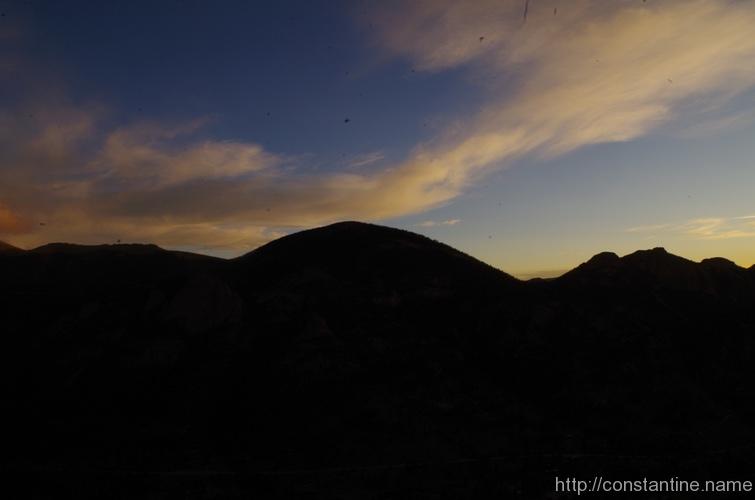
We reached the base of the rocks moment before dawn.
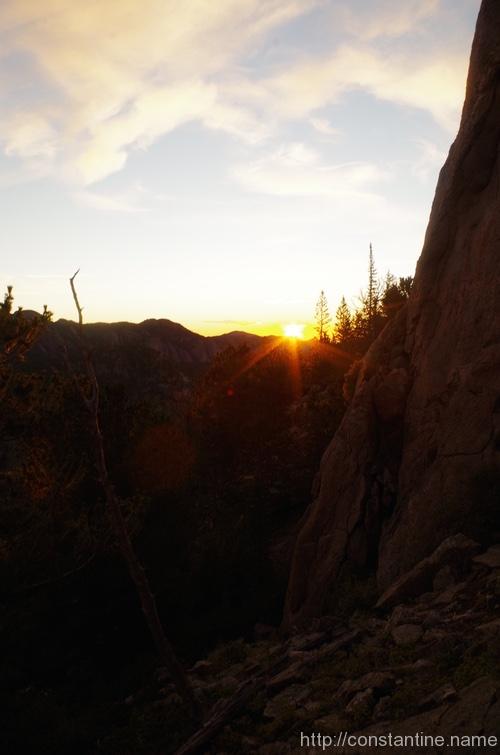
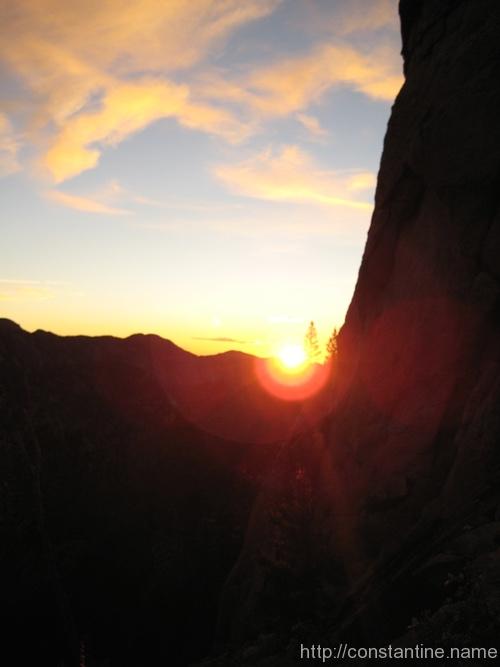
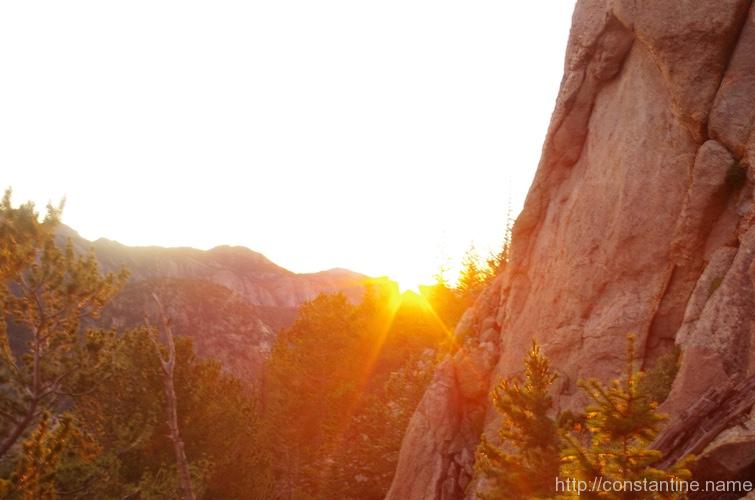
…and this is what the dawn “Alpine glow” looks like at 8,000 feet on Deer Mountain.
Giddy as school children — and possibly a wee bit oxygen deprived — we took a break to sight-see.
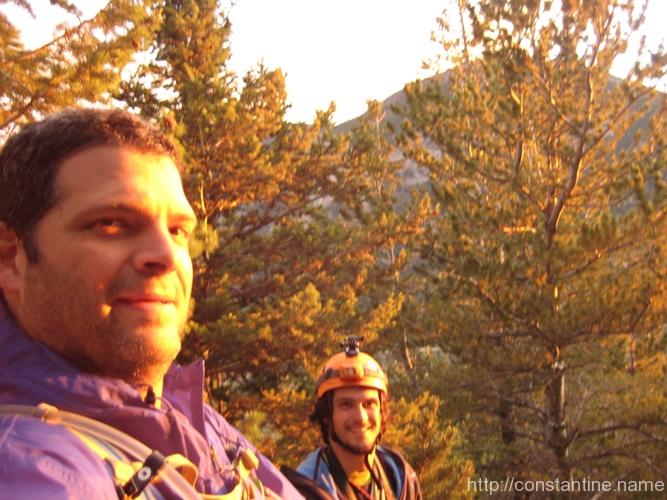
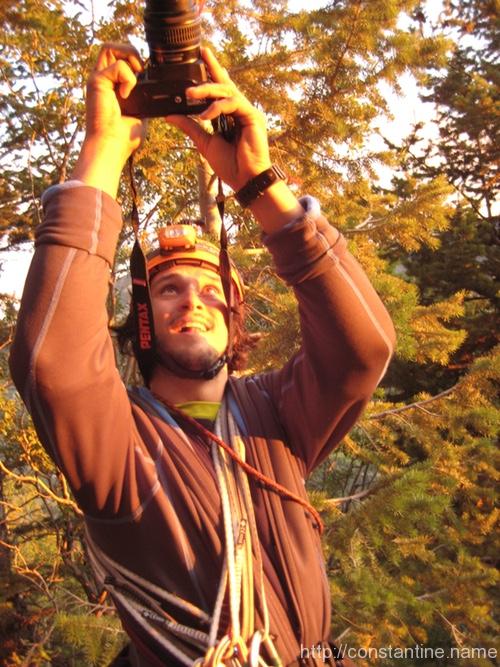
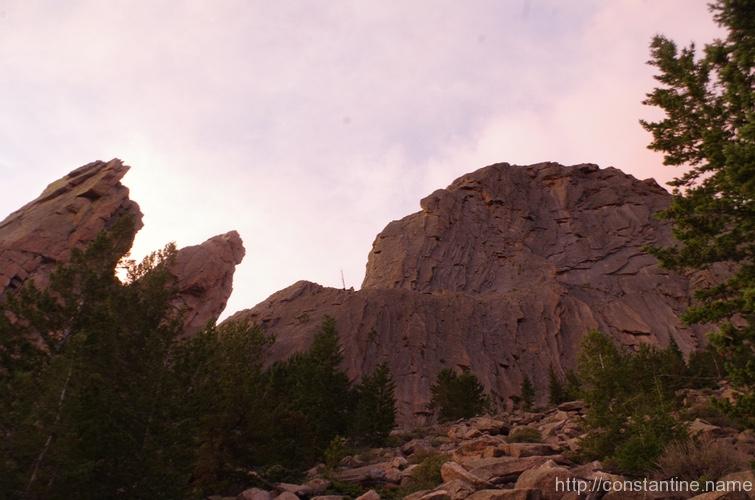
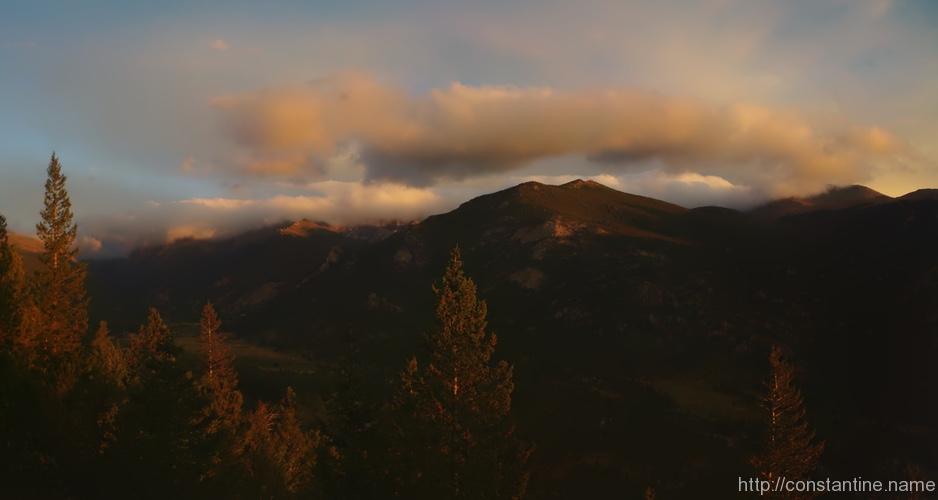
The final approach phase — yes, this is all just to get TO the climbing — is to duck around the lowest spire and climb up another 500 feet. To the left of the nose is a gently sloping shoulder called Stagway.
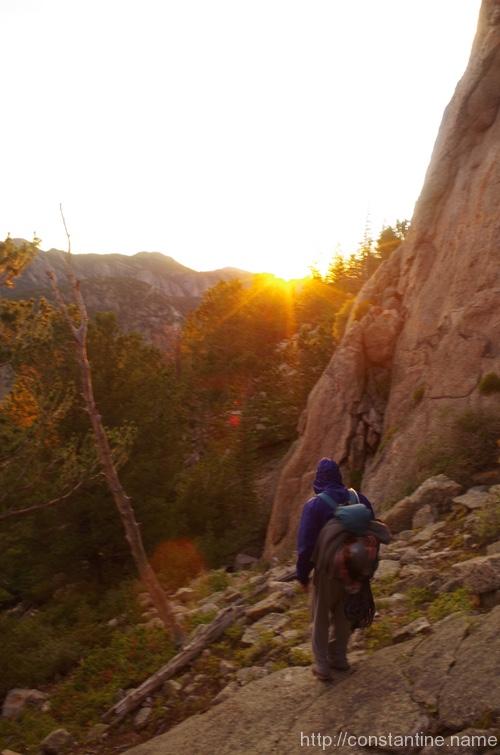
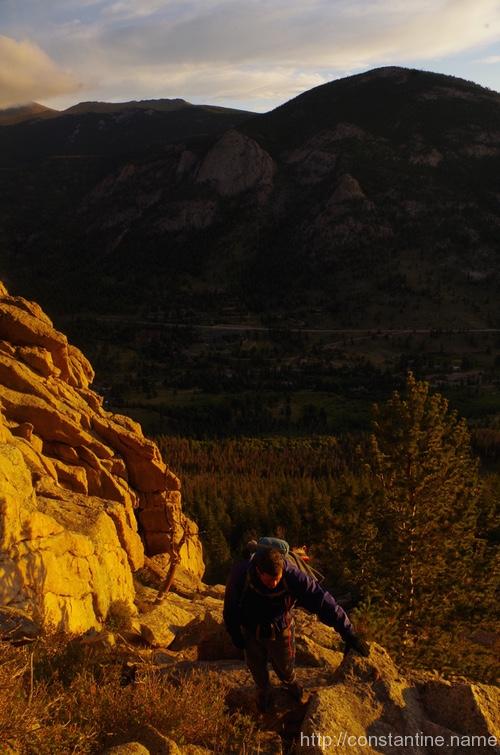
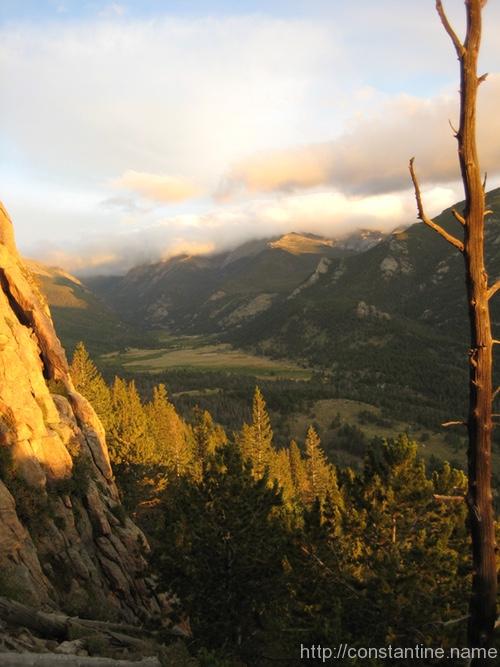

We totally loved that the “Notice” sign, had been there so long, that the actual notice was gone. The view from Stagway was beyond awesome, and was well worth the two hours of extreme labor to reach it’s ~8,500′ above sea level view point.


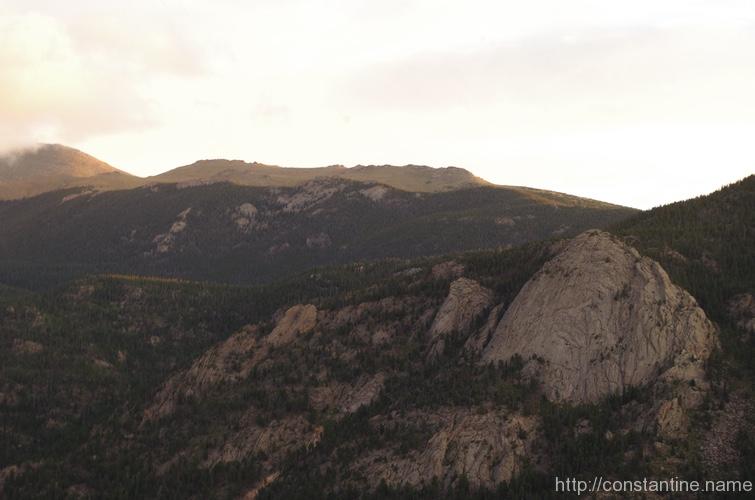
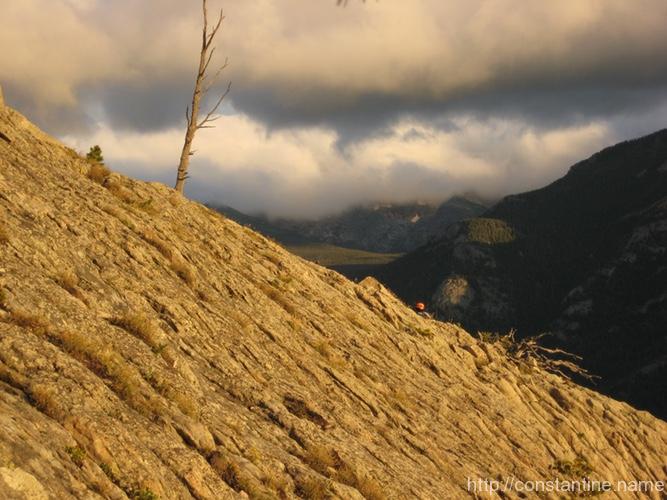
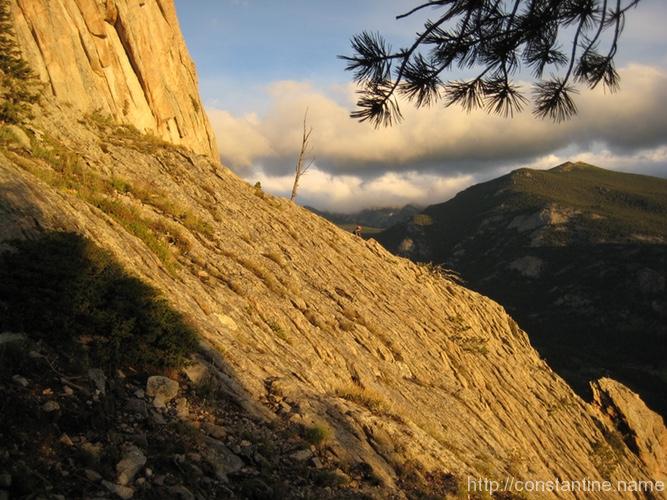
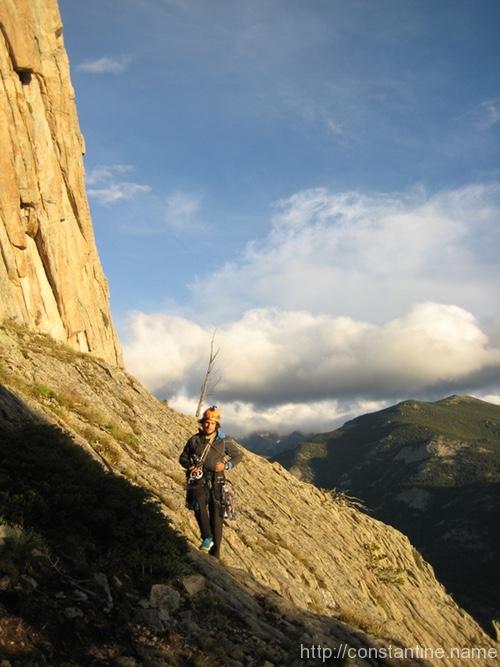
At this point, we could finally walk up to the base of the climb and assess. We were facing 30+ mph wind gusts, storm/rain clouds coming down the valley, and the first section was 80 vertical feet of crack climbing. (ie, there are no hand holds on the rock, just a crack to wedge your fingers and hands into.) We discussed it for a while, and I eventually called it off. It was just too many things weighing on the wrong side of the equation.
We snacked and discussed climbing the random looking stuff directly above Stagway. Unfortunately, the climbing guide said all the climbable lines were on the nose and to the right. On the plus side, it would be easier (in terms of technical difficulty) than climbing the nose, and just for a perk, it would be opening a new line. (Meaning no one had ever climbed it.) We figure that after one section through this stuff on the left, we could traverse back to the right, and continue up the nose’s progressively easier sections.
Unfortunately, this is also where we stopped taking photos and video as things went from being “fun”, to being “hard work.”
We setup and started up through the randomness above Stagway. After a long, long time slowly feeding rope to Mike, he stopped climbing and setup a belay point totally out of my sight. (Remember, it’s windy so we can’t communicate at all beyond a very simple rope-pulling system.) Eventually, I started up after him. I won’t say it was a mistake, because it was still fun at parts. But we spent nearly two hours, gaining about 50 vertical feet. I seriously thought Mike had been trying to write his name on the wall as I followed the rope up and down (down?!) left to right across the rocks. There was a lot of tricky climbing, and a tremendous amount of effort for almost no vertical gain.
Finally, at our first belay, with only half the gain we needed to go around the nose’s first section, we both decided to bail off. Bailing from the middle of a mountain requires leaving gear behind; You have to build an anchor, and then rappel from that anchor. You can pull your rope down, but the gear has to be left behind. Part of our plan for the 24 hour challenge included “bail gear”. That’s a small collection of things that we wouldn’t normally use, because if you used it, then you couldn’t bail off it in a pinch. This was litterly one nut, and a carabiner that Mike had found in the Himalayas that had been left behind when someone else had bailed.
It took us 10 seconds to rappel off of our two hours of work. That was followed by an hour of down-scrabble all the way back to our camp site, where we collapsed pretty exhausted. At this point the weather seemed to be deteriorating, and we threw in the towel on our entire 24-hour challenge. We never even tried to cross over to MacGregor slab. We did say, half-jokingly, that we would come back some day and get it right.
Aside: as I write, in March 2015, we are planning to return in July.
On the other hand, we both felt like climbing more, so we headed over to climb “Batman and Robin” over on Lumpy Ridge. (Which will be my next post.)
ɕ
Have men these days “gone soft?” Is our generation less manly than past generations? Are we less tough than our grandfathers?
~ Brett McKay from, Are You As Fit As a World War II GI?
Elsewhere, this is 4uaoae2. — slipbox
ɕ