Sedimentation and erosion

I have this image of our home as a bunch of related-rates problems: There’s inflow and outflow. Energy: In through my electric meter, out through lighting, waste heat and heating/cooling, water heater, etc.. Climate control: Heat flow in from heating/cooling system, the wood stove, the sun, versus losses through the attic, windows, doors, etc.. Mass: The balance of the rates of the flow of all the stuff.

Ever stop to think of that? Think of your home as a sealed balloon which has two, (or more of course,) doors, (garage doors count,) through which everything passes. Everything—no exceptions—passes in first, and then out second. Everything–every single thing, including the people–is only inside temporarily. The people come and go most frequently, (some pets might exceed some people I suppose,) and some things might remain inside for decades. But still, inside only temporarily.

You know that at some point you, (and everyone else if you share your home,) will go out for the last time. You might carry some things with you on your last exit, or you might arrange for someone else to come in, (and go out and in and out and in and out one last time,) to remove things after you go out for the last time. And of course eventually the entire structure will be removed and certainly at that point, everything you brought in—everything that was temporarily still inside—will go out at that point.

Where does everything you carry in from the market and grocery store go? Where does the furniture go? The books? The nick-naks? The packages and packing material from purchases? The clothes? The postal mail? The firewood you carry in is vastly more massive than the ashes you carry out; where does all that mass go?

Based on how the things around me make me feel, I know I have too much stuff. When I think of our stuff this way—as just a mass of stuff that’s temporarily inside our home—it’s much easier to keep my life under control. Too much stuff? …all I need to do is make sure more goes out than comes in, on average, and the problem will subside.

…and I can have fun with it. If something breaks, is worn out, or I’m done with it, that’s the outbound mass for today! Can I recycle this random thing? Can I FreeCycle this random thing? I no longer feel bad about sending things out, (wether that means landfill, recycle, giveaway, whatever… as appropriate.) Instead, I now find I feel bad about bringing things in. Each time I consider buying something, I think: Do I want to bring that into my life?
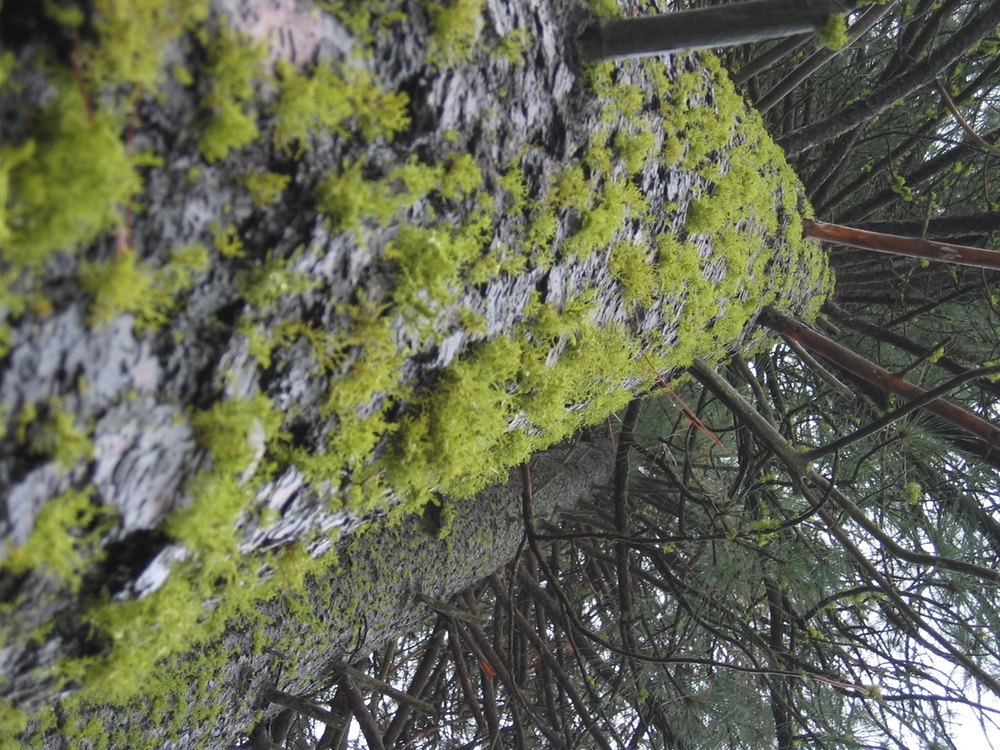

Tree from Badger Pass

Photo circa 2008 from the actual pass above Badger Pass Ski Area in California.


Did I mention I gave up coffee?

They even offered some decent life strategies: look at everything, pick up anything you can, avoid wizards, and always haggle for jetpacks.

~ Peter Welch from, Coffee is Hard

slip:4usico1.

The quote has nothing to do with what I’m writing today. The only relation is the word coffee. That said, you should totally go read Welch’s piece. You should totally go read everything he’s written; it’s generally awesome and often downright alarming. I digress.

On a Sunday morning–June 23, 2019 to be exact–with a congratulatory high-five, I gave up my morning coffee. I’d been thinking about doing so for months. Truth be told, the catalyst that day was to support a particular lady’s efforts wrestling with migraine headaches. With a brave, “huzzah!” my fate was sealed.

There’s a song by Frank Sinatra, “Hallelujah, I lover her so,” which begins with a telling verse:

Let me tell ’bout a gal I know
She’s my baby and she lives next door
Every morning ‘fore the sun comes up
She brings my coffee in my favorite cup
That’s why I know, yes, I know
Hallelujah, I just love her so

Setting aside the completely wacked concept of your girlfriend living next door and bringing you coffee before dawn. (1969 America. amiright?) I want to just draw attention to the coffee being how he knows he loves her. That’s just wrooong.

Over a few decades we had settled into a morning routine that started with the coffee maker. As anyone everywhere will tell you, if you drink coffee every morning it just becomes the neutral baseline, and without it, things aren’t happy-land. Occasionally, obtaining the morning drug hit would be a challenge leading to un-happy-land.

But mostly, it just meant getting out of the freakin’ bed was rough. …and like the addict I was, I went to the drug quickly.

Is it easier to get up now? Absolutely.

Do I spring out of bed like a happy rabbit? Absolutely NOT. But it’s better. I still need a bit of time to wake up fully–which I do via some morning stretching and movement.

Do I still drink it? Absolutely. Anytime I go anywhere, and I find myself near a real coffee shop . . . hello darkness my old friend, I’ve come to talk with you again.

ɕ


I am not my work

“I am not my work,” is one of those aphorisms that I need to have etched into my cornea. Have you seen watermarks on images? I need this phrase watermarked directly onto my vision.

Long ago–if memory serves–I was motivated by extrinsics. Doing something well resulted in external confirmation; so generating that external confirmation was easy for me. But–as everyone knows–it’s a vicious cycle of saccharine sweetness. Eventually, that lesson was learned. The obviously better option is to be intrinsically motivated. Check. Got it.

Unfortunately for me, there’s another onion-skin layer to peal away below, “be intrinsically motivated,” which is to not take criticism of work done as criticism of myself. The immediate hack is that I’ve inserted a mandatory, “thank you,” in response to criticism. This doesn’t fix the problem of identifying myself with my work. But it does buy me a few moments. By the time I’ve said thank you and acknowledged the critic, it’s become possible to see the criticism as being ‘of the work.’ Crucial moments indeed.

ɕ


Colin MacDonald: Parkour design, dream builds, and inspiration

How can public spaces be designed to integrate parkour features while balancing community needs and architectural aesthetics?

Colin MacDonald discusses his experience designing parkour parks, and what he’s learned from the process. He shares thoughts on his creative process and inspirations before explaining more about Landscape Architecture and the program he is in. Colin unpacks some of his personal design and build dreams, along with the realities that affect them, and explores the connection between sculpture and parkour design.

I think that a well-designed parkour park—compared to something like a well-designed skate park—has the potential to serve a lot of populations.

~ Colin MacDonald (11:05)

Colin McDonald leaps into the creative and logistical aspects of designing parkour parks, exploring their potential to serve communities beyond the parkour practitioners themselves. He reflects on projects like Rose Park in Boise and Penzer Park in Langley, highlighting the balance between making a space inviting for movement and considering broader urban challenges. Colin also discusses the aesthetic and functional aspects of his work, emphasizing the importance of materiality and community integration.

Colin explores his influences, from urban sculptures to conversations with other parkour architects like Mikkel Rugaard. His interest in creating multi-use spaces reflects his vision for inclusivity and accessibility in public design. Beyond this, Colin shares insights on evolving parkour spaces from purely functional sites to places that are inspiring and aesthetically pleasing, contributing to a more dynamic urban environment.

Takeaways

Integrating parkour into public spaces — Colin emphasizes the balance between creating functional parkour features and ensuring spaces are welcoming to all.

Materiality in design — He reflects on the tactile and aesthetic importance of materials like wood and metal.

Community impact — Colin considers how spaces influence community behavior and activate underutilized areas.

Influence of public sculpture — He draws inspiration from large-scale public sculptures for parkour park designs.

Evolving creative process — Colin shares how conversations and collaborations have shaped his approach to designing movement spaces.

Resources

Parkour Visions — A non-profit organization focused on creating parkour parks and educational programs.

Street Movement — A design firm known for innovative parkour park concepts.

TraceSpace — A German firm creating distinctive parkour spaces using mixed materials like brick and timber.

(Written with help from Chat-GPT.)

ɕ


§23 – Learning a new language

This entry is part 35 of 37 in the series Study inspired by Pakour & Art du Déplacement by V. Thibault

Chapter 23 is one of the longest in the book… it’s all of 2 pages, overflowing to begin a third. In it, Thibault presents the stages of learning and mastery of parkour/ADD via a metaphor about learning a new language.

Meanwhile, the local parkour community where I train, not nearly as often as I should, continues to grow and change. Long story omitted. These days, I find myself dropping in for an adults, beginners class once a week. A class, as it were, of the A-B-C’s, basic grammar and some short, simple words.

I’m old enough, and wise enough, to know that I can empty my tea cup, go to just about anything and find something useful to take away. And so I find myself faced with one of those kindergarten pencils and those sheets of paper with the widely spaced lines—they don’t want you to miss getting in between the lines and start crying. It’s the perfect opportunity to review so many lessons. To tinker with nuance, to fiddle with symmetry, to doodle without consequence.

ɕ


Sunday, fireside

Learning to create spaces is one of those super-power life skills that they don’t—or at least, they didn’t, I don’t know about now—teach in school. But I’m not sure you could have taught this to me in school. Probably best that they didn’t even try. I had to discover for myself how much it matters to have a space, a context, and a set of expectations in which to do… well… everything that matters.

The things I use to create a space certainly don’t need to be expensive. They do need to be purposeful. My particular chair that I use for reading. My gel pens that have served faithfully for years. (A parade of clones, not one super-pen.) The keyboard and large screen for programming. The physical-paper books I generally prefer.

…and then comes the intention. Why am I reading? Why am I writing? Why am I having this conversation, or that experience?

ɕ


Decisions decisions decisions

Over and over, throughout the day, we make the Hundred Little Decisions: to work on this, to check email, to go to this website, to respond to messages, to grab a bite to eat, to meditate or exercise or do yoga or have tea or watch a video or push into deep purpose.

~ Leo Babauta from, Hundred Little Decisions: Training Ourselves at the Decision Point

slip:4uzede3.

As usual, Leo has this boiled down to its essence. I certainly make plenty of bad, in-the-moment decisions. These generally relate to food or entertainment, as escapes from stress and workload—both are entirely self-imposed and positively feedback into each other. I’m convinced that no amount of good intentions, nor mantras, nor little sticky notes, etc. can save me.

My mistakes are made much farther back in time. The mistake is not what I do when I feel frustrated; the mistake was starting the 42nd task during which I became frustrated. The mistake was putting 47 things on my todo list—not literally on paper, but in my set of expectations of myself. When I get to item 41, there’s absolutely not way I’m not going to start on number 42 when I have my eyes on the goal of 47.

I am completely on board with the idea that what one can accomplish in a lifetime is astounding, and that I can get there by simply doing a little bit, (of whatever it is,) each day. I understand that idea, but it appears in action too rarely in my life. I have a nice, sparse, morning routine and each day—more than two hours after I’ve awakened—I get to the point where I “surface.” Where I open up all the communication tools, project management system, notes, everything… and I plan my day.

This is where I fail; around 7:30am. Every day I grab life by the short hair and set out to tackle All The Things allocated for today. Every self-cursed day, I get to the 42nd item and get frustrated, tired, hungry, discouraged or whatever.

This problem is not solved with sticky notes at the spots where decisions are made in real time. This problem is solved in my first two hours in the morning… where I should be thinking:

What would a good day look like today?

ɕ

P.S.: I’m adamantly opposed to planning “tomorrow” before going to sleep. The last thing I want to do, at the end of my day, is wade into what tomorrow holds, in the end-of-day, wound down, ready for restorative rest, mode. That’s crazy. It’s also presumptuous about there being a tomorrow into which I will awaken—the last thing I ever want to do is have someone find me dead, and see the stupid crap I was planning to do the next day. The only sane course of action is to wake up, begin the day with a fresh start and see what it holds in store.


Nameless joys

That particular experience—abundant warmth and dryness with dampness at the fringes, and a well-earned touch of fatigue—is exactly the same feeling I had as a kid every time I came in from playing in the snow. It still summons images of snowball fights, toboggan rides, and the ribbon of exposed grass you make when you roll up a snowman-ball.

~ David Cain from A Million Nameless Joys Await

slip:4uraai9.

Anybody else feel like looking back at all the ones I can think of seems almost inappropriately decadent? The more I thought about it, the more I came up with, until I started to think, “maybe I should become monastic for at least a short while, since I seem to have been gorging myself on joy.”

haha no

More seriously, his idea of the intersection—a Venn diagram as he put it—of place, time, and culture leading to unique moments of joy, is a succinct description of what I love about traveling; I’m not trying to escape from “here,” but rather I’m trying to see what’s outside my normally tiny Venn diagram.

ɕ


Humility

The artist and the entrepreneur (and all of us on the soul-level) live in an uncertain world. Our trade is in ideas, but who can say where the next one is coming from—or even if there will be a next one?

There’s a wonderful quote from John Gardner or somebody that, alas, I can’t find. The bad paraphrase goes something like this: …

~ Steven Pressfield from, Humility

slip:4usehu1.

Yes, I left out the best part to make you click through to his site.

It seems there are three choices:

  1. be a braggadocios asshole, “I am the King of Awesome!”
  2. be faux humble, “little ‘ol me? …I’m nobody, I’ve not done anything.”
  3. be actually humble, “I’m in love with this idea, and I’ve over here quietly working on it.”

Of course, there’s an infinite range of coloring on those axis. But I think my point is clear. I spent a lot of time over in zone 1; that didn’t work out well (for me or anyone else.) I’m disqualified from zone 2; there are simply too many things I’ve done.

Which leads to the problem: Over in zone three, one would necessarily want to sacrifice everything else to nurture the idea. That way lies madness, I think.

ɕ