Feb 7, 2012

Pardon me?

I lobbied for a new idea: Let’s stop talking to each other from different rooms. Let’s take the time to find the other person, and to wait until they are ready to listen before we begin speaking. I hoped this would eliminate the hearing-related false starts. But to be fair, we agreed this should be a two-way street; We would both work to try this new idea.

Everyone who knows me, knows my hearing is failing. Recently, I realized just how much of the communication at our house was frought with false starts. If my attention wasn’t focused on the speaker, we started most conversations with, “Mumble mumble mumble?” “Pardon me?” “I said, …”

I lobbied for a new idea: Let’s stop talking to each other from different rooms. Let’s take the time to find the other person, and to wait until they are ready to listen before we begin speaking. I hoped this would eliminate the hearing-related false starts. But to be fair, we agreed this should be a two-way street; We would both work to try this new idea.

It turns out, that it’s amazing how much this changes. As the listener, you have time to finish your thoughts. Instead of the speaker demanding your instant attention, you shift your attention when you are ready to listen. As the speaker, you place increased value on the other’s time. You have to invest your time to locate them, and then you have to wait for them to be ready to listen.

People are dubious when I explain this idea. It sounds exactly like the sort of hair-brained, overly pedantic, arrangement people expect me to invent. After all, it is hair-brained and pedantic. And it is life-changing. Try it. Go ahead, I’ll wait.

ɕ

Aug 28, 2012

No this. No that. No delay.

“As a 6th kyu, I have spent very little time, and have very little skill at sensing the timing of a coming attack. Though my teacher has worked on this with us, I find I am slow at learning to ‘read’ my attacker, and rely on knowing what is coming and the very slow attacks of training. Have you any specific techniques for this?”

~ name withheld

I do have specific things you can practice. But first, I’m going to wander very far afield…

An aside for those not well-versed on Aikido: ‘6th kyu’ is the first rank one reaches in Aikido. “A minimum of 40 hours” of practice time is commonly seen as a baseline requirement in the various styles of Aikido. A 6th kyu student is definitely a beginner, but also definitely someone dedicated enough to have stuck with their training through their first real test.

Martial arts are mentally and physically difficult. Everyone is their own worst critic. When students express frustration with something, (a technique, a principle, etc) I often say, “that is why it is called ‘practice’.” My best advice is to simply practice. I assert that such advice is not trite!

“If you want to go east, go east. If you want to go west, go west.”

This is a handed-down quote which Sensei Wirth attributes to Sensei Koichi Tohei. It is clearly echoed in one of Sensei Wirth’s phrases, immortalized on some of our t-shirts years ago: “No this. No that. No delay.” So whatever is being practiced, do that thing, the whole thing, and nothing but the thing. Do not entertain some mental storyline about how, “this is a great opportunity to work on sensing,” nor “this is particularly hard so I need to pay special attention here.”

Simply practice

Physically, do only what must be done. Do not flail, twitch, wind-up in preparation, shuffle before starting, speak, nor any other of countless things. Practice being physically calm; Act calm until you are calm. Simply move. Move simply. Go east. Go west. Practice this physical aspect always and everywhere.

Mentally do only what must be done. Don’t have a running mental commentary. Do not think, “I did that one wrong”, “I did that one better”, “that one was horrible”, “my partner does this so much better than I”, nor any other of countless thoughts. Observe your thoughts, but do not add one iota of energy to them. Thinking, “I am thinking useless thoughts”, is a useless thought! If you were handed a large bucket of sloshing and disturbed water and told to calm the water, you should simply set the bucket down and wait for the water to calm. You would definitely NOT shake the bucket in an attempt to convince the water to calm down. You cannot think your way to sensing an attack; You can only NOT think, whereupon you will discover your senses work rather well.

Further reading

Here are several other sources of information which I think are apropos…

O’Sensei mentions a ‘mountain echo’ in at least one place. The best source I see is AikiNews (AN), later known as Aikido Journal. Refer to issue 46 from March 1982 wherein Seiseki Abe Sensei — who was O’Sensei’s caligraphy instructor in addition to being an Aikido student — granted permission, under the supervision of then-doshu Kisshomaru Ueshiba, for AN to publish a selection of O’Sensei’s ‘Doka’. (Alternatively, ‘Poems’. But ‘poem’ is not a perfect word to describe what O’Sensei was writing, so you’ll need to read the entire AN article to get more context.)

The article contains these two doka among many others:

(#48)
Blend with ki-musubi the
Universe of Heaven and Earth (tenchi)
Stand in the center (of all)
In your heart take up the stance
Of “The Way of the Mountain Echo”

(#68)
The cold expanse (samuhara) of the Great Vast Sea
Which is foaming in the world of kotodama
Is “the Way of the Mountain Echo”.

I am by no means qualified to analyze O’Sensei’s writings. I only present these two particular doka so as not to pull “the Way of the Mountain Echo” completely out of context from O’Sensei original writing. You will need to pick up AN #46 to learn more; There is much more in the article than the little bit I’m presenting here. Abe Sensei provided a number of explanatory footnotes for the doka. Here is the footnote for “the Way of the Mountain Echo”. Bear in mind that “today”, although it’s not completely clear, is certainly no later than circa 1982.

“This is a difficult image to define clearly, especially since it is rarely used today by the present teachers of Aikido. A mountain echo repeats back to the caller the same thing that was originally shouted. In O’Sensei’s “Way of the Mountain Echo” the images seem to be something akin to the concept of Aiki, in the sense of responding to or adapting to whatever it may be that your partner delivers and dealing with each encounter as if it were a completely new and fresh event. Associated with this may be the image of the emptiness of the echo before anyone calls out to it, the fact that an echo makes no distinction between two different callers and recognizes no differences in languages, or content of the message. It may also involve the idea of the purposefulness of the echo’s calling back although it never fails to do so whenever called upon and to do so with all its effort. Another possible interpretation or nuance could be the fact that the echo’s answering call always brings pleasure to the caller.”

~Seiseki Abe Sensei, from AN #46 March 1982, footnotes to selections of O’Sensei’s Doka

Next I would like to draw your attention to an article published more recently on the Aikido Journal (AJ) web site. The article is, I believe, publicly accessible. (However, any serious Aikido student should join AJ as a supporting member.) You should read the whole article. The sections “Beyond ‘Sensen no Sen'”, “Up, Down, To and Fro” and “Leading and Directing” are apropos, and this paragraph introducing ‘Takemusu Aiki’ is particularly poignant:

“This is a high-level ideal that is attainable only through long years of training to develop a heightened sensitivity to people and happenings in one’s surroundings. It further involves developing a set of spontaneous skills consisting of physio-psychological responses suited to any conceivable kind of human interaction. The Founder described this state as ‘Takemusu Aiki’ — the highest level of aikido where one is capable of spontaneously executing perfect techniques in response to any circumstance.”

~ Stanley Pranin, Aikido Journal web site

The article is Exploring the Founder’s Aikido by Stanley Pranin.

Another article I recommend is simply titled “Irimi.” It too is posted on the AJ web site, but is written by Ellis Amdur, (who is not directly related to AJ.) There’s so much in this article that is apropos, I couldn’t select a reasonable amount to quote, so go there and read the entire thing.

This second article is Irimi by Ellis Amdur.

Having wandered very far afield, I’ll now circle back to some nuts-and-bolts things you can practice. Only the most die-hard of Aikido students will still be reading at this point. The first two suggestions below are internal/mental things to do and the later two are external/physical things to do.

Things to practice

1) work on not “missing frames” of the movie.

If what you see of uke were actually a movie, would you be seeing all the frames of the movie? Does is seem, in hindsight, that they teleported from their starting position to somewhere mid-attack? Repeat the practice and pay attention to when (which frame?) you first notice they have attacked. Continue practicing, focusing your senses on noticing the gap in your observations. The gap will necessarily grow smaller the more you practice this.

2) stay “pressed against the glass”

A metaphor I probably lean on too often. Consider driving in a car at a break-neck speed. Don’t lean back in your seat cowering in fear of whatever it is you’re going to encounter. (And which, at break-neck speed you could not hope to avoid and would therefore crash into.) LEAN FORWARD. Press your face against the windshield as if somehow getting a few feet closer to the oncoming destruction would somehow buy you enough time to avert the collision. This is a metaphor! Don’t physically lean perilously forward. Move your attention and your curiosity forward. Strain to reach forward with your senses.

3) practice entering into a swinging-jo-staff

Have uke hold a staff by the very end and swing it menacingly through a full range of arc; so the staff goes from behind on the right, around the front to behind on the left. You should have a good “whoosh whoosh” going on with the swing. If you get hit with the end of the stick, you’ll need smelling salts or a cast. Stand safely outside the staff’s swinging range and move as close as is possible remaining perfectly safe. “whoosh whoosh whoosh”. When the time is right, move briskly right up to uke without getting whacked.

4) practice atemi

The atemi should be the “affect uke’s attention and balance” variety, not the “crush uke and end the interaction” variety. Begin by finding (no small task, ask your Sensei) the atemi options for whatever uke is doing. Then work on noticing — actually thinking, atemi there, atemi there, atemi over there — several (all?) of the possibilities in each attack. Then practice actually implementing one or two (or more!) of the atemis.

ɕ

Feb 26, 2013

Our profession has a long way to go

old_timey_sysadmins

Here is the 2013 Super Bowl Dodge Commercial, “God Made a Farmer.”

https://youtube.com/watch?v=GdR5TOhHJGM

Here is the recent spoof, “God Made a Sysadmin.”

There are important differences.

Obviously the ‘farmer’ video is a commercial. It intends to stir up empathy and appreciation for hard work, solid work ethics, traditional American values, (and perhaps some spirit of ‘rally around the under-dog,’) and then the corporation hopes everyone will associate those positive characteristics with their product. (This is also known as, ‘Intro to Marketing.’)

The ‘sysadmin’ video is a spoof. It engenders a healthy dose of pride, enables those who work in the profession to smile at the references, and to have a bit of winsome fun.

There are also important similarities.

Both professions entail difficult work, (the type of difficulty is of course different,) and have clear work ethics. Without the farmers, or without the sysadmins, life as everyone knows it would end rather quickly.

But, here’s the rub:

The average person will understand all of the things which the farmers are said to do, but will understand almost none of those things which the sysadmins are said to do.

Sysadmins like to think, and I’ve said this myself, that they are part of a profession with a “long” history. In reality, computers and the profession are in their infancy. We have just 70-ish years of history if we measure from Alan Turing’s ideas, and we have just three different generations of people who have worked in our profession.

If we want to be treated as professionals, if we want to be individually granted a measure of respect based on our chosen profession the way farmers, doctors, and (some) lawyers are, then we must continue to work hard as we have done for 70-ish years.

We also need to work hard to raise awareness of our profession. We need to work together more, as a community of people, rather than an archipelago of individuals. We need to take better care of ourselves; We must not sacrifice our own physical and mental health at the alter of short-term advancement. We need to work to solve the larger problems — the ones which aren’t even system administration problems, but which are organizational, societal and philosophical problems — which put many of our fellows into untenable situations.

Our profession has a long way to go.

ɕ

Apr 8, 2013

Splitting Firewood

red oak round

Red Oak round. Part of a standing-dead tree felled by my father in 2009.

It’s a beautiful Spring day — perhaps a little too breezy for the 50-something temperature — in the cute little neighborhood where we live. Laid out in the ’50s, our lots are about 60 feet wide and organized into neat rows of little 2- and 3-bedroom homes. From the back patio, I can see directly into the yards of at least a dozen of my neighbors.

We have a wood stove. It’s a magnificently efficient, modern marvel that fills our living room with the distinct glow and flicker of a one hundred thousand year-old technology. The little stove remains cold on the back, gets inconceivably hot on the front, and can heat the entire 1,400 square feet of our little ranch in the dead of winter. It does all that while consuming one big-ass piece of firewood every 90 minutes or so.

In other words, I’m polluting the world. I’m also releasing carbon-dioxide and a host of other truly hazardous chemicals into the neighborhood. (For example, read this revelation of horrors.) In my defense, this is Pennsylvania, the slopes of a wooded mountain start a block from our house, and every house in our neighborhood heats with oil or wood because natural gas is not available.

I digress.

I grew up in a house on a wooded lot, where loss of electric power was not uncommon in the winter. Every Spring, my father, (and later, my father and I,) set about laying up firewood. When he was younger and I was indefatigable, we would cut our own trees, or cut and remove trees for neighbors. The cut rounds would then be laboriously split by hand with wedges and sledge, (no fancy-schmancy log splitters for my dad,) over the course of weeks and months until we had a season’s worth of firewood. Each year we’d burn the wood we’d layed-up two Springs back.

I possess a swirled mass of happy memories related to a deafening chain saw — a kick-ass early ’70s “Mac10” (yes I still have it, no it’s not for sale) — huge bow saws, splittin’ wedges, mauls, worn work gloves, wood chips in all your clothing and socks. I distinctly remember being deemed too young to be allowed to swing the sledge, and being relegated to wedge-starting duty working with a four pound maul. I also distinctly remember my dad wincing as I quickly wrecked the hickory handle of his sledge hammer once I was deemed old enough.

Split your own firewood; It will warm you twice.

They’ve stopped already??

See, I started writing this piece because “the young kids” two yards over were splitting firewood, and I just noticed they have already stopped some time ago. ha! Kids these days.

We’ve a section of shadow box fencing on the side of our yard, so I could only see them in glimpses through the slits. But I could hear the whootin’ and a-hollerin’, and the not-as-rhythmic-as-it-should-be banging and whacking, and also the missin’ and cussin’ and the sound of a sledge handle hitting things.

I could see they were swinging the sledge the way one would swing a tennis racket for an overhand serve. They were hurrying the swings, instead of making each strike count. They were excited when the wood split, rather than being excited by the process of producing firewood with their own hands.

You see, to split with a sledge, you draw the handle back by sliding it through your top hand until your hand nears the head of the sledge. Then you send the head straight up, pushing with your lower hand that is at the end of the handle and sliding your top hand down to meet your bottom hand. As your hands meet, the head of the sledge is up in the clouds. Then — all together — bend your knees slightly, lower your whole body, pull down your arms, and bring everything to focus on the top of that wedge. If you’ve done it correctly, the sledge strikes with a solid BAM! and stays on the wedge with a succinct “da-tink”-sounding hop. When a log splits clean, the wedge sings out, “PLING!”

Last spring I split firewood for hours on end. Carefully. Methodically. For the long haul. While thinking of my father.

BAM-da-tink. BAM-da-tink. PLING!

Splitting firewood as a metaphor for life

Choose the right work.

It’s not enough to choose to do the splitting. You have to split the right wood, at the right time of year. You need a place to do the splitting. You need a place to stack the wood so your labors are ultimately useful. You also need family or friends with which to share the warm glow of the fire as the fruits of your labor.

Use the right tools.

A mechanized log splitter is fine for commercial firewood sellers. But humans splitting their own firewood use hand tools. You need the correct tools; No more, no less. Your pride in your work shall show in the maintenance of your tools.

Strike decisively.

Aim. Strike. Strike correctly. Strike hard enough, but no harder. Strike so that you can strike again and again and again, until your work is well and truly done.

See, this here our fathers wrought for us.

ɕ

Apr 12, 2013

The Cat’s Out of the Bag

If you want to repeat that little jump at an angle to a moss covered wall all day until you can do it with your eyes closed… well my friend, you are not alone. I want to repeat that jump with you. But let’s do 50, just to be sure. And one more for the others who can’t join us. That’ll do us both more good than that big roof gap whilst you hold the camera.

~ Chris ‘Blane’ Rowat from, «http://www.parkourgenerations.com/article/call-arms»

By now, all of my friends know I practice parkour with Lehigh Valley Parkour. I’m pushing 42, with graying hair and the BMI calculator says 34.9, (which is “obesity.”) So when people first find out, they raise an eyebrow and say, “You’re a brave soul!” or “Huh? The jumping from roof-top to roof-top thing?!”. …my answer is ‘no’ to both of those.

Please do not go to TouYube and look up parkour; Total waste of your time. This is one of those Catch-22 things where the people who believe — quietly, to themselves — that they “get it”… well, those people aren’t posting spectacular videos on TouYube. So you don’t notice their point of view on the whole thing.

I am not saying, “those people over there have it wrong.” I am not saying, “parkour is the One True Path(tm)”. I am not saying, “these ideas are to be found only through parkour.”

I am saying parkour is…

…a journey composed of tiny steps so easy that failure is impossible.

…the grueling, deconstructing, work of self-improvement.

…that well-earned sense of accomplishment.

…the joie-de-vivre that I hadn’t noticed I let slip away.

Playfulness.

Freedom.

…and one more for the others who can’t join us. :*)

ɕ

May 10, 2013

Law of sacrifice

Society today tries to deny the law of sacrifice at every turn, promising people that they can fulfill their desires without having to forsake anything at all. “Lose weight without giving up your favorite foods!” “Get ripped without long workouts!” “Get rich without having to work hard!” The denial of the law of sacrifice is at the heart of things like our soaring credit card debt (US citizens currently hold $886 billion of it), not to mention our national debt. The fantasy that you can have whatever you’d like without ever paying for it is an incredibly seductive fantasy.

But it is only a fantasy. There is always a price to pay.

~ Brett McKay from, The Law of Sacrifice

Elsewhere, this is 4uaote3. — slipbox

“What does it cost?”

Over the years, I have talked to hundreds of prospective students who have walked into the dojo and asked about Aikido. One quickly learns that anyone who walks in, has some level of interest. So these are not cold sales calls where you need fast paced, hard hitting, sales tactics. People simply have some specific questions that need answering before the conversation continues to more general topics.

Some people are concerned about the monetary cost. That is important, and money should be discussed. But they should be much more concerned about the time cost of the commitment.

My explanation usually goes like this…

The cost of committing

One class per week is not often enough, and few people can withstand training more than three. So let’s say you’d like to come to class twice per week.

How much time is that? For each class you need at least one hour of padding — pack your bag, drive to the dojo, change before/after class, drive home, unpack, etc. Then the actual class time is about 2 hours per class. So three hours per class, twice per week: We’re talking about, six hours every week.

Now think about your life, and tell me about the six hours every week when you are alone, doing absolutely nothing.

So the real question is: What are you willing to give up from your current life to create those six free hours?

There’s no going back

Once you realize that your time is the limiting resource in your life, you’ll look at everything differently.

How much time do you spend watching TV? Is that time entertainment, family bonding, or what? Do you value anything more than entertainment?

How much time do you spend commuting to work? You clearly value something more than your time. (2 hours a day? 14 hours a week? . . .) What is it that you value so highly you’re willing to commute? …is it your children’s school district? …the size of your paycheck? …your career path?

Do you mow your own lawn? Do you pay someone to mow your lawn? Might you spend time mowing your lawn if it was mentally relaxing? …or if you push-mowed (sans motor) your lawn, and it was a means of exercise?

Do you get enough sleep at night? If not, why not? …are you spending time in the evening/night doing — what? Why do you value that activity more than sleep?

ɕ

Jun 15, 2013

It is done fast enough when it is done well.

Getting done right does not mean getting done slow. Getting done right means getting done fast. You will go faster if you do things right. You will go faster if you come down off the “high” generated by the illusion that effort is speed. You will go faster if you calm down, follow your disciplines, and refuse to rush.

~ Bob Martin from, «http://blog.8thlight.com/uncle-bob/2013/03/11/TheFrenziedPanicOfRushing.html»

While he’s talking about software development in general, and test-driven development specifically, this is true for – I think – everything. My experience is that this is true for software development, and other technical work. But it is also true of martial arts practice, parkour, games, building model airplanes… you name it.

The pervasive admonishment should be “do it well,” rather than, “slow down.” Do it well and you’ve – by definition – done it as fast as possible. What’s the point of doing it poorly? What’s the point of rushing to completion; If you didn’t do it well, then it’s not done.

ɕ

Oct 17, 2013

Our federal government has failed

The problem is not the problem.
The problem is your attitude about the problem.
Do you understand?

~ Captain Jack Sparrow

I think we need to reframe the problem so more people understand.

Civics 101: Are we on the same page?

I’m not going to discuss political parties. I’m not trying to sneak in the idea of “republican” to later make a case for a particular political party.

A federation is a government composed of several independent states. Each of the 50 current members of The United States of America are sovereign states which, through the process of their joining the union, have agreed to pass certain of their powers to the federal government. We, the individual people, are not members of the federation; The states are members of the federation. (May I recommend Wikipedia’s article on Federation?)

The distinguishing principle of a “republic” is that the activities of the government are public. To be a republic, the government cannot be arranged below a monarch, dictator (benevolent or otherwise), or some other (for example, a secret inner circle of corporations) inscrutable font of authority. (May I recommend Wikipedia’s article on Republic?)

The distinguishing principle of “democracy” is self-determination of the governed. To be a democracy, we need features that derive the government’s power from the governed people and that foster equality of each participant’s contribution. (Again, may I recommend Wikipedia’s article on Democracy?)

A pure democracy is one where the governed people may be fully involved in all decisions. A pure democracy of 300+ million people is absurd. But from the absurdity of pure democracy springs the idea of “representative” democracy. In this form of democracy, representatives are empowered to participate in the democratic process on behalf of the governed people.

The United States of America is a federation.
The United States of America is a republic.
The United States of America is a democracy.

By the way, “I pledge allegiance to my Flag and the republic for which it stands, one nation indivisible, with liberty and justice for all.”, is the original 1892 wording adopted by Congress.

The Federal Government Has Failed

Yes, exactly! Craig, I know what you’re going to say…
Our military is too big! (nope.)
The 1% is getting all the benefits! (nope.)
Too many people live in poverty? People can’t afford health care?! (nope and nope)
Look at the national monuments being closed!
…the IRS tax system?!
…immigration reform?!!
(nope nope and nope)

My definition of, “the government has failed” is: When I am expending increasing amounts of my time “on” the government. We, the governed people, are spending increasing amounts of our time on our federal government, and I put it to you that this is the ONLY thing on which every single American can immediately agree.

I want to be very clear: I’m not talking about spending more time interacting with the government. I’m not talking about time spent filing your federal taxes, or waiting in line at some federal agency. I am talking about time spent watching news about the federal government, reading posts, (including this one,) and debating federal policy, activities and programs with other people. Wouldn’t you rather spend your time doing, well, anything other than spending time on the federal government?

Some people have “tuned out” of the whole thing. This saves their time in the near future, but turns them into freight stored in the cargo hold of the ship; Their future remains coupled to the success, or failure, of the country.

As a democracy, a distinguishing feature of our government should be that it enables self-determination. If I’m spending increasing amounts of time on my self-determination, then I have decreasing amounts of time to enjoy the fruits of my self-determination.

Is this definition of failure useful?

If we can agree that the government has failed, then I think we can start a new discussion.

Instead of discussing any of the topics on which we’ve recently focused, we could instead discuss the very nature of our government. It would be a discussion which we – those of us alive today – have never actually had.

At some point, you were told where to register, and were told to “do your civic duty” by voting on certain days. But aside from a wee bit of civics required in high school, did you take the time to learn and care about the nature of our government? (I admit that I did not.)

If only we could agree on the nature of our government.

My hope…

My hope is that you’ll try to change the topic of discussion the next time some hot political topic comes up.

The current discussions are an endless train of political topics. Last year it was [this topic], before that it was [that topic], and next year it will be [this other thing.] You must know by now that in 5 minutes at the water cooler, you are not going to convince that other person to fundamentally change to your view of the current political topic. So you are clearly wasting your time “on” the government by participating in political discussion of the current topic.

Change the topic.

Talk about the nature of our government. Talk about why our government exists. Talk about the origin of its powers. Talk about what specifically are those powers.

…and if you don’t feel comfortable discussing the nature of our government, then why are you comfortable being governed by it?

ɕ

Feb 11, 2014

Why Doesn’t Barnes and Noble Just…

Barnes and Noble is the last man standing, right?

They tried the hardware/tablet/reader game. (Kudos for putting their money and effort where their hearts are.) But they flopped:

Barnes & Noble laid off its Nook hardware engineers, according to a source that tipped Business Insider. The engineers were let go last Thursday, according to our source. This follows Barnes & Noble dismissing the VP of Hardware, Bill Saperstein in January.

~ From Barnes & Noble Fired Its Nook Hardware Engineering Staff

Go over and search the IOS app store for “Barnes and Noble”. Nadda.

Free consulting for B&N:

  1. Develop a kick-ass (ie, hire experts) app which lets me “use” the bookstore on my IOS device. I want to browse the ENTIRE B&N catalog as if the whole thing is the world’s biggest bookstore; Every book available this instant in every physical store (you can do that today on their kiosks in the store), your second-hand “marketplace” books, special order, everything visible in one app.
  2. Do NOT make the app into Am*zon. I want JUST a bookstore. Am*zon is HORRIBLE at being just a bookstore; They jam all those ads/also-viewed, in my face, etc etc. Make a bookstore. In an app.
  3. Let me START reading in the app. (You’re big enough to go after the publishers to get the rights to start this with some books. Other publishers will follow when they realize you’re selling books for the other guys.) A few pages are free to get my feet wet. Maybe the first chapter is available for a small fee (50c? buy.), and the whole book as a digital read, (when that’s possible) for a significant discount off dead-tree book price.
  4. Meanwhile, I can click to buy the actual book.
  5. Over the rainbow: Ship me the book, with a B&N bookmark on the page where I stopped reading.
  6. Shipping the book to me? I pay shipping. (Unless of course I’m one of those B&N members, then shipping is free.)
  7. Or offer to ship-to-my-store for free. (You ship truckloads there already!). See what you just did there? PRE-sold a book, and got me into your store for some additional impulse shopping.

Nice. You just made it the best digital bookstore in the world, and made it easy for me to shift sideways to a physical book because people DO still read dead-tree books.

Extra credit:

Come up with a book recycling program so I can bring the dead-tree book back to the store — maybe I can only do this with books I bought from you. That book can then be donated to a library, resold in the marketplace second hand, or you write it off, whatever.

In exchange for me giving you the physical book, I get a wee bit of in-app credit that I can use buying those getting-started reading excerpts. Now you’ve created a cycle where I buy the book, give it back and use the “credit” to get my next hit of initial reading, to make me buy the next book . . .

You’re welcome.

ɕ

Apr 15, 2014

Hello App.net

App-net-icon

App.net is WAY cool

What makes it cool, different and BETTER is:

  • They built the PLATFORM, (the heavy lifting behind-the-scenes that makes it all work)
  • They wrote the API, (the instructions for how to build things to USE the platform)

…and that’s all they wrote.

Aside: Yes, they did write sample applications. It’s hard enough to wrap your brain around it as it is, let alone if there were no apps to play with. So they built a web-based front end called “Alpha”, (for example.)

You, (dear reader) do not “look at” App.net, and you do not “use it”. You use APPLICATIONS which are built on the App.net platform/API.

App.net is different

App.net charges the developers: They’ve built a stable, powerful and feature-rich PLATFORM. They logically believe that developers will be willing to pay to use the platform.

Developers build applications: They pay App.net for access to connect their application to the platform. For example: Tapbot’s Netbot app is a superlative app using the platform. (App.net also maintains a directory of available apps.)

People use the applications: You, dear reader, choose your favorite application. You can use the free “Alpha”, (that’s it’s name) web front-end that App.net wrote. You can also download an app, (some are even free) from your favorite app store for your mobile device.

So, for example, how do you find me on App.net? Easy: Open your favorite App.net application and look for “cc1315”, my full name, or my email address. If you like to use the “Alpha” web-based application, then I’m /cc1315 . So there’s you using an App.net application! Another example is the application I wrote, (it required three mouse clicks) which enables this blog to push my posts into the App.net platform.

Wait. Wat?

The problem with all the big-name social networks is that they built, own and control the platform AND the application.

By “problem” I mean “things regular-users don’t like.” For example: Ads appearing; Weird algorithms that determine what I actually see and which strong-arm content-creators into paying money to boost viewership; Posts that look like posts but are really ads paid for by advertisers. And things that limit content creators, like: Not allowing posts at all into the platform; Weird rules that limit how posting is done because they don’t want the users leaving the platform to go read  content directly.

This is exactly WHAT WE DESERVE. The companies that built the platforms get to create the rules because they own the platform, control the API and they control the applications. The people USING the social network are the product that gets monetized. So everyone shows up, for free, to socialize. But then the advertisers buy-in to get access to all the people. To the people socializing, it feels like the social club is letting weirdos into the club who roam around asking if we want to buy things.

Don’t believe me? Here are some search-result links:

“why Facebook sucks”
“why Twitter sucks”
“why Pinterest sucks”
“why Instagram sucks”

App.net fixes this how?

Let’s think through the “problem” scenarios…

First, you do still choose who to follow. So let’s assume for this discussion I’m following a couple hundred accounts. (My friends, some favorite businesses, etc)

ads

I see a post from a business, but it’s actually an ad! …how do I make that go away? Current social networks? …you cannot.

Aside: Yes, some social networks let you kill that particular ad, but there are always more to follow. In reality, you’re just TUNING what ads they will show you, not blocking out ads.

With App.net it’s easy: Stop following that account. (Or maybe contact them and say, “yo, less ads please” if you really like their other posts.) App.net won’t let them send you further content, that would be a lousy platform that developers wouldn’t pay to use!

So maybe that ad you see is being shown by the application you’re using… it’s not really coming through the App.net platform… Easy: Don’t use that application. Or maybe pay them to turn the ads off. (Look! An application ecosystem where great apps win out.)

But, (you ask) what If someone tries to write an app to spam ads into the App.net platform? It turns out the platform doesn’t have that ability. (The current social networks have that ability BIG TIME — it’s how they make money.) But App.net makes money from the developers, so they don’t have a “spam everyone” feature in the platform. That’d be a lousy platform that developers would not pay to use.

content filtering

App.net delivers everything from all the accounts you’re following; That’s why developers want to pay to use the platform; It works well! So the applications might filter, or sort, or whatever. (Maybe, show me more posts from my friends whose posts I favorite.) But that’s a feature that you CHOOSE when you select what app to use. Don’t like how the app filters or sorts? …switch apps!

content posting into the platform

Current social networks want you to use their apps to post content. App.net simply moves the content through the platform. (Which is why it’s a great platform that developers want to pay to use.) So anyone can write any application to post content into the network.

Closing thought

The only thing more cool (in social networking) than App.net is Tent.io . With Tent.io, instead of having one centralized platform like current social networks and even App.net, you have one giant fabric which is composed of everyone’s PERSONAL data platform. So Craig’s posts are on Craig’s platform, etc. Then the Tent.io magic moves the messages around between the nodes, prevents anyone from impersonating anyone else, etc.

But that’s another post altogether… :*)

ɕ

May 9, 2014

What does “honest” mean in Kinokawa Aikido

When we opened the new dojo in Allentown, I sat down to try to write a short description of what distinguishes Kinokawa Aikido. I wanted to avoid pretentiously explaining “what makes it better,” because starting down that path will instantly close off the minds of certain readers. Instead, I wanted to lay out the hallmarks of Kinokawa so that readers could get a sense of the style at a glance.

There is a bit more at Aikido on the dojo’s web site. But here is the part about honesty:

A second hallmark of Kinokawa Aikido is that is honest — in the sense of being interested in honestly exploring Aikido as a high intensity [physical and mental], combat effective, applicable to your daily life, sort of practice. In fairness, practitioners of hard type martial arts will generally not consider any sort of Aikido as combat effective or workable in a real world scenario. (Obviously, we disagree with such a prejudged assessment.) But setting aside the judgement (does Aikido work, or not, in real application?), it is the goal of honestly exploring those concepts, within the framework of Aikido, which is a critical feature of Kinokawa.

…and here are some similar thoughts from Tom Collings, from Responding to Aggression – Part 2:

… The rule of thumb in military and police training, established through exhaustive battlefield and police critical incident research is: “if it takes long to learn, it probably won’t work under stress.” Yet, as black belt martial artists we take great pride in the techniques that took us many years to master, and it would be unthinkable at the dojo to teach only what is easily learned. Who would that impress? The other rule is: “practice what you will need to perform.” That means our training must very closely match what we will confront.

Do those of us in the aiki arts really believe that assaults commonly occur by someone running up reaching for our wrist, or striking at us from above their head as if holding a sword? I guess we do because we devote most of our valuable training time to these scenarios. If it is obvious that modern day assaults are very different from these classical style attacks why do we not modify our curriculum more in line with what we will actually confront?

ɕ

Jun 14, 2014

A deep sense of malaise

You can harness and channel these needs, but a man completely ignores them at his peril. Modern men are told there’s nothing real about manhood — that it’s all a silly, outdated cultural construct — and they sure work hard to believe it. And yet they cannot shake a deep sense of malaise, and they don’t know why.

~ Brett McKay from, Where Does Manhood Come From? | The Art of Manliness

Elsewhere, this is 4uaowe1. — slipbox

I consider myself very lucky. I’m expressing my mid-life crisis in some pretty healthy and productive ways. Instead of going on a more traditional bender, I’m shaking off shackles and bindings that I in fact put on.

One day I realized that there is no longer anyone left to tell me what to do. Certainly one has responsibilities, but there are precious few of those which are immutable bedrock. You look at your life and think, “Look at all these ideas I’ve accepted.” When you pick idly at some of the threads, the whole thing comes apart, and you find yourself in a row boat on the sea — or on a bicycle on the open road (choose your own metaphor). On the open sea in a good way; You realize you are free, that in fact you have NOT always been free, and that there’s an awful lot of life left to live now that you’re ready to start.

ɕ

Jul 8, 2014

Visceral

My suspicion is that, in our convenient society, we don’t need to be acutely aware of our balance and body positions vis a vis the ground because many of us don’t do much physical labor anymore, or play freely as kids outdoors now that we have so many enticing computer games to entertain us.

~ Wayne Muromoto from, 90. The base: close to the ground – The Classic Budoka

Elsewhere, this is 4uwote2. — slipbox

More than a year ago, I wrote that parkour is about freedom (and much more.) There is also a visceral component that I’m finding is playing a greater and greater role.

Visceral, adj. characterized by, or proceeding from, instinct rather than intellect: a visceral reaction;  characterized by, or dealing with, coarse or base emotions.

When you treat your body like a Cadillac meat vehicle – that is, when it’s just a mode of conveyance from one creature-comfort to the next – you soon cease to be intimately aware of what your body is feeling. A large part of the allure of parkour is the immediate and clear, honesty and reality of the experience of training. It’s obvious that your body and mind are not readily separable, but in normal daily life, one mostly ignores the body. In parkour, the body and mind have to work in harmony.

I have a lot more to say about this harmony (my personal interpretation, and explanation, thereof.) But for the moment, I’m just going to start with the above.

ɕ

Aug 18, 2014

Flatiron #1

900 feet. 6.5 hours of climbing.

It is 6am and I’ve been napping in the front seat of Mike’s van since 3am. I’m pecking this out, stream of consciousness, on my phone, racing the dying charge, with a sore right pointer finger. Other than some apples and oranges, I’ve not eaten a ‘real’ meal in about 20 hours. What we managed to do last evening is the most amazing, most challenging, most focused thing I have ever accomplished. Nothing else I have ever done is even worth *mentioning*.

We started on a whim at about 6pm: spreading gear out of Mike’s van into the parking lot as the the regular mortals stared. “Look! Real climbers!” From the lot we power-hiked up what, I’m guessing, was at least 500 vertical feet of increasingly gnarly wooded trail.

To the base. Of the biggest inclined slab of rock imaginable. We spent a lot of time going over gear, call-n-response stuff, etc.

And on my first day on real rocks, Mike started up the first pitch, dragging the “sharp” end of the rope, and setting hardware for fall protection.

“CLIMBING!” Then I followed.

We did seven pitches, meaning Mike climbed away out of sight, and set up. a belay position as high as our 200ft rope allowed. Then I climbed, picking up gear as I passed it.

Seven pitches. Three before it got dark. Four in the dark. (We’d brought head lamps. ) Oddly, the dark was WAY easier: All I saw was this rock, my hands, my feet, and the infinite piece of rope I was following.

Up, down, around, over. Literally one. Inch. At a time. I covered something approaching 1400 feet along the rope, 3, 4, 5? false summits. Where you scale a thrust of rock – rock sticking up literally into the Milky Way hanging from the sky – an inconceivable puzzle of body and mind, to the top. Only to find a little down climb, over, and up yet again.

Six and one half hours of, “I’ll move my left foot up two inches to that nice looking spot. Now, I wonder what’s up to the right for my hand…”

We reached the summit at 12:30am.

Then rappelled literally down into the inky black off the back. From there we walked down an endless foot trail and back to the van.

At nearly 2am. Where I lay in middle of the parking lot, flat on my back, enjoying the sheer comfort and staring at the exact same stars.

It was transcendental. It was Herculean (for me anyway. )

Now, at 6:30, my legs are a bit tired, my finger tips are sore. I’ve not one bruise. The sun has just popped up on the other side of the world. Climbing is not “my thing.” I’m never going to want to sleep in a park, or live in a van, as Mike does now without a second thought.

But.

My god! It’s full of stars.

ɕ

Mar 21, 2015

My oath

I’ve been slowly collecting small thoughts so that I could begin writing something about my journey. Over a year ago, I found an oath on Nerd Fitness, but hesitated committing; There are bits in this oath that will demand 40+-years-big-ship-small-rudder sorts of changes of me. I’ve been revisiting it periodically to see how it felt each time I tried it on.

I love it. I’m committing to it.

My oath:

Today is the first day of the rest of my life. I shall make no excuses and hold no grudges.

I care not where I came from, only where I am going.

I don’t compare myself to others, only to myself from yesterday.

I shall not brag about successes nor complain about my struggles, but share my experiences and help my fellows. I know I impact those around me with my actions, and so I must move forward, every day.

I acknowledge fear, doubt, and despair, but I do not let them defeat me.

ɕ

Elsewhere, this is 4b24. — slipbox

May 13, 2015

Sorry, no actually I’m not

So this happened in Cartegena.

This is funny, but that’s not why I posted this. See the bottom.

Imagine if you will, a bus load of 45 tourists — a perfect stereotype bus tour from a cruise ship. We all walk up a hill/road to see the Castillo overlooking Cartegena. (Very nice by the way! Photos coming soon.) Then we walk all the way back down. We reach an intersection, near our bus in the home stretch, and across the street is a small park with one of those long railings meant to keep people from J-walking.

The cross-walk says “go”, so there’s no traffic. Without thinking, I J-walked straight across and vaulted the rail.

…and I hear 44 people do a group groan. They had all followed me across the intersection and everyone had to walk all the way around the railing. (My mom shouted out, “Brat!”)

SO? Well, I did it without thinking, but FORGET ME.

Imagine what YOUR LIFE would be like if you vaulted a little railing after a long walk AND THOUGHT IT WAS FUN. What, really, is your excuse?

(…and if you’re in shape, or under 20, or can already vault a rail. Kudos to you! …but I’m not talking to you.)

ɕ

Jun 3, 2015

A student of Aikido

In college, I briefly practiced Taekwondo, and I spent 5 years practicing, and informally teaching, modern fencing. (Epée!) But I didn’t begin martial arts training in earnest until 1998, at age 26, when I began practicing Aikido under the direction of Sensei Michael Wirth. I practiced non-stop, reaching shodan (1st-degree black belt) in 2003 and godan (5th-degree) in 2013.

Sensei Wirth’s Aikido is an unaffiliated, no-nonsense, art; It is built on the bedrock principles of a soft and flowing Aikido, while honestly seeking to be physically functional and practical. On the mat, his Aikido is soft and flowing; It can vary very quickly from a light touch to vigorous atemi. In more recent years, I’ve repeated catch-phrases such as “No this. No that. No delay.” and “Relax beyond any indication of every injury you’ve ever received.” to convey the idea that you can be your most powerful only when you relax and eliminate all the unnecessary thinking and movements.

In the beginning, I had no clue how unique the Aikido group was that I’d stumbled into. It wasn’t until ten years or so into my journey that I realized the incredible luck of my timing: I started training just young enough to survive the tail-end of what I call Sensei Wirth’s “Does this work?” epoch, and was just old enough to thoroughly appreciate the subsequent, “Yes, it works. What can we do with it?” epoch. Those who experienced the former epoch nod knowingly with a serious expression. Those who experience the later epoch have the luxury of following the now more direct path that Sensei Wirth has arrived upon. The later epoch is certainly better, but the few of us who experienced both are indeed, very lucky.

Along the way, as I’ve wandered (physically and mentally), I’ve taken the opportunities to experience a wide range of Aikido styles, groups and teachers. I’ve gone to fundamentally different Aikido groups’ seminars just to honestly try the “when in Rome…” thing. I also made an honest effort of a couple years in Tai Chi. I expanded my practice by reading from a wide range of topics directly, and indirectly, related to Aikido including philosophy, physiology and spirituality. In fact, I would go so far as to say that I did my best to deconstruct and reassemble everything I’ve learned.

On the other hand, I make no claim to the quality of my reassembled puzzle since some pieces are missing, several are chewed on, and many which don’t fit remain to the side. All things considered? I’m delighted to still feel I am a beginner.

ɕ

Jun 3, 2015

A student of Art du Déplacement

Art du Déplacement, (a French phrase meaning ‘art of movement’,) is a method of improving oneself through challenge. The founders say that to practice the art means to work toward: Being mentally and physically strong; being useful; being a positive contribution to your community; being better than you were yesterday.

But what about competition, flips, stunts, jumping roof gaps and gymnastics tumbling? …are those things part of it? Certainly, some people do those things as part of their practice. Competition can make you physically stronger. Jumping roof gaps can make you mentally tougher. So these things can be part of your practice, but your practice does not have to be these things.

For me, swallowing my pride and starting over in physical fitness with a group of people about half my age… That was a challenge. For me, pull-ups are a challenge. But that’s the whole point. It’s is about me improving me, and you improving you.

But I didn’t know that when I first tried Parkour, (before I understood the Art du Déplacement roots of what I was learning,) in the spring of 2012. I had met Adam McClellan during a martial arts demonstration and he talked me into coming out to play with the growing Lehigh Valley Parkour community. I am continuously delighted to be the big, old, slow, lumbering gorilla in a community of enthusiastic, supportive and happy people. After two years of serious training, at the age of 42, I passed the ADAPT Level 1 certification through Parkour Generations. Art du Déplacement, Parkour, and this unique community, have changed my life.

ɕ

Aug 3, 2015

Shut up and train: Self-directed advice

Nature has given us two ears, two eyes, and but one tongue – to the end that we should hear and see more than we speak.

~ Socrates

Elsewhere, this is 4a100. — slipbox

I think that “shutting up” has been the most difficult aspect of my Parkour journey.

In my youngling days — let’s define that as sub-30-years-old — I was always the clown: obnoxious; rude, crude and ill-mannered; smart ass. When you have a big ego and low self-esteem, you seek attention to try to make those ends meet. That’s probably a good benchmark definition of dysfunctional. Worse, I had no idea such was the case. Over the next ten years, (or so,) I started to realize that such behavior was dysfunctional and pathetic. That decade was finally followed by my beginning to try to change about 40 years of ingrained behavior.

It was at this point — just as I was trying to change the course of a very large ship with a very small rudder — that I started Parkour. At the time, I simply jumped into Parkour being my usual self. But two pushups into my first class I was stripped of my delusions of grandeur. Two minutes in, and I figured out that I was an out-of-shape pile of bacon. After two hours of trying to do something, anything, and failing and sweating and flailing and sweating more… Well, shit got real.

That first class was followed by a solid year of me having an argument with myself, in real-time, at every class. Every time I’d exhibit some variation of my dysfunctional behavior I’d mentally berate myself; Shut up. Train. After each class, I’d think back on all the cringe-worthy moments and think: Next time, shut up more. Train more.

Somewhere around two years in, my ship’s course had shifted far enough that the dysfunctional behavior was noticeably tailing off. Certainly, the behaviors I disliked were still frequent enough to bother me, but they WERE tailing off.

Now, three years in and going stronger than ever, I’ve made a lot of progress in terms of fixing myself mentally and physically. I can now say, with an air of experience: Everything has changed. And nothing has changed.

Shut up more. Train more.

ɕ

Sep 13, 2015

Indescribable

I spent Saturday in Philadelphia training with a relatively small group of people.

Honestly, I was pretty beaten up, broken down, and tired before we even started. Brutally honestly, I need a break; I have simply been doing way too much for way too many weeks in a row for these old bones. So right out of the gate on Saturday, I could tell I was going to be dragging my a** all day.

And then the entire day unfolded in so many ways I could never have imagined.

I’d have to write a small book to tell all the stories; The people, the names, beautiful smiles, sketchy Philadelphia parks, smiling strangers, wall runs, jumps, cats-to-climb-ups, people who have grown and changed so TREMENDOUSLY since I’ve last seen them, old friends, new friends, people with broken hearts who are an inspiration in the way they continue to crush challenges, people ahead of me laughing and playing and urging me on by simply “being”, people behind me yelping approval that I can’t comprehend, and dinner and milkshakes and conversations and shared thoughts with people I expect I will never forget.

ɕ

Sep 13, 2015

Parkour & Art du Déplacement

https://www.librarything.com/work/17885382

On September 4th, Vincent Thibault’s latest book, Parkour & Art du Déplacement: Lessons in Practical Wisdom came out on Kindle. (A print version is eminent.)

I was in Québec at the time, and it felt like an early birthday present. I took most of the day off to sit in a beautiful park, on a spectacular day. I devoured the entire book in one sitting. With every page, I became more convinced that I was going to be spending a lot of quality time with this book.

This book brings a fresh approach to understanding and exploring Parkour/Art du Déplacement/Free Running. No pictures, no explanations of techniques. Instead, it provides 90 distinct thoughts and ideas giving you the option of exploring your Parkour/ADD in your own way. You can read the entire book, or dive into one particular idea at a time. If you read it overall as one piece it will give you a great introduction to the Spirit and Philosophy of Parkour/ADD; If you want to “dive deep”, you can pick each of the ideas apart separately and explore them through your own thinking, exploration and communications with others.

The book includes both English and French written by the author — this is an exceptional feature of the book. Rather than being translated, Thibault is able to convey the ideas naturally in both languages. Native speakers of English or French will benefit equally.

Finally, this is the first book (that I’m aware of) which literally bridges the two most important languages encountered in the context of Parkour/ADD. If you are working on one of them as a second language, you can flip between the two language versions of the material and be assured you are getting a nuanced, and accurate, translation of the concepts.

ɕ

Sep 13, 2015

§1 – The growth mindset

“I can’t.” versus “not yet.”

Right out of the gate in the first section… hitting the ground running. This mindset is something that I already find critical. Critical in the sense that I attribute my success –– what success I can be said to have achieved –– to two things: This mindset, and sheer willpower/determination. (spoiler: the later is covered elsewhere in the book.) But I’d already made my own connection to the Stoics’ philosophy, and that’s a very apropos piece of bedrock.

aside: as this is the very beginning of this experiment, I’m going to be making this up as I go along. First bit of framework: I’m not going to quote/include any of Thibault’s book. Pull-quoting is time consuming to do well, and by the time I’m done, I’d have way more of his book “excerpted” here than I’d feel comfortable with. That means, if you really want to follow along, you simply must get a copy of the book yourself and read the original material. It’s easy, and you can thank me later.

I’m looking at this material in the context of: OK. I’ve read it. I understand, but what’s the action item? …or how do I use this as a catalyst?

Lehigh Valley Parkour has a few oddball traditions. One of them is a strong aversion to the word “can’t”. Community members will avoid saying it at all costs. The penalty for using the word is an immediate 5 pushups. Mostly, it’s an honor thing… we take the word “immediately” seriously; mid-run, in a car, in a restaurant, right now. Immediately. On the spot. Why?

Because when you change your words, you change your thinking. “I can’t get up that wall.” becomes, “I am not yet able to scale that wall.” Which is pretty weak sauce, and is still pretty negative. But, we quickly get sick of saying “not yet able”, and start getting creative… “I’d have to be able to jump higher to scale that.” …or run faster, or be stronger, or whatever.

BOOM

I banned a word and I’ve flipped my thinking around.

Next up: let’s take the idea to class.

ɕ

Sep 15, 2015

Post class thoughts

As I expected, I pretty much forgot about this project once I was on my way to class. So this is just my looking back at my experiences in class through the lens of this first section of the book. (I’m betting this is what’s going to happen another 89 times.)

I’m not going to pick apart every moment from class; I’ll just go over a few that come immediately to mind:

Balancing at height – We started practicing purposely bailing off a low rail and worked up to some climb-over tasks in a playground. Eventually we worked up to a “find something that’s high enough to be moderately uncomfortable” level of individual balancing. I headed for a 7-foot high long bar (like where swings would hang. sorta.) and struggled my way up onto the bar — that was a challenge in and of itself. So I definitely went straight at something that was challenging — falling from standing on a 7-foot bar is not trivial. I down-graded though after falling, because climbing up multiple times wasn’t worth the little bit of balancing I was managing.

Balancing on a rail – We were working with partners. We ended up mostly taking turns challenging each other. Try this, try this variation, etc making it increasingly difficult. At one point, I quietly headed off to the side for a rail to work on a sequence of variations. (Off to the side so as not to be a distracting, apparent-show-off.) So again here, definitely operating in the mind set where “the obstacle is the path”.

QM exercise – We ended with a laps challenge. For me, 3 laps of QM around a small-ish basketball court, followed by a running lap around the school. I pushed this really hard and it was here that I think the mind set really paid off . . .

In a discussion with Tracy after class, I came up with the idea that I seem to be using this mind set as a “razor”; An immediate yes/no testing tool. Your mind is busy with a stream of thoughts as you grind you way through hard work. In hindsight, I realize I was fast-processing everything with this combination of the mindset and a dash of stoicism. “Caution, quad nearly cramping,” is something I can affect; pause and unload that leg, or stretch it, or slow down. “Ow, stone in my hand,” shake it off when next I lift that hand. “I want to quit,” what? no, that’s not going to move me forward towards my goal. “How is [other student] still going so fast,” ignore that I cannot affect that. So it seems to have been just this long (long LONG) series of thoughts. Sometimes I’m certain I wasn’t finished with one thought before another preempted it; Which is fine, the really important stuff will preempt silly thoughts about a cool drink of water.

So it was nice to come away believing that I’m already applying this mind set in a big way.

Light bulb

But wait a second, here’s a new [for me] thought: This mind set also means there’s a difference between “stopping” and “quiting”, even though outwardly they look identical to an observer. I can STOP for the RIGHT reason, or QUIT for the WRONG reason. Stop before an actual cramp, verus quit because I’m demoralized. That’s another facet of using this mind set as a “razor”.

ɕ

Sep 17, 2015

Work with curiosity

Finally, going forward, let’s practice tossing out our expectations of how we’re going to do today (and in life in general), and instead adopt an attitude of curiosity. We don’t know how we’re going to do at work, or in our relationships, or with our personal habits. We can’t know. So let’s find out: what will today be like? How will it go?

~ Leo Babauta from, A Guide to Dealing with Frustration & Disappointment in Yourself – Zen Habits Website

Elsewhere, this is 4uzedi2. — slipbox

Another something that jumped out at me as part of my regular, ongoing reading. Leo talks a lot about “mindfulness” and related practices. If you’re digging Vincent’s section 1, I think you’ll like this too.

ɕ

Sep 20, 2015

§2 – One thousand ways to read a book

Here Thibault draws an analogy from how one reads a book. The obvious way is to read straight through from front to back. But he points out, just as there are alternatives with a book, there are alternatives with how we view and interact with our environment.

I’ve said many times – this isn’t my idea but I’ve forgotten where I picked it up – that one aspect of Parkour is realizing that the obstacle IS the path. Things in the environment which once were “obstacles” become “options.” Things which others would never consider interacting with draw my attention and suggest ways to interact. As my curiosity developed, I literally began to see my environment differently.

Aside: One of my favorite Parkour jokes is that I’ve converted my ADD from “Attention Deficit Disorded” to “Art Du Déplacement”. (That’s the French name for what we call Parkour.) But I’ve subsequently been diagnosed with late onset “Obstacle Attraction Disorder” (OAD).

Here, there is a railing. Why, really, may I not walk upon it? Many of the reasons for staying off are internal: I may fall; I have poor balance; I’m afraid. The rest of the reasons are based on other people’s internal fears projected out into the environment: People think, “I may fall, therefore you may fall.” And so we encounter people yelling, “Get down from there you’ll hurt yourself!”

Aside: Here’s my opinion on liability issues. Railings, as an example, are clearly not intended to be walked on. So I’m implicitly accepting the risk of my falling off the railing. Further, I’m also implicitly accepting the responsibility to repair the railing if I break it.

Through Parkour, I slowly discovered all of these internal reasons which I’d never noticed, let alone attempted to address, which were holding me back! Not simply holding me back in the context of some particular obstacle. (After all, I could simply walk around that wall!) But rather, all those internal reasons were holding me back in the context of my entire life. I realized that climbing stairs was no longer trivial. Touching my toes was no longer trivial. Climb a tree? …no more. Live a full life, sleep well, run? Nope, nope, nope. As a human being, I have a birthright to move (with a hat tip to Ido Portal), and to interact physically with my environment.

(Spoiler: I also have a birthright to interact physically with my fellow humans, but that’s another section in Thibault’s book.)

So Thibault’s section 2 seems trivial at first glance, but actually speaks to a very deep, and fundamentally important idea.

ɕ

Sep 23, 2015

Alternative paths

Post class thoughts? Not many. Class is usually pretty visceral, (as one would expect,) and there’s not much time for an internal dialog of philosophical thinking. There were of course various opportunities to come up with relatively creative solutions to physical movements and challenges. But nothing particularly interesting in the context of this discussion. I think the primary reason this “alternate paths” section didn’t stand out in class was that everyone there already thinks this way. Almost everyone in class is already applying this section’s ideas — at least applying it in the physical context.

And so, I hadn’t bothered to put up a “nothing to report” report. Until I happened to read:

As you begin to learn something, notice when you feel frustrated with sucking. It might be really difficult, confusing, full of failure. You’re out of your comfort zone, and you want to go back into it.

Now turn to this feeling of frustration, or whatever difficult feeling you’re having: confusion, impatience, boredom, feeling bad about yourself, wanting to quit.

Turn to the feeling, and instead of trying to stop it or avoid it … try sitting with it (or running with it). Just be there with it. Let it be in you, give it space.

~ Leo Babauta, from The Gentle Art of Trying Something & Sucking at It – Zen Habits Website

Elsewhere, this is 4uzesu2. — slipbox

I’m pulling disparate threads together here of course. But this is the feeling! I look at something really sketchy, challenging or downright scary, and my mind flees to the easy path. Took a lot of work to get my body to NOT flee to the easy path, which eventually gave my mind a bit of time to look at the “I don’t think so…” path and give it some consideration. In hindsight, I think it’s what Babauta describes so succinctly.

So, uh, yeah. What Thibault said. And also what Babauta said. :*)

ɕ

Sep 27, 2015

§3 – The rose that grew from concrete

Resilience.

Why does Parkour so effectively teach resilience? Because your regular world and your regular life are DESIGNED for your interaction. Stairs are a certain height, walking surfaces are smooth and even, door knobs are convenient, chairs, air conditioning, trains and autos; Everything you interact with is designed for human interaction. In a very real sense, that’s what “civilized” means.

Have you ever stopped to consider something as simple and common as doorways? What would life like, if – just for some historic reason – every doorway was only 4 feet high? Life would be much better simply because everyone would have to bend over regularly!

What if stairs were the norm? What if walking was the norm?

When you begin exploring your world through the lens of Parkour, you are told to intentionally seek out challenges. In Parkour practice, you’re exposing yourself to a hard choice: Bend your mind and body to the challenge, or face pain and injury. A good coach sets you up for success, but you’re still told to go under that railing, climb over that wall, and put your hands on that rough concrete. You have to teach your mind and body how to be resilient so that you can rediscover the ways already within yourself to interact with an environment that is, at best, indifferent to your wellbeing.

Once you see things differently, you can start interacting with things that were specifically designed for some reason other than human interaction. You start by looking at your world this way as part of a specific practice; “I’m going to class and the instructor makes us do this”. Eventually, the mindset becomes comfortable on its own without prompting, and you begin to automatically practice a mindful resilience in your daily life.

How could I get to that place over there without using that obvious pedestrian route? How would I get down there, or up there? Why am I eating inside when it’s so nice outside? What would I do if an emergency happened right now?

Once you are well and truly comfortable with the resilient mindset, your body relaxes and the physical uncertainty, or even fear, that you were unconsciously feeling goes away. In it’s place wells up good old natural Human Curiosity. Your mind says, “Sure, let’s go this other way,” and, “Let’s take this road less travelled.” It really does make all the difference.

I shall be telling this with a sigh
Somewhere ages and ages hence:
Two roads diverged in a wood, and I—
I took the one less traveled by,
And that has made all the difference.

~ Robert Frost, from The Road Not Taken

ɕ

Sep 30, 2015

Was that resilience?

Sunday’s class contained a block of time where we were told to set a specific goal for ourselves, and then go work on it.

There’s a particular technique that I’ve been stuck on for nearly two years. It’s completely a psychological issue. Each time a coach brings up this technique, I equivocate, and they drop me back to the progressions for the technique. But, I can do the progressions, and every coach then says, “Then just do the technique.” Usually, they manage to encourage me enough to eek out a few tentative iterations of the technique. At which point I’m all like, “Yeah! Progress! Awesome!”

And the next time the technique comes up I have the EXACT. SAME. PROBLEM. I profess inability, the coach assesses the progressions, and then coaxes me through getting the technique. Over and over and over and over and over with too many coaches, way too many times.

Nemesis: n., this technique.

So on Sunday, armed with 15 minutes of time and delusions of making progress on my own, I set off to work on my nemesis.

(Here, there would be a montage and inspirational music.)

13 minutes later I had managed to scare the crap out of myself several times, and had accomplished absolutely nothing. I’d stared at it, fiddled with variations of feet and hands, and jiggered every adjustable parameter. Basically, I spent 13 minutes trying to avoid my fear. It was exceedingly frustrating because I’ve done this countless times: Every single variation, every attempt, every change, telling myself the things coaches would say, my worries, my self-reprimands.

So I’m standing there, mentally kicking myself thinking: “Yes yes, I’ve even tried mentally kicking myself countless times before. Fine. All I have to do it screw around for two more minutes and then this can be over.”

At which point I finally had a different thought: Section 3! Resilience! How can I specifically use resilience in this situation?

Truthfully, I had no idea how to apply resilience. I tried looking at the obstacle differently. I literally laid behind the wall and looked up from where I should land. I sat astride the wall and imagined the technique from the side.

I eventually tried again and — I have no idea why anything was different — I actually made one. Then a second. And then a third. And then, in fact, 13 in a row, banging out the last few repetitions as the instructor called us back together.

NOT comfortable: Even the success freaks me out so badly that my palms are sweating days later as I type this.

NOT impressive: It’s a simple technique. The 13 I did were teeny tiny baby versions with a low obstacle, and most of them had poor landings. Worst of all, I’m not the LEAST bit certain I can do it again.

Was it resilience? Was it stubbornness? Luck? Finally just strong/flexible/whatever enough to make it? I have no clue. I was jammed so far up in my “head space” that I haven’t the slightest idea what actually happened in those last two minutes.

Do I have a point here? I’m not even sure about that. This is just a story related to section 3.

meh.

Some days, Parkour is like this; It’s not all unicorns and rainbows.

ɕ

Oct 2, 2015

Others’ thoughts on what exactly is resilience

A key point from the following podcast is the idea that resilience is not a “broad” skill, but rather something that you develop in a particular aspect of your life. Being resilient in social circumstances is not directly related to being resilient in a violent (eg, combat) circumstance. So that’s something to keep in mind: In Parkour, we’re practicing and developing our resilience in the context of MOVING, and moving is something we do every day.

So that’s what we’ve taken, that idea of resilience and we’ve applied it to human beings and we tell people, you should just bounce back. Bounce back, bounce back. I actually believe human beings can’t bounce back. The reason why you can’t bounce back is because you can’t go back in time. So the 19 year old Marine who leaves for Afghanistan is never going to be 19 again. Parents who lose a child are never going to be the same parents again. The entrepreneur whose business goes bankrupt is never going to be the same entrepreneur again. So what resilient people are able to do is not to bounce back from hardship but they’re able to integrate hard experiences into their lives in such a way that they become better. That’s what I think is really at the heart of resilience.

~ Eric Greitens, from “Resilience With Eric Greitens“

Elsewhere, this is 4uaopo2. — slipbox

The link it to a transcript of a podcast, (I recommend just skimming the transcript,) from my ridiculously long queue of podcasts. I was skimming through the list culling a few episodes and realized this one was apropos of the current section from Thibault’s work.

ɕ

Oct 4, 2015

§4 – Close the gap

“What would the greatest version of myself do?”

I can think of no better personal compass than that simple question. I whole-heartedly agree with its sentiment; that exploring your own concept of “greatness” is the single most important thing you can do. Each of us will come to a different answer; potentially very different answers. But, the act of honestly exploring your own conceptions, and the act of self reflection, are what will move you in a positive direction.

I had already begun embracing this idea of seeking the greatest version of myself. As part of that effort, I took up a personal Oath which clearly reflects the idea.

What is Parkour?

Thibault’s section 4 is about seeking personal greatness and striving to constantly improve. That’s clearly a “big picture” goal involving one’s entire self. But we can also use this idea of “closing the gap” to investigate our every-day description of what Parkour is.

When asked, many people say that Parkour is about “efficiency”. They say that Parkour is about “moving efficiently” or “getting from A to B efficiently.” (“Quickly” is also used.) Alternatively, there are many people who dislike the “efficiency” description. Some prefer “personal expression through movement”, “pushing the boundaries of human movement”, or even simply “freedom”. There are many alternatives to the “efficiency” description, but it is undoubtedly one of the most dominant descriptions.

Where did I stand before reading this section?

If you practice Parkour, you will be asked (and often!), “What is Parkour?” I realized I would do well to have a one-sentence answer to that question. I’ve found that people are pleasantly surprised when I have a clear, one-sentence answer. Almost everyone asks further questions and a conversation about Parkour grows naturally from there.

My one-sentence answer is: Parkour is using challenges to improve oneself.

And now?

When I read Thibault’s section 4, it struck me that Parkour is exactly about “getting from point A to point B as efficiently and quickly as possible.”

Point “A” is here; the me of today.

Point “B” is there; the me of tomorrow.

ɕ

Oct 8, 2015

Point “B”; the me of tomorrow

Over the last few years it seems I have — finally! — learned some key lesson about pace; the idea of enjoying the journey. The idea of focusing on what I can control. The truth that some of these projects I will not finish, some places I will not see, and some people I will not manage to spend enough time with. These ideas are patently obvious and unequivocal, but learning the Lesson, and deeply and truly making it part of your work-a-day life and personal philosophy takes effort.

When once you have tasted flight, you will forever walk the earth with your eyes turned skyward, for there you have been, and there you will always long to return.

~ Leonardo de Vinci

Years ago I started journaling as a form of self-reflection. It enables me to look back. Sometimes it’s a travel log, but mostly it’s a “this is what I was thinking” log, a glimpse at what I was working on, inspired by, or frustrated by. After a large amount of writing and thinking I gained enough perspective to start removing some things, and changing others. I learned to say ‘no’ to some things I would have taken on in the past, and learned how to rearrange other things to make more space.

I always wonder why birds stay in the same place when they can fly anywhere on Earth. Then I ask myself the same question.

~ Harun Yahya ( https://en.wikipedia.org/wiki/Adnan_Oktar )

But only recently have I found myself turning more often to look forward, rather than back.

What would the best possible version of myself do?
Walk the Earth with eyes turned skyward.
Point A to point B, efficiently.

Close the gap.

ɕ

Oct 14, 2015

§5 – Moment to moment

I reached section 5, and got stuck.

It’s obvious the key idea of section 5 is mindfulness. So I started by thinking about “mindfulness in Parkour practice.” But I wasn’t able to find a compelling thread to unify my thoughts. I came away from a few writing sessions with nothing of value. Eventually it occurred to me to circle back and reconsider my writing process.

I reread this whole series and — aside from, “Wow, I suck at writing!” — it struck me that I have been “unpacking” each of the first four sections. My process has been to sift each section for a key idea, and then simply spend time thinking about that specific idea:

What exactly does the idea mean?
Do I already know and understand the idea?
How does it relate to my Parkour practice?
What other areas of knowledge does it relate to?

But section 5 is already short and to-the-point and doesn’t need to be unpacked.

I’m so META Even This Acronym:

Stop the presses! It seems I have just discovered the concept of being mindful of the writing process. /sarcasm

Next up:

I am actually writing something about section 5 now that I have a different plan.

ɕ

Oct 17, 2015

Practicing mindfulness

Mindfulness is an inward directed practice of contemplation. It is a continuous process of being present. For me, because it was initially unfamiliar, it was more difficult to approach than the obvious physical activities such as running, jumping, and climbing. But after some practice, it became a critical part of the foundation on which I’ve placed many other parts of Parkour.

There are many ways to practice mindfulness at large in one’s life. For example, Leo Babauta, of Zen Habits, has a great piece titled, 9 Mindfulness Rituals to Make Your Day Better I am a firm believer that mindfulness across the full breadth of daily life yields big benefits. But in this post, I’m focusing on the practice of mindfulness within Parkour.

In many ways, mindfulness is like any other skill that you can practice intentionally. But unlike other skills, failing to be mindful leaves me with blindspots. These blindspots, which are closely related to the Dunning Kruger Effect, create space for “unknown unknowns” to lay hidden.

Worse, lack of mindfulness is akin to: Failure of attention, which leads to injury; Failure to notice moods and emotions, which leads to loss of interest in the short term and training plateaus in the longer term; Failure to notice signals from my body, which leads to chronic injury and developmental imbalances.

Options for practicing mindfulness

One option would be to set out explicitly to practice mindfulness. (“Today, instead of practicing vaults, I’m going to practice mindfulness.”) Unfortunately, I would need to be highly mindful in order to stay on task working on being mindful. But, if I could be that mindful, I wouldn’t need to practice being mindful. (Which is a Catch-22 that makes my brain hurt before I even start doing anything.) In the end I find that saying, “I’m going to practice mindfulness,” is simply too vague to be motivating.

Another option is to passively rely on fellow traceurs, or coaches, to call me out for “not being mindful”. (Or for them to set up specific “mindfulness practice.”) But mindfulness is too important for me to simply rely on other people to hold me to it. It’s much better for me to practice it intentionally.

To make the options more complicated, it is not at all clear how I switch from being NOT mindful to being mindful enough to notice that just-a-moment-ago I was NOT being mindful. Heavy stuff that. In reality, I usually notice my mind has wandered, (“I’m paying attention to irrelevant things around me,”) or I notice my practice has become unmotivated, (“When did this get boring?”)

Shoelaces

So how do I practice mindfulness? I think of it like tied shoelaces. It’s important my shoelaces be tied, but I don’t obsess over them by constantly checking my shoes. I simply tie them when I notice they are untied.

I practice mindfulness when I notice I’m not being mindful.

My mindfulness drill

So when I notice, what can I do, exactly?

I locate a small jump. The jump needs to be well within my ability; not something risky or overly tiring. I want a relatively easy jump that I know I can do without thinking. It must be any easy jump, because there can be no nervousness or doubt. I’m purposely selecting a jump to set myself up to be lulled into NOT being mindful.

I physically prepare to jump. I position myself, arrange my limbs, engage muscles, etc. Eventually I arrive at that point in space and time which would normally be the last point before I jump. At this exact point, I wait. I am poised, comfortable, ready, willing and perfectly able to jump. I know I’m in at the correct point when I suspect that if someone startled me, I would jump involuntarily.

I find my thoughts are like birds flitting around a cavernous room. Some thoughts are on-task as they seem related to the jump: The way my body feels; The anticipation of being in the air; The expectations of the landing. But depending on how mindful I am, there are more or less other “off-task” thoughts flitting about the room.

The sky is blue.
How much time is left?
I’m thirsty.
There’s an ant where I’m going to land.
What’s for dinner?
People must be looking at me funny.
…and on and on and on.

I am alone with my thoughts, and I am simply an observer in a room with these harmless, incorporeal, flitting birds. I notice as many of the thoughts as I can, taking special notice of the ones that I believe are related to the jump. I don’t fight with the thoughts, because I cannot catch nor chase away any particular bird. In fact, chasing them is worse than useless because they simply loop around to become “the thought about the thought I just tried to chase away.”

Gradually, some of the extraneous birds fly away. When I think the number of extraneous thoughts in my head has reached a point where it’s as good as it’s going to get . . .

I jump.

ɕ

Nov 21, 2015

A thought on health

Of this I am certain: Unless you take the time to study how your body’s biology and chemistry work, you will never figure out what you should actually be eating. Your health is your number one priority — your children, your parents, your spouse/significant-other… you cannot help them if you don’t have your own health.

Take just a bit of time to start reading about metabolism, diet (the general idea of what you should consume, not a specific set of instructions to lose weight), biology, and chemistry. Just spend a little bit of time reading to investigate the things you believe are true, and to verify the things you believe are false.

ɕ

Feb 21, 2016

Scaf 101: Introduction

This series of posts (12 total, navigation is at the very bottom of each post) is intended to give you enough basic information to get started with scaf. I’m going to give you a specific list of things to buy — what I’m calling “The Set” — while trying to keep the cost as low as possible. I’m also going to show you a number of completely different things you can construct using the set.

In the initial posts, I’ll assume you know nothing and I’ll explain everything. As I show various setups, I’ll initially explain every step of assembly so you understand how to put things together without killing yourself (by working too hard, or by dropping pipe on your, or your friend’s, head). I do not recommend skipping to the end because the instructions on the later setups assume you understand what’s going on, and they only mention the “this is unusual or interesting” parts.

Once you spend some time building, and playing on, scaf, you’ll understand what is easy to build, what is hard to build, what is pretty stable and what is not. But how do you get started? The hard part is figuring out what should be the very first pile of stuff you buy. You want enough to have fun and options, but not more than you need, because scaf gets very expensive very quickly. VERY roughly, it’s almost $20 for every clamp, and almost $3 per foot of pipe.

This entire set is about $400 and will build you some really neat setups. There is a detailed parts list and buying instructions/links in the next post in this series.

Safety

Hey! Let’s get this out of the way now…

This sh*t is DANGEROUS. Seriously. You have been warned. I’m not being hyperbolic here.

The easy-to-get pipe used in this set comes with threads cut into the ends. The threads are razor-sharp. (The clamps cover the ends of the pipe.) I know what I’m doing, and still I’ve cut myself many times.

Steel pipe is heavy. If you lose control of even a seven-foot piece as you stand it on end, it will KILL someone if it falls on someone’s head. But what about pinched fingers and dropped-it-on toes? …I’ve had too many to count. Plus the old (not funny at all) slap-stick humor of carrying pipe, turning and striking someone with the end behind you. Steel pipe is heavy. There’s no “oops, sorry bro’,” just lacerations, crushed fingers, concussions and broken bones.

…and there’s the danger of the clamps working loose. You are planning to jump on, step on, swing from and generally use this NOT in the way the manufacturers intended. You have to learn how to align the pipe in the clamps, (or everything will wiggle loose even more quickly). You have to learn how tight to make the clamps, (so as not to break things, but tight enough to hold). You have to be smart enough to check and tighten things occassionally.

…and THEN there’s the danger of falling OFF the scaf. Or having it topple over ONTO you, or with you ON it. …or IN it.

Terminology

Back on day one of my Life With Scaf, this was very confusing and I wished someone had written a getting-started guide. So, here it is:

Kee Safety Klamps – This is a brand name of a type of pipe clamps. There is a whole collection of clamp types with neat names like “side outlet elbow”, “90 degree two socket tee”, etc. The set I describe in this series contains just three types of clamps that will get you started. As you buy more — and you will buy more because scaf is a highly addictive habit — you’ll have no problem figuring out what the other clamps are for.

kee_clamps_examples

Set screw – Each clamp has several screws (one screw for each pipe the clamp accepts) that are threaded into recesses in the body of the clamp. You will need an 8mm Allen wrench to tighten them. Clamps come with their set screws but there’s no wrench. This isn’t IKEA. (More on wrenches later.)

kee_clamp_set_screws

Schedule 40 – You don’t really need to know this, but it’s common to encounter the terms “schedule 40”, and “schedule 80”, when talking about scaf pipe. A “schedule” is a giant table of specific details like exact dimensions, and strengths for each of the various sizes of pipe. It’s used when building engineered structures where they’re computing loading for realsies with math. What we need to know for this series is that you want “schedule 40” pipe. (If anyone should ask you, that is.) Schedule 80 is much heavier, and therefore stronger, but is the same EXTERIOR size. So it fits all the same clamps as schedule 40 pipe. Down the road, you might want to shell out for a special schedule 80 pipe or two if you’re doing a lot of gonzo bar precisions or something. Anyway. You’ll have a good understanding of schedule 40 pipe after you play with this set. The longest pieces in this set are 7-feet, and they’re going to feel pretty nearly “bomb proof”.

steel_pipe_schedule_40

1-1/4″ pipe – The least obvious thing about scaf is what size do you use? It turns out that this size is the best balance of weight, cost and strength. So the most commonly used size is “Size 7″. (For clarity: That is the seventh pipe size in schedule 40, also the seventh row in the table, and is known as 1-1/4″ or one and one-quarter inch.) Home Depot or other Big Box stores will just label it as 1-1/4”. Here’s the confusing part: There is NO dimension on 1-1/4″ pipe which is 1-1/4″. The interior diameter is close to 1-1/4″. Anyway. Just learn: “Size 7, otherwise known as 1-1/4″ pipe.” Kee Safety clamps have their size molded into their body; They have two numbers, like “20-7”, meaning clamp style 20, size 7. Again, after you play with this set, if you ever encounter a clamp that’s not size 7, it sticks out like a sore thumb. (I once received a pile of clamps in a box, and there was one number 8 incorrectly included… it was instantly obvious.)

kee_clamp_markings

Galvanized steel – You want “galvanized steel pipe.” You will also find “black pipe” at your local Big Box store. Do not use “black pipe”. For one thing, it feels different to the bare hands, and I like it less. For another thing, it will rust if you have it outside. “Galvanized” means the steel is coated with some Zinc. The Zinc will corrode away before the steel rusts, and black pipe is NOT galvanized. For yet another thing, I have NO IDEA about the strength of “black pipe”. When you cut pipe, you expose steel which is not galvanized, and lo and behold! …it rusts. The pipe in the photo never got wet, that’s just good old humidity and oxygen doing their thing. (“Rust never sleeps!”)

galvanized_pipe_cut

Summing up

We’re building this scaf set with size 7 Kee clamps, an 8mm Allen wrench, and schedule 40 galvanized steel pipe.

ɕ

Feb 22, 2016

Scaf 101: Parts list

You need about $450 for everything in the set I’m describing in this series. You’ll need a bit more if you need all the tools, and want to make the wooden “feet” too. …or a smidge less if you have the tools already and skip the feet. (But I suggest you build the feet too. You’ll be happier down the road.)

Clamps

You need only 12 clamps for this set. They’re pictured below, left-to-right.

4 of Kee Safety Klamp 20-7 – “Side Outlet Elbow”, Size 7 aka 1-1/4″ Dia. $17.50 each

4 of Kee Safety Klamp 21-7 – “90 Degree Two Socket Tee”, Size 7 / 1-1/4″ Dia. $14.00 each

4 of Kee Safety Klamp 12-7 – “45 Degree Single Socket Tee”, Size 7 / 1-1/4″ Dia. $15.75 each

kee_clamps_examples

The best place I’ve ever found for clamps is Global Industrial. Here’s the link to the Kee Safety family of clamps:

http://www.globalindustrial.com/g/storage/fittings-framing-rail/Kee-Klamp-Fittings/galvanized-kee-klamp-pipe-fittings

Currently, you have to choose brand “Kee” and then choose pipe size “1-1/4” to narrow the page down to showing just the clamps you want. The 12 clamps listed above are $170 (circa Feb 2016). When they add tax and shipping, the total comes to just under $200.

Skip to the exciting part: No don’t. But I will say, if you have just a little extra money — about $65 more — buy four additional 45° single socket tees. Way down the road, in the later builds, I’ll mention, “Hey, you’ll notice you have some 1-foot pieces you’re not using in this build! If you have those extra 45°, add a brace here…”

Pipe

7 pieces of 10 foot, galvanized steel pipe, size 1-1/4″, ~$220.

(The “breakdown list” is further down explaining the lengths to cut it into.)

Pro-tip: Steel pipe is dirty, and the threaded ends have grease on them. Don’t expect to simply toss this stuff in your car. Almost all of it will fit in a trunk, but the 7′ long pieces may give you trouble.

When I first bought this pipe it was about $23, then it was $27, and most recently $29. Since this pipe is just standard schedule 40 pipe, you can call around and price shop. But remember, you need someone to cut it for you, or you have to do a LOT of hacksawing. You definitely CAN get a better per-foot cost, but you may have to buy “bundles” of pipe. As a bonus, it won’t have any threads on it. But the pipe will be longer than 10-feet lengths, and probably delivered as “freight” by a truck. Again, the whole point of this series is to get you started on the cheap. So just buying 7 pipes from Depot is the way to go. (But don’t take my word for it, call around.)

Home Depot will cut the pipe for you. The pipe is sold with threaded ends. (They receive it that way. They don’t sell it without the threaded ends.) They charge $1 to cut the pipe AND put threads on the ends. Depending on the employee, they may cut the pipe for free (since threading the ends is the tedious part). But, if they charge you $11 for the eleven cuts (see below), be happy. $11 is WAY better than hacksawing steel pipe.

One last note about cutting the pipe. If you have Depot do it, they use a machine that grabs the pipe and spins it (it makes sense when you see it done.) The machine leaves a few little marks in the pipe. You can feel them, but they’re harmless.

clamping_marks

Tools

You need an 8mm Allen wrench. You’ll be happier if you have more than one because your new scaf set means you’re going to have new friends who you can put to work. Does this really need explaining? …fine, here’s a photo of a hand model holding a wrench:

allen_wrench

See that neck on the end of the wrench? That allows you to insert the wrench on a slight angle and spin it quickly with your fingers. Really handy to keep the upper L-bend from swinging into pipe/clamps — you’ll discover that happens ALL THE TIME, and is why people use rachet wrenches after a while of this. Seriously Craig? You took a photo of the angled Allen wrench? Yeup:

angled_allen_wrench

You can use a regular wrench as pictured, which has the advantage of keeping you from over-tightening the screws. The downside of this little wrench is you have to work pretty hard and it’s tedious to use.

Euphamism alert! The screws cut little pairs of curves into the pipes, making the scaf pipe look less sexy. The light marks (shown below) from reasonably tight screws I like to call “set screw kisses”, and the really deep gouges — that can sometimes cut your hand (none shown below) — from really tightened screws, I like to call “set screw hickies”. Yes, I’m a simple creature, easily amused.

set_screw_marks

Alternatively, you can buy the Allen driver to fit into a standard ratchet wrench if you already have one of those sets. The 8mm socket attachment should come as a 3/8″ drive socket – meaning it fits the “medium” sized driver. (Some people also buy the 3/8″-to-1/2″ drive socket adapter so they can put the 3/8″ drive socket onto the large, 1/2″ drive handle.)

IMG_1528

One last word about those set screw “kiss” marks: On the ends of the pipes, it’s not that big of a deal. The pipes will almost always be hidden inside clamps. But some of the clamps you will be positioning in the middle of the pipes. If you tighten the screws really hard, you make deep marks in parts of the pipe that you WILL be later stepping or grabbing. Experienced scaffers (did I just invent a word?) are more gentle on mid-pipe clamps, returning to snug them later, rather than tightening the daylights out of them immediately.

Break down

You need to make the following cuts. The employee at Depot is unlikely to appreciate the four, one-foot cuts. I recommend smiling, being polite and asking nicely. :)

Cut 2 pipes in half (i.e. at 5 feet.)
Cut 4 pipes at 7 feet.
Cut 1 pipe into 4 one-foot pieces, and 2 three-foot pieces.

You’ll end up with 18 pieces of pipe:
4 x 7′
4 x 5′
6 x 3′
4 x 1′

R&D digression: A bit about how I came up with this set: I have PILES of scaf and clamps. What I did was come up with small sets of parts and then figure out what I could build. I kept adding/removing/changing the pipe/clamp combinations to see what could be built. I also kept in mind that starters have to buy 10′ pipes; doesn’t make sense to go, “oh, we need just one more 4-foot piece” when they then have a 6-foot “extra”. So it’s a balance of cost, what you can cut from 10-foot pieces and how many clamps are needed. Way WAY at the end of this series I’ll mention a few places where having a few more 45-single outlets would let them add some bracing in the setups where they are not using the little 1-foot pieces. You can toss a little 1-foot angle brace in almost anywhere and it makes for bomber builds. I digress.

Extra credit: Feet

I bought a pressure treated 2×4 and made feet for the scaf. If you’re setting it up on concrete, the pipe WILL dig up the concrete when you have it set up certain ways. (The “A” frames for laché, the “railing” setup where the pipe ends rest on the ground, etc.) If you have these feet, you can just set the pipe ends in the feet.

scaf_feet

Mark out 8, 10-inch cuts on the 2×4. Use a 1-3/4″ (or whatever) hole saw to drill through 4 of the pieces. Then cut the 2×4 into pieces and screw them together. Viola!

Pro-tip: If you’re making feet, make more than 4 because the 2×4 is plenty long. You’ll use the feet down the road when you have more scaf. A lot of scaf designs I see have clamps and pipes right down on the ground to avoid the naked pipe ends resting on the floor/ground. Well, if you have feet for those pipe ends, you have a whole range of options where you move the pipes up from ground level (changing clamps of course) to give you more intermediate bar options. It will all makes sense once you are fully addicted to Pipe Culture. Anyway, if you want to go full out, make 8 feet (mark 16 10-inch pieces, drill through 8 of them) and you’ll use them on my last example setup.

ɕ

Feb 23, 2016

Scaf 101: Inside the clamps

Remember when I said I’d start by explaining everything? Well, you should understand how the clamps work, so that you understand how to put them together. If you do it wrong, they wiggle loose and come apart surprisingly quickly.

Pro-tip: Scaf should be quiet! If you hear a rattle or tapping sound stop. Something is very loose — you probably forgot to tighten something. Or, you didn’t have things lined up correctly, then after the scaf is jostled a bit, things shift and voila! Loosey goosey. Learn to pay attention to your “scaf sense”. When your scaf sense tingles, stop and figure out what’s going on.

“omg Craig shut up already and let’s build something…” This is the last background information post. We’ll start building stuff in the next post. Please read this one carefully, this gets technical. But, if you understand this material, you’ll be a happy clamper later on.

Depth

On some of the clamps, you can actually insert the pipes too far. Usually, it’s the first pipe that you insert too far. In these pictures, the first shows the pipe inserted so far that the end of the pipe has bumped into the curved body of the clamp. That’s too far! You can see how the straight line of the side of the pipe looks out of whack. Tightening the screw will not fix this; although it will get tight. You will have two problems: 1) The overly inserted pipe might be in the way of some other pipe’s space, messing up alignment/lengths. 2) Things don’t turn out square/correct because when you start tightening everything else, this clamp is fighting the additional angle added by the mis-aligned pipe. If you get it right, your pipes make nice 90° (or 45° or whatever) angles.

WRONG:

pipe_insert_wrong

RIGHT:

pipe_insert_right

Bear in mind that the problem comes up when you cannot really see the angle you’re making. You have to sort of feel that the pipe is inserted correctly, while holding a pipe up over your head, or holding three pipes at once and aligning the clamp. You’ll get the hang of it.

More depth

But wait, it’s worse. Next you have to be thinking about whether each pipe will interfere with the other pipes. So in the “RIGHT” photo above, the pipe is still inserted too far. Why? Well the pipe inserted from the bottom of the photo looks like it has enough room. But the pipe inserted from your point of view probably should go father into the body. Or maybe it shouldn’t; maybe all three pipes need to be equally inserted for this setup. My point being that you have to pay attention. First, pay attention to my assembly hints. Later, you’ll understand intuitively how “an extra pipe width here”, or “a half pipe width there”, adds up to make your assemblies fit, or not fit. If I have included a close-up photo that shows the ends of pipes inside a clamp, then I’m thinking the insertion depth is really important in that clamp. As we go farther along with these setups, I’ve assembled (and photographed) some mistakes on purpose, and I’ll show you how it ends up messing up the setup and how to correct it.

Lands

In machining, a “land” is the accurately machined part (of something) that some other thing is supposed to rest on. Pipe clamps are not machined (they are cast in molds) but they do have lands; the places where the clamp actually touches the pipe. In Kee Klamps, the lands are circumferential raised ridges on the interior of the clamp. Each set key presses on the pipe midway between the two lands; it’s like how you might press down on the middle of a board resting on two saw horses as you cut the end off. The set key is pressing in the middle, and instead of flat saw horses, the clamp has round ridges that cradle the other side of the pipe. Here are photos of some pipe lands:

IMG_1359

Above: One land deep inside the clamp is easy to see. The other land is at the very face (closest to you in this view) of the clamp. (The already-inserted pipe is surely in far enough to be over both of its lands; in fact, it might be in so far as to hit the clamp body and cause that alignment problem discussed above.) When inserting a pipe in this view, the set screw will drive the pipe upward until it touches both lands, at the top of the photo.

IMG_1375

Above: Lands are the extreme nearest and farthest sides of this clamp. Set screw is pressing from the right, so the pipe will touch the lands on the left. Also, the pipe will have to go all the way through (protruding slightly) on both sides of this clamp.

In the next photo is a similar clamp where the pipe is not through (upwards towards the viewer) far enough to reach the land at the top opening of the clamp. This pipe could wiggle loose. As it is now, tightening the screw will drive the pipe into the clamp body. It looks like the end of the pipe will touch the clamp body where the body is rounding from one side-out to the other side-out. There, the body is curved (convex) enabling the pipe end to wiggle; compared to the land (concave) at the pipe opening face which would cradle the pipe.

IMG_1403

Next is just another shot of a clamp, its lands and the set screw on the bottom. Remember, you have to understand, and insert the pipes correctly when you cannot actually see what’s going on.

IMG_1458

Once you get the feel for this, you’ll recognize when you have it right. The pipe will be loose in the clamp initially. As you tighten the screw, the pipe will move to the opposing side of the clamp. Ideally, if you have it all lined up right, it reaches the lands at the same time (or things are loose enough that the clamp pivots easily to bring the second land into contact). When you do it wrong, you get one land, and the pipe hits the clamp body or the mis-aligned clamp just torques against the screw-and-one-land. That’s a recipe for wiggling-loose.

At this point, you should see why you don’t simply stuff the pipes into the clamps as far as possible and then tighten the screws. It’s all about having sufficient insertion depth to reach the lands.

Next is a photo of “this looks good”. It’s a good sign when all the space is on the side with the screw, and you can see the pipe is flush up against the other side (i.e., against the land). What you cannot see, but have to feel, is whether the pipe “registered” (i.e. “found it’s correct location”) when the end of the pipe in the clamp was driven to its land.

IMG_1364

One last item: Now that you know where the six lands in this clamp have to be, you understand how you could choose how far extra to insert the pipes. Any one of these three could be inserted (roughly) an extra half-pipe-width to occupy the central hollow of the body. Or, all three could be democratically not inserted beyond the interior land.

Mastery

In the next photo, you should now have an “a-HAH!” moment about why the threaded pipe ends are a bad thing. (Which, we’re only dealing with because this is “getting started with scaf on the cheap.”)

IMG_1488

I’ve drawn the red line parallel to the pipe’s side and offset a little so you can still see the pipe. I’ve drawn the orange line parallel to the threads (and offset a bit so you can see the threads.) Now, the pipe on the left could touch the inward land at the end of the pipe (because no taper). But the pipe on the right has it’s diameter reduced slightly by the thread cutting producing a tapered end. So if you put the threaded pipe in so the threads just reached the inward land then the pipe (or the clamp) will be pulled slightly on an angle as the pipe end has to be driven just a smidge farther to reach the land.

So it turns out that if you know this little detail you can do things like orient all the 3-foot pieces (which all have a thread on one end) the same way, and insert them all father into the clamp body so the unthreaded pipe body reaches the inward land. To do that you have to not insert some other pipe into the clamp and occupy the middle space. You’ll see an example of this in the first build. And this little trick about how to insert threaded ends just a little farther only makes sense once you understand lands and how the clamps work.

Look away, insanity ahead: So know you understand that pipe threads are bad for our scaf build. What to do? Easy, buy all your pipe by the bundle via freight without the threads. (Wee! …thousands of dollars.) Or, on the longer pieces where an inch doesn’t matter (you know, those 7-foot pipes Depot cut for you from 10-foot sticks) just cut the threads off the end of each pipe with a hacksaw. Or cut all the threads off all the pipe and deal with the fact that your scaf all has an inch missing here and there. Or, go full-on insanity mode, buy a lot of extra pipe from Depot, cut all your scaf pipe in perfect integral-foot sizes withOUT the threads, and recycle all the odd-sizes you end up with. (Bring the pipe home uncut, start with a 10-footer, cut off an inch, cut off a 7-footer, cut off a 2-footer, throw away the other few inches. etc. You can make a 9’10” stick, one-8-and-one-1, 7-and-2, 6-and-3, 5-and-4 if you’re willing to make a ZILLION hacksaw cuts.)

Whizardy

In the beginning, remembering which way to orient the 45° single outlet tees can be tricky (because they go onto different pipes at different times as you’re assembling). But beyond that, angle braces are actually pretty hard to assemble well.

Exercise: Let’s look at this photo and make some wild guesses about of what might be going on…

angle_braces_suck_actually

  • The set screw towards the bottom of the photo is snug. Gap is on the screw side. But probably not fully tightened because the screw seems to be a little proud (sticking out too far.) Opposing side of pipe has no gap, good.
  • No idea if the pipe is in so far that it’s hitting the other pipe, instead of resting in the inward land. Hmmm, would have to feel that as it was put together. WAIT… why is that screw so proud? Maybe the end of the pipe is hitting the upper pipe, that would twist the pipe clockwise, I can see the outside land is tight. Oh, the pipe is in too far. Or the pipe is being held by hand and that screw isn’t tight at all. Gah! …this is hopeless.
  • The upper screw seems to be not at all tight because the clamp is resting on the pipe (down toward the concrete.
  • IF the lower screw is tight, and IF the lower pipe is correctly landed, then the orientation of the angle brace is off; it needs to have it’s left end (out of the photo) moved clockwise. What? Why? …look at the alignment of the clamp at the very top edge and that side of the pipe. The whole clamp needs to rotate clockwise.

The best way to assemble these angles is to slide the clamps along their side pipes, and insert the brace pipe into both clamps at once. Then, get one end of the brace pipe on both lands (without inserting it so far that it hits the other side pipe in the tee), and tighten the screw moderately. Next, do the other end of the brace. Hopefully, you can still wiggle and shift the clamps on the side pipes, because you need to orient the brace so that both of the clamps will land correctly when you tighten the screws to lock them onto the side pipes. You will only be able to make all four lands on the side pipes touch if the corner is close to a 90° angle. Sometimes you land/clamp the ends onto the brace piece, only to discover that you can then not get the clamps to land perfectly on the side bars. But, if you get all eight lands to touch, you will have an insanely strong corner. Unfortunately, building good angle braces is something you just have to learn by doing.

Bam! You’re now a clampion. (What’s with the puns? I know, right!) But, as I sad at the very beginning, I wish someone had put all this together in one place when I started. Having read to this point, you have now just saved yourself about a year of “learning the hard way” about how to build with scaf.

ɕ

Feb 29, 2016

Scaf 101: Epilogue

Closing thoughts, other random clamps and ideas.

A fist full of clamps

Here are three more clamps. The first two you will certainly end up with, eventually. The third one is just a fun, sort of, “what would you ever do with that?”

Split cross

This is your new best friend, the “split cross”. This is better than sliced bread. This clamp can be opened (by tapping one of the pins out), and then placed onto an existing pipe in a structure. Note that the pins are slightly tapered. You’ll see they stick out on one side (that’s the thick end) and they are flush on the other (that’s the thin end, the end you tap).

IMG_1537

With these clamps, you can add another pipe, like this, when someone says the top one is too high…

IMG_1534

Or you can just throw a precision (or balance etc.) rail right into the middle of a build. I keep one, 10-foot-plus pipe laying around for this purpose. You can even strap on extra bars angled across the build if you bolt to the vertical poles. You can strap to two different horizontal poles, at different heights and make odd-angle slopes. There’s tons you can do with this clamp.

IMG_1533

90° single outlet

There’s a 90° single outlet tee which is handy for making really clean builds:

IMG_1536

Swivel mount

I have a few of these that I use as feet on my ground rails. Makes the pipes sit neatly on just about anything. But you could also attach these to big wooden blocks, and then use them as feet on the bottom of your scaf corners to keep it from sinking into your lawn. (Because of the set screw, these feet would move easily with the scaf when you pick it up.)

IMG_1539

The simple wooden feet are great, but in the lawn, they tend to flip over and come away when you move the scaf. So using feet that are attached to the legs would be slick.

IMG_1535

A few clamps more

Clamps are easy; point, click, ship. (Unless you’re lucky enough to live near a place that stocks them.) But as you accumulate more steel pipe, you’re going to want to start cutting it yourself.

…well, ok maybe you never end up cutting a single pipe yourself. If you buy your steel pipe from a supply house, you can just list all the lengths you want. But if you’re just going to buy a couple sticks at a time, then one day, you’re going to want to make a few cuts.

Ye ‘ol hacksaw is tedious, and the ends are never perfectly square. The gonzo method is to buy a chop saw and fit it with a metal-cutting blade. But the middle-of-the-road method is to buy a heavy duty “tubing cutter”. A steel pipe cutter will make short work of schedule 40, 1-1/4″ steel pipe. (But you will need to clamp the pipe down somehow to resist the cutter’s rotation.) For example, a “Ridgid 32820”.

The good, the bad and the clampy

I think I’ve done a reasonable job of capturing, and organizing everything (and more) that I’d wish I’d been able to find on the first day I started thinking about buying some scaf. Along the way, I had a lot of fun indulging my scaf habit and I hope you (fellow pragmatist) enjoyed reading this far.

Where to go from here? …to the clamp web sites, to the scaf supply depot, to your first scaf build party with friends!

On the other hand, if you’re in the mood to stare at your screen more, I have a #scaf tag for all the scaf posts on my site. They are mostly photos of built scaf, so perhaps you’ll find some ideas/inspiration.

Finally, a big shout out to Blake up in the Boston area for being a huge scaf-addict and spreading the scaf love. They don’t have anything scaf-specific on the web, but if you hunt them down on your favorite social medium or in real life, there’s pretty much scaf everywhere: Parkour Generations Americas Boston on DuckDuckGo

ɕ

Mar 18, 2016

That which gets measured

I’ve often heard, “that which gets measured, gets improved.” (…and you have to actually plan and work to realize improvements.)

Ten years ago, I saw 270 pounds on the scale and decided to start tracking. The first step was to work on getting proper sleep (followed by many more steps – but that’s another story.) I’ve been tracking health related things – weight, hours of sleep, dietary supplements, habits like stretching (whatever little projects I’ve had going on) for almost 10 years. This enables me to trot out amazing things like this when I’m looking for some inspiration…

Highest weight from memory: 270
Dec 2006, earliest recorded weight: 265
Jun 2012, started Parkour: 254
Jun 2014, ADAPT 1: 240
Aug 2014, rock climbing in Colorado: 232
Mar 2016: 221

Me, excited? You betcha!!

I’ve said it before: Find the smallest first step you can make towards your goal. Take that step. Tomorrow, look back and say, “well… I’ve come this far, may as well take the next step!” The hardest part of any journey is believing the journey is possible.

ɕ

Jun 1, 2016

§6 – I Choose To Fall!

I’ve now read the entire book several times, and Chapter 6 never ceases to inspire!

Three thoughts:

I may not be the strongest. I may not be the fastest. But I’ll be damned if I’m not trying my hardest.

~ unknown

It ofttimes requires heroic courage to face fruitless effort, to take up the broken strands of a life-work, to look bravely toward the future, and proceed undaunted on our way. But what, to our eyes, may seem hopeless failure is often but the dawning of a greater success. It may contain in its debris the foundation material of a mighty purpose, or the revelation of new and higher possibilities.
…
Failure is often the turning-point, the pivot of circumstance that swings us to higher levels. It may not be financial success, it may not be fame; it may be new draughts of spiritual, moral or mental inspiration that will change us for all the later years of our life. Life is not really what comes to us, but what we get from it.

~ Chapter 14, “Failure as a Success”, from Self Control, Its Kingship and Majesty, by William George Jordan, 1907

The application in the Ways is to falls in life. To be able to take a disaster or a great failure, with the whole personality, without shrinking back from it, like the big smack with which the judo man hits the ground. Then to rise at once.

Not to be appalled at a moral fall. Yet it is not that it does not matter. The judo man tries by every means not to be thrown, but when he is thrown it does not hurt him and in a sense it does not matter. It matters immensely, and yet it does not matter.

‘Falling seven times, and getting up eight.’

~ “Falling”, from Zen and the Ways, by Trevor Leggett, 1978

ɕ

Jun 9, 2016

Introduction

I’m putting down my thoughts on “Parkour travel” for two reasons: First, I’ve found it immensely fun and rewarding, and so I hope to encourage others to travel. Second, I’ve seen enough things first-hand (as a host and as a guest), and heard enough stories, that make it clear that some bits of helpful knowledge are not universal. In this second area, I can only hope to raise some awareness.

This series will necessarily cover a wide range of ideas which I’ll try to cram into a few broad categories. Eventually, I’ll share my thoughts on all of the following (and more): Why travel at all? What do I mean by ‘Parkour travel’? How to be a good guest? Where to go?

This series is not about the nuts and bolts of traveling lightly and enjoying the experience. Although that’s a closely related topic, it’s an entirely separate series.

ɕ

Jun 10, 2016

When the ‘me’ is obliterated

When the ‘me’ is obliterated by fear or the demands of immediate survival, action is no longer constrained by social forces, and the individual is left with a sense of self-determination. […] Behavior in edgework appears to the individual as an innate response arising from sources deep within the individual, untouched by socializing influences”

~ Stephen Lyng from, Edgework, 2004

A couple years ago I tried to write something explaining what exactly it is about practicing parkour that I like so much. It turns out others are way WAY ahead of me. Julie Angel (you have read Cinè Parkour, right?) talks a bit about “edgework”; The idea of negotiating the “edges” between things like consciousness/unconsciousness, sanity/insanity, and life/death. Others (H.S. Thompson and Lyng) have talked about “edgework” in depth.

And I agree. My experience is that being in the parkour practice — even just the visceral edges where I’m pushing my physical limits while exposing myself to only manageable levels of risk — just totally strips away all the context of my work-a-day life. Everything — all the way down to my thoughts — everything falls away.

My martial arts teacher has a great phrase related to edgework: No this. No that. No delay.

ɕ

Jun 15, 2016

The little box on my desk

A long long time ago I began collecting inspirational quotes and aphorisms. I kept them on the first version of my web site, where they were displayed randomly. But as time went on, I realized I wanted them where I would see them. Eventually I copied the fledgeling collection onto 3×5 cards and put them in a small box. As I find new ones, I add cards.

I keep the box on my desk with one card showing — just wedged in so it stands up readable. I change the card randomly, whenever the urge strikes.

Countless times I’ve pulled another card and found it eerily appropriate to the challenges of the day.

Countless times I’ve returned to my desk and felt inspired upon rediscovering an old card’s whispered counsel.

Countless times, just as I was about to throw in the towel, I was saved by an echo from the little box on my desk.

ɕ

Jun 18, 2016

§7 – Lemons

“Lemons” simply reminds us that sometimes we need to make lemonade from whatever lemons we find before us.

I am acutely aware of this aspect of Parkour; This searching what is right in front of me for something to do. Initially I felt like a one trick pony. Every time I’d be faced with some little area, I’d stare at it thinking, “I can only do, literally, a step vault. What am I going to do here?!” Yet somehow, I manage to force myself to stand in the face of my ineptitude and to search for inspiration.

Eventually I came up with a sort of “wedge” for the problem. I would seize on, literally, the first thing I could think of. Often that would be something even I felt was ludicrous. But this first ludicrous movement, got me moving. (That’s the wedge.) From there, I invariably saw something else.

Usually the second thing was also ludicrous, but sometimes it was better (whatever “better” might mean to me at the time). So I’d change to doing the second thing. I’d throw my shame and ego to the wind and start doing repitions of whatever that first ludicrous thing was, then the second thing if it was better, and so on. Sometimes, I could only see a single thing which I feared, and so I’d start with ludicrously simple progressions to the thing I feared.

In my mind, I called this “busting rocks”. Pick the biggest, ludicrous rock and smash it. Pick the next biggest rock, and so on. As I smashed, I’d remind myself of something I’d written years ago: “Parkour is the grueling work of self destruction.”

One day, I participated in the most surreal jam session. On a sign. It was just a slightly sloped, big flat sign with a map on it and four skinny legs into the ground. One person did something near it, “interesting,” I thought. Then a second person did a little sliding thing across it. And I thought, “I wish I could do something on there.” And the wedge happened automatically and I thought, “I can try this ludicrous move.” And I tried it, and someone said, “Craig, what are you doing?”. And I failed. And someone else said, “OH! That’s totally a thing!” And in the blink of an eye a dozen world-class traceurs — people whose abilities all boggle my mind — LINED UP to play on this little sign. And for what seemed like eternity, we all took turns trying crazy stuff on a sign, at night, in a busy public square. And passers-by stopped and some even applauded or cheered. And we all ate ice cream and drank milk-shakes as we waited our turn and pondered our next go. And I for one wanted it to never end.

It was the greatest lemon pie I have ever tasted.

ɕ

Jul 3, 2016

Yes you can

Hello there! Welcome!

This post is where I’ve dumped a bunch of things intended to convince YOU that you really can do Parkour.

Why do I think you can do Parkour? Because, basically, everything the general public has heard about Parkour is wrong. You could totally do Parkour because…

I’m too old, over-weight, out of shape…

I did it, so can you.

I simply mean that when I started, I was very over-weight (BMI well over 30, definitely “obese”), very out of shape, and I was just over 40 years old. That combination is probably “worse off” than most people who end up reading this.

However, if you are older, in worse shape, or fatter than that, I do still think you can do it . . .

Do you think you can improve yourself?

Parkour is about improving yourself through challenge. So whatever is challenging for you, that’s going to be your practice. Maybe for you, it’s a warmup and then start working on some shoulder strength, but you spend a majority of the time watching class so you’re not over-exherting yourself. Maybe it’s a long talk about nutrition and diet (generally what you eat, not a specific diet fad) combined with your initial Parkour efforts.

What about that crazy stuff on TouYube?

It is NOT about big jumps! Why does everyone see the EXTREME movements, and then assume ALL Parkour has to be like that?

You can drive a car without getting into auto racing. You can do a cart wheel without being an Olympic gymnast. You can go for a jog without running a marathon. You can practice Parkour without jumping between roof-tops across an alley!

There’s nothing wrong with the extremes (in the “ultimate level of performance” sense) in any of those activities, but those extremes are NOT representative of the average activity of “driving”, “cart wheeling”, “running” or “Parkour”.

And anyway, here’s a link to my all-time favorite video of some Parkour. I think it’s spectacular, but not in the “huge jumps”, “extreme movement” sense: Julie Angel’s, Movement of Three (2’33”) Movement of Three – YouTube

But I’m a woman…

The answer is still: Yes. Yes you can.

I do understand that there are issues (not just in Parkour) that only women face. But those issues are either societal norms, or other bullshit caused by men. That has nothing to do with Parkour per se. (It’s about men. Actually it’s about boys. Real men don’t pull misogynistic crap.)

HOWEVER, do not take my word about anything regarding the woman’s point of view. Instead, go read this:

«http://www.risingtraceuse.com/2015/03/5-thoughts-that-keep-women-from-trying.html»

And the question almost no one asks…

How do I figure out where and with whom to train?

This is ACTUALLY the hard part. It’s always the same: finding the right coach is mission critical. And you have to perfom this most-important step BEFORE you know much about the thing you want to learn.

So here’s how you do it: You find the nearest place/people/group that purports to teach the thing. You go there. You put your “vibe radar” on and you don’t go back if anything weirds you out. If anything is high pressure (“Jump this! NOW!”, “Sign up for a year! NOW!”) then you back away slowly, and never return. They should be welcoming, intelligent and you should feel supported by most (if not literally) everyone in the class.

ɕ

Oct 15, 2016

Crossing the Williamsburg Bridge

Having carefully examined every inch of the pedestrian pathway on the Williamsburg Bridge, I can authoritatively state that it is in fact, VERY long. When I stood up after 2,000 meters of quadrapedie-movement, I could hardly believe it was over! Two kilometers turned out to be possible!

The entire bit of madness started after I mentioned to several people I might be heading into NYC/Brooklyn on a particular weekend in October. Unfortunately, my plans changed and I forgot to tell Jesse.

As the weekend approached, he sent me a message, “I’ve been thinking of some good physical challenges for when you’re here…” I was just thinking, “Oops, I forgot to tell him I’m not coming into the city that weekend.” When he followed with an upbeat, “Let’s QM across the Williamsburg Bridge on Saturday!”

Now in my defense, I was feeling a little guilty that he had spent time thinking about a visit that I had to abort, and my train of thought went off the rails like this:

The problem with my schedule is that I need to be home by about 3pm on Saturday…
…actually, that gives me until about 1pm to do some QM in the city on Saturday…
…so if I went in Friday, and if we started early enough…
…sure, a little QM in the morning would be fun…
…and October’s weather has been so beautiful…

“Ok, sure! I’m in. Let’s do it!”

…and then I looked up the Williamsburg Bridge on Wikipedia, learned it was 2,200 meters long, and thought, “I have made a terrible mistake.”

ɕ

Oct 20, 2016

Life Return On Exercise Invested

Life Return On Exercise Invested – LROEI

Exercise has been show to correlate (caution, https://en.wikipedia.org/wiki/Correlation_does_not_imply_causation) with longevity; The people who exercise more are also the people who live longer:

«http://www.drbriffa.com/2009/03/06/taking-up-exercise-in-middle-age-appears-to-give-a-handsome-return-on-investment/»

Elsewhere, this is 4udita1. — slipbox

I had never thought about exercise in quite this way: If I’m going to exercise, and if the exact details of the exercise aren’t so important, WHICH exercise would I prefer to do?

Would I rather spend time indoors or outdoors?
…in a gym, or at a playground?
…alone, or with my friends?
…in a familiar place, or some place new?

There are many types of exercise. The way I’m pursuing exercise through Parkour ALSO happens to generate a greater LROEI.

ɕ

Dec 21, 2016

§1 – Introduction

I’ve lost a lot of weight and gotten a lot stronger in the last few years. But how, exactly, did I get to where I am now?

In 2011, I didn’t like where I was, and I don’t mean, “I was embarrassed about being fat.” I mean I was physically uncomfortable being sweaty, physically unable to get comfortable sitting, grumpy all the time, tired all the time, and more. I really wanted to change and I knew I needed to change before the Doctor started one of those, “Let’s talk about these numbers,” conversations.

Around that same time I’d discovered a few blogs…

I’d read a lot over at Nerd Fitness. I read all of Steve Kamb’s inspirational and motivational stuff.

The big take-away from NF was the loud-and-clear message about what does NOT work: Simply getting a gym membership does not work, declaring a New Year’s resolution does not work, and generally trying to “turn over a new leaf” does not work. Fortunately, rather than come away hopeless, I took it as a big comforting confirmation that I am not alone in sucking at changes.

Whatever it is that I’d been doing, that is EXACTLY what was NOT working.

I also read everything from Leo Babauta over at Zen Habits. For example, When Willpower is Trumped By Bad Habits is a great example of Leo-zen. Eventually, I finally teased a few more threads out of the Gordian knot that was my problem:

I am weak in willpower.

I need to stop beating myself up about failures and shortcomings.

I began by slowly making progress on some “health” projects, improving my sleep and more. (I’ll go into all of that in detail in subsequent parts.) As soon as I began taking Parkour classes, it became clear that I needed to ease into actual running. I also concluded that “regular” footwear was going to act as a crutch and slow down my progress in Parkour. (Long story. Just go with it for this discussion.) So I also switched to minimalist shoes for Parkour, for running and daily wear.

The result of running and Parkour? I was stiff, achy and sore literally all the time. It became glaringly obvious that I needed to start doing “recovery work” — stretching, massage, and basic range-of-motion movement if I was to have any hope of keeping up my hard work.

…and on and on.

I built upon each small success, one small step at a time.

Which brings me to today, and this series of posts. Here I’m going to document my journey by spelling out all the things I did. Hopefully, this roadmap will inspire others.

Next up, some Philosophy!

ɕ

Jan 3, 2017

Wrandom

witty words will work wonders when wishing wanderers would want what we will

ɕ

Jan 5, 2017

§2 – Philosophy

I wandered a haphazard path until I learned some philosophical lessons and made some critical, first changes. I tried many different things, keeping what seemed to help and abandoning what did not. It is only through hindsight that I can share the things which are the foundations of my progress.

The first step in my journey was realizing I was unhappy. This realization — detecting it, understanding it, believing it, surrendering to it, and finally owning it — was the first piece of bedrock on which I started building. I was clearly in a slow, downward spiral, and this realization led me to thrash around trying to change things.

( I didn’t find this until years later, but Leo Babauta has a wonderful post about, The Spiral. )

My initial progress was glacial as I began working on the twin skills of self-awareness and self-analysis. Although I began my journey blissfully unaware and ignorant, my problems became increasingly obvious. Owning up to each problem required all my fortitude and courage. Step by step I found the motivation to begin changing my life. It was the discomfort of the status-quo which motivated me to change; Without that discomfort — without the self-awareness which created that discomfort — I would simply have continued my downward spiral.

Along the way, it was also important to realize I was fragile (physically, mentally and emotionally), and that I would need to build up a tremendous, new resilience. Becoming mentally and physically resilient creates a comfort zone. It means that bumps in the road may slow, stop, or even set back my progress. But they will never turn my upward spiral into a downward spiral. In truth, I was well into building up my resilience before I understood what I was doing. But as my understanding caught up, it became possible to work intentionally on resilience.

( One article which helped solidify my understanding was about, Anchoring One’s Resilience in Your Authentic Self. )

Although I remain a work in progress, my success is entirely built on the simple philosophy of continuous self improvement. Unfortunately, it is not at all simple to implement. I tried a litany of changes — small and large, easy and hard, crazy and clever, pointless and miraculous — as I incessantly kept learning, experimenting, and building upon each tiny success and advance. The things which worked for me form the remaining parts of this series.

( It wasn’t until far into my journey that I learned of the Observer, Orient, Decide, Act (OODA) loop. )

Which would boil down to these essentials:

– I owned up to being unhappy.
– I built up my skills of self-awareness and self-assessment.
– I built up my mental and physical resilience.
– I began making continuous self-improvement changes.

ɕ

Mar 1, 2017

Why Travel?

What shall I find?

It’s funny, I thought, if you could hear me, I could hang on, somehow. Silly me. Silly old Doctor. When you wake up, you’ll have a mum and dad, and you won’t even remember me. Well, you’ll remember me a little. I’ll be a story in your head. But that’s OK: we’re all stories, in the end. Just make it a good one, eh?

~ Doctor Who, in Doctor Who (“The Big Bang”), (s5e13, 2010 TV series)

Elsewhere, this is 4a1133. — slipbox

When I travel, I am writing my story.

I am not travelling in search of something.
I am not travelling to escape.
I am not travelling as a search for fulfillment.
I am not lacking some key experience that I can only find by travelling.

What shall I find? …nothing in particular. And then I’m free to find everything.

What shall I experience?

Travel is fatal to prejudice, bigotry, and narrow-mindedness, and many of our people need it sorely on these accounts. Broad, wholesome, charitable views of men and things cannot be acquired by vegetating in one little corner of the earth all one’s lifetime.

~ Mark Twain

Elsewhere, this is 4a1120. — slipbox

I travel because I want to meet new people. I want to learn about their culture, their ideas, their hopes, dreams and passions, their way of thinking, their language, their ancestors, and their philosophy.

I travel because I want to see things. The world — all of it, near and far — is an amazing place. I want to see new vistas, new architecture, new mountains, new valleys, new weather, new plants, new animals, and new art.

I travel because, in the end, I am just a story. There’s no finish line, no definition of “having arrived”, “having suceeded”, or “having it all”. Hearses do not have luggage racks. I am not taking anything with me. I can spend my days sitting at home, collecting and counting and organizing my things, toiling to create a pocket of order in the chaos of the universe. Only, I remain absolutely certain that everything I collect, create, organize, build, and buy will not matter to me in the end.

In the end, I am just a story. And I’d very much like to enjoy the writing of it.

ɕ

Mar 11, 2017

How do I stay motivated?

My level of motivation varies tremendously, and it took me far too long to learn that it was cyclical. I used to think I had these huge swaths of motivated productivity with an occasional, unexplained crash. I used to think I just needed to figure out how to avoid those anomalous crashes, and I spent too much precious time fighting with myself in the down-turns. I now see that I was wrong; My motivation is inherently cyclical.

When I am highly motivated, it’s alluring to believe that I should spend my time working only on focused and directed things. I used to fall into the trap of trying to focus all of my time and energy on moving forward. I felt that if I wasn’t on-task, then I was wasting time, and that feeling fed into my sense of guilt.

Because I now expect the inevitable down-turns, I feel justified spending time on things which support my motivation in the long run. I work intermittently in two directions: I spend some of my time working on-task towards achieving my goals, and some time goofing-off cultivating my motivation and inspiration. In effect, I’m prolonging the motivational peaks by spreading them out wider. At the highest points, I may not be as motivated as I once was, but I maintain a productive level of motivation for a much longer time.

(To be fair, I have a pretty organized way of goofing-off. I read from a wide range of online sources and books, from health, wellness and exercise blogs to physiology text books. I constantly fiddle with new exercises to try, places to go, health tweaks, and habits. I make plans to travel near and far, where I can meet new people, and visit old friends. I even have no-thinking-required things — music playlists, and monotonous chores — which I can draw on when I need to be off-task.)

But eventually, I head into a down-turn. They vary from mild bouts of, “meh,” where I simply feel unmotivated to do any of the things I’ve set out for myself, to dark moods of depression. Regardless of the depth, when I’m heading into a motivational down-turn, my best tactic is to stop doing — to stop trying — and to simply be. It’s as if I’m at the crest of the first hill on a roller-coaster; I see what’s coming, and prepare for the inevitable ride.

At the bottom of that huge, thrill-less, depressing hill it is agonizing to lay in a puddle of “meh” and believe that this is exactly what I need to be doing right now. But that is the truth. After countless cycles of ebb and flow, I’ve learned to think: “Right now, laying in this puddle is exactly what I need.”

…and that is the key to my success.

I remind myself to roll with this down-turn, guilt-free. I try to avoid “should’ing” on myself. (I should stop this. I should do that.) I remind myself this down-turn is only one phase of a healthy cycle.

I rest.

I mope.

Maybe I watch a movie and have some popcorn. Maybe I nap. Maybe I nap in the hammock if it’s warm outside. Maybe I bask before the fire, or lay in the sun. I do whatever it is I feel like doing, which may well be absolutely nothing at all. I throw down the reigns which my executive-level mind normally holds with an iron grip. I set my thoughts and body free. They weren’t listening anyway.

And then I could write a long diatribe where I try to explain how it feels as if there’s this big, gloomy, moping, dog that sits around keeping me stuck in the down-turn. And eventually that dog gets bored and I can convince it to go away. And, honestly, it’s a stupid metaphor. Except for the fact that here I am, stuck writing some lousy metaphor, making me hate writing this, which — it turns out — is exactly the sort of perfect metaphor for feeling lousy when I’m stuck in a down-turn…

I’m going for a walk.

Just the tiniest little stroll.

But…

Walking invariably loosens up my mind. Sometimes it takes days of doing nothing interspersed with some walking before I see the light at the end of the tunnel. Soon, I find I have at least a few things on my mind that need to be unloaded. When I hear that quiet calling, I write whatever-it-is into my journal. Writing things down — moods, worries, plans, ideas — unjumbles my mind. So I record my thoughts as inspiration for future projects, and as reminders to expect future down-turns.

Eventually, I simply find the thought of working on something might actually be fun. At which point I realize I’m headed back towards the next up-turn.

When things go badly, relax; It will not last.
When things go well, relax; It will not last.

ɕ

Mar 26, 2017

§3 – Strategy

The bulk of this series is about the various major changes I have made. In the big picture sense, it’s just a long list of posts with actionable ideas for you to consider. Unfortunately, accomplishing any of these changes requires you to be able to break old habits and create new ones.

There’s plenty of information available on habit change, so I’m leaving the psychology of habit change out of this series. Instead, I’m going to suggest one activity: Keep a habit journal. I started my habit journal, began by trying to fix my sleep, and slowly began my upward spiral.

For the rest of this series I won’t – I promise! – tell you the back story of how I discovered and explored each change I’ll be describing. Instead, I’ll compress each as much as I can, with as much actionable intel as possible. But for this “Strategy” part of the series, I want to tell you the story of how I discovered and started my habit journal.

This entire “Changes and Results” story begins with me realizing I needed to get more, quality sleep. It was a slow realization, and it sprang from some online articles I had stumbled upon. As I read more, I became curious about my sleep, and found I was often thinking about my sleep and how to improve it.

To make any change, new knowledge is required; What would the change look like? What are healthy sleep cycles, duration and times-of-day? What temperature, light and sound levels are conducive to good sleep? What room details (the bed, the colors, the room layout) and room uses (is the room multi-use or a space where I only sleep) are conducive to good sleep? It turns out that all of that knowledge is out there, and so I dug into it to varying degrees until I felt I had satisfactory answers to some of my questions.

But, all that new knowledge accomplishes nothing.

I had identified a problem, (“get better sleep”,) which gave me new questions. From there, my curiosity led me to new knowledge. At that point, I knew what I wanted to change, but right there is where I had always failed.

Enter, stage left, Benjamin Franklin.

One day, still frustrated and making no progress on improving my sleep, I read an article about Ben Franklin. Franklin had set out to improve himself over the course of several years. He came to the conclusion that there were too many different things to focus on for him to improve himself in one broad effort:

It was about this time I conceived the bold and arduous project of arriving at moral perfection. I wished to live without committing any fault at any time; I would conquer all that either natural inclination, custom, or company might lead me into. As I knew, or thought I knew, what was right and wrong, I did not see why I might not always do the one and avoid the other. But I soon found I had undertaken a task of more difficulty than I had imagined. While my care was employed in guarding against one fault, I was often surprised by another; Habit took the advantage of inattention; Inclination was sometimes too strong for reason.

I had reached the same conclusion, (but, alas, without the same eloquence,) when I was unable to change things by simply desiring them to change. Goals such as: sleep better, be less grumpy, and lose some weight, all failed to materialize.

Franklin went on to create a grid, with a row for each virtue and a column for each day of the week. At the end of each day, he put a mark if he felt he hadn’t lived up to that virtue on that day. The goal was then to have no marks on the grid at the end of the week. Each week he would focus particularly on one virtue (and he cycled through his 13 virtue goals.) He began each week by re-reading a small reminder he’d written about the week’s focus virtue (for example, “Humility: Be not Achilles; Imitate Socrates.”) He would then set about focusing on that virtue during the week. Franklin was working on a list of virtues such as Tranquility or Temperance, but his system works perfectly well for anything.

[O]n the whole, though I never arrived at the perfection I had been so ambitious of obtaining, but fell far short of it, yet I was, by the endeavor, a better and a happier man than I otherwise should have been if I had not attempted it.

Inspired by Franklin, I began my habit journal more than ten years ago. At the beginning of each month I create a table with the dates across the top, and a row for each thing I’d like to work on that month. Initially, I had a small notebook just for these monthly habit journal tables. I started with rows for 6, 7 or 8, hours of sleep and put a corresponding mark for each day. This created a rough graph running across the month. That visual graph really gave me a push: “Yesterday’s mark is 6.5 hours, if I go to bed right now, I can put tomorrow’s mark at 7.” (I’ll go into the details of my sleep changes in the next post.)

Eventually, if something becomes an ingrained habit, I remove it from the grid; If it becomes a problem again, I add it back and work on it again. Sometimes I don’t get around to filling in the table, and the next day, I’m thinking, “Not two days in a row! Fill it in!” Which serves to further reinforce my paying attention to my daily goals.

(When I travel, I usually leave the habit journal behind and track nothing. Generally, I don’t have the time and my schedule is changed, so filling it in or even sticking to the habit plans would be tough. But such trips — little breaks from the habit journal — serve as test runs with the training wheels off. A three-day weekend, for example, gives me a lot to think about when I pick up my habit journal upon returning home to my normal routine.)

The monthly habit journal tables grew in size and complexity as I added and tracked more things, and eventually tracked many things. But there’s no need to start with complexity. Start with columns for the days of the month, and make a row for that one thing you want to work on first. Next month, assess how you did, adjust as necessary, and add a row if you want to work on a second thing.

In the very beginning, I used a small, square-gridded, notebook, but my tables eventually outgrew the page size. Years later, I started journaling and I didn’t want to have both a habit journal and a “regular” journal. So I invested the time to copy all the historical grids into my journal so I’d always be able to refer to them.

So what does this actually look like? Here’s my (recopied) habit journal table from the very first month, December 2006:

…and here is the table from, February 2017:


That’s really all there is to it. These little grids are the framework on which I hang whatever it is I’m trying to change.

ɕ

Mar 30, 2017

§8 – Focus on the process

Early on a brisk Saturday morning, I was struggling to find the motivation to put solid effort into a quadrapedie workout. During a break, I was talking to someone about how I’ve recently been dropping goals. I’ve always had a laundry-list of goals such as getting to a free-standing hand-stand, or a specific number of pull-ups. But I’m learning — slowly — that blindly chasing goals only leads me to injury and failure. Tenaciously refusing to let go of a goal can be counterproductive, even overtly unhealthy.

I find it’s easy to learn, and easy to get some new bit of knowledge stored in my mind. But it is difficult to get my instincts and feelings to change to align with that new knowledge. So it is with my processes and goals: I know it’s all about the process, but my instincts and habits are to create goal upon goal. I regularly get caught up chasing the goals, and lose sight of the process.

How far ahead can I see? How wisely can I set my goals? Do I chase them blindly causing my journey to veer off? Or do I have a broad spread of goals that firmly draw me in my desired direction towards the horizon, and ultimately, to the end of my journey?

ɕ

May 23, 2017

§4 – Sleep Prologue

I’ve been talking about writing a post about sleep for years. But as I started writing, it turned into a huge article. Which makes sense, because fixing my sleep is the single most important healthy change I have ever made.

I realized that if I wanted to get a sufficient, healthy amount of sleep — let’s say around 8 hours — I would be spending ONE THIRD of my life sleeping. That means sleeping vastly outweighs any other activity in my life. I became determined to optimize the time spent sleeping and to ARRANGE MY LIFE AROUND SLEEPING. This was the critical, first step.

Failing to plan is planning to fail

I only know how much sleep works for me. You’ll need to find out for yourself how much sleep you need. This is another spot where the habit journal will really pay off. If you can track when you go to sleep, when you wake, how much sleep you get, and your quality of sleep, then you can make changes as you review each month.

One detail I’ve discovered is that some days I simply need extra sleep. So while I have a consistent plan, some days I’m stumble-down tired a half an hour before I’d normally turn in for the night. In these cases I just go to bed a little early, and with that extra half hour I usually feel terrific the next morning. There’s no feeling to match that of walking up, fully refreshed, a few minutes before the alarm.

I started by considering the time I needed to be at work, and subtracted time working backwards (commute, breakfast, shower, etc.) to determine what time I actually needed to get up. It was basically when my alarm was already set for, but it was good to double-check by consciously figuring this out. From there I just backed up 8 hours and that told me when I needed to go to sleep.

That gave me my very first sleep hack: Get to bed at the appointed time. That would lead to sufficient sleep (sufficient is the first hurdle, quality comes next), and a reset of my life at the start of each day. But it was immediately clear that I would have to change much of my evening habit. Dinner had to be coordinated at a more consistent, earlier time, and I had to break the habit of lounging in front of the TV.

This is all VERY hard to do.

I worked to consistently use my habit journal, and to review each month. Each day that I wasn’t in bed on time, I reminded myself that SLEEP was the most important thing in my life. These days — a decade later — I do deviate from the plan. Usually it’s when I’m traveling, or intentionally out late. But the point is: I HAVE A PLAN. My sleep plan sets me up FOR SUCCESS, rather than having no plan, and sabotaging the rest of my life each day, before I even open my eyes.

Partner Buy-in

Since I share sleeping space, this was the first, serious issue I had to solve.

I found that every night we enacted the following scene: I would get sleepy, and ask her, “What time do you want to go to bed?” The response was usually, “I just need ten minutes to finish this up.” Ten minutes later, it’s role reversal: She’s ready for bed, but I’m busy with something new and it’s my turn to ask for 10 more minutes. We’d then repeat this until 1am when we’d both crash, exhausted, and get yet another terrible night of sleep.

( Sound familiar? Maybe for you it’s roommates, or guests that are around all the time. Whatever. )

Our solution was to set a bed time, and a lights-out time. Everyone goes to bed at bed time. At “lights-out” time, the ready-for-bed person, is permitted to turn off EVERY light in the house (because we sleep in darkness), leaving the other to stumble into bed IN THE DARK — no turning lights on after bed time! This means you have to learn to plan the end of your evening so you can have time for your bedtime routine.

Why bed times? Why lights out rules? Because we realize that we must go to bed on time, so we can wake up on time, having slept well.

Sleep is priority number one.

Next up

A long list of sleep hacking ideas…

ɕ

May 25, 2017

Bookending

For as long as I can remember, I’ve had an idea I call “bookending.”

While most of life is reasonably flexible, there are certain important events which are scheduled at firmly fixed times. Bookending is planning, starting with the fixed event and working backwards. From the fixed event, I can imagine in reverse all the preceding steps, and how much time each requires. I can then determine the time at which I must begin the first step in the chain. From the beginning of that first step, through to the fixed event, defines a wide bookend during which all my actions are more or less known.

As I was writing my series on Parkour Travel, it became clear that bookending is critical to my success with traveling. A Parkour trip tends to be very random and unorganized (those are good things,) but that means it’s even easier to get surprised by firmly scheduled things sneaking up.

Bookending is simply a visualization practice. Various professions use visualization to minimize mistakes. They visualize each step happening successfully, as a complete chain of events, which leads to the desired outcome. When they face time constraints, visualizing the important details of each action they will take reduces errors and increases the likelihood of success.

Here’s an example from traveling:

My flight leaves at 11:00. I don’t have any checked luggage, so I’ll plan to arrive an hour and a half before my flight departs. I’m now thinking, “9:30.” There’s a bus which leaves at 8:00 and arrives at the airport at 9:27. That’s too close for my personal preference. I’ve already bookended the time before the flight: It’s not, “flight at 11:00”, the fixed event is now “be at airport at 9:30.” The previous bus leaves at 7:00, I’ll plan on that one. Now I’m thinking, “bus leaves at 7:00.” I need 15 minutes to drive to the bus terminal, and let’s aim to be 15 minutes early for the bus. That’s now 6:30. I need to park, buy a bus ticket, probably stop at the bathroom, and I need a cup of coffee somewhere along the way, so I’ll throw in another half an hour. I’m now thinking, “6:00.” My bookend is from 6:00 through 11:00. When I begin at 6:00, everything falls into place, bumps in the road don’t cause significant problems and I’ve plenty of time at each step of the way.

Before I learned to bookend, I used to remember the time of the firmly scheduled event (“my flight departs at 11:00”), and then I’d have in mind how long I needed before that (“I need five hours to get there.”) People would ask me, “What are you doing tomorrow?” and my train of thought each time was always, “Flight at 11, I need 5 hours… Five hours? Really?! Yes, I’ve already thought about this. I should leave at 6:00. Ouch. That’s pretty early.” And then I would finally say, “I have a flight at 11:00 and I want to leave about 6:00.”

With my old “method” is was, “Flight at 11:00 and then here are more details that aren’t important, but actually 6:00.” In my mind, and everyone else’s, it’s 11-and-then-all-these-other-details. In my mind, and everyone else’s, we’re always second-guessing why I seem to want to start so early. How did a flight at 11:00 lead to wanting to leave at 6:00?

A large part of what makes bookending useful is that it flips the thinking to, “I would like to leave at 6.” I’m thinking 6:00. I’m saying 6:00. 6:00 is what’s bouncing around in my head. 6:00 comes around and the entire planned sequence of events for the bookend is cued. Off I go, and on time I am.

As I got used to this process, I discovered other benefits: People who host or who are helping you when you travel, understand when you do NOT need their help. If I say “I have a flight at 11:00,” does that imply I’d like a ride to the airport? Perhaps. But if I say, “I’m leaving at 6:00,” that implies I have a plan to get wherever it is that I’m going.

There’s another huge benefit that sneaks in. Having extra time padded in, leads to little chunks of time for me to read. I keep a collection of read-this-later items in my phone (via services like Pocket or Read It Later.) As I find pockets of spare time I always have things to read rather than wasting time in social media or bookface.

ɕ

May 26, 2017

§10 – Undershoot Overshoot

Thibault uses the phrase, “mindful resource management,” which resonates with one of my frequent avenues of thought.

Today, I can easily take one thousand steps without risk of injury, and I could take one thousand steps every day without developing chronic injury. In fact, such regular walking is improving my general health. (Although I expect that at some point it will simply be maintaining my general health.) Clearly then, these resources are well-spent on walking. But what about some specific running precision? How many can I do well? How many can I do before I’m tearing down my tomorrow-self more than will benefit my next-week-self? What about some other challenge? Where is the tipping point where I go from, “sustainable growth,” to “acute or chronic injury?”

To answer my own questions I must apply mindful resource management and calibrate my efforts. These concepts are important, explicit and obvious in Parkour. With movement, success or failure is usually obvious, and I can continuously calibrate my movements as I over-/undershoot. Initially I “throw myself at it” with flat trajectories and smash-crash-bang landings, but eventually I learn to “float in” with higher trajectories, more power, and more control.

In a larger sense, this applies not only to my Parkour efforts, but to my everyday life. Much of what I do could be calibrated: Food consumption; Listening skills; Speaking skills; Time spent interacting with others versus time spent alone; Self-reflective thought versus philosophical discussion; Mindful meditation and recovery work versus high-intensity physical training.

In the largest sense, this calibration tracks a life-span.
Beginning with the frenetic activity of youth, actively trying to carve my life through the universe: Overshooting. Then comes the inevitable, timorous, mid-life reversal to a hyper-aware, hyper-reflective approach: Undershooting. And then finally — hopefully! — a calibrated, broad, world-view.

A balance of give and take.
Power and control.
Life and death.
Yin and yang.

ɕ

Jun 19, 2017

§11 – Half Measures

The keys to life are running and reading. When you’re running, there’s a little person that talks to you and says, “Oh I’m tired. My lung’s about to pop. I’m so hurt. There’s no way I can possibly continue.” You want to quit. If you learn how to defeat that person when you’re running. You will know how to not quit when things get hard in your life. For reading: there have been gazillions of people that have lived before all of us. There’s no new problem you could have–with your parents, with school, with a bully. There’s no new problem that someone hasn’t already had and written about it in a book.

~ Will Smith

Coming up short because of half-measures is not a problem I have. On the other hand, I am stubborn to a fault. Sure, I’m not stubborn every moment of every day, but I can easily muster my inner Bulldog when I need to dig my nails into the earth and push through things. I don’t think anyone has ever called me a “quitter.”

Self-injury? Behavior corrosive to interpersonal relationships? Mindlessly bashing myself on challenges both mental and physical? Being critical of others from a myopic view-point? Wearing my stubbornness as a badge of honor? Pride? Hubris? On all counts: Guilty as charged!

Clearly, I should continue to practice dialing-down the stubbornness. But, is there an appropriate amount of stubbornness?

Is play, or joyfulness, the key to finding the balance?

If I’m happy and having fun, does that rule out being stubborn?

Thibault’s section is urging us to avoid half-measures. But maybe I should occasionally practice putting in only a half-measure of effort. Maybe — just to practice not following through — I should try abandoning something for no particular reason?

ɕ

Jul 8, 2017

§2 – Unpacking

Every time someone was looking for something my grandfather would bark out:

Put it where you got it! It’ll be there when you go for it!

When I was little, I thought that was pretty cool. Turns out it’s a variation of the old adage:

A place for everything, and everything in its place.

Unpacking begins with things having a place

In certain productivity and self-improvement circles there is an idea called Clearing to Neutral. Simply put, when ceasing work on something think ahead to the next time a task will be worked on, and eliminate as much start-up friction as possible.

Having all your travel and packing items in their place means packing for a trip is simply taking things out and putting them into your bag. (And perhaps some things should simply be kept in your bag.) That’s as close to zero-friction as possible. So clearing to neutral suggests I prepare for the next trip by immediately putting everything away.

So where to keep the stuff? The first iteration is to simply have a pile of things on a shelf, or in a drawer, where you know you keep “the travel stuff.” The next iteration might be a dedicated bag, or large box. But the best solution I’ve found is to use translucent plastic filing tubs. (For example, these filing tubs.)

These tubs are perfect; you can see what is in them and they are easy to handle. I have one which holds things I grab most frequently; for example, my micro-flashlight and M’Urgency kit. I have another tub which holds the less-used random stuff; for example, the replacement o-rings for my flashlight, those little toothpaste tubes the dentist gives me, refills for my cartridge razor, and my rarely used, travel laundry kit. When packing, I just pull the tubs out and grab what I need.

The tubs can be stored on a high shelf, on the floor in the back of a closet, or in the garage. Regardless how exactly you store your travel gear, it should have a dedicated home where things don’t get dirty, lost, or eaten by your cat.

Exploding

So now everything has its place, and I’m mentally prepared to spend time putting things away when I return. But I have a problem: When I return, some — often most — of my stuff is not ready to be stored.

I gave out a bandaid from my M’Urgency kit which needs to be replaced. The sheet from my sleep system needs to be washed. I lost a zipper-pull on my backpack that needs to be replaced. My flashlight needs a new battery. My razor needs a new cartridge. I need a new bar of soap. …and on and on.

Each of these issues is a very small thing to take care of, and it is tempting to leave these small tasks for later. But this is exactly the moment where a little work now leads to zero-friction later. This is where the magic of clearing to neutral shines. All of those little issues would slow me down — or worse, leave me in the lurch during a trip — when next I pack to travel. By taking care of them when I return, I eliminate all the friction and make packing a breeze when the next opportunity arises.

If I’m exhausted, I may simply set my bag down and go to sleep. But when I’m ready to unpack I explode everything in one place. I pull everything out and if it’s ready to store, (that is to say, it is ready to use again when I next travel,) I put it away immediately. If it needs something, I leave it in the exploded area. Normally, this is right in the middle of the floor, in the middle of a room. So the goal is to clean up the entire pile. Laundry into the laundry basket, or better yet, right into the washing machine. Get a fresh battery, change it and put the flashlight away. Grab a spare zipper pull and fix the backpack. Grab a bandaid and razor cartridges from the spares tub and fill up the M’Urgency and bathroom kits; then put them away. Zip, zap, done.

Aside: I clear everything to neutral. Years ago, my Hueco backpack came with spare zipper-pulls. I put them in a ziplock bag, with a 3×5 card that says “spare zipper pulls for Hueco” in the tub of less-used items. By the time I lost a zipper-pull, I had completely forgotten it had come with spares. But I knew that _if_ I had spare zipper-pulls, they’d be in the less-used tub. And there they were!

Using processes like this will expand outward into the rest of your life. I just used the last of the spare razor catridges from the storage tub to refill my bathroom kit? Add “razor cartridges” to the shopping list that we keep in its assigned place, so everything is on the list when someone goes to the market. Go to the market, buy what is on the list.

As you’re unpacking, sorting, cleaning, repairing, etc all your stuff, you’ll find you’re automatically reviewing; Which is the next part of this series.

ɕ

Aug 18, 2017

A Traveler’s Mindset

A good traveler has no fixed plans, and is not intent on arriving.

~ Lao Tzu

A traveler’s mindset is the foundation for being a successful traveller and for being a good guest. I didn’t set out to develop any particular mindset when I began traveling. I simply started traveling, and only much later did I realize my mindset had changed.

In my Travel Gear series, I describe my habit of reviewing after each trip. While I began by reviewing the things I had packed for each trip, I soon realized I was spending more time thinking about what had gone well, and not so well. As I examined my mindset, I was drawn to experiment and refine, to try more challenging trips, and to push my comfort zones.

Which brings me to my traveler’s mindset:

Plan
Be flexible
Be positive
Move forward
Slow down

Plan

To be good at planning requires knowledge, but not simply knowledge of my destination. Rather, I discovered it was most important to have knowledge of my own strengths and weaknesses. For the things I am good at, the situations where I’m comfortable, in these areas I can do less planning. But in areas where my skills are weak, or situations where I’m uncomfortable, there I need to focus my planning.

Here’s an example of a strength for me: I’m not a picky eater and I have no dietary restrictions. So I never worry about food, and I hardly ever plan meals; Wherever I travel, people eat and there is food. (I’m happy to fend for myself, help cook, or team up with others.) So in the realm of food, a sufficient level of planning for me, is to carry a plastic spork.

Here’s an example of a weakness: It bothers me when I’m late for scheduled things, or when I miss out on things because of transportation. That it bothers me is my weakness. Until I can overcome that weakness, I try to avoid transportation issues. That means I prefer to be responsible for my own transportation whenever possible. I’ll be the person who coordinates buying the plane tickets, figures out the train schedule, or rents the car.

The next component of good planning is to know my bookends. In any trip, there are firmly scheduled components, such as major transportation legs, or an event being attended. Bookending is the idea of planning out as much of the time and actions leading up to the scheduled item. Once I’ve planned my bookends, I’m free to do any level of planning — including “none” — between the bookends.

After the bookends I search for unknowns. This is basically a litany of questions that I’ve learned to ask myself: Do I have my passport, visa, and host’s address for immigration control? Do I need foreign currency, working credit card, or cell phone data plan? Does my phone even work on the local cellular system? Have I sorted my transportation from the airport? If my phone dies, what must I have on paper (plane ticket, host’s address for immigration, host’s phone number)? Do I speak the local language, or do I have some needed phrases written down that I can point to when searching for help? Do I know the weather? Do I know the laws and customs? Do I have the necessary electrical adapters? The more I travel, the more I think to ask myself, and the more things I might plan for to avoid problems.

At this point I have a skeleton plan. I can convert my bookends into a basic itinerary and pass that to my hosts, and to my family members (who invariable love that they will know where I will be.) I can use my skeleton plan to coordinate with others traveling with me. People with less travel experience, who couldn’t setup a trip of the same complexity level, will be able to join in; They can match transportation (plane tickets, etc.) to my bookends and coordinate with the same (or different) hosts, and so on.

Finally, when talking to my hosts, showing that I’ve done some planning helps them understand I’m not going to show up and expect them to take care of my every need. I can also ask open-ended questions like, “I’ll be in city on date, with some free time. Any suggestions?”, to fill in other parts of my travels.

Be flexible

I should be accepting of change. That’s obvious, right? But I have too often been the stick in the mud, and I have too often seen inflexible people cause friction. The bookends in my plans are the inflexible parts of my travels, and knowing them provides the security that enables me to relax and be flexible the rest of the time.

I try to never be that person who responds negatively to suggestions without having an alternative. My personal rule is to never say, “no,” to a suggestion unless I have an alternative. I had to learn to either get off my lazy butt and go with the flow, or to take the initiative to plan and suggest. Meal planning is the easiest example. When I get hungry, I don’t wait for someone to say, “lets get food, how about X?” and then I’m all, “No. Meh. No,” to each of their ideas. Instead, when I get hungry, I make up a plan for food, and then I say, “I’m getting hungry. What about X?” Maybe there’s another plan they had in mind, and I get to practice being flexible and rolling with their plan.

I think of planning as a sort of currency: If I want to have an opinion on the question at hand, then I have to buy-in with some planning. If I’ve done no planning, then I’m not entitled to an opinion, and I should be maximally flexible to adapt to the plans of others.

At the same time, I had to learn to avoid “false flexibility.” That’s when I used to agree to go with the plans of others, but then quietly — or worse, passive-aggressively, or even openly — dissing the experience once underway. An example of this, which I see too frequently is when people think dinner is going to be an inexpensive, quick meal, but the group’s opinion shifts and everyone suddenly heads to the expensive brew-pub. People then get grumpy about the expense. Too bad! Learn to be flexible. If money is that important, then you had your chance to counter-suggest; “Hey guys, I need to eat on a budget. Can we get food for like $15?” (And really, if you want to have an I-need-to-eat-on-a-budget opinion, you should buy-in by doing some planning to find a possible spot.) But once you’ve agreed to go with the plan, you should spend the money and enjoy it; Or peel off entirely. Never be the passive-aggressive jerk who goes along and drags his feet the entire time.

The easiest way for me to begin learning flexibility was to directly plan to be flexible. I sometimes plan blocks of time intentionally left open. (“Friday, until bookend begins at time, I will wander around the city.”) This taught me to be comfortable with big swaths of unplanned time. It taught me to be aware of my surroundings and helped me learn to adapt to the opportunities that arise.

Planning to be flexible also has a subtle effect on my hosts and others traveling with me. If I say, “I’ve nothing planned today.” This creates an unspoken, subtle suggestion that perhaps I’m hoping my host will fill in some things for me to do. The unwritten sub-text might be, “I’ve nothing planned today, can you entertain me?” But instead, if I say, “I’ve planned to spend the day wandering around the city,” this still leaves open the opportunity for my host to suggest activities, but it also makes it clear that it’s equally fine to simply leave me to my own devices.

Be positive

It took me a long time to develop a positive attitude. The big turning point was when I came to understand the Fundamental Attribution Error. The error is that we tend to attribute the causes for other people’s actions to themselves, (that driver cut me off because he’s an aggressive narcissist,) while tending to attribute the causes for our own actions to external circumstances, (I cut you off because I’m making up time lost to some unavoidable delay I encountered.)

There’s debate in psychology circles wether this attribution error is “fundamental” in the sense of being an inherent trait of how we think, versus just being a very common way of thinking. Regardless, I found it was pervasive in my thinking, and practicing thinking about what I was thinking was a fruitful exercise.

Lessons cautioning against this sort of attribution error appear in many places, including:

Be kind, for everyone you meet is fighting a great battle.

~ Plato

Elsewhere, this is 4a116. — slipbox

And from Epictetus:

Someone bathes in haste; don’t say he bathes badly, but in haste. Someone drinks a lot of wine; don’t say he drinks badly, but a lot. Until you know their reasons, how do you know that their actions are vicious?

As I traveled more frequently, I learned the power of positive thinking. Initially I began by using sugar-coating positive thinking, “I’m going to have fun!” But that is weak medicine. Over time, through intentional and conscious practice, I learned to use positive thinking to dig deep for actionable items: What can I do to solve this problem? What is good about the current situation? What can I say now that would express my appreciation for what this person has done? What can I do with my spare time now, which would create a fun opportunity for all of us later?

Being positive also appears in the way one commits to choices made: not the choices themselves per se, (to go to this event or not, to take on a responsibility or not,) but the way in which I express those choices. Sure, making choices takes time, as I have to consider options, weigh existing responsibilities and allocate free time. But, when it comes time to choose:

Everything in my life should be a, “No,” or a, “Hell yes!”

Simply saying, “Yes,” is not commitment; it is in fact a, “No.” Saying, “Yes,” but not realistically planning, is in fact a, “No.” Unrealistic planning, not allocating money or not allocating time, are more variations of, “No.” On the other hand, “Hell yes!” is the passion and fire that make life worth living. That is what I mean when I say I must be positive with my decisions.

Move forward

I tend to move forward, towards the next scheduled thing. This cultivates an attitude of forward momentum and is closely related to the idea of bookending. Generally, wherever I am, if there’s no specific reason to stay, I’ll move forward, and the closer I get (in time and space) to the next thing, the more I relax and slow down.

For me, 15-minutes-early is, “on time,” and on-time is “late.” Of course, it doesn’t have to be exactly 15 minutes; the longer the journey, the earlier I plan to be. Something like 20% seems to work well — so an hour early on a 5 hour drive. And I don’t mean “the map engine says five hours, so I’ll leave six because I want to stop for lunch.” I mean, five hours on the road, plus an hour for lunch etc, that’s a six hour journey. Then I add 20%, leaving about 7 hours of travel time. When you’re padding in this much time, everything becomes a leisurely journey!

When I travel with others I try (gently) to get them motivated and moving early enough. Only then do we find we have enough time to move at a leisurely pace — to pause for a cup of coffee, to stroll down the side streets — without worrying about wasting too much time.

Once I started thinking about momentum, and moving forward, I found I was visualizing my next actions. “I should do laundry. I should get up early tomorrow and do my laundry. I should shower now and go to bed, so I can get up early and do my laundry.” Invariably, the more I think ahead, and move forward — physically move towards the next thing, or just pick off tasks I can do now, rather than later — the more I find myself with free time and flexibility.

Slow down

Which brings me finally to the best part: Slow down, leave space and enjoy life.

I find I have a certain pace to my normal life, I know how much I can pack into a day, and how long I need to get from one place to another. But when I’m traveling, I purposely plan a slower pace. First of all, things often take longer than I expected, so things work out better when I’ve expected that by leaving extra space and time in my schedule. When things go as planned, or take less time then expected, I suddenly have time to notice things, or go on little adventures.

My entire traveler’s mindset leads to this, “slow down, leave space and enjoy life” end-goal. Unexpected conversations with new friends, a 10 minute walking tour of a neighborhood that’d I’d never have known to plan for, a spontaneous meal, a suggestion by someone that I’d have missed if I hadn’t been relaxing with free time.

In short, without my mindset, I’d miss all the good stuff, and end up simply travelling.

ɕ

Sep 2, 2017

Podcast Backstory

Why doesn’t someone…

Hopefully, you’ve discovered the the podcast project. (Originally it was called “Parkour, They Said”.) The original project was entirely based on the written word and was inspired — ironically — by podcasts in general.

In late 2015, I was lying on the floor slow-roasting myself before the wood stove. I had stumbled onto a new-to-me podcast — yes I remember which one, no I’m not telling — and I was starting from their first episode. The episodes were horrible, but I knew they would get better, since a recent episode is what had drawn me in.

But listening to those early episodes left me with a litany of ideas:

I can’t even understand them with this crappy audio. Why aren’t all podcast episodes fully transcribed and available?

But honestly, no one would read the entire, long transcript of this horrible ramble-session. Why not break that large interview apart into its basic themes? Then people can read the entire interview, or just a part.

Why not have a standardized set of themes on the site? Then the “chunks” of the interview can be organized under those themes, and people can read just the material on a particular theme.

Why not add translation functionality? That’s way better than a podcast because people can read the interviews in many languages.

So wait, why bother with podcasts at all?

Why not just open it up with a form where anyone can write anything? Then people can contribute their writing in any source language, and the site then facilitates communication by translating everything to/from every language.

…and why not make it a generic project, conveying whatever everyone contributes? Well, what would we call that? It’s just a collection of whatever it is that people have to say…

“They Said”.

…and why not make several sites, each on a particular topic. How do we name and label each site?

“Parkour, They Said.”

(Bully on you for reading this far! You now know that the “Try Parkour they said, It’ll be fun they said,” meme is not in any way related to “Parkour, They Said”. :)

What could possibly go wrong?

I know, right… that whole project above is a TERRIBLE idea. (I’m not being sarcastic.) There are at least two, major problems:

  1. Writing is hard. People don’t like to write. Actually, it turns out that writing well is also very much harder. It’s as if one could make an entire living if one could write well. :P So this project’s success depends on… Oh, that’s a problem.
  2. The way the project works, and its purpose, are not the least bit obvious, and the name is downright obtuse. Worse, the name uses a wonky grammatical construct, (“topic, more information”) which is uncommon generally, and a straight-up Unicorn in spoken language. And the meme does not help. So, go ahead, say, “Parkour, They Said” out loud. Did you manage to convey everything about the project? Oh, that’s a problem.

But, whenever I spent 10 minutes blabbing about the project, people seemed to think it was a good idea. (This was probably the conversational equivalent of Beer Goggles on my part.) So, after many months of talking about it, we built it anyway.

“You should write something for Parkour, They Said!”

“Huh? What?”

I spent more than a year, randomly in my spare time, talking about the project and trying as politely as possible to repeatedly nag a few hundred people into writing. I learned at least two things:

  1. Writing is in fact really hard, and people already know this.
  2. “Parkour, They Said” is a strikingly unhelpful name for an already non-obvious project. If the project had been called Snorklewacker, (yes, yes it is, yes I did,) it wouldn’t have been any harder for me to explain, or any harder for everyone to remember. And just for the triple-bonus, start in the hole, difficulty score, we put it on a “.world” domain.

Surprisingly, a number of people actually managed to write some really interesting things. This made me very happy.

“Craig, why don’t you just make a podcast?”

I really like talking. (Everyone who knows me just laughed and thought, “collossal understatement there Craig.”)

Via a perfect storm of things not worth the deep dive, I wind up in a ton of fun, wide-ranging, interesting, and educating conversations. That’s not just me being hyperbolic; I regularly find people glommed onto my conversations. (I literally have a new friend who — their words — “was just eavesdropping the shit out of that conversation”, and we started talking when my original conversation partner moved on.)

People — often the people who were eavesdropping my conversations — started saying “that conversation should have been a podcast episode.” So the idea of making a podcast was gaining some footing in my head space.

But, I have a problem. It’s called shiny thing syndrome, or ADHD, or whatever. (“Get off my lawn! We didn’t have all these fancy acronyms back in my day.”) So I was really, REALLY, determined to not add “podcast” to my list of things to do. I already had this crazy “Parkour, They Said” web site sucking up time.

In one last-ditch, Herculean effort to avoid the inevitable, I started offering to help people write by recording Skype calls and passing them the transcripts. I think I did three recorded calls before I had convinced myself that-

oh! SHINY!

“Hello, I’m Craig Constantine…”

ɕ

Sep 13, 2017

§5 – Sleep

Q: I’ve been entirely preoccupied by a most frightening experience of my own. A couple of hours ago, I realized that my body was no longer functioning properly. I felt weak, I could no longer stand. The life was oozing out of me, I lost consciousness.

Picard: You fell asleep.

sigh Sleep. Sweet. Rejuvenating. Blissful. …when you can get it.

Preamble

There is a huge amount of information about sleep available on the Internet. Over the years, I’ve collected a wide range of references upon which I’ve based my actions and opinions. I do this for a lot different topics, and I have a companion web site where I collect all the health related information I’ve found. In the case of Sleep, please see Sleep Quality, Light Sensitivity in the Human Brain, and Magnesium and Sleep over on Hilbert’s Library.

Darkness

I sleep best in complete darkness.

Long ago, I had no idea that light was messing up my sleep quality. Light is everywhere in modern life: it comes from windows, from doorways, from the alarm clock’s LED numerals, from the blinking LEDs on the WiFi router. But, after a lot of reading, and over ten years of experimenting, I’m convinced that light is enemy number one.

Sure there are other things which will wake me, (noise, movement, etc) but light is pervasive. Light is subtle. Light is insidious. Rage! Rage against the light!

So the goal for me is complete darkness.

Aside: Yes, I’ve considered using a sleep mask to cover my eyes. However, the human brain is broadly sensitive to light, so I’m not convinced a light mask is as good as a good old-fashioned dark room. See Light Sensitivity in the Human Brain.

My life is organized around the time on the clock, so I do not have the luxury of arranging my sleep around the sun’s rise and set. Therefore, I needed to manipulate my environment. When I began hacking my sleep at our apartment, my first light source to tackle was a street light that completely illuminated our bedroom through a high window in our cathedral ceiling. I had to buy a tall ladder just so I could climb up and cover the entire window with cardboard wrapped in velvet. Although we only had nearly-useless mini-blinds on all the other windows, this first light-reduction hack made an improvement in my sleep quality.

When we bought a house, the bedroom was the first room we remodeled. We set it up to be PITCH BLACK. The alarm clock is dimmed, there are no chargers or electronics in the room, and I added black-out curtains to the windows. Each night, when I first lie down to sleep, I cannot perceive a difference between having my eyes open or closed. (Of course, by the middle of the night, my dark adapted eyes can easily tell the difference.) If I step out of the bedroom in the wee hours of the night, the rest of the house seems so bright! There’s a light on the smoke detector, all the windows admit outside light, the microwave’s clock, the standby light on the TV, and on and on.

So my first suggestion is to get as close as you can to pitch black. Change things, move things, buy things, whatever — sleep is the most important part of your life.

The alarm clock

Initially, I had a generic alarm clock… beep beep beep BEEEEP! There’s nothing like waking up with a shot of adrenaline and cortisol to start me off on the wrong foot for the day.

First, I changed to an alarm clock which played music, but it had blindingly bright green numerals. Eventually I read about alarm clocks which have a bright light which slowly — over a half hour — fades up to fully illuminate the room. (Search for “Philips HF3470”; It’s discontinued, but it will get you going in the right direction.) Some mornings, the fact that “the sun has come up” in the room is enough to wake me up. But usually, the alarm clock proceeds to an audible alarm, and ours urges us by playing various tweeting bird sounds. (If I wasn’t so deaf, the light would probably wake me up enough to hear the actual birds outside.)

When to sleep

If you have all the above under control, you can technically sleep at any time of day. But there’s a catch: You need time to physiologically wind down before going to sleep. If it’s bright daylight when you want to sleep, you’ll need to craft a dimmed, calm space where you can relax and wind down. (But not where you actually sleep, don’t lay on the bed to wind down. More on not making your bed a multi-use space below.)

Consistency in sleep times is key. There are physiological processes which occur in the body which are not under conscious control. The body works on habit (and environmental cues) and it’s sluggish about changes. Wonky work shifts that make you change your sleeping patters are not healthy; if you’re into that type of work, just realize you’re trading your quality of life to accomplish your job. Be sure it’s worth it.

Remember: For me, sleep is the most important thing in my life. Work, play, scheduling, consistency… these are all things I’m will to work on, hack on, and change, to improve my sleep schedule because poor sleep leads to a poor life.

Temperature

Slightly cooler works for me (and agrees with what I’ve read.) But it doesn’t seem to matter too much. As long as you’re comfortable. But if the temperature is consistently UN-comfortable, you need to correct that.

There are obvious ways to hack the temperature, (e.g., air conditioning, a fan,) but you can also hack the general room environment. Figure out where the air moves through the room. (For example, if air normally moves from your open window to the door, move your bed to be near the window.) Get creative and sling a hammock across your room and sleep close to the floor, (where it’s cooler in summer, or closer to the ceiling where it’s warmer in winter.) Find the room with the best sleeping temperature and move your bedroom there.

Different mattress and sheet surfaces will feel cooler or warmer, so experiment to find what works best for you. Different types and extent of clothing obviously matters, but have you actually experimented to see how what you wear (or don’t wear) affects your perception of temperature?

Comfort

In general, splurge on things for your bed: Mattress, sheets, covers, comforters, pillows etc. Buy the most comfortable mattress, and the sheets you love to slide into. Then go another step and buy two sets of the sheets you love. (When you change the sheets you can strip and immediately remake the bed with clean linen.)

Improve the psychological comfort of your bed. Make changes, and build habits, which make the bed a comfortable, inherently relaxing, space. Room details such as color (hint: darker hues and blues are relaxing), lighting and general “busyness” of the room all have a subtle effect on your mood.

Slightly less obvious is to make your bed every morning. It doesn’t have to be fancy with specific folds or tucks, just make it up to whatever your definition of “made up” is. Later, each time you see the bed it will look inviting all made up, and you’ll look forward to peeling it open and sliding in.

Because it is a large, clear, open, space it will generally attract — but especially if you make it up each morning — random items throughout the day. Pay attention to what ends up on the bed and find proper homes, or invent systems, to keep those things off the bed. (For example: Clothes go ‘here’, worn-but-still-wearable items go ‘there’, pets are excluded by closing the door, put a chair in the room for sitting when dressing, etc.)

Avoidance

I’ve read various things about avoiding blue light in general, computer screens, TV, etc. But I’ve found that simply avoiding whatever it is that “winds me up” is sufficient to not sabotage my sleep. So, while I will look at my computer or phone near bed time, I don’t go to web sites or apps where I know I’ll get sucked down the rabbit hole. Instead, I’ll read through news feeds, e-books, or review my personal productivity systems and to-do lists. A lot of being able to readily fall asleep is related to my thinking-brain being relaxed. If there are things on my mind then I find I’ll be stuck laying awake in bed.

Eating

As with everything here, the key is to figure out what foods, and what eating times, affect your sleep.

I try to avoid eating within a few hours of going to sleep.
(In another part of this series, I’ll talk about intermittent fasting.) I find that I can sleep very well after a meal, particularly if I’ve had a couple hours for my digestion to get started.

What I’ve eaten also has a huge impact on my ability to fall asleep, and on my sleep quality. Too many sweets, or almost any amount of alcohol, to close to bed time will affect my sleep; I can fall asleep, but after an hour or so I find I’m wide awake. Same thing if I drink too much coffee. I’m pretty sure the stimulants (sugar, caffeine) and depressants (alcohol) affect my ability to reach the deeper sleep levels, and so I wake up instead of sleeping deeply. There’s a tremendous amount of information available about food and diet. Related to sleep, it’s worth looking into issues of digestion and experimenting to see what works for you.

Magnesium

There is solid evidence that Magnesium deficiency can cause sleep problems (restless legs, muscle cramps and more.) It is also a well-known relaxant. So that’s doubly suggestive that Magnesium (reading, experimentation, supplementation) could be very useful in improving your sleep. See Magnesium and Sleep.

Technology

There’s a lot you can do in terms of tracking sleep with things like Fitbits and Beddits. (Tracking is part of the “quantified self” movement.) Here again, the goal would be to measure something (sleep duration, quality, presence of sleep apnea, number of sleep cycles, etc.,) correlate that with how you feel and how it affects your life, and then make adjustments to your sleeping environment, habits and life in general. I did a small amount of tracking with a Fitbit. (I didn’t like the blindingly-bright green lights it uses for the pulse sensor. That’s how dark it is where I sleep.) But, for the period of time when I was tracking my sleep quality, it certainly helped focus my attention and efforts on improving my sleep.

Mental Activity

If I have too much on my mind, I sometimes have trouble falling asleep. When I first started working on my sleep I wasn’t yet journaling. Years later I started journaling and I found that emptying my brain in the evening was a wonderfully relaxing way to prepare for bed. Over the years, it became clear that as my time ran out each day, sitting down consistently to journal was difficult. So these days, I don’t regularly journal in the evening. (Instead, I write as part of my morning routine.) But sometimes I will journal to empty my thoughts if I feel that I’ve too much on my mind to readily fall asleep.

Room Usage

Don’t do anything other than sleep in your bed. Don’t read in bed, watch tv, or use digital devices. Whatever you do regularly, that is what you’re training yourself to do in that space. Have a “going to bed” routine, and turn out the lights.

Napping

For me, I can take a half hour blink-nap in the afternoon without it missing up my sleep. (A blink-nap is where I’m thinking, “I feel like I need a nap,” I lay down, blink, and a half hour has elapsed.)

Next up…

A few things I have not tried…

ɕ

Dec 28, 2017

§14 – Precommit

The devil is in the details?

On one hand pre-committment gives you the power of hindsight; the power of having a higher view point– the executive-level view. You can sort out all the nuances and make an objective decision. But the downside is that you’re intentionally surrendering the ability to make flexible, quick decisions down the road when your day-to-day passions might lead off in a new direction.

Do I want to be sacrificing following my passions?

I’ve attempted — sometimes even “done” :) — big projects where I’ve invested a lot of time up-front thinking, planning, and then started off on the journey. But later, in the midst of the journey, I started to have doubts. Not small, nagging doubts, but well-founded, objective doubts. When that happens I’m faced with letting go of the sunk cost of the prep work that went into the pre-committment. I start thinking, “Look at all this planning I did. Look at how far I’ve come! This doubt must be unfounded.” And suddenly all my pre-commitment is working against me. Granted, the original intention of the pre-committment is to make it easier to achieve my goals, but it can pile on sunk costs, or worse, pile on guilt, which never serves me.

In the end, it seems I simply have to know myself: These days, a 30 day challenge is something I can probably do, but 100 days will probably become a drag.

The devil really is in the details.

ɕ

Jan 1, 2018

Simplicity in 2018

Paring down one’s possessions and schedule are go-to ways to seek simplicity because they are outward, accessible, concrete actions that produce fairly immediate results. Their weakness, when practiced as their own ends, however, is that they lack a set of overarching criteria for how they should be carried out, as well as intrinsic motivation for following them through.

Practicing outward moves towards simplification, without this set of criteria, is like placing spokes in a wheel, without connecting them to a hub.

Simplicity needs a heart, and its center must be this: having a clear purpose.

~ Brett McKay, from The Spiritual Disciplines: Simplicity

Elsewhere, this is 4uaosi1. — slipbox

Throughout 2017 I’ve been slowly paring down. Fewer physical things sure, but also changing out some things and hobbies and projects and people. Can I eliminate one? Can I replace two of something with a simpler one?

I’m a “systems” person. I get things done via the observe, orient, decide, and act loop. For 2018 I’ve no delusions of rewiring my brain and kicking all my systems and processes to the curb.

I’ve realized, (far too recently,) that I need to take more time to “zoom out” and to take the time to consider how the really big things in my life fit together. Do they fit together? What if some really big component of who I am — even if it’s a great, fine thing — doesn’t fit with the rest of everything? What should I change; everything else, or that one great, fine thing?

I don’t do New Year’s resolutions, but I do love to spend the indoor, chilly, winter season thinking about the big picture — and now, perhaps a bit more of the really big picture.

Goodbye 2017! I will look back on you fondly.

MEMENTO MORI

ɕ

Mar 10, 2018

Heating with math

Something a little different today: I’ve been considering switching to heating with gas and I recently ran some numbers.

tl;dr: I will be continuing to heat with solid fuel.

Preamble: We have already deeply insulated our attic, upgraded insulation in the walls which were opened during some remodeling, and replaced all windows and doors with modern versions. (Our house was originally built in 1954.) This is the obvious first place to begin improving heating your home.

Electricity: My electricity costs $0.0758 per kWh. I can basically turn on my electric baseboard heaters and this is what I’d pay (per kWh) to heat our house.

Methane: This is the proper way to heat a home in northern climates. Unfortunately, “street gas” is not present in my neighborhood. One block over, yes, here, no. They would install it for me… if I’m willing to pay the entire cost to rip up the street and put in the gas main.

Propane: Chemistry geeks know that propane has about 12% less energy per molecule compared to methane. But generally speaking, appliances (my gas cooking stove, a gas heating appliance I would need to buy/install) can be adjusted to burn either fuel. Anyway. I already have a small propane tank that serves my cooking stove, so I would “just” need a larger tank — possibly MUCH larger, possibly so large that safety ordinances would require me to put it underground. Anyway. My propane costs me $5.999/gal — if you know about petroleum, this is an incomprehensibly high number. Meanwhile, 1 gal propane = 27kWhr of energy. And a gas heater (I’m imagining replacing my wood stove with an appliance that sits in the same space) is effectively 100% efficient at turning that gas into heat. So simple math shows that propane would cost me $0.222/KWh — about THREE times the cost of electricity.

Firewood: This is MUCH harder to compute. First off, I have to estimate how much energy is available in the wood I’m burning; that’s affected by species of wood, and how it’s seasoned and stored (because the MORE water in the wood, the more heat is “lost” to vaporize that water and send it away up the chimney.) Some factors to consider: Where I live, there are several readily available “fuel” species of trees that are sustainably available. I’ve found a reputable supplier who is not hauling it long distances and provides me the right sizes etc for what I want. I also have the absolute best imaginable way of storing the wood in “cribs” that expose it to air drying while having it under cover.

So I’m guessing 20 million BTU per cord. (A cord is a stacked, pile 4 feet tall, with a foot print of 4×8 feet. Technically, it’s a pile of 4-foot LONG logs, 4 feet high and 8 feet wide on the ground. A true wood heating system is a separate unit outside that is meant to take 4 foot long logs. I purchase ~16″ pieces split, which still makes the 4×8 foot print computable. I digress.) Good fuel species can be up to 30MBTU/cord. So I’m being conservative with 20.

20M BTU is 5,861 KWh. I pay $300 per cord (fellow Pennsylvanians just twitched because that is pretty expensive — 225 or 250 is typical — but this is excellent wood species, all cut and split to the correct sizes for stove fuel, delivered early in the season, and dumped exactly where I want it. As usual, I digress. So math happens leading to $0.0512 / KWh. Even if I figure-in that the wood stove is only 80% efficient (we have a great stove made in Scandinavia which really does exceed 80% efficiency when operated correctly), that only bumps the cost up to $0.0639 / KWh.

Update in 2019: My electricity costs $0.07039 per KWh. (That’s down about 1/2 cent.) I’ve a new firewood supplier, with the price down to $225 per cord. That’s $0.038 / KWh, and still only $0.048 / KWh at 80% stove efficiency.

And finally some references…

http://www.propane101.com/propanevselectricity.htm
http://worldforestindustries.com/forest-biofuel/firewood/firewood-btu-ratings/

ɕ

Feb 18, 2019

On writing

I believe that everyone should write in public. Get a blog. Or use Squidoo or Tumblr or a microblogging site. Use an alias if you like. Turn off comments, certainly–you don’t need more criticism, you need more writing.

~ Seth Godin from, Talker’s block

Elsewhere, this is 4useta2. — slipbox

Thank you. …don’t mind if I do. Coming up on 8 years on this blog, and well over 2,000 posts. :)

Writing here has been useful on two fronts: First, when I do have to write something in some random context, le voila! …every day I suck less at writing. Second, writing clarifies my thinking. (My thinking needs a lot of clarifying.)

ɕ

Feb 20, 2019

What’s wrong with the world

Ok, here’s what’s wrong with the world (Pt. 2)

Elsewhere, this is 4uraoe2. — slipbox

I’m not sure that’s worth linking to. But it is the article that sparked the thought that became this post. So, hat-tip where hat-tip is due.

You’re probably familiar with the common definition of the word “doldrums”: A period of stagnation or slump, or a period of depression or unhappy listlessness. But the common definition comes from the actual doldrums, which is a place in the Atlantic Ocean, more generally referred to as the “Horse Latitudes.”

Here’s the thought I had: I’m in the doldrums.

I’m not in the internally-generated, mental state, that the common definition implies. I’m in a place in my life which is the doldrums.

Old-timey sailors discovered a huge area of the Atlantic Ocean where the winds and sea are unreliable. Once a few explorers got stuck there, “in the doldrums,” on sailing ships, they shared the knowledge with others. Everyone quickly learned to avoid the Horse Latitudes because that place made things difficult.

Long ago I developed the twin skills of self-awareness and self-assessment and set about a long—and ongoing!—journey of self-improvement. But these days, I seem to be stuck in my journey. Why? I’m in the doldrums. I’ve navigated myself to a place which makes things difficult.

Bonus: How did sailors of old get out of the doldrums? When faced with mass dehydration, (it doesn’t rain much in the doldrums,) they’d tie their huge sailing ships to their tiny row-boats, and take shifts towing the ship.

ɕ

May 6, 2019

Being a great guest

This post is entirely rules, tips, and ideas about how to be an insanely great guest in someone’s home. It’s organized into three sections. The first two sections are meant to get you thinking about how your host, and other guests, perceive you. The third section is focused on the day-to-day details of living in an unusual space. It’s meant to get you thinking about solutions to problems, and ways to make travel more enjoyable.

tl;dr: Empathy.

For my purposes here, empathy is the psychological identification with the feelings, thoughts, or attitudes of another person. I’m not suggesting that you must continuously empathize with everyone. I’m suggesting that empathy is a tool that can be used to inform your plans and behavior. Simply put, artfully using the soft skill of empathy will transform you into a great guest.

Why Bother?

Do unto others as you would have them do unto you. Why? Because decent human beings treat other human beings decently. (Did I need to write that? I hope not.)

If you are not already motivated to improve and to be a good guest, consider these benefits:

Lubrication: If your host likes you, they’ll interact with you more, you’ll experience more of their life, knowledge, and culture, and they may even help you more by driving you somewhere, or introducing you to someone. There is a wide margin of experiences which you cannot plan. But if things are going well via your being an awesome guest, then you’ll more often find yourself invited into that margin by your host.

Pete and Repeat: If you want to be invited back, you need to be a good guest. If you enjoyed a first visit (with your host, to the community, to the city, to the country), you’d probably enjoy a second visit. Notably, second visits are logistically easier because you know the lay of the land. So it’s a double-win if you visit again. Rare and valuable are hosts who become true friends through repeated visits.

Avoiding self-sabotage: Invitations generally only appear when meeting someone in person, so new invitations are fairly rare. If you are an annoying guest, your reputation will quietly precede you, and invitations won’t be extended.

Lead from the front: We are social animals. (Everyone varies as to how much social interaction we prefer, but no one is an island.) So it’s wise to help weave the social fabric by setting a good example. An excellent way to save the world is to be the change you want to see in the world. Be the traveler who breaks the ice, (appropriately of course,) who dives into the distasteful chore, who finds ways to include everyone, and who kicks off the cascade of cohesion and camaraderie.

The Cardinal Sin

Invitations are never extendable to others; Never invite another person to your host’s home.

Invitations are never extendable to others; Never invite another person to your host’s home.

Corollary: Be cautious with social media. Avoid, revealing your host’s exact address, or the details of their private life.

Here are cringe-worthy examples I’ve seen: Someone you’re training with needs to use the bathroom? Someone needs a place to stash their belongings? A place to shower? A place to crash for the night? No, no, no and no. You should always and forever consider yourself a guest. Guests are, by definition, not the host and only the host can invite others.

Treat your host’s home like a magic kingdom. It’s a rare privilege, reserved for the select few, to even know where it is located, let alone be permitted to glimpse the interior. Only your host may pierce that veil and reveal the kingdom to those whom they alone choose.

I’ve spoken to many people, and there are differing views held by persons in the guest role. Some incorrectly believe that a guest’s behavior may change, pushing, or crossing, the boundaries I’m describing, based on the host and the situation. (Pro-tip: Be the host and then you can do whatever you want. Until then, you are a guest.) The guest’s role is unwavering. Hosts and their “homes” vary widely from open-door, dog-pile, continuous-house-parties, to Zen-temple-like retreats of peace and quiet known to only a select few. The boundaries of acceptable behavior are set by your host, will vary widely, and are usually not explicitly detailed. But that variety in homes and boundaries does not change the guest’s role and responsibilities in the least.

Lead from the front, be considerate, and practice empathy.

15 Suggestions

Be careful what you wish for: Your host may go out of their way to arrange something you didn’t actually want. If this happens, you should follow through with what you asked, enjoy it, and remember to pass your heartfelt thanks to your host. (Ask me the story about the swimming pool in Japan.)

Be predictable: Since, as a good guest, you are actively paying attention to how your presence is imposing on your host, you can work to minimize friction and problems. Once you start to see how this works, you’ll think of a myriad of small things you can do to be predictable. Think about your communications from your host’s point of view. (Here’s that empathy skill again.) Always let your host know what to expect.

Everyone has routines: Your mission is to figure out your host’s routines, and to figure out what their intentions are. (The later is much harder than the former.) Do they want no disruption of their normal routine, or do they want to get up early to do things with you? Do they want you to feed yourself, or do they deeply enjoy cooking and sharing meals? The inroad here is found by realizing that your goal is to make your interaction with your host, and your affect on them, intentional.

Sleeping: The biggest challenge is to tease out when your host expects to sleep and expects to awake, and to try to fit yourself to that. This can be hard to do well. If you wait too long, they will eventually ask you, and it can get awkward if you give an exact response—”I go to sleep at 9:30 and get up at 5:30″—if that is significantly different from their normal routine. I usually open the conversation about sleeping by mentioning what time I need to get up (for an event, transportation logistics, etc..) But, challenges can still arise because sleep is the thing I’ve arranged my life around, and it is rare that I encounter others with this same level of attention to sleep.

Scheduling: Of course, if you have a specific thing to do (event, train, plane, etc), and they watch TV (or play games, etc.) at night, you should join them a little, but then go to sleep. Hopefully your sleep spot is out of the way. Sometimes sleeping on the floor is great because you can say goodnight and head off to your nest. Sometimes sleeping on the floor is a problem if your assigned space is the common space where staying-up is happening. Know your schedule in advance and factor that in when planning where you’ll sleep.

Bed: In the morning, stow your bed by putting your sleep system away or putting the sofa back together. If you’ve found yourself in a guest bedroom, make the bed.

Bathroom etiquette: This is hero-level stuff done by dream guests. If the shower is in the only bathroom, before you head to the shower, politely ask if anyone would like to use the bathroom. Always bring all your own bathroom stuff, (soap, shampoo, whatever you need, you should be able to carry it when traveling.) Leave absolutely nothing in the bathroom. (If there are multiple guests, the bathroom can get insane.) The exception would be your towel: If you’re the only guest, it should be hung neatly to dry in the bathroom. But if there are lots of guests, your towel needs to go dry in your sleeping space. (If you have a tech towel that dries quickly and shower before bed, it will dry by morning in your sleeping area.)

…and more Bathroom tips: Showering at night keeps the bedding cleaner, (your host’s, or yours if you’re using your sleep system.) Technical clothing that dries quickly can be washed with you as you shower to dry as you sleep. Take cooler showers to save hot water for others, and to make less fog in the bathroom. Always run the fan. Next, imagine you are being timed while in the bathroom. …and imagine there’s a line of people waiting. …and then imagine yourself waiting desperately in that line to use the bathroom. If there are many guests, get yourself presentable as quickly as possible, and then crack the door while finishing up the things you can do while dressed. Most people will knock on the door if it is cracked open. You can then pause your work to politely step out for them.

If you are handy: Fix things. But only if you are absolutely sure you can succeed! Sometimes you can just leave things a touch more organized, more clean, or less broken, then when you arrived. Do not make a big deal of it nor point out what you’ve done.

Disappear during the day: Not only you body, but all your stuff too, should disappear! Either carry everything with you whenever you leave, or have a large bag to leave at your host’s. (There are large, packable duffels that take up little space when stuffed.) This enables your host to move all your stuff easily if needed. (It also tends to keep children and pets out of your stuff.) If you do this well, instead of your host feeling like you’re there for three days, it’s more like three, separate, one-night visits; They have fun sharing a meal, some conversation, then everyone’s asleep, and then it feels like your visit ends in the morning.

Refrigerators: Use the fridge, but remove all of your stuff. Seriously, no one will eat your left-overs, (except obviously useful items like eggs.) If your host gives you a tour of the fridge, (literally, or by mentioning it in passing,) then do eat/drink their stuff. If they do not mention it, do not touch their stuff. Mastery level: change your eating habits so you don’t eat breakfast. Find your lunches and dinners out-and-about and place zero food-load on your host. Then, if they want to eat socially, you can add that back in.

Not seen and not heard: By default you should be invisible, and as quiet as a mouse. Make no noise, don’t watch TV, play games, etc. Let your host lead. If they want to interact, make noise, watch TV, playing games, etc., then join in!

Before arrival: Tell your host how and when you are arriving (“My train gets in at 4:30, so it will be about 5 by the time I get to your place by subway.”) This way they know when to expect you, and that you are not expecting them to pick you up. Then, if they want to offer you a ride, (or whatever,) they can. You should always be thinking: All I need is shelter and a bathroom; Anything else is icing on the cake. (wifi? electric power?! food?!! …omg awesome!)

Intentional updates: Your host should always know when to next expect to hear from you; This means you make the effort, not that you nag them. When you leave for the day you might say, “I’m not sure what time I’ll be back. I’ll send you a message after lunch.” …or, “I’m going to be late this evening, I’m having dinner with so-and-so.”

Oops happens: When things go wrong, own up to it immediately. If you break something, tell your host. However, if you ask, “can I fix/replace this,” most people will lie and say to not worry about it. Instead, you must first figure out how to fix/replace it, and say, “I see there’s a home depot across town. After breakfast I’ll take the subway over and get another one of these.” Sure, you will miss the morning of the event you came to attend (!), but you broke it and you should be the one who misses half a day fixing it. You’ll learn a hard lesson and be a better person for it.

Review: After each visit, take the time to think about what went well, what went badly, and wether your visit matched up with your expectations. Continuous improvement is the key!

ɕ

Jan 5, 2020

It’s only five sentences!

As Vonnegut said, if you can’t write well, you probably don’t think as well as you think you do. There was something about a particular project that wasn’t clicking for people. I couldn’t describe what was wrong—why I couldn’t communicate clearly. The more I talked to key confidantes, the more I tried to explain it, and the more I listened, the more convinced I became that I didn’t know what I was talking about. I didn’t have something straight in my thinking. So I asked for a meeting of minds to craft a clear explanation. To write it clearly, I believed I would need to clarify my thinking.

Four people sat down to write a better description of a project. It took over four hours to write five sentences. They’re not particularly complicated sentences. The affect—the change in my perspective, the things I now see have been done wrong and need changing… The affect is vertiginous. I’ve begun sharing the sentences with key confidantes. I’m letting them set and I’m picking them up at intervals to see if their power persists.

Forget about my five sentences.

What’s something you could solve, improve, or take to a new level if you sat down and crafted five perfect sentences?

Could you do it in four sentences? …how about three? …two? …what about one?

ɕ

Feb 28, 2020

Like architecture?

Most importantly, I think we need more software that’s done—not allof it, just more of it. Just like we’re always going to have prefab buildings to serve a particular function at a particular time, software that continues to change and improve pushes us forward and is absolutely necessary. But maybe it’s ok for that app you’re working on to be done. And by going into it with a realization that it’s going to be done some day, you might even make something that lasts for decades.

~ Rian van der Merwe, from The Analog Revolution

Elsewhere, this is 4uaico1. — slipbox

It’s taken me a long time–like, maybe, right up until about ten minutes ago… It’s taken me a long time to realize just how much I enjoy creating physical artifacts. I built a bunch of universes worth of stuff with Legos as a kid, lots of model airplanes, and a scratch-built glider that I flew untold hours. With the help of various others, I built a complex shed from plans I purchased, and a small retaining wall that solved a fundamental problem with how our home was built 60 years ago.

The internet and computers clicked right into my obsession for understanding things and for making things work. The ephemeral nature of the digital things I’ve built, or been involved with, over the years is a big positive; it enables one to take big swings with vastly reduced down-sides. On the other hand, it’s ephemeral.

I know exactly where and when I became inspired to start this, my web site. The inspiration arose from within me. At the time it was because I felt I had something to say—something to share. At the time I already had a long established personal website which I tossed in the trash bin and started anew. It turns out, I now see, that what I really had was the ongoing urge to think and learn and to build something as permanent as is possible on the internet.

Today, it may well be that I do have something unique and interesting to share. (…or it may be I don’t.) But I’m quite certain that the thinking and learning I lured myself into, day after day as I built this site one post at a time, was without exaggeration the smartest thing I have ever done (and will continue to do.)

Are you too called to create?

ɕ

Mar 1, 2020

No one will notice

No one asked you to write. And no one will care if you stop. If you succeed, no one will notice. It’s a rough, heartless business.

~ George Higgins

I’m not “in the business” [of writing for money] thank-you-very-much. However this terrific little aphorism is also perfectly true of writing for personal reasons on a blog. I often remind myself of that first bit; no one asked me to write.

But write none the less do I.

ɕ

Mar 9, 2021

I am not byslexic

Left/right, port/starboard, red/green, … no problem!

However, I’ve discovered that—at the drop of a hat—my lowercase, printed b and d … for some reason, I have to really think about it. Ask me to lowercase-print brotherhood, bomb, dowry, down, dobson, diffidant … no problem. But when I try to write random strings of characters, like at the top of a slip going into the Slipbox—e.g., “4c1de”, that fourth character? I meant the other one.

I’m not trying to make light of dyslexia. Rather I’m simply pointing out that, once again!, fiddling with this Slipbox has taught me something that was hidden in plain sight.

ɕ

Jan 24, 2022

Storytelling

Linda McLachlan is the host and creative spark behind The Arena. Our conversation began with the topic of storytelling. I was interested in learning how she was using storytelling in the context of her podcast. In particular, I wondered if her thoughts on storytelling had changed after applying it to podcasting.

In The Arena, Linda uses a mostly consistent set of questions to power her conversation with her guests. This started as a backbone around which, in each conversation, she could find other questions to ask and build it out. Unexpectedly, the story that comes out each time is quite different.

What continues to fascinate me is that I ask basically the same questions, but the story that comes out is always quite different. In creating the podcast originally, I hadn’t necessarily decided that I was going to stick with the same questions. What has become important to me is making sure that I’m telling a story that is compelling for the listener to follow.

~ Linda McLachlan

Linda’s insight to focus on storytelling was sparked when she took a storytelling course with Bernadette Jiwa. Developing an understanding of using story, and narrative structure, while developing her podcasting work, proved to be perfect timing. Asking herself questions such as: “How am I going to communicate this stuff? How am I going to tell these stories in a helpful way?” guided her to creating the backbone structure for her podcast.

I was curious to know how much of the story arc she develops before the recording, and how much it ends up changing in post-production. It does come out different, but surprisingly, not completely different.

I ask largely the same questions, and can sometimes anticipate where that guest will go in their story, but there are always surprises. What I think is going to be the pivotal moment for their life can be quite different from what they choose to talk about. And it’s not as though they’re backing away from a moment that is difficult or transformative. It’s that they, in their mind, see it very differently than I might.

~ Linda McLachlan

A challenge for anyone recording conversations or interviews is deciding how much of our process or structure to explain to the guest before recording. In Linda’s case, since the questions are mostly the same, there’s also the chance that a guest would know what questions are coming. Linda pointed out that even when the guests have listened to previous episodes, and thereby had an idea what questions to expect, there’s still a degree of surprise. Right at that moment of being asked, guests are still surprised at how and where the question takes them. Beyond the planned questions of Linda’s baseline structure though, it’s the follow-on questions that often work the magic.

But sometimes the story arc remains unclear. In those cases, Linda does the hard work of editing things to make it clear.

It really depends on the person and their storytelling style. It depends on how tangential we get. Some of them, you have to go in with a chainsaw for the first edit. And then subsequent edits might be a little more surgical. I would say I do a fair amount of editing, and that is perhaps due to my lack of skill in terms of interviewing at this stage.

~ Linda McLachlan

For my part, in my Movers Mindset podcast, I do long conversations that are often an hour-and-a-half, and sometimes approach two hours. But I’m not trying to create, or even uncover, a story arc in post-production. We do remove things which would detract from the listener’s experience. I’d like to believe that I’m creating a podcast episode which is meant to enable the listener to experience the guest. But perhaps I’m just being lazy by not attempting to go further into the work and craft a story arc.

Linda mentioned another podcast creator, Jule Kucera of Hard Time and Hope. Jule uses a similar structure for her podcast, walking each guest through their story. While the questions are very different, you still anticipate the structure as it plays out: What is it going to be this episode? What is the “hard time,” and what is “the hope?”

Linda recently began coaching in the Akimbo Podcasting Workshop. I suspected this gave her some unique perspective on where the skill of using storytelling, or story arc, fit into the evolution of a beginner student learning to podcast. While we both agree it’s a useful and interesting tool to learn, it might be a more advanced tool that is better left for later in the journey of learning to podcast.

As we began to wrap up, a freight train quietly rolled through the small town where I live. (I was reminded of Simon and Garfunkel’s, Train in the Distance; “Everybody loves the sound of train in the distance / Everybody thinks that’s true.”) Linda took us in a new direction by making an insightful connection to interruptions to our work.

I love the fact that there was that interruption. We can get really focused on having this pristine sound. But every once in a while, something random happens. I was listening to Carole Blueweiss’s podcast Wisdom Shared, and she was interviewing this young woman. Suddenly there was this argument happening in the background; A mum, dad and daughter having a heated discussion, and Carol just dealt with it so well, and she kept it in. I think that there’s a realness and humanity that one can allow to come into the podcast from a storytelling standpoint.

~ Linda McLachlan

To wrap this up, I’ll leave you with some more of Linda’s words:

The thing about podcasting is that there are no rules. …being able to just be in a creative mindset, tell the story you want to tell, share the stories or the information that is important for you to share with the world, and be creative without concerning yourself with the rules. And as much as I’ve talked about having a story arc and having a story structure, within that there is an enormous amount of freedom.

If you give seven different artists the same restriction, it’s amazing what they would come up with. Take the restrictions, take the goals, and make them your own. Just go with that moment of creativity, and concern yourself less with what others are doing. Be aware of it, explore, steal like an artist, but also allow your creative juices to flow and just put out in the world what you most want to be able to do. Podcasting is one of the most unrestricted areas of creativity right now, and that gives you license to put it out in the world without any sort of restrictions.

~ Linda McLachlan

ɕ

This written-to-be-read article is based on a transcript, my recollection and my opinions. Any mistakes or mis-representations are my own—but I’d love to have them pointed out so I can correct them. All of the quotations here are edited lightly for readability and clarity. Delivering insight in realtime, while being recorded in a single take is difficult, so I’ve edited only with the intention of highlighting the awesome parts.

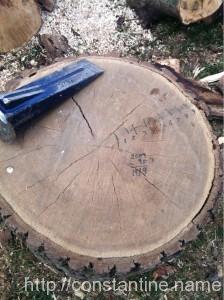
Elsewhere, this is 2so1. — slipbox

Jan 31, 2022

Audience

Elisa Graf is both a writer and an editor and has started a podcast called Mystic Takeaway. She loves stories about the transcendent and the everyday world colliding, and the surprise, joy, and wonder that ensues. Her podcast showcases extraordinary stories of mysterious encounters and miraculous healings.

In our conversation, we found ourselves talking about podcast show statistics. They come up often when people first dive into podcasting. Everyone quickly realizes there’s an array of numbers that can be tracked. But what do those numbers mean? What numbers should we be shooting for? What does a “download” or “listener” even mean? But rather than dive into techno-babble, I was curious about what first surprised Elisa about podcasting stats when she published her podcast.

When you open a Simplecast account, they have this little section called analytics. They tell you all the countries where downloads have come from. A download isn’t necessarily a listen, but it’s a good chance that people are listening if they download it. Simplecast shows you the total download numbers, what times of day, your most-downloaded episodes, and which podcast players they’re being downloaded on. I’ve gone back and forth between being addicted to looking at that, and trying to keep it out of my sight.

~ Elias Graf, 2’10”

While there remains some contention around the topic, consensus has formed around the Interactive Advertising Bureau’s (IAB) efforts to uniformly define podcast statistics. (The IAB’s mission is to, “Engage a member community globally to develop foundational technology and standards that enable growth and trust in the digital media ecosystem.”) Through several revisions, an industry-wide standard has been created as a set of podcast measurement guidelines. If you want to dig into podcast statistics, and the IAB’s efforts, (and the controversies,) I suggest beginning with Podnews.net’s IAB articles.

If a show is going to try to sell advertising, then someone needs to understand the statistics because that’s how advertising is sold. But if we can avoid it, I’m with Elisa and I don’t want to overthink it. But even without diving into the specifics, there’s a lot we can learn from just a high-level look at the statistics.

I’m an analytic thinker and I love to run little, (or not so little,) experiments to try to answer questions I have. In March of 2020, I started a simple, daily podcast reading short quotations from my collection. My question was: What would happen if I put up a simple episode every single day for 365 days? What would happen if I did nothing else, and simply published it? It’s been nearly 500 days and it’s coming up on 16,000 downloads. It’s averaging more than 100 unique listeners per week, and has been downloaded in significant numbers in more than 10 countries.

My first take-away from the experiment is that listeners will discover podcasts. I don’t know if that’s from the podcast directories or podcast player applications recommending them, or from other listeners sharing. But my little experiment definitely got discovered by listeners. Even more interesting is that—related to Elisa’s comments about what countries are people downloading from—I find it inspiring to see all the different places where my work is being heard. This tiny little bit of work that I’m doing to create each episode is reaching people all over the world.

Elisa and I agreed that it’s important not to get overly focused on the stats. She has so many good reasons for what she’s doing, and it’s not about how many people are listening. At the same time, people have been popping up telling her they love all her episodes, or that they’ve been listening since the beginning. They’re mostly people she already knows in the meditation space. None the less, it’s fun to hear that other people value one’s work.

Many podcasters talk about posting audio clips, even short videos made from those audio clips, and getting good results on various social networks. But Elisa and I both know that if we aren’t paying for something, then we are the product being sold to the advertisers. The social networks are motivated to use algorithms to not show our posts to everyone that wants to see them, until we pay.

There’s much better success—more people see it and more people interact—when someone else shares something we’ve posted. Which leads immediately to the idea of asking our podcast guests to share what we’ve created.

I’ve found that it’s really hard to get a guest to share their episode of your show. First, we’re asking them to put their name behind our work. If I’ve created an hour-and-a-half podcast episode, and then I say, “please share this,” the first thing someone thinks is, “I need to listen to it.” Instantly, my simple, “please share this,” request has become a request for a large chunk of their time. In effect, I’m asking for another chunk of time, (in addition to the time they gave me when we recorded the podcast.) Worse, even if the guest enjoyed the recording process, they may still not want to hear themselves for fear of how they might sound.

(Here, I’m going to break from the narrative of my article a bit. I’m writing this article months after recording the episode with Elisa. Just before I started working on this article, a podcaster asked me to share an episode we’d recorded about a month prior. All my suppositions above were perfectly revealed in my own thinking. “Share it? Well I’d have to listen to it first. And how long is it?” followed immediately by, “and do I really want to hear what I said?” I believe asking a guest to share is an enormous ask. Caveat emptor.)

It’s totally true. One of my guests, said some things that I didn’t know were uncomfortable for him, and then didn’t want to share it. He told me after it was published, saying, “I wish I hadn’t said that. Because if it gets around to one of my friends, they’re gonna be upset.” It wasn’t hard for me to take those details out, so I said, “I’ll just go back and I’ll scrub them and I’ll just put it back up again.” He was so grateful, and after that I got a lot more listens on that particular one. So I think he did pass it around after that. But it’s hard. He didn’t want to listen to it. I don’t think he wanted to listen to himself. He had regrets about what he’d said. Then it was a period of a month or something. It took some time before we ironed that out— That he finally told me and then I was able to fix it. And then it took him a long time to listen to that. So it’s a process.

~ Elisa Graf, 9’33”

I believe we’re always going to have fans. The fans who listen to every episode. I could hide the podcast under a rock in the woods and they’d find it and listen. But settings the fans aside, I think most people who listen to my podcasts are listening to just one episode. We all know that as you build that body of work in the back-catalogue, the stories that we’re sharing don’t deteriorate. New listeners are going to find the episode via the topic that was talked about, or they’re going to find it via the person who was the guest. People will listen to that episode two, three or more years later.

I felt Elisa and I had come to the idea that we each simply have to do the hard work ourselves: I have to share my own things in a way I feel is appropriate and meaningful for what I’m sharing. I can’t rely on my guests. I can’t expect that just because I landed a really popular guest, that I can sit on their coattails. The power is in the value of the work even when it’s simply sitting there for years.

Elisa went on to share some experiences of encountering people who have become dedicated listeners to her show. Also that her first episode, where she describes her inspiration for beginning the entire podcast project, continues to be downloaded by new listeners. It is happening that people hear one, and then go back and listen to the older ones.

It’s amazing, really, the whole idea. This medium of finding your voice, and then ship. Putting something that you really care about out there in the world, and having it have its own life. It’s having its impact. It has no half life— it could go on for for a long time.

~ Elisa Graf, 12’45”

There are so many possible ways to approach using social networks to make our shows known. It’s incredibly difficult to know on which platforms to focus, and what to do with our content. In my opinion, it’s difficult to get someone to change mediums. They are in their podcast player app listening, and they listen in a certain physical place or mindset. They are not in a place or mindset where they expect to interact. So saying, “rate my show” or “share with your friends” requires them to change contexts— to change place or mindset.

The same holds true for someone on a social network. If we put up an audiogram or cover-art image on a social network and say “subscribe” or “listen my show” it requires them to change contexts— to change place or mindset to the one where they listen to podcasts. But once someone “has” you in both of those “contexts,” then your efforts start to work. I’ve seen my social network posts of an old back-episode, to an audience of ~500 followers, generate a 40 download bump. That’s a huge response of 8%. But it’s arguably ~500 people who already had my project in both of their contexts. Then, my social network post reminded them of something in their podcast context.

Those of us who are podcast creators, we already know it’s a grind. The key lesson here is to realize that putting effort into social networks is entirely different from creating podcasts. It’s critical to be mindful of how much effort you’re going to need to do it well, and to then be sure you have that much spare energy and time.

Elisa and I wrapped up our conversation by touching on ratings. The evergreen question is do ratings help? Do they make our shows more visible, or attract new listeners? The issue I have with ratings of any kind is there’s always going to be a motive for whoever created, posted, or curated the ratings. When I see ratings like, “Number one show,” or “3.5 stars,” I zoom out and think: Who rated that? What does that rating tell me? What was the motivation for that rating being created?

That said, I think there’s more to be gained by asking the other side of the ratings question: If I ignore those ratings created by other people, what then am I interested in? What is success for my show? What is success for any episode that I create? For me, it’s if someone listens to an episode, and then can some day have a more meaningful conversation with the guest. That’s success. If an episode can improve that potential future conversation, for both the listener and the guest, that’s success.

Sometimes people come up to me in person and talk about a show (any piece of my podcasting work), or sometimes I’ve overheard people talking about a show, and that’s delightful. I love the one-on-one interactions. Elisa also shared her feelings about getting personal notes from people telling her how much they enjoyed a particular episode, or how they loved hearing a particular story. And I agree: That’s the part that is truly gratifying.

ɕ

This written-to-be-read article is based on a transcript, my recollection and my opinions. Any mistakes or mis-representations are my own—but I’d love to have them pointed out so I can correct them. All of the quotations here are edited lightly for readability and clarity. Delivering insight in realtime, while being recorded in a single take is difficult, so I’ve edited only with the intention of highlighting the awesome parts.

Elsewhere, this is 2au1. — slipbox

Feb 7, 2022

Inconsistent yet persistent

TK is an all-around mover, a dancer, rock climber, traceusse and earned her degree in athletic training. In addition to her movement practices, TK is a certified authentic Tantra instructor, teaching holistic healing of body, mind, spirit and sex. TK considers herself a sex activist and is the founder of LoveCraft, a sexual coaching and empowerment collective.

Tantra was the obvious place to begin since we were surely going to end up talking about tantric sex. My fear was that most people’s—myself included—knowledge of Tantra would be something to do with the artist, Sting. We immediately agreed that leaving the world only knowing about “men in linen pants” would be a disservice. “Tantra means, literally, to weave light and sound with form, the light being visualizations of your chakras in your body, sound being chants that you’re making, and then the form being your body, your physical body. That’s it, in a nutshell. The way that often looks is meditating. The way a lot of people do that is they’ll meditate and then have sex; they’ll meditate during sex; they’ll meditate on their own without any sex. Yeah, that’s kind of that, which means nothing, right? It’s like a, ‘Cool, and then what?’ which is what got me into having a coach.” — ~ TK from, ~4’40”

But, what drew TK to Tantra, and how does she use Tantra as part of her work with others?

TK: In the introduction to Lovecraft Collective, we say, in addition to the movement practice, I practice Tantra, as well. And movement is inherently part of everything humans do, for the most part, so there’s a movement aspect of Tantra, as well.

I got into Tantra when I was 18 because I wasn’t having what I considered orgasms despite a pretty full sex life from a rather young age, what most people would probably consider a young age. My mom had this book called Urban Tantra by Barbara Carrellas, amazing. I later learned she wrote this book during the AIDS crisis and was trying to find ways that were sexy for people to connect that wouldn’t transmit the virus, and it was like, “We don’t have time to hang out on this mountain and get enlightened, but, what’s hot? What’s not, and how do we practice connection using these methods?”

That was around 18. I read some of the book and then, on and off, had partners that were more or less — mostly less — interested in practicing it with me, and, finally met someone who was like my Tantra teacher. We were playing music together and he mentioned his Tantra coach. I’m like, “Wait, there’s coaches?” I had just been reading books and trying to find drawings. I’m like, “What is here, there?” Turns out there was a coach, and I met her. She had a coaching program, and I found the website and I started crying. I was like, “This is what I want to do.” I had read this article, I guess a couple years before about how to find your passion, and the article was basically saying, “You know your passion. It’s what you think about all the time. Whether or not you get paid for it …”

I was like, “Oh, I want to help people with sex and I want to heal sex.” One of my friends when I was really young had made her sexual debut through the form of being raped, and that made me really sad for her because I was having really great sex in high school and really loving it and feeling really empowered in it. We couldn’t share that experience, so I had known then.

Then, it kind of kept popping up in all these different ways of, “Oh, now I can have orgasms. Oh, I’m not broken. Oh, how do I show other people that they’re not broken?” The way it looks now is integrated into a life where it’s not just about sex and orgasm. Although, that’s a huge driver because sexuality is a huge component of being a human, but it’s integrated into fully embodied experiences.

That’s the way that’s looked. It continues to ebb and flow and transform as I imagine it to. That’s the lifework, right?

I’m always curious to know how someone turns a passion from something they simply find themselves doing, into something organized or purposeful. Organizing one’s ideas, vision, and mission into a clear structure multiples the effect one can have on the world. What do TK’s efforts look like today?

TK: The reason why I called LoveCraft Collective… LoveCraft Collective is because I have this idea that once I teach or coach or work with somebody, that they’re a part of the collective. Not that, then, they will be able to offer services under the name, but that, if we’re bringing this healing to people, then they’re a part of the mission. I want to create more harmony and people that are embodied and loving themselves, and so, I do it for money. That makes me a professional although I feel rather amateur most of the time.

For too many people, the topics of sex, pleasure, and intimacy make for awkward conversations. But it’s my opinion that those topics shouldn’t be treated exceptionally. It’s one thing to have an intimate conversation—as TK and I had—but it’s another to figure out how to share with people, so they are then enabled to have those conversations with others.

TK: Couples are my favorite because they are with a friend, and I get to coach them through practices with each other. I also take individuals: male, female, womxn, any gender, trans, vagina owners, penis owners, whatever they call themselves.

Craig Constantine: My first reaction is, “Okay, that’s pretty progressive.” But then, I’m thinking: Well, suppose one was transgendered, or one had recently realized that you were trying to live the gender that didn’t fit who you really felt that you were. Where’s the manual for that? How do I make the transition? Being able to go talk to someone, to spend time with someone, to interact with someone, to be sexual with someone who maybe understands, “Oh, here’s the role that you’re missing.” It seems like it’s really not just about sex. It’s about helping them understand who they are or could be?

TK: Yeah, and just about being embodied like, “Here, sit with this and develop a pleasure practice.” I don’t know if you’re intending this, but I don’t ever claim to know left or right, female or masculine or anything like that. Tantra is about balancing those energies. However they show up for people is how they show up for people, but I just think it’s important to … we call it yoni massage and Lingam massage. I still like the word pussy. Nothing is sacred; everything is sacred.

I find the more interested I become in conversation, the more interested I become with etymology. Initially, we each simply use language as we attempt to convey our ideas to others. Some people get good at that. But some people experiment with language, and then go farther to use language very intentionally. TK struck me as such a person.

Craig: There are certain words in English that have a visceral energy to them, and that, if the word is overused, then it would lose that. But, being able to trot a word out intentionally— “I really mean to convey this energy to this other person.”

TK: Totally, yeah. And, vagina means sheath for a sword, which is very male-centric, whereas yoni means sacred space. Some people are really drawn to that language. I’m a real straight shooter. I love the idea of Tantra and buddhism that it stems from. And the lineage, the Shangpa Kagyu lineage that authentic Tantra taught me from. And I’m into kink and I’m into BDSM, and I enjoy the whole range of — is it phenomenological — what’s actually happening here and now, and our brains doing things. Metabolites are happening. Neurons are firing. You can call it energy. As woo-woo as you like, however you want to go.

Craig: Energy can just be a shorthand for all this stuff we discovered, actually makes it real.

TK: Speaking of working with people of all different gender identities, the idea is really to work with people to develop a pleasure practice because our lives are so full of shit, all of us. The human experience is this shitty ball of burning gas and also this beautiful sunset.

I like the blueberry analogy: If you’re eating a bowl of blueberries, they’re next to you and you’re not looking at them. And you’re going: blueberries in your mouth, blueberries in your mouth. All of a sudden, you pick a roach up and you put it in your mouth. Next time you go to the blueberry bowl, you’re like, “Holy fuck, I don’t know what it’s going to be!” There might only be one roach in the whole bowl, but what does your brain go to every time now when you think blueberries? It’s terrifying.

That’s kind of the way we treat all our negative experiences. The idea of Tantra, in the weaving light and sound with form, is to develop this blissful counterbalance.

The glorious sunset we were experiencing as we were recording, led me to take a detour to movie-land. Such detours happen a lot, if you have a long conversation with me. But the dance of distraction, humor, delight and serendipity is always worth the effort. That’s a major part of what makes us Human. We joking started discussing magic powers, before I got specific and asked what her friends would say her super-power is. “I guess if I were to list the thing that I like the most about myself: I bring a sort of comfort to the room as being rather authentically expressed and unafraid to share things about myself that I hope inspires other people to do the same thing, and I consider that a societal superpower.” — ~ TK from, ~18′

When recording conversations for podcasts, there’s a balance to be searched for: How much of oneself should be present? If there’s too little of me—if I’m too quiet, if I don’t share stories and be vulnerable—then the guest is left hung-out on the stage with a spot light on them. On the other hand, if there’s too much of me— well, then you get what we have here in the recording with TK. I broke into a series of stories as TK and I played with the conversation. If you want to get that experience, you’ll have to go listen.

Here, I’m going to try to present the stories that TK shared. Just remember that there’s a lot that’s been edited out in the following stories which came from TK generously rolling with what I was interjecting. I’ve added […] where I’ve made large elisions.

Craig: What’s the most interesting story that comes to mind when I ask you about eye contact?

TK: I was at what I jokingly and lovingly call Tantra Camp, which was our first retreat while I was in the authentic Tantra certification program, and I was meditating with my teacher. We were practicing this thing called microcosmic orbit, and I get lost. Some people call it the void, but it just felt like swirling dark colors making eye contact with this person kind of in this forever place of being and being okay both simultaneously of like, everything is perfect and everything is right and I am right here and you are there, but also, where are we? What’s even happening? And, beyond the story, my theory around it is that human beings experience themselves through experiencing others relativity. Thanks, Einstein, or maybe Einstein’s late wife … unclear who actually … women rolling their eyes.

[…]

And so, there’s something kind of magical that happens when you … we’re making eye contact right now, and it’s kind of silly, but if we allowed ourselves to continue to make eye contact-

Craig: Well, yeah, there’s definitely an awkward zone here, people. We’re now at about six or seven seconds and it’s like, “I really need to look away, now.”

TK: Right, right, right, and like, why is that?

Craig: Well, because eye contact is extremely intimate, like the old … The metaphor of the eyes being windows to the soul— I think that … humans are really good at detecting eye contact.

[…]

TK: It continues to be all about eye contact in my experience.

Craig: Anyway, off on a tangent, Craig. Eye contact: so, I think that because we are so good at detecting eye contact, and compared to other senses, we’re not nearly as sensitive. Even just eye contact is a thing. So, when you spot that eye contact, it’s inherently electrifying in your deep brain. So, I don’t know, that’s just, how could you ignore a sense that was that hooked up?

TK: Totally.

[…]

TK: That actually reminds me of a different story about eye contact. This weekend, I was at the Folsom Street Fair down in San Francisco, and there’s a lot of leather, sex and kinky activities and people doing them in public and people watching. There was a moment I was partaking in a scene with someone and I looked up and made eye contact with somebody else in the crowd and immediately lightened the mood. It was like I was in this kind of intense space and feeling somewhat humiliated, which is fine, because that’s what we go for, sometimes. That’s okay.

And, they looked at me and they kind of giggled. And then, all of a sudden, it was this goofy not-so-serious thing that was happening, anymore. They saw through what I might have been experiencing as shame and it became: when I’m being seen in something that I think is shameful and this person isn’t turning away but is celebrating it and enjoying it, it allows me to then fall into more of a, “Oh, this is okay.” And, I think that being seen by people creates a lot of that for-

Our conversation danced over a number of topics as TK and I simply followed whatever thoughts bubbled up. We flirted briefly with discussing radical honesty as it feels nearby to eye contact and intimacy.

Craig: I was just talking to someone who was talking about radical honesty. What would happen if, when someone asked you for money on the street, instead of saying, “Sorry,” and moving on— What if you said, “I’m choosing not to give you money.” What would you have to do to be able to be that radically honest to them. That might be the right thing to say to them. They might be like, “Well, thank you for being honest.” I don’t know. I’ve never tried that.

Maybe part of what is uncomfortable about the interaction with somebody who asks you something, which would really be a small task for you to do, is you literally don’t want to see them. You’re like, “I don’t want to be seen by you, so I’m going to turn my head and say I’m sorry.” I’m not suggesting everybody give every dollar they have to every person who asks…

TK: …but, sometimes, it’s just about making eye contact with them and saying, “Hey, I see that you’re living on the street. You’re not totally invisible to me. I don’t think giving you money will solve the problem, but also, I see you as a human.”

“That’s one of the other things inside of Tantra, inside of movement, inside of … right, why do we go move our bodies? Why do we sit with our bodies? Why do we intentionally breathe? And, so much of it comes down to stress relief, relief from — I’m looking around the room — all this shit.” — ~ TK from, ~28’30”

Mindful of the time, it occurred to me to return to the main avenue of our conversation. We’d had a terrific conversation exploring Tantra and intimacy, and I thought we might next turn to talking about movement. TK, ever the good sport, started to follow that lead, before I interrupted here to launch us into a huge nerd-gasm about rock climbing. She got exactly this far:

Craig: This is nice. Have a bite of chocolate while I look at the time. We haven’t really touched your movement background. I’m not sure if you think, at this point, that would rise to a level of even being interesting, but if you do, we could talk about maybe how you got into Parkour and what your thoughts are on that.

TK: Parkour is a shorter story than my movement practice in general. I had been interested in parkour for a while and was really scared to go into Parkour Visions. Then, by the time I looked it up, I saw that the gym had closed, unfortunately. And then, I am a climber. I’ve been climbing for … God, that’s a hard thing to say, I’m a climber.

Craig: Oh my God, I fancy myself a climber…

…and then followed a long segment with me geeking out about climbing. TK was super into it, but I think she was mostly having fun watching me geek out about climbing. It became a two person show with her adding color, jokes, and little digs. Super fun—I thought anyway—but not something that makes much sense in a written transcript.

But some of our exchanges gave a sublime insight into TK’s style and sense of humor. This section in particular, conveys the warmth and playfulness of an intimate conversation with TK:

TK: Well, I climb at Index, Washington, which, don’t publish that because nobody go there; it’s horrible. It sucks. Don’t go. Index sucks, now.

Craig: Why does it suck?

TK: …so that people don’t go, mostly.

Craig: Oh, okay. So, basically, gear blows out. It’s all sandstone.

TK: It’s just choss. It’s horrible. The rock falls apart in your hands.

This summer, I went out to Washington Pass, which isn’t far from here, a bunch of alpine climbing with my sweetie. We did the South Arete of South Early Winters Spire. It’s a 5.6. It’s super mellow. We pitched out the first couple pitches and then just soloed the rest, and it was such a good time, just movement over rocks. I don’t tell people I solo often because they usually say-

Craig: …people freak out…

TK: Like Alex Honnold. Yeah, “Climbing without a rope?”

Craig: Like that?

TK: Yes, free solo.

Craig: …exactly like that?

TK: Not at all like that. It’s mostly scrambling over pretty chill rocks, but you don’t have to deal with the rope and all the gear. I brought up climbing because I was talking about my movement practice. I’ve been climbing for four-and-a-half years. I said I was a climber and then I got sheepish because, like it’s hard for me to say I’m a singer, I also still have imposter syndrome about climbing.

Eventually, I stopped talking long enough for her to get to her climbing origins.

TK: When I first got taken out climbing, I didn’t realize that the people I was climbing with were very, very strong climbers because, as a total Gumby, right, you just don’t know what’s going on. They’re telling you to do these things and you’re like, “This is normal,” because you don’t know any better. Within my first year of climbing, I was climbing trad with folks, mostly following. I was climbing at an ability level that I could do on top rope that I still have a hard time leading.

This year, I was putting the ego aside and really wanting to do the thing, to know that I could do the thing. A lot of 5.8 and 5.7 and 5.9 and a lot of crying and being scared and allowing that to happen. Inside of dating somebody, I was surprised how many emotions came out in ways that didn’t when I climb with other people because it’s a whole ‘nother level of being vulnerable and intimate with somebody.

Large scale, outdoor rock climbing is spectacular and can be—it should be, but sometimes things go sideways—a wonderful experience. I’ve found rock climbers earlier in their journey start to pick apart the different aspects of climbing as they learn what calls most to them. Some pursue the huge, heady experiences outdoors, and some look inward searching for small problems that they can learn through solving. There’s a type of climbing called bouldering, named for climbing on boulders. Done generally low to the ground so that falling off is low consequence, it brings the same mental aspect as with the large scale challenges of other types of outdoor climbing. But since bouldering is done without any safety equipment, (often with just a small crash pad tossed on the ground below the climber,) reality and danger can set in very quickly.

Our conversation about outdoor, large-scale climbing transitioned to small-scale, but very mental, bouldering:

TK: And bouldering — you mentioned bouldering earlier — I feel like is the most similar to parkour in the realm of the fear about falling off of stuff and the zero margin for error at a certain point, at a certain height.

It’s a totally different story. I don’t like bouldering outside so much because of that, and it’s been a heady thing for me to develop. It hasn’t been something that I’ve been that interested in, partially because the go game, and I see some people that are really good at capturing that mind space, doing these big descents. It’s beautiful. It’s beautiful. It’s beautiful. It’s beautiful, and I have done my best this year, too, as being on the sharp end of just trying to enjoy the movement, just wanting to enjoy moving on rocks. I mentioned kink, earlier. I think rock climbing fits in some of the same realms of masochism of, “I’m going to jam my hand in this crack and I’m going to crank on it and it’s going to fuckin’ hurt, and then I’m going to cram a crank on and stick my other hand in this crack, and then I’m going to shove my ankle in there and twist on it and stand up and just … I’ve done a lot of climbing shirtless and naked because I love the way my body feels on the rocks and the movements of being outdoors and-

Craig: Rocks are so tactile, yeah. There’s definitely a … I’m not going to say it’s erotic, but I guess, okay, if you want to go there.

TK: Yeah, it could be. But, feeling rock on skin, it’s like being out in nature. I know there’s this whole group of people called eco-sexuals. They really get off on being out in nature. I wouldn’t identify as an eco-sexual, I think, mostly because I have a hard time with labels, a lot of labels, but yeah, just getting your … I think men have an easier time with being shirtless in public in our world in general.

Craig: Just because of how it’s socially constructed?

TK: Yeah, but being wedged between rocks or climbing trees and feeling … I think it’s another level of Tantra, another part of Tantra […]

The guests on the Movers Mindset podcast are mostly chosen simply because I want to have a conversation with them. But some people, TK for example, are mentioned by my friends. TK’s passion for movement also includes parkour. Our shared interest in rock climbing was a surprise, but it was some parkour friends who said, “You should talk to TK.”

Here again, I had the distinct pleasure of being led by the guest to the next interesting thread.

TK: I got into parkour because I met Caitlin Pontrella at Seattle Bouldering Project. That’s the answer to that question.

Craig: Okay, honestly, you’re really good at pulling us all the way back to there.

TK: Thank you.

We were hanging out at the bar in West Wall Café [ed. inside the Seattle Bouldering Project’s facility], and a friend was like, “You should meet this person. She’s really cool.” We became friends, and then I met Brandee Laird. What was really cool, I think, about developing those friendships, is that I didn’t know who they were in the parkour community, and they said, “Come out and play with us.”

Just like my climbing experience, I started climbing with these people that were developing at Index and climbing really fucking hard, like 5.12+ climbers, and I just didn’t realize because how would I know? It wasn’t until … I think it was Art of Retreat maybe by the time that Brandi was teaching at American Rendezvous or something, and I saw some internet stuff and I was like, “Holy shit, this person is a very respected, well-known, world-renowned coach, and she’s my friend and I know her as a friend before coach.” I think if I had stepped into [Parkour Visions] before that, our relationships would have been different, which is just an aside about friendships and how they develop and what you know about people or what you think you know about people and the way we treat folks that are at certain levels of pedestal or no pedestal or-

Just to be sure the level of respect she’s conveying for Caitlin and Brandee is clear, I’ll unpack her climbing jargon: “developing at Index” — Index is a place to rock climb, which we discussed it earlier. “like 5.12+ climbers” — that’s world-class level climbing, few ever achieve 5.13.

TK: That was really cool, seeing that side of people that I had become to know as friends and not as coaches, but as peers. Now, I do parkour, and I see the world very, very differently in terms of what I can play on or how I can … I think parkour changed my life in the greatest way.

I have two nieces and a nephew. My niece last year had bacterial meningitis. I know she almost died at three weeks old … five weeks old? Three or five weeks old. And, I went down after she got out of the hospital. My sister had to go back for some followup appointment, and my sister left me outside of the hospital in the parking lot with a four-and-a-half-year-old and a three-year-old and I was like, “Oh, fuck.” We were talking about kids earlier and I was like, “Shit, I don’t know what to do with these. How am I supposed to entertain the little people in a fucking parking lot?”

Craig: I think if you stand on them, then they don’t run away…

TK: And, that would have been my answer, before, but I had just been learning about parkour, and there were rails and there were benches, and I was like, “Okay, it’s superhero practice time. Do y’all want to be ninjas or what?” I was able to Auntie TK my way into entertaining them for almost as long as it took for my sister to come back outside, almost an hour.

Craig: And now, of course, she hates you because her kids want to know where they can go learn parkour. Way to go, TK.

TK: Oh, no. And, I think that’s some of the magic of parkour and movement and changing the mindset.

From parkour, our discussion meandered touching on the intimacy of audio with headphones on, audio exhibitionists and conversations, free-styling vocal improv…

Craig: I always like to say I turn my ADD into Art du Déplacement— my Attention Deficit Disorder into Art du Déplacement. I wasn’t diagnosed as a kid, because I’m old enough to be before they invented the cool thing— what is it, the DSM thing. We were probably on DSM [version] negative 2 at that time.

TK: I have a thing about that.

Craig: Go ahead, go. Go, go, go.

TK: Well, just coping mechanisms. We talk about the DSM and that it’s disorder, disorder, disorder, disorder. It’s a potentially useful discourse, I suppose, for talking about a wide array of symptoms that people maybe share. Like all the people that have, air quote, “ADD,” share this kind of, “This happens in my brain when I’m doing this X thing.” But it’s potentially just a coping mechanism you developed when you were young to survive in the world.

My personal experience, the coping mechanisms that I’ve developed that people maybe have names for in the DSM is more about discovering the awareness of, and not being a victim to. So, when I turn disorder into coping mechanism, I am able then to have agency and power around it. So, you were talking about your hand thing. You turned your ADD into ADD, and that’s your power. That’s your art, yeah.

I’m continuously fascinated by the unique aspects of experiencing conversations in audio-only. I regularly find I’m drawing my guests down this side street.

Craig: People who are listening with headphones, you get a certain kind of experience. I’m hoping if you’re listening on headphones, you’ve noticed that podcasts in general suck you in, and it’s because, I think that your ears work … because they’re connected to an older part of your brain, so when you hear something, it draws your attention, and when you hear people talk to you and they’re in your ears as opposed to hearing it across the room, it’s like you can’t help but be drawn to that.

So, I think part of my the reason why podcasting works so sell is that humans are really fixated, are really interested in audio. There’s one experience, people who are listening. And then, there’s another experience for people who are listening to each other and making awkward eye contact again.

TK: It’s only awkward if you make it that way.

Craig: I think you would kill me in a staring contest every time. Please, I’m just going to close my eyes, now. I’m not challenging you to a staring contest. But, there’s something about …

[…]

If we were any closer together, it would be awkward. So, the headphones bring us closer together. You are literally in my head and I’m literally-

Here we drifted off into having more fun. My interest in any particular topic, doesn’t necessarily mean I can stay on that topic for long. But as I’d learned, give TK enough time and space and she’ll bring us back. We drifted back to talking about headphones and then about creating spaces.

TK: I think it’s similar to the way I feel bed is sacred space, being in bed with somebody else. I guess I call it pillow talk, and it sounds so cliché to me, but having this space with someone else like I wake up in the morning and, “Let’s share some coffee together,” and then it’s kind of talk and giggle and be silly and, “Please pet my head and we’ll feel really close in this way that, once we’re out of bed, we don’t feel this way anymore because it’s time to go back to real life and I have to go to work, now, and you’re going to go do this thing.” I think that creating space … headphones create a space.

Craig: Yeah, a new space. It actually takes away a lot of space and creates…

TK: Right, totally arranges a bubble in the same way that maybe a bed arranges a bubble, or, if you’re meditating with somebody and you’re making this eye contact with them, you’re arranging this bubble, right, of, “It’s just me and you and we’re right here and the outside world can get kind of squirrelly and you’re not focused on it.”

[…]

There’s the four-minute thing. It was a questionnaire. It was 36 Questions to Make Anyone Fall In Love. I don’t know if you saw that. It was going around the internet for a while. I did the questions with somebody. We dated for three months.

Craig: It’s total BS.

TK: Sure. I mean, they were great and I love them, but it wasn’t going to last. Then, there’s a four minutes of eye contact thing you’re supposed to do at the end of it, and I think, fuck all the questions. Maybe it’s just the eye contact.

Craig: Just four minutes of eye contact, right.

TK: We were doing it via video chat, but, maybe it’s just about sitting down with someone and being seen. I find eye contact, to go back to eye contact, as … you know you’re talking to somebody and they’re kind of looking all around and they won’t look at you or settle down and they seem highly anxious and you’re just like, “Whoa, can you chill and be here with me? It’s okay. I’m safe.”

And, a lot of that, I know, comes from trauma, so that’s not to dis anybody who has a hard time making eye contact with people, because I can also understand that neuro-atypical people … eye contact can actually feel physically painful. To the degree that eye contact creates connection for neuro-typical people, it can create disconnection for atypical people.

So, that’s something, when I first started practicing Tantra, I came across this article written by a woman who was autistic. And I was very, very grateful for finding it because I was like, “Eye contact,” right, just fresh out the gate. I’m like, “Eye contact is a thing.” And then, you can’t just stare … that’s why you’re like, “You’re staring at me.” I’m like, “Wait, no, I’m actually seeing you and trying to be here with you,” and I try to make a distinction, there because I have played from the ego place before of, “I’m big and strong and, yeah, you’re going to look away from me,” and that’s not a place of compassion and connection. So, having played in the realm of darkness, as you called it earlier, I think it’s an important distinction to make.

By this point, we were well over an hour into our conversation. The sun had set, and the room had grown dark leaving us with just a single light over our table. The energy of the entire conversation had been very different from others, and apparently I wanted to be sure that was recognized as a good thing.

Craig: Maybe, this is like, every hundred episodes or so we have to do one [of] these [to] blow-off-steam. I know this is weird.

TK: That’s good. Are we blowing off steam, right now?

Craig: I may be. So, I came from Art of Retreat before this, and I did something like 24, 45-minute interviews in two days.

TK: Whoa.

Craig: Whoa, that may have been a mistake.

[…]

It was good because it’s really … it forces me to hone my skills to be able to read [people] as fast as I can and figure out whether they want to talk about it. And, there’re different kinds of interviews. Maybe this would be fun to unpack…

So, this interview that we’re doing, sometimes I just say I let the guest off-leash and I try to keep up. I don’t mean in a derogatory way, although maybe you would really enjoy that.

But, when we let the guest off-leash and let them run, then it’s up to me to just try and not mess up what you’re doing, and it can be really fun, but it can also go really weird like if the guest is expecting a certain role from me and then I’m just like, “Let’s go have fun,” and they’re like, “I thought you were going to ask questions.” Or, if I ask a question, it’s [too] open-ended. They’re like, “I thought you were going to give me some context.”

TK: Okay, well, off-leash, I was at Folsom this past weekend. I grew up in San Francisco and left when I was 17. Growing up with such an open, I mean, really gay environment, topless people in parades waving at me from a young age and seeing my teachers in elementary school were gay and married couples and it was just part of life. It wasn’t something I thought so much about until I moved to Montana where people were meeting their first gay person in college.

So, coming back to Folsom as an adult, my first time going to the fair as an adult and participating and being … it was almost like a homecoming where, having grown up in such an open place, I took it for granted, and then have been out in the world in different places and kind of forgot. So, coming back and being able to experience this whole thing that feels like it’s been an inherent part of me for so long that yet maybe hasn’t been expressed to its full capacity as I had appreciate was really, really cool.

And, what I find really interesting about … so I performed at something called Twisted Windows, which is put on by a lovely person named Shay Tiziano, and it is a subversive performance art on Friday night. It’s all night long. There’s bondage performances and… wow, a plethora. There’s someone on trapeze and just all kinds of cool shit, people self-suspending and puppy play. That’s where people dress up like pups and play with stuffed animals and bark at each other. It’s fucking the cutest thing. It’s just great. Yeah, yeah. Two thoughts: the performance we did, I was holding something heavy over my head for half an hour while taking on a lot of impact, whips, heavy floggers, bites, this whole realm of sexual-

Craig: Things that would make you want to use your arms to defend yourself, right?

TK: Right, and, well, by choice as a sensual experience. I am a masochist. I think that climbing plays into that very well. And, holding something heavy overhead for half an hour straight is really intense.

Craig: Just that.

TK: Yeah, right, just like, can you imagine holding 20 pounds over your head for half an hour? I was just pouring sweat. So, meditation and Tantra bring on this space of presence and can get you really high, especially and more so, generally, in my experience, with somebody else. And, what I’ve found really cool about kink and why I’m open to talking about it here, I have this idea that Tantra is supposed to be spiritual and it’s serious, and it’s the right way to do things. Then, having some more experience in kink and realizing that there’s this level of connection and negotiation and all these things that need to be present, trust, in order to let somebody, to ask somebody to please hit you-

Craig: Yeah, play this role.

TK: Yeah. And then, they’re trusting you that you really want that and that they’re not hurting you, and that they’re doing something that might be seen from the outside as awful is a beautiful expression of something that I had been experiencing inside of Tantra. And then, I brought up Barbara Carrellas, earlier. She talks about that inside of Urban Tantra. I think some people call it dark Tantra where they interplay the two things, and the integration of that just into life.

It’s not just like, “I’m going to sit here and meditate and breathe.” It’s like, “I’m going to hold this heavy weight over my head and meditate and breathe and get into this space while getting hit,” and that can also bring me to this level of heightened … but, there’s something about the movement. That’s why I want to talk about it. I’m watching this person move around me. I’m unable to move. What happens when I shift my weight to this side or I get hit here versus there, and how can I breathe and move the energy to become something that feels really good instead of, “Ow, that was sharp.” Or, you’re trying to knock me off balance. How do I reel it in to be present? It was just fascinating.

When recording conversations I sometimes find I drift up from the depth of the conversation and remember that there will eventually be people listening. I have a sudden urge to see if there’s some kernel of wisdom, or constructive take-away, that I can find with just the right question.

Craig: I’ll just close my eyes. What I was thinking was there’s something that we can, I’m going to say challenge, something that we can challenge people to think about that might help them find places or ideas or spaces where they have an unknown bias. […] I’m wondering if there are places where people might have biases that they aren’t aware of, and if there’s any thoughts you have on how to help people find those. I’m really reaching here for like an, “Ooh.” What if we went meta meta?

[…]

TK: That’s a hard one to dig up. I think so much of … here’s a great one. So, when you watch somebody … how many times have you practiced something, or you’re telling someone about what you do, and they say, “I could never do that.”

Craig: All the time.

TK: All the time. Climbing, “I could never do that.” “Oh, what do you do? I could never do that.” For some people, I don’t want to say everyone, because all movement is valuable. Sometimes, it’s a small jump and something that people that I look up to, I would think, “Oh, this is nothing and cake for them. It’s big for me.” And then, somebody else is like, “Wow, that’s amazing. I could never do that.” And, I think, “Just try it. Just go try it.”

You asked what my superpower was, earlier, and I mentioned being inspiring and wanting people to go past what they think is possible or break down barriers, and that’s why I consider myself a sex activist because I’m into the idea that sexuality is a part of everything we do, including movement. And, I find it a really interesting line that we choose to draw. We say, “Sex is this,” and it’s an incredibly transgressive idea to say, “Sex is everything,” right, because then it’s like, “Oh, I’m hanging out with my friends, and I love them. Is that sexual? Oh my God, I’m gay.” Whatever that brings up for people, it’s a huge world of triggers. I’m eating this apple or this peach and it’s so good, and it’s dripping down my face.

Craig: Sensual, right?

TK: It’s so sensual, and sensual is a bad word, right? All of a sudden, sensual is like, “Don’t.”

Craig: It describes that it has senses involved.

TK: Exactly. And then, so, what degree do we sexualize that? I don’t have answers for any of that. I just find it fascinating to ruminate on, and I think that the answer, to a degree, is to just go try it. So, BDSM or kink is a lot harder to watch than it is to partake in. To watch somebody get hit for half an hour is a lot harder than being the person getting hit for half an hour because something else is happening. And, I think in the same way that watching … I don’t know a ton of parkour athletes, but Bryan Riggins is a friend of mine, and we’ve had some conversations about performance and mindset.

Then, I’ll watch some of his stuff and I’m just like, “Holy shit, dude, how do you do that? How do you keep it together? I could never do that.” I find myself in the same space, and so it’s like, “Okay, where do I start? How do I break that down and how do I know that I feel a certain way about it until I go try and do it?” and I think that’s the best way to find your unknown biases, is to try things that interest you or try things that don’t interest you because maybe they will or maybe the thing you thought you were going to be into isn’t the thing you’re into, and that’s how you meet people that expose you to new things that will then get you to discover you had a bias.

On the other hand, sometimes one finds the right question by not trying too hard to find the right question. After some more random thinking, out loud, I arrived at:

Craig: There’s a ratchet involved that we’ve been ratcheting up the conversation to a point where it’s like, “Well, we only have a limited amount of time to do this on mic,” and I’m like, “Well, I probably have one or two more questions, so what should I ask?” I just wasted 30 seconds.

What I wanted to say first was: what’s a story that you can tell me about somebody that you admire?

TK: Wow. Whoa. My first thought is my mom, and then I’m like, “What story is there to tell?” I could even relate one to movement. My grandfather passed away in February, and my grandma and him lived together. They were married, basically married for 50 years. They lived in Edmonds, which isn’t that far north of where we are right now. And, I live here in Washington, Seattle area, and I work here. My mom came up from San Francisco, where she lives, to handle stuff. Some of her siblings came out, but were the East Coast people … we’re the West Coast [people]. West Coast, best coast. I can’t say that to you, can I? We’re the West Coast people, and so there’s all these expectations about, “Who should be taking care of things?” and all the kind of shit that happens, and you realize that we-

[…]

TK: This is an aside: I didn’t realize how dysfunctional our family was until that happened. And then, the coping mechanisms my grandfather had developed and his neuroses is evident because you’re going through all their shit because they no longer can.

My mom came in and, at first, wanted all this help because it’s hard to be the person to take things on. But then, at a certain point, when you know that you’re the one that’s going to be doing it and you seem to have the way figured out and it’s just too much anxiety for anyone else to help out, then she just stepped into this role. We moved my grandma down to Sacramento. She’s in assisted living, now. She broke her ankle earlier this week.

Craig: wow…

TK: I know. There’s just shit on shit, but my mom has been … she’s the one. She stepped into the role and has put her life … she’s not serving on my grandma hand and foot, and she’s going up to check on her at the expense of her own movement practice. That really was like when my mom was in Edmonds emptying out the condo and going through 50 years of photos, all this stuff that life puts on people.

I’m like, “Ma, I got to go to the gym. I’m not helping you with this, I got to go climb or I got to go work out.” I got to go move or I go crazy because I need … my movement practice is whatever. I’ll go dance at the gym or I’ll go twerk. Whatever I need to shake the shit out of my body, and she didn’t have that ability. She had a timeline. She had to get the thing done, and I admire the shit out of her for it for putting her mother’s wellbeing in her hands and choosing to be that rock for her. I think it’s incredibly admirable. Love you, mom.

Craig: Thank you for sharing.

And sometimes my conversation partners do all of the work themselves:

TK: Oh, you commented on everything is sexual, now, and I had a bit about that. Do you remember saying that?

Craig: I do remember saying that.

TK: Cool, I couldn’t tell from your eyes.

Craig: I’m wondering whether I should be regretting saying that, but go ahead.

TK: I don’t think so. I’m poly. Do you know what that means?

Craig: No.

TK: I date more than one person at a time.

There’s a lot of ideas I have that I think, to a degree, are dangerous because ideas can be really dangerous. I think if we were all just more open about everything being sexual all the time.

I think that, in schools, we need a consent and boundaries class of how to set … and, I think that’s part of what parkour and mixed martial arts teaches people. I used to box, right, of tapping out, or, “This is my limit.” I think if we equipped people with the ability to say, “You know what, it’s this point I’m going to remove myself from the room,” or, “Please don’t say that to me, again,” or, “I really don’t appreciate that kind of language in X, Y context.”

I realize it’s a big, complicated world and it’s not as easy to just say, “Yeah, give people the tools and they’ll use them,” but, I think for the most part if we’re able to just talk about it and say … yeah, I fall in love with my friends. This is personal. I fall in love with my friends all the time, and, being poly, it’s kind of problematic. You’re like, “Wait, I could actually date all of you. I mean, you don’t necessarily want to date me, but like, that’s part of my personal way of living.”

Because love is so big, and when I’ve had conversations with people that are like, “Hey, I’m attracted to you. I don’t necessarily want to date you. I just kind of need to get this off my chest because it would make hanging out with you easier for me to just share with you this.” It’s like intimacy and vulnerability of, “I have this thing happening that every time I see you, these chemicals are going on in my body,” and if I don’t address it as a disorder, and it’s just like, “This is what arises in this context, and now let’s deal with it.”

I think if we were all equipped with a little bit more of that, however we would learn that — I’m not entirely sure how we would spread that to the people — I think that could go a long, long way. I think that’s interesting.

The end of every conversation is bitter-sweet. There’s always the moment, in any conversation, when we know it’s time to drift toward the door; Things are as good as they’re going to get. But the moment is more jarring when recording. At some point, we have to stop. At some point, I have to take the lead and say, “thank you, that was awesome.”

Craig: I don’t know if you’ve listened to the podcast at all, but there’s this thing that I always ask at the end.

TK: Is it about a word?

Craig: It’s about three words.

TK: Three words…

Craig: So, I’ll just throw it at you and see what you do with it. It’s…

And of course, the final question: three words to describe your practice.

TK: Inconsistent yet persistent.

Craig: That’s a terrific answer.

Well, thank you very much, TK. It has been … to say it’s been a pleasure is not quite the right … it’s been pleasurable and fun and energizing and exhausting. I mean, exhausting is good.

TK: Thanks.

Craig: It’s been a wild ride, a fun ride, a very different chance to get to talk to someone who challenges me and pushes me in different ways during an interview. Thank you for that. It’s been a pleasure.

TK: Thanks so much for having me.

ɕ

This written-to-be-read article is based on a transcript, my recollection and my opinions. Any mistakes or mis-representations are my own—but I’d love to have them pointed out so I can correct them. All of the quotations here are edited lightly for readability and clarity. Delivering insight in realtime, while being recorded in a single take is difficult, so I’ve edited only with the intention of highlighting the awesome parts.

Elsewhere, this is 2io1. — slipbox

May 10, 2022

The second time

This one’s for Mike, who’s been waiting very patiently after reading about the first time.

At any golf course there are people known as the greenskeepers. There are different roles, and it’s a massive undertaking. There’s one superintendent who oversees everything, with different people working on specialized tasks. There’s one person—or I suppose a team at a really important course—who is responsible for the pins.

I am not a golfer. I worked one loong summer at a golf course and 35 years later I might… no, actually, I’ve still no urge to go even near a golf course. Back then, I had no idea what “the pins” were at (on?) a golf course, and perhaps you’re in the same boat: The “pins” are the cylindrical metal “cups” with the big flags sticking up, which the golfers are ultimately aiming for. The bottom of the cup has a recepticle that holds the base of the flag. The cups are set into the ground exceedingly neatly and regardless of any slope where the pin is set, the flag must be perfectly vertical. The specially bred grass, mowed super short, with special mowers, grows right up to the edge of the hole, and the top of the cup is an inch below the level of the ground. The golf balls roll on the grass, and then fall perfectly into the cup. (“Nice putt, Bob!”)

And like me, if you’ve never played golf, it will never have occurred to you that the pins are periodically moved to different locations on each green. This is called “setting the pins” generally, or “setting a pin” if you’re moving the pin on one green. At the course where I worked we had one greenskeeper who was responsible for the pins; a college dude, (so a few years older than me at the time,) who was always in a college-dude baseball cap that had nothing to do with baseball, which led me to guess he was in a fraternity, but who was none-the-less nice enough as far as I was concerned. I can’t recall his name. He probably still wakes up from a recurring nightmare, screaming my name.

Setting a pin is tricky to do well. If you don’t do it perfectly all sorts of crap goes south. First, you have to do this when the course is not open to play. You use a special tool with a big T-handle top and a cylinder bottom; remember punching holes in cheese with straws? …it’s that, but for a lawn. You carefully push that into the green—right into that gorgeous, perfect, green grass—you just punch this gaping hole. And you have to hold the tool perfectly vertical, even if the green is sloping where you’re doing this. (It had a bubble-level on it.) You push it down with some twisting, and pull the core sample out. In the tool is now a plug of dirt with a perfect head of perfect grass on it. Leave that in there. Go to the current pin, pull the cup out of the ground; there’s a simple rod with a hook that you just reach into the hole for the flag and pull the cup out.

Now you swap! You push the cup down into the new hole. And you better have made that hole perfectly vertical. The 8-foot flag pole really magnifies any off-vertical error. Then you take the plug which we left in the tool. You push the tool down into the old hole. Then you push this lever arm, (which I didn’t mention before,) and it pushes the plug into the ground as it pushes the tool out! Since you put the plug in a hole you previously made with the same tool, it fits perfectly. Except, the plug has grass on it. If it’s too high, or too low, you have to extract it, fiddle with dirt, and put it back in so the plug’s grass-top seemlessly matches. If you do it wrong leaving it too high, when the green is mowed, the moved-plug’s grass gets scalped short and you get a dead brown circle. If it’s set too low, you get a dimple that makes golf balls roll funny. It’s fiddly. There’s also a minimum distance that pins had to be from the edge of the green, and you couldn’t put a pin back in an area where it had recently been. It turns out that moving the pins around is a huge part of what makes the whole game interesting, (for golfers who play the same course regularly.) So as I said: It’s fiddly.

And this sort of fiddly crap is right up my OCD alley. I set a couple of pins on the testing green, (we had our own, out of the way, extra, green for testing things like mowers and people who set pins,) and our pin-setter was like, “okay, yeah, you can do this. Nice, bro’!” Which was great because he was going to be away, pin setting must continue, and there was absolutely no way our boss, (recall that superintendent,) was going to get off his stool in the barn let alone get down on his hands and knees…

Just like that, I was a pin setter. It doesn’t take very long to move a single pin once you get the hang of it. One morning, as instructed, I went around shortly after sunrise, and reset the pins on all 18 holes. I did a really neat and tidy job of it.

…and around lunch time, the guy who owned the course, (literally, it was one person, who lived adjacent to the course, of course,) showed up at the greenskeepers’ homebase barn livid, screaming, and foaming at the mouth. (I missed this because I was out doing other greenskeeper jobs.) My boss actually thought it was funny, (after his boss left of course,) but it turns out the golfers had been bitching up a storm all morning at the club house. It turns out they live, die and base their self-worth, (or so I’m guessing,) upon their golf score, and some asshole had apparently raised the par-for-the-course by about 9 strokes.

You see, no one told me that there’s a method to deciding where you put the pins. It turns out you’re supposed to mix things up and there are rules about how to place the pins. Ideally, with each resetting of pins some holes get harder and some easier. And overall the par stays the same, while the course is still different to play.

I went around, thinking golfers like challenges, and intentionally put the pins in the most mischevious places I could imagine. This one under the overhanging tree so you can’t chip onto the green. This one on the steepest slope into that sand trap. This one close to the near-side trap so you come up short in the sand or roll right across the green into the other sand trap. I put all 18 holes into challenge mode! And no one appreciated my hard work.

ɕ