No instruction manual

The fact that you can’t remember an agreement you made with yourself doesn’t mean that you’re not holding yourself liable for it. Ask any psychologist how much of a sense of past and future that part of your psyche has, the part that was storing the list you dumped: zero. It’s all present tense in there. That means that as soon as you tell yourself that you should do something, if you file it only in your short-term memory, that part of you thinks you should be doing it all the time. And that means that as soon as you’ve given yourself two things to do, and filed them only in your head, you’ve created instant and automatic stress and failure, because you can’t do them both at once, and that (apparently significant) part of you psyche will continue to hold you accountable.

~ David Allen, from Getting Things Done

…yes another quote from the GTD book.

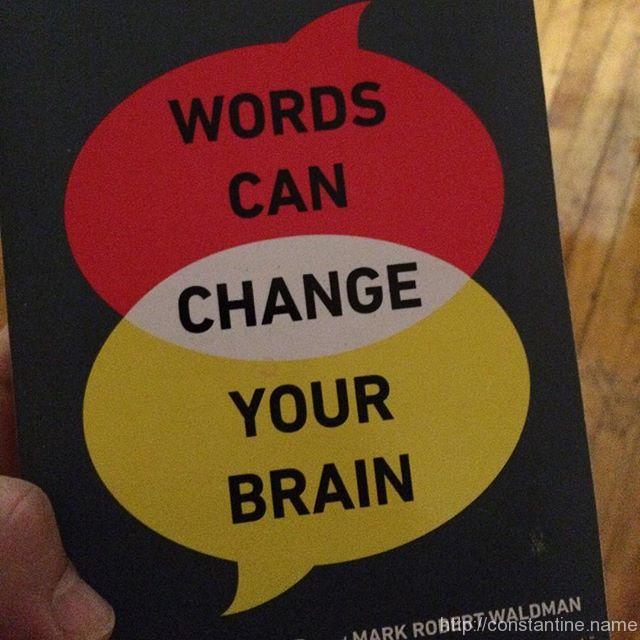
In the first half of my life — say to age 40 — I made a HUGE MISTAKE: I presumed that I had a reasonable understanding of how my brain worked. I don’t mean at a physiology level; I still don’t really understand that. I mean at a day-to-day-doing-stuff, when-I-do-this-then-this-happens, this-is-how-one-lives sort of level. Like how I thought I knew how to use my brain to decide what to eat, what to work on, what to read, what to do with my time . . .

Now why on earth did i think I had any idea?

Seriously: You think of “me” as this “self-thing” located behind your eyes, but that “you” is just “running” in/on your brain. So have you ever tried different ways of running your life? How do you know reading some such book will or won’t change your life? Maybe you should experiment with everything. Try something radical: Pay attention to the results. You’re ALREADY following lots of advice — my advice, your mother’s advice, the TV ads’ advice, your doctor’s advice — but have you ever bothered to figure out what the results are? Then make a deliberate change intended to move you toward a specific goal. Observe results. Then make another change. Then another. And another.

I mean, it’s not like your entire life depends on the choices you … oh wait. *lightbulb*

ɕ

Moloch

In Allen Ginsberg’s poem “Howl” (1955), Moloch is used as a metaphor for capitalism and industrial civilization, and for America more specifically. The word is repeated many times throughout Part II of the poem, and begins (as an exclamation of “Moloch!”) in all but the first and last five stanzas of the section.

~ from Moloch

slip:4uwiwi2.

I just recently, (in the scale of my life,) stumbled over an explicit reference to Moloch. I was all like, “Moloch? Who the what is that? *bookmark*”

I finally got around to reading the WikiPedia article and realized that there’s a huge amount of Moloch wriggled into and behind a ton of the classic fiction which I love.

ɕ


Carl Sagan on the Power of Books and Reading as the Path to Democracy

Books are key to understanding the world and participating in a democratic society.

~ Carl Sagan

slip:4a781.

I don’t think it has to be physical books — recall Mr. Sagan is from the pre-Internet epoch — but definitely *reading*, and definitely you have to be doing the hard work of deciding for yourself what you are reading.

ɕ


Books are key

Books are key to understanding the world and participating in a democratic society.

~ Carl Sagan

slip:4a781.


Pioneering scientist Erwin Chargaff on the power of being an outsider and what makes a great teacher

If there is such a thing as a great scientist … that greatness can certainly not be transferred by what is commonly called teaching. What the disciples learn are the mannerisms, tricks of the trade, ways to make a career, or perhaps, in the rarest cases, a critical view of the meaning of scientific evidence and its interpretation. A real teacher can teach through his example — this is what the ducklings get from their mothers — or, most infrequently, through the intensity and the originality of his view or vision of nature.

~ Erwin Chargaff from, Pioneering Scientist Erwin Chargaff on the Power of Being an Outsider and What Makes a Great Teacher – The Marginalian

slip:4ubaei4.

ɕ


Hermann Hesse on the three types of readers and why the most transcendent form of reading Is non-reading

For this reader follows the poet not the way a horse obeys his driver but the way a hunter follows his prey, and a glimpse suddenly gained into what lies beyond the apparent freedom of the poet, into the poet’s compulsion and passivity, can enchant him more than all the elegance of good technique and cultivated style.

~ Hermann Hesse from, Hermann Hesse on the Three Types of Readers and the Most Transcendent Form of Reading – The Marginalian

slip:4ubahe4.

ɕ


Breaking the bookshelf

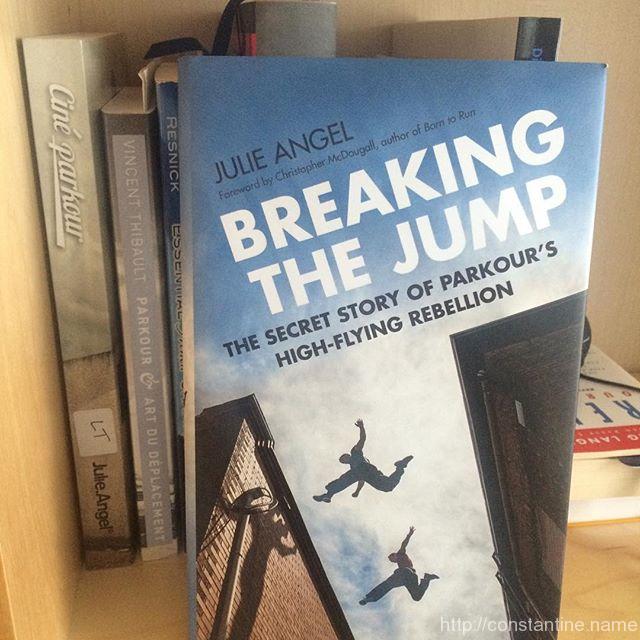
Read all the books! Gee… about a hundred books on my to-read pile, where should this one go now that the pre-order wait is finally over?!

ɕ


§6 – I Choose To Fall!

This entry is part 18 of 37 in the series Study inspired by Pakour & Art du Déplacement by V. Thibault

I’ve now read the entire book several times, and Chapter 6 never ceases to inspire!

Three thoughts:

I may not be the strongest. I may not be the fastest. But I’ll be damned if I’m not trying my hardest.

~ unknown

It ofttimes requires heroic courage to face fruitless effort, to take up the broken strands of a life-work, to look bravely toward the future, and proceed undaunted on our way. But what, to our eyes, may seem hopeless failure is often but the dawning of a greater success. It may contain in its debris the foundation material of a mighty purpose, or the revelation of new and higher possibilities.

Failure is often the turning-point, the pivot of circumstance that swings us to higher levels. It may not be financial success, it may not be fame; it may be new draughts of spiritual, moral or mental inspiration that will change us for all the later years of our life. Life is not really what comes to us, but what we get from it.

~ Chapter 14, “Failure as a Success”, from Self Control, Its Kingship and Majesty, by William George Jordan, 1907

The application in the Ways is to falls in life. To be able to take a disaster or a great failure, with the whole personality, without shrinking back from it, like the big smack with which the judo man hits the ground. Then to rise at once.

Not to be appalled at a moral fall. Yet it is not that it does not matter. The judo man tries by every means not to be thrown, but when he is thrown it does not hurt him and in a sense it does not matter. It matters immensely, and yet it does not matter.

‘Falling seven times, and getting up eight.’

~ “Falling”, from Zen and the Ways, by Trevor Leggett, 1978

ɕ


CANT

This IS why LVPK doesn’t use a certain word.

ɕ


Proteins and Nutrition

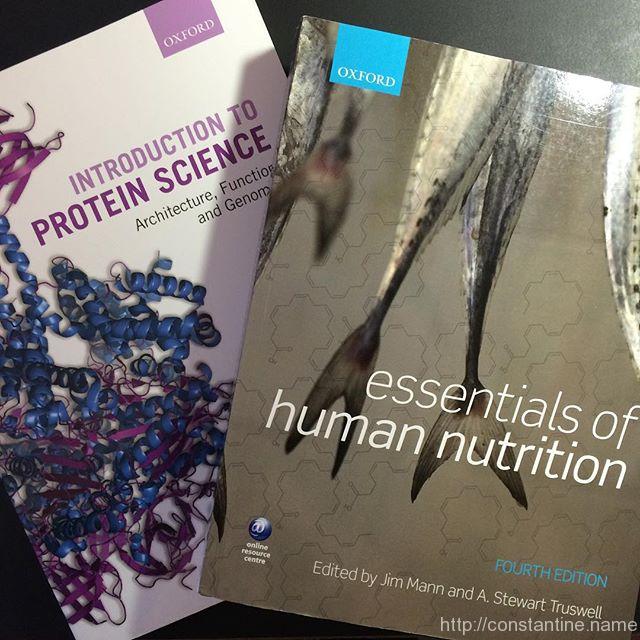
Latest additions to the library. Much grey matter exercise ahead!

ɕ