Chop wood, carry water

There is a well-known trumpet player named Rick Braun. Although a few years younger, he was born in the same city and went to the same high school as my dad. And if my memory serves, they were in high school at the same time and at least knew of each other. My dad played the trumpet in high school, even performing in a band. Many year ago, my dad saw Braun somewhere—a concert I think—and had a chance to speak with him. The story goes that my dad said something complimentary about Braun’s ability and talent. (Yes, this is all hearsay.) Braun’s reply? “What a lot of people mistake for talent is simply a lot of hard work.”

At Time in the nineteen-fifties, the entry-level job for writers was a column called Miscellany. Filled with one-sentence oddities culled from newspapers and the wire services, Miscellany ran down its third of a page like a ladder, each wee story with its own title—traditionally, and almost invariably, a pun. Writers did not long endure there, and were not meant to, but just after I showed up a hiring freeze shut the door behind me, and I wrote Miscellany for a year and a half. That came to roughly a thousand one-sentence stories, a thousand puns.

~ John McPhee from, Omission

slip:4unema1.

John McPhee is a stellar writer. He’s written a lot and, okay, sure, I get that. There are greatest-of-all-time musicians I’ve heard of who still do scales daily 30 years on. And McPhee wrote a thousand puns(!), a thousand titles, and a thousand one-sentence stories cut-down from larger stories. (And go read McPhee’s article right now, about omission.) And now here’s Braun’s comment. Frankly, I’ve heard this sentiment countless times in countless variations: The path to mastery? Chop wood, carry water.

The thing I’m not certain of though, from my dad’s story, is whether the takeaway for him was, “Oh cool, Braun’s just a regular guy who worked really hard!” or “Fudge, I shoulda’ stuck with the trumpet!”

ɕ

Water pump

Have you ever worked a hand-operated water pump? I mean the outdoor, permanently installed ones for pulling up drinking water. There’s a lot of varability to them, but generally there’s a bit of pumping before there’s any fruit to the labor. In my mind, there’s also a particular sound that goes with the initial machinations.

Sometimes, when I want to create a blog post from nothing, I hear that sound. You start on that pump. Then you’d hear the sound change, you’d feel the water make the action of the pump more leaden as the amount of effort changed.

But still, no water yet. You’d lean into it a bit more. Some sounds of water now. A gurgling rising in pitch which you instinctively know means the space for air is dwindling rapidly. And at a hard to predict moment . . .

You get a blog post about water pumps when you were expecting drinking water.

ɕ


The web is like water

There is no question that apps are here to stay, and are a superior interaction model for some uses. But the web is like water: it fills in all the gaps between things like gaming and social with exactly what any one particular user wants. And while we all might have a use for Facebook – simply because everyone is there – we all have different things that interest us when it comes to reading.

~ Ben Thompson from, Why the Web Still Matters – Stratechery by Ben Thompson

slip:4usawe1.

That’s from 2014, and holds up pretty well I think. That the web, “fills in all the gaps,” is insightful. Sure, the technology that defines “the Web” drives an enormous amount of stuff other than written content. But even just the smaller portion that is the written word is a huge swath of time and attention. That speaks well for us in the aggregate.

I still believe that the problem, currently, is simply that people rarely bother to figure out how things actually work. People don’t tinker and change things. Once someone gets the bug of curiosity, it’s a slippery slope from poking and prodding, to tinkering and experimenting, to building and creating; It’s a slippery slope lined entirely with reading.

ɕ


Waterfront

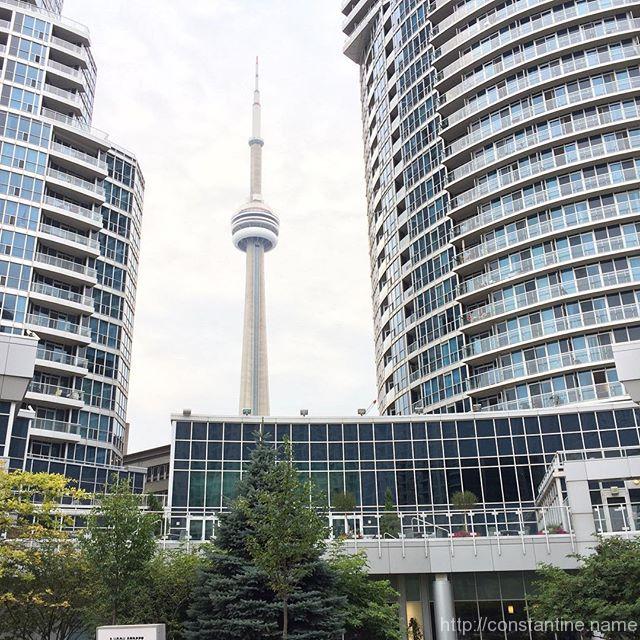
Doing the tourist thing at the Toronto waterfront. Heading to the CN tower soon.

ɕ


Bourton on the Water

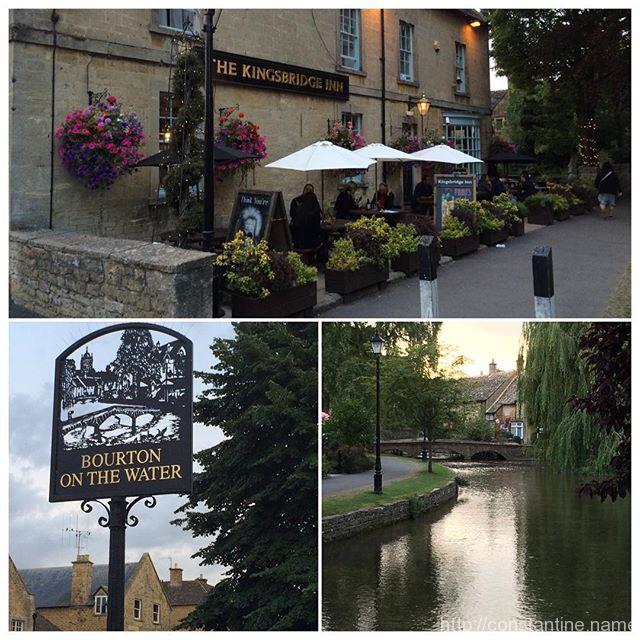
Kingsbridge Inn in Bourton-on-the-Water. A lot of the countryside here looks exactly like Pennsylvania… so much in England to love. (Driving on the left, not so much. But the way the traffic ‘works’ here is SO much better than in the states!)

ɕ


Fish don’t know they are in water

If you know a little history, you might see some of this, and think that today’s culture battles are part of a tradition that goes back to FDR …

If you know a bit more history, you might see that this culture war stems from North Eastern progressive tradition dating back to the US Civil War.

The truth is that our culture war does date to the Civil War. Just not the US Civil War in 1861. It’s the English Civil War in 1640s I’m talking about.

~ Clark from, «http://www.popehat.com/2014/10/10/strange-seeds-on-distant-shores/»

ɕ


KU waterfall traverse

ɕ


Be water

Empty your mind, be formless, shapeless – like water. Now you put water into a cup, it becomes the cup, you put water into a bottle, it becomes the bottle, you put it in a teapot, it becomes the teapot. Now water can flow or it can crash. Be water, my friend.

~ Bruce Lee

slip:4a189.


The eudaimonia machine

Perhaps further outside the clear connections, it also reminded me of the Eudaimonia machine, which I’ve previously written about here and here. It’s “a multipart floor plan that effectively funnels employees[, workers, creators, thinkers] through various spaces with the intention of triggering different mental states. The layout consists of an entry gallery, a social salon, a multi-person office, an archival library, and the chamber—a site for deep work.” One can easily think of the cloister as one more space in such a setup.

~ Patrick Tanguay, from The Cloister & The Starship

I’ve long been an admirer of subtly curated spaces. Sentiers itself is one such space. There, I keep staring at the juxtaposition of a starship and a cloister. There’s just something special about a wide range of experiences. For example, listening to meditative music streamed across the Internet—an incredible tech stack just to make some quiet sounds—while sitting in an ancient meditation posture listening to water gurgle in a downspout. We each contain multitudes, as it were.

ɕ


What does practice ask, as the body keeps changing?

I have a long Aikido background before coming to Art du Déplacement in my forties. I’m in my fifties now. The age of air, this stretch has been caleld — after roots, fire and water. Things that used to take effort don’t. Things that didn’t take effort do. The practice that carried me here doesn’t fit anymore, and I’m still figuring out what I’m going to do about that.

This thread is a path through pieces I’ve written and conversations I’ve had with others, sequenced for someone who’s wondering what their practice is asking of them next. None of it answers the question! But, I’m hoping it makes the question easier for you to explore yourself.

(more…)