Circumspection with Carole Blueweiss

How can podcasting, particularly reflective solo episodes, enable personal growth, storytelling, and audience connection?

Reflecting on one year of podcasting reveals unexpected lessons about authenticity and audience connection.

Some ideas that might be cliché—which is another fear of mine, but nevertheless, it was what I learned—that we are all more similar than different. And it’s worth saying that, because a lot of these parents struggle with being sort of put in a category other than what’s considered normal. And what I realized is, first of all, normal is overrated and that there is no such thing as normal.

~ Carole Blueweiss (13:10)

This conversation explores the challenges and growth associated with podcasting, particularly solo episodes and reflective storytelling. Topics include finding an authentic voice, balancing preparation with spontaneity, and the iterative process of creating meaningful episodes. Carole reflects on how removing notes and speaking freely deepened their authenticity, transforming their approach to podcasting.

Additionally, the conversation dips into universal themes uncovered through interviews with parents of children with special needs. These parents’ stories highlight societal constructs like normalcy and disability, emphasizing shared human experiences. The discussion expands to broader societal issues, such as inclusion and accessibility, while expressing hope for creating empathy and understanding through storytelling.

(more…)
Intelligently

The ideal agent’s frame of reference is thus her whole life, represented as accurately as a human being can remember its history and imagine its future, and lived as intelligently as a human being can exploit its possibilities.

~ Lawrence Becker

slip:4a576.


Subservient to others

Remember that it is not oly a desire for riches and power that makes you abject and subservient to others, but also a desire for quiet and leisure, and travel and learning. For the value you place on an external object, whatever it may be, makes you subservient to another.

~ Epictetus

slip:4a379.


Buzz buzz buzz

Anicet Desrochers slips the small, crowbar-like tool underneath the lid of the beehive and cracks the propolis seal, a glue that bees make from resin. He puffs a smoker over the box as he pulls and examines the honeycomb frames with bare hands. The smoke, he says, disrupts the bees’ alarm pheromones, making them groggy, while also causing them to gorge on honey and nectar, a possible response to believing there is a fire. When they’re full, they’re less likely to sting.

~ Shaun Pett from, How a Canadian Beekeeper Breeds New Queens – Gastro Obscura

slip:4uaaai9.

Let me think about that… NO. But it’s a great article that explains the bee keepers’ extreme efforts to breed the Queens. Fascinating stuff.

…but I’m not putting my bare hands in no bee hives.

ɕ


Persistence with Bruce Devereux

How does persistence shape the creative and personal processes involved in podcasting?

Audio’s timeless richness offers a counterpoint to the overwhelming world of visual media.

Every time I finish an episode I step right back into my little recording booth and think, ‘What’s next?’ It sort of builds that cycle back up again. So that’s been a really positive experience.

~ Bruce Devereux (2:18)

The conversation explores the role of persistence in podcasting, reflecting on its significance in sustaining creative momentum and overcoming challenges. The discussion highlights the iterative process of producing episodes, where the cycle of finishing one and immediately conceptualizing the next becomes an energizing force. Persistence is seen not only as a key to podcasting success but also as a framework for managing the broader challenges of creative work.

Additionally, the conversation goes into the distinction between audio and visual storytelling, emphasizing audio’s unique ability to engage listeners in an immersive, focused experience. Bruce contrasts the richness of audio with the ubiquity of visual content, advocating for simplicity in both podcast production and lifestyle. Themes of managing creative thoughts, balancing personal input with guest presence, and crafting meaningful soundscapes also emerge, painting a holistic picture of the podcasting journey.

(more…)

Earnest practice

The teachings of your instructor constitute only a small fraction of what you will learn. Your master of each movement will depend almost completely on individual, earnest practice.

~ Morihei Ueshiba

slip:4a408.


Corning Museum of Glass

In the past, I’ve enjoyed posting these sort of photo essays. (For example, there are several of them from a 2014 adventure in Colorado.) The hard part, of course, is getting somewhere and taking the photos.

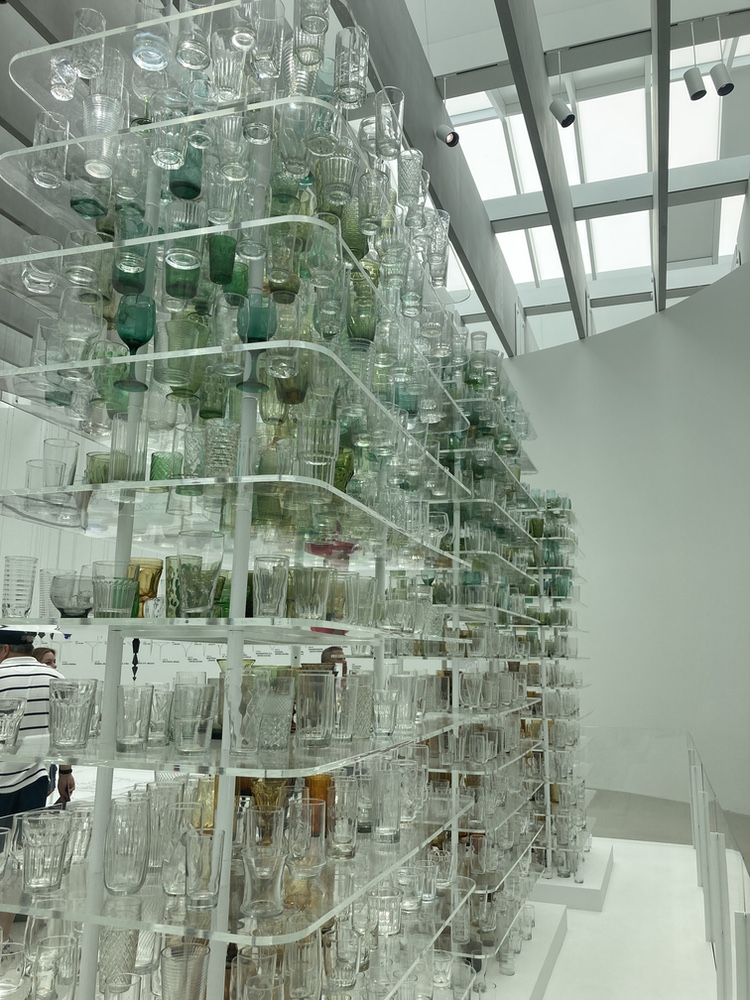
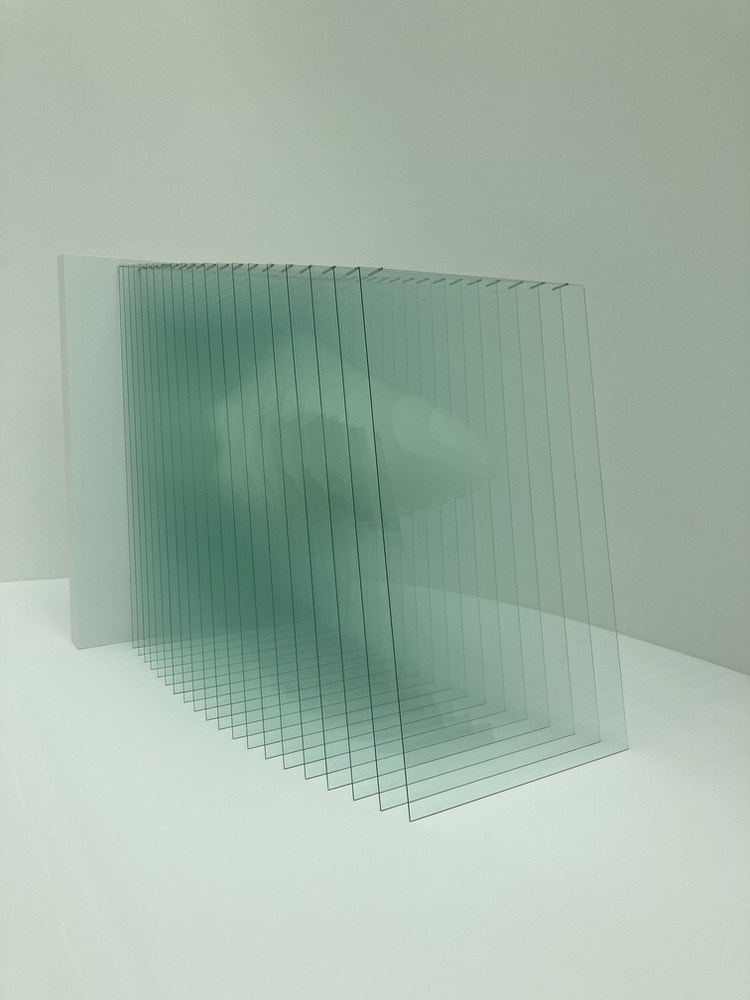
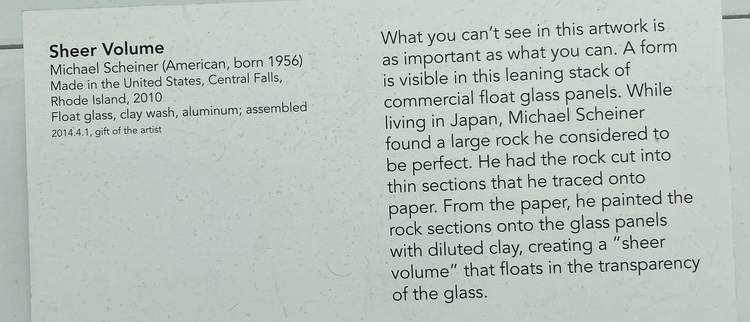
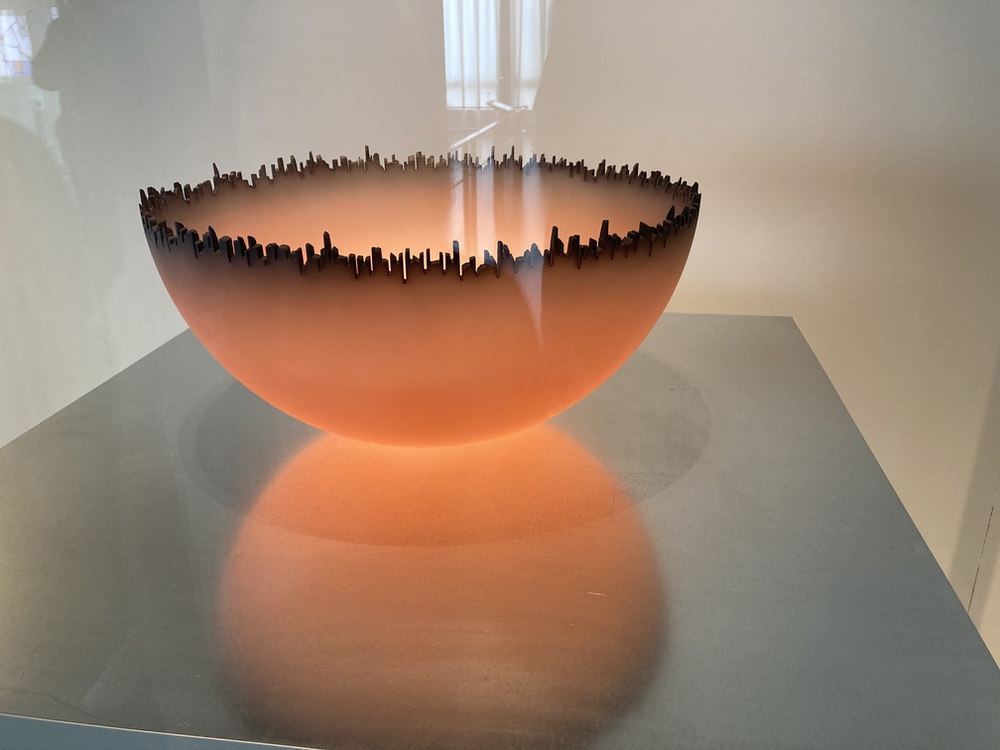
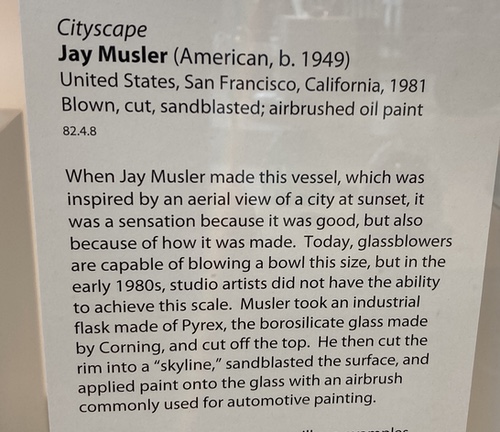
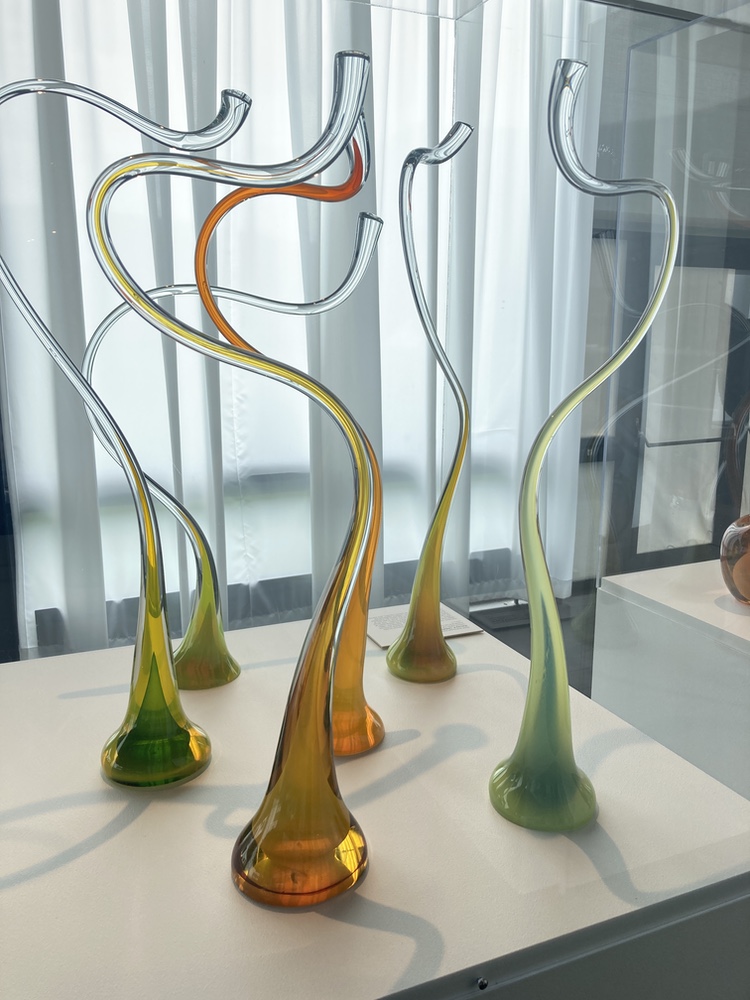
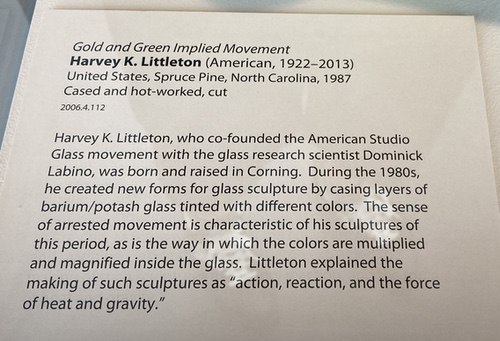
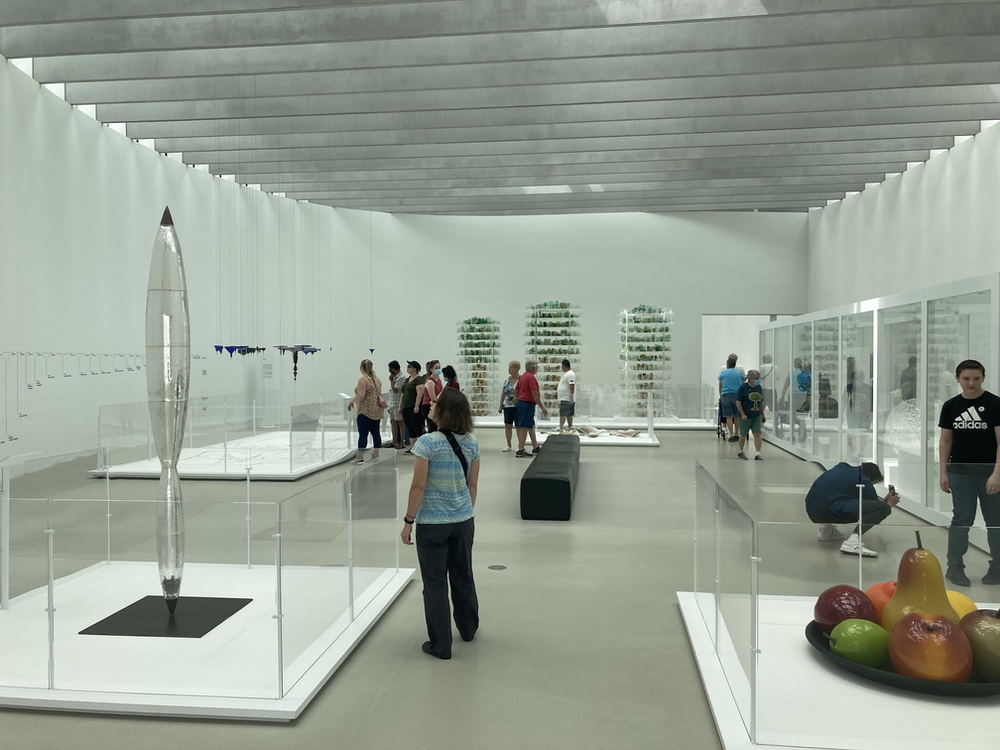
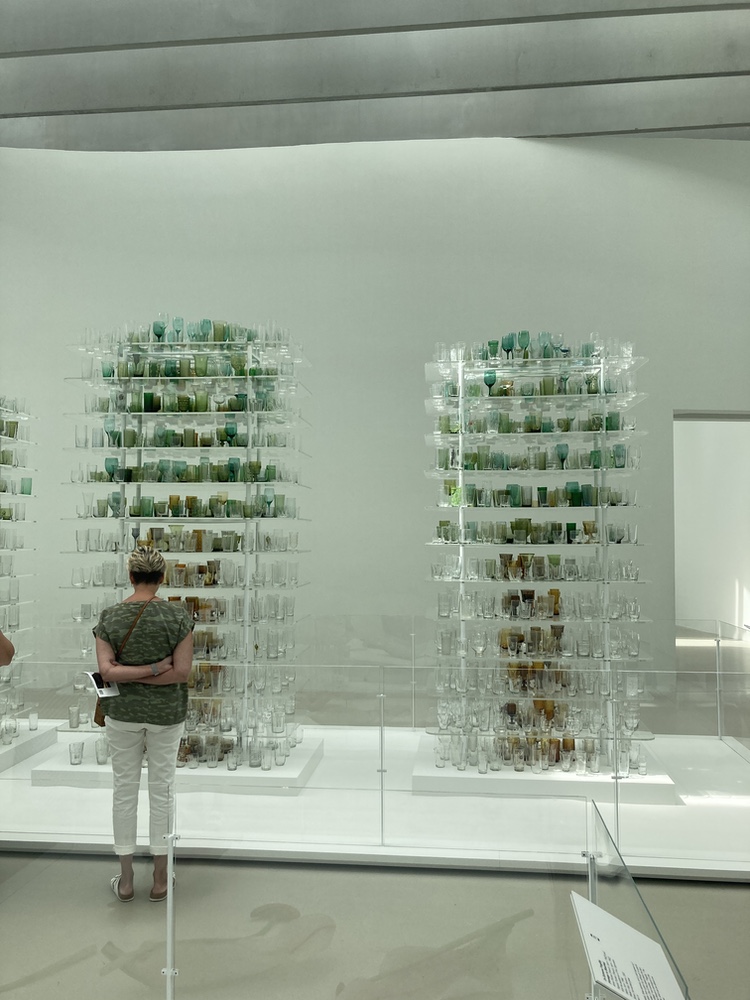
Back in August, we spent a half-day at the Corning Museum of Glass, in Corning, New York. (Yes, the Corning, New York, of Corning Ware repute.) It turns out that Corning is quite the hot spot—sorry, couldn’t resist—for glass work in general. To wit:

If you’re going to make a gallery for displaying glass, this is the way to do it. More glass than not in the ceiling with hung-vertically dividers; The entire space is flooded with natural light, but you don’t see the light’s source, unless you look straight up. The ceiling is flat; the space is not rectangular.

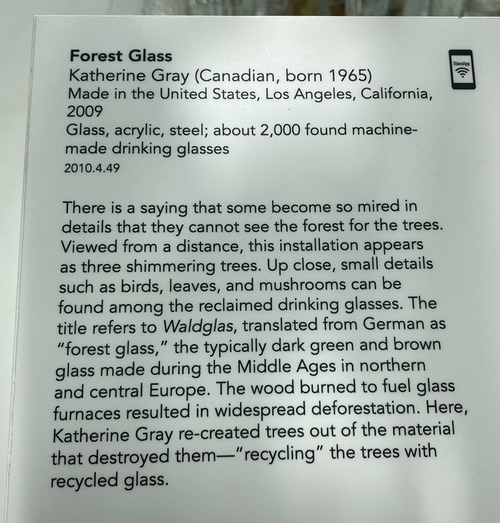
Note the three “trees” at the far end of the room. They are not what they appear to be.

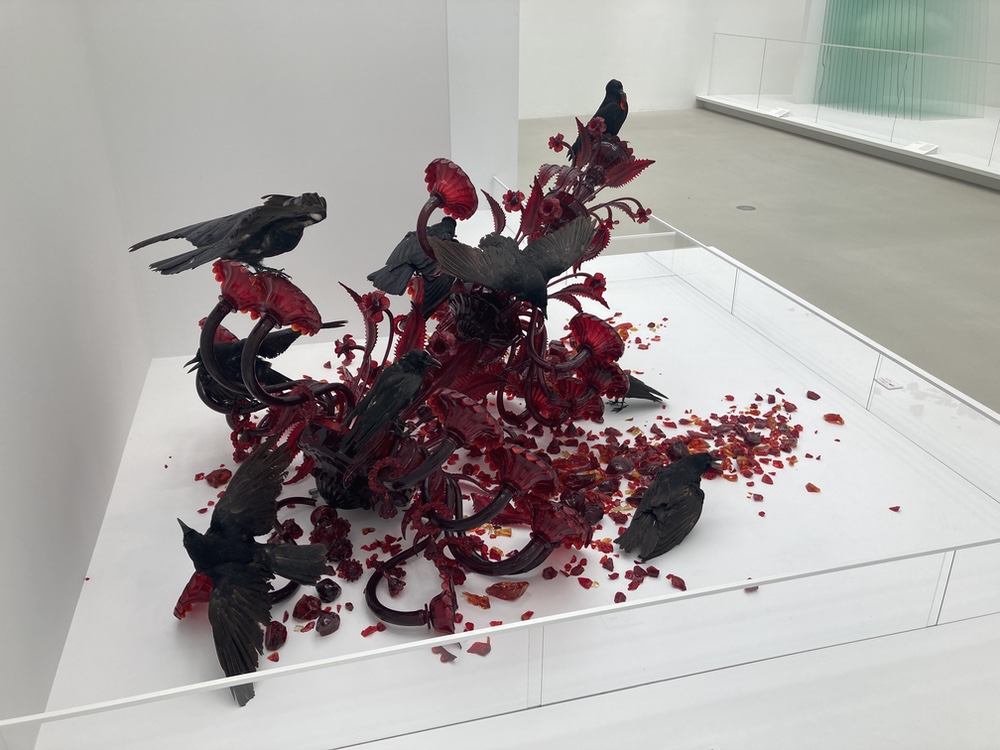
In another space, just around the corner…

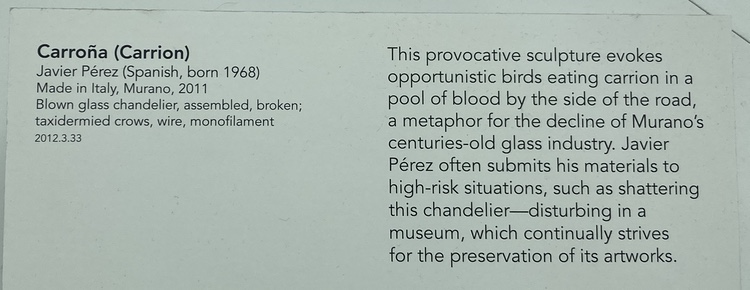
Murano, as in the islands in Venice, Italy. In the top-right of that Carrion’s photo, you can see this piece…

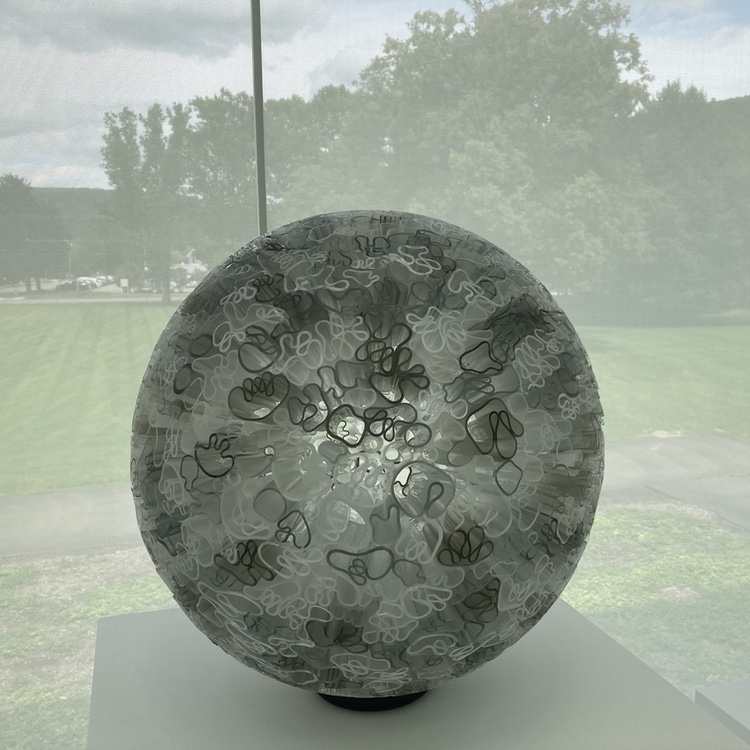
And this sphere, for which I neglected to snap the description. It’s composed of folded ribbons of glass, and it’s appearance is the same whatever direction you look at it. There’s a bright, omni-directional light inside. The glass wall behind the piece extends the entire height of the building, not just the floor of this gallery. There’s an applique that is about half-round holes, half opaque white—so the outside world is visible curiously obscured as if by fog.

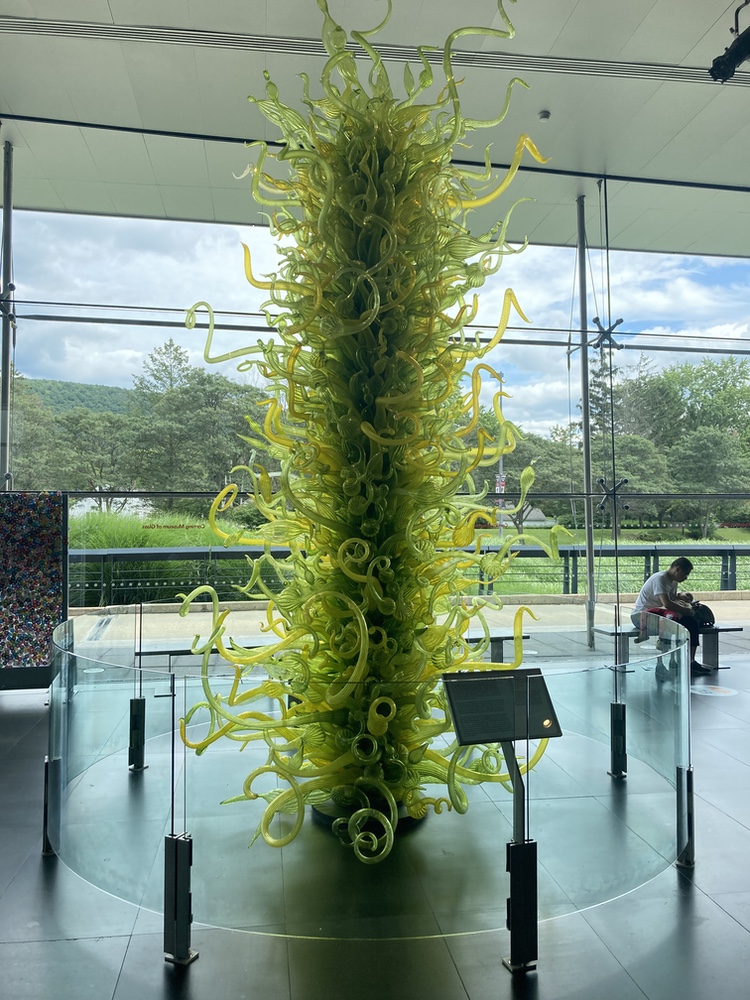
Hey, I’m pretty good at this photo essay stuff! Not. The trick it to have spectacular things to photograph. Like this iconic piece by Dale Chihuly. It’s “simply” hundreds of similarly blow glass pieces which are individually, (each has a hole in the interior end,) slid onto the countless small pins sticking out of the central armature.

In another gallery, there were countless, large cases with displays like this, where I kept going, “wat? holy crap!” (I’d make a great, R-rated, museum tour guide.)

Really. Holy crap!

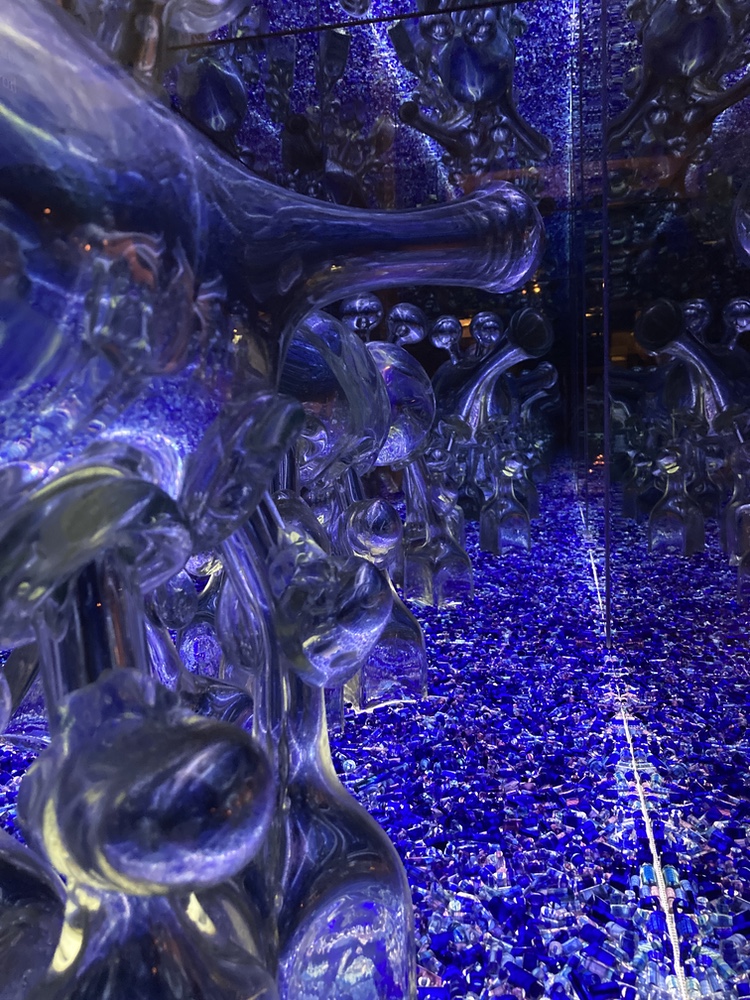
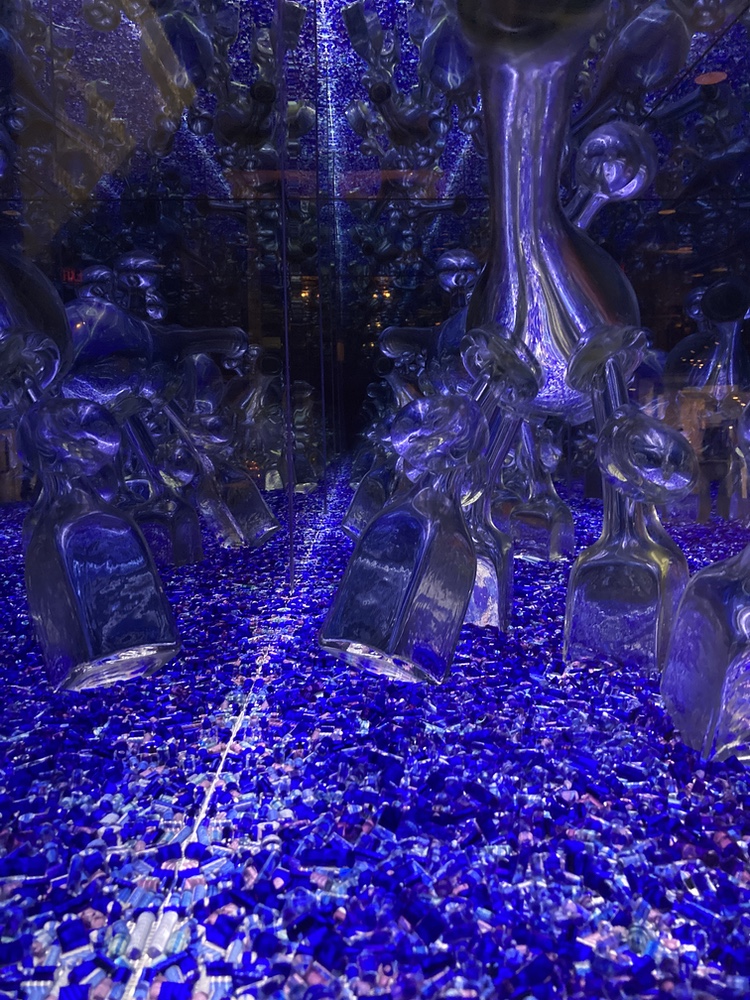
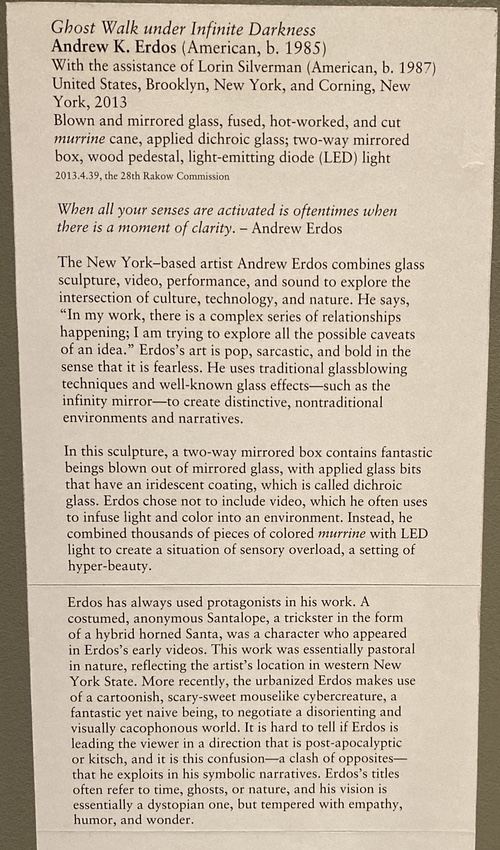
Finally, I’ll leave you with this piece. (I have photos of many more, and there were thousands of things I gaped at and didn’t photograph.) This was very difficult to capture in photographs. There are two, four-legged figures inside this case. They have legs made from square-sided bottles. The two figures are similar, but not identical, and are posed marching, one after the other. I’ve taken a photo from before them, looking past them on one side and the other. The case is a size that you could put your hands on either end and is in a darkened area in the museum. There are only two figures in the case— everything else is repeated, internal reflections…

In summary: WOW.

ɕ


Facing two ways

Choose, then, which you prefer, to be loved as you used to be by those who loved you formerly by remaining like your former self, or to be better and not meet with that same affection. For if this latter course is preferable, direct yourself at once to that, and do not let the other considerations draw you away from it; for no one can make progress while facing two ways.

~ Epictetus

slip:4a385.


Attitude and assessment

It seems likely that Jack Sparrow’s admonishment about attitude is an echo of Aurelius’s reminder to himself two thousand years earlier. This idea that the attitude and assessment is most important has really helped me relax. Things will never be done, and I create all of my problems. I’ve come to understand that concrete goals and clear progress are detrimental to my health. They’re necessary, yes, but detrimental. The more goals I set, the more clear progress I can measure, the worse off I become; Mentally and physically those things grind me down.

Since they’re necessary—without them, it seems I’d simply devolve to being a blob on a sofa—I must have something in my life which counters the damage so that I can continue setting some sane number of goals and measuring some concrete progress. One of those things is practicing my attitude and assessment. I set aside time for this each morning. It’s not meant to take long. 15 minutes is really long enough. I read through a prompt from a set that I’ve created for myself. I read through a selection from some key books. I write in my journal, usually copying a single new quote from my collection as the beginning of the journal entry. I write some thoughts. I write some observations from the previous day.

Unfortunately, just about every morning, my urge—affliction? addiction?—to measure and create goals creeps into my morning reflection. Why am I taking all this time? (I’m up to something like 4,000 hand-written pages of journals!) Am I getting benefit from all this reflection? What’s the optimum “dosage” of reflection which yields the most benefit? How do I even measure the benefit? Is that page—that one I just wrote, an instant before these questions pop into my mind—worth writing? If I read that page in a year, will it in any way help me? Is the entry for today long enough? Should it have more “here’s what I did yesterday,” type stuff, or less? Maybe I should be also making a small note on my mood, or how I feel physically? Maybe I should… Oh, crap.

Close the journal, and go on with today!

ɕ


How hard can it be with Kate Field

What motivates someone to transition to farming and podcasting, and how do these pursuits interconnect with larger societal and environmental issues?

Discover how personal passion for storytelling evolves into impactful podcasting about regenerative farming.

We sort of got to this point in our careers and we just looked at each other and went, ‘Oh, this is not fulfilling.’

~ Kate Field (7:50)

The discussion explores a transition from urban life and academic careers to a rural farming lifestyle, driven by dissatisfaction with consumer culture and a desire for meaningful, fulfilling work. Kate describes the initial challenges of establishing a farm, including the hard labor and the steep learning curve. She shares how cheesemaking became a practical entry point into farming and an opportunity to align their values with their lifestyle.

The conversation touches on broader themes such as the importance of sustainable farming practices, the environmental impact of agriculture, and the misconceptions surrounding food production. Kate emphasizes the role of agriculture in addressing climate change and how their podcast helps amplify this message. She also discusses the social transformation that comes with rural living, highlighting the strength of local community bonds and how these relationships differ from those in urban settings.

(more…)