Getting things done

GTD

The fact that you can’t remember an agreement you made with yourself doesn’t mean that you’re not holding yourself liable for it. Ask any psychologist how much of a sense of past and future that part of your psyche has, the part that was storing the list you dumped: zero. It’s all present tense in there. That means that as soon as you tell yourself that you should do something, if you file it only in your short-term memory, that part of you thinks you should be doing it all the time. And that means that as soon as you’ve given yourself two things to do, and filed them only in your head, you’ve created instant and automatic stress and failure, because you can’t do them both at once, and that (apparently significant) part of you psyche will continue to hold you accountable.

~ David Allen from, Getting Things Done

I talk often about David Allen’s, Getting Things Done. It’s one of a few books which I keep extra copies of on hand to give to people. There’s a Wikipedia article, Getting Things Done, but it talks more about it rather than describing what/how to do it.

I recently found a talk given by Allen which has been repurposed as a short podcast; Getting Things Done: 55 – Removing System Drag is well worth the few minutes it takes to listen.

Aside: Learning when and how to “go deep” is an important part of what you gain when you understand GTD. If the thought of spending five minutes listening to someone teach you something abhors you, you may need GTD more than you think. /preaching

If, however, what Allen said interests you, a fellow podcaster named Jey Jeyendran, (of Productivity Heaven,) is working on a mini series of podcasts on Allen’s GTD. They’re bite-sized, inspiring and you should check them out. https://productivity-heaven.simplecast.com.

É•


US Parkour Association (part 2 of 4): National governing bodies, Board of Directors, and getting involved

What is the purpose and vision of the United States Parkour Association (USPK), and how does it aim to shape the future of Parkour in the United States?

USPK seeks to unite the Parkour community under a shared vision for safety, legitimacy, and inclusivity.

This episode explores the purpose and necessity of the United States Parkour Association (USPK), focusing on its role as a national governing body for the Parkour community. Topics include the importance of legitimacy in representing Parkour to external entities like governments and media, the development of safety guidelines for gyms and events, and the need to preserve the culture and inclusivity of the sport. Members of the transitional board share their vision for how USPK can guide the community while ensuring that its direction remains member-driven.

The discussion highlights the structure and goals of USPK’s transitional board, including the emphasis on transparency, broad representation, and accessibility for members. The board envisions creating a sustainable framework that encourages collaboration among individuals, organizations, and businesses passionate about Parkour. Special interest groups (SIGs) and other mechanisms are designed to empower members to contribute actively to areas such as certifications, competitions, and educational standards.

(more…)

WebSub or PubSubHubbub

I recently found James Cridland’s article, A Podcast Industry Guide to WebSub, or PubSubHubbub. It’s a good unpack of how the RSS-is-a-pull-service impediment to scaling is solved by creating aggregators that support pushing RSS update notifications.

…how does your podcast player notice that daily podcast is out, without polling the podcast’s RSS feed every minute?

I’ve added a link to Cridland’s article to my Deep Dive About Podcast Feeds.

É•


The art of starting a fire

During heating season, each morning begins with my ducking outside for the ash pail and then shoveling out the stove. Then with a selection of kindling and a medium-sized piece or two, I build a small work of art and set a match to it. I’ve done this, easily, a thousand times. I’ve read one book entirely about burning wood, and several about thermodynamics and chemistry. I understand the different types of wood and how to season it, the convection of air, and I know intimately how the house and stove interact. I’ve intentionally experimented with variations of the art, including working with more stoves and fireplaces than I can recall. Usually, I have a roaring fire in 30 minutes—sometimes 20—with not the least hint in the house of the smell of a fire. Occasionally it doesn’t work well. Most of those mediocre attempts or outright failures are immediately attributable to my having cut some corner. But every once in a great while, the art eludes me despite my best efforts.

There’s a large lesson in that.

É•


Road trip to Dylan’s

This entry is part 3 of 4 in the series The interviews from my perspective

Dylan Johanson / Episode 15

I met Dylan Johanson in 2013. I went to an ADAPT certification course at Kutztown University run by Parkour Generations, and Dylan came down from upstate New York. He hadn’t really had a chance to train with a lot of other people, so this was the first time that he had had a chance to be in a group of roughly 27 candidates for the course, which was enormous. He was just so happy. He was basically running, jumping or laughing the whole time because he had never found such a large group of people with the same passion.

The first day he was sort of playing the, “I’m old,” card because he was in his late 30s at the time, having started parkour after quitting his previous business life. When he eventually bumped into me, it was like, “hey, fellow oldster!” We just sort of clicked, and we wound up walking from the training spots to where lunch was and back and forth. When I started doing the podcast years later, I was always thinking his story was interesting because of—as he talks about in the podcast—his early “days of the ninja”; He would just pick a straight line through Kingston on a Sunday when everything is closed and run over fences, dogs and all that.

(more…)

Sedimentation and erosion

I have this image of our home as a bunch of related-rates problems: There’s inflow and outflow. Energy: In through my electric meter, out through lighting, waste heat and heating/cooling, water heater, etc.. Climate control: Heat flow in from heating/cooling system, the wood stove, the sun, versus losses through the attic, windows, doors, etc.. Mass: The balance of the rates of the flow of all the stuff.

Ever stop to think of that? Think of your home as a sealed balloon which has two, (or more of course,) doors, (garage doors count,) through which everything passes. Everything—no exceptions—passes in first, and then out second. Everything–every single thing, including the people–is only inside temporarily. The people come and go most frequently, (some pets might exceed some people I suppose,) and some things might remain inside for decades. But still, inside only temporarily.

You know that at some point you, (and everyone else if you share your home,) will go out for the last time. You might carry some things with you on your last exit, or you might arrange for someone else to come in, (and go out and in and out and in and out one last time,) to remove things after you go out for the last time. And of course eventually the entire structure will be removed and certainly at that point, everything you brought in—everything that was temporarily still inside—will go out at that point.

Where does everything you carry in from the market and grocery store go? Where does the furniture go? The books? The nick-naks? The packages and packing material from purchases? The clothes? The postal mail? The firewood you carry in is vastly more massive than the ashes you carry out; where does all that mass go?

Based on how the things around me make me feel, I know I have too much stuff. When I think of our stuff this way—as just a mass of stuff that’s temporarily inside our home—it’s much easier to keep my life under control. Too much stuff? …all I need to do is make sure more goes out than comes in, on average, and the problem will subside.

…and I can have fun with it. If something breaks, is worn out, or I’m done with it, that’s the outbound mass for today! Can I recycle this random thing? Can I FreeCycle this random thing? I no longer feel bad about sending things out, (wether that means landfill, recycle, giveaway, whatever… as appropriate.) Instead, I now find I feel bad about bringing things in. Each time I consider buying something, I think: Do I want to bring that into my life?


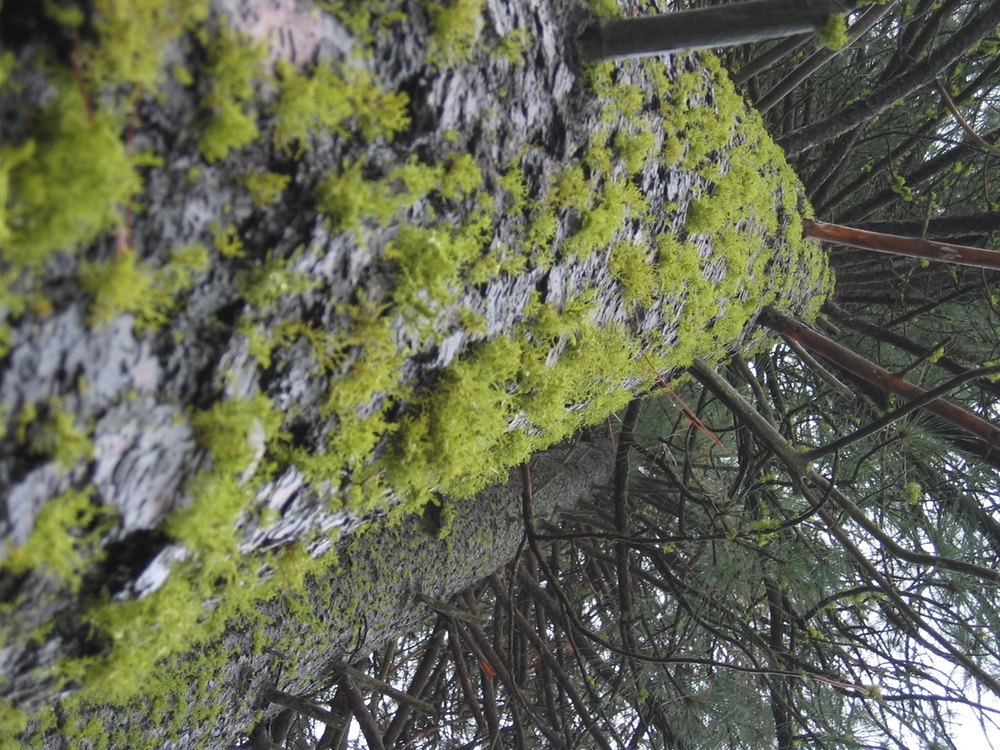
Tree from Badger Pass

Photo circa 2008 from the actual pass above Badger Pass Ski Area in California.


Did I mention I gave up coffee?

They even offered some decent life strategies: look at everything, pick up anything you can, avoid wizards, and always haggle for jetpacks.

~ Peter Welch from, Coffee is Hard

slip:4usico1.

The quote has nothing to do with what I’m writing today. The only relation is the word coffee. That said, you should totally go read Welch’s piece. You should totally go read everything he’s written; it’s generally awesome and often downright alarming. I digress.

On a Sunday morning–June 23, 2019 to be exact–with a congratulatory high-five, I gave up my morning coffee. I’d been thinking about doing so for months. Truth be told, the catalyst that day was to support a particular lady’s efforts wrestling with migraine headaches. With a brave, “huzzah!” my fate was sealed.

There’s a song by Frank Sinatra, “Hallelujah, I lover her so,” which begins with a telling verse:

Let me tell ’bout a gal I know
She’s my baby and she lives next door
Every morning ‘fore the sun comes up
She brings my coffee in my favorite cup
That’s why I know, yes, I know
Hallelujah, I just love her so

Setting aside the completely wacked concept of your girlfriend living next door and bringing you coffee before dawn. (1969 America. amiright?) I want to just draw attention to the coffee being how he knows he loves her. That’s just wrooong.

Over a few decades we had settled into a morning routine that started with the coffee maker. As anyone everywhere will tell you, if you drink coffee every morning it just becomes the neutral baseline, and without it, things aren’t happy-land. Occasionally, obtaining the morning drug hit would be a challenge leading to un-happy-land.

But mostly, it just meant getting out of the freakin’ bed was rough. …and like the addict I was, I went to the drug quickly.

Is it easier to get up now? Absolutely.

Do I spring out of bed like a happy rabbit? Absolutely NOT. But it’s better. I still need a bit of time to wake up fully–which I do via some morning stretching and movement.

Do I still drink it? Absolutely. Anytime I go anywhere, and I find myself near a real coffee shop . . . hello darkness my old friend, I’ve come to talk with you again.

É•


I am not my work

“I am not my work,” is one of those aphorisms that I need to have etched into my cornea. Have you seen watermarks on images? I need this phrase watermarked directly onto my vision.

Long ago–if memory serves–I was motivated by extrinsics. Doing something well resulted in external confirmation; so generating that external confirmation was easy for me. But–as everyone knows–it’s a vicious cycle of saccharine sweetness. Eventually, that lesson was learned. The obviously better option is to be intrinsically motivated. Check. Got it.

Unfortunately for me, there’s another onion-skin layer to peal away below, “be intrinsically motivated,” which is to not take criticism of work done as criticism of myself. The immediate hack is that I’ve inserted a mandatory, “thank you,” in response to criticism. This doesn’t fix the problem of identifying myself with my work. But it does buy me a few moments. By the time I’ve said thank you and acknowledged the critic, it’s become possible to see the criticism as being ‘of the work.’ Crucial moments indeed.

É•


Colin MacDonald: Parkour design, dream builds, and inspiration

How can public spaces be designed to integrate parkour features while balancing community needs and architectural aesthetics?

Colin MacDonald discusses his experience designing parkour parks, and what he’s learned from the process. He shares thoughts on his creative process and inspirations before explaining more about Landscape Architecture and the program he is in. Colin unpacks some of his personal design and build dreams, along with the realities that affect them, and explores the connection between sculpture and parkour design.

I think that a well-designed parkour park—compared to something like a well-designed skate park—has the potential to serve a lot of populations.

~ Colin MacDonald (11:05)

Colin McDonald leaps into the creative and logistical aspects of designing parkour parks, exploring their potential to serve communities beyond the parkour practitioners themselves. He reflects on projects like Rose Park in Boise and Penzer Park in Langley, highlighting the balance between making a space inviting for movement and considering broader urban challenges. Colin also discusses the aesthetic and functional aspects of his work, emphasizing the importance of materiality and community integration.

Colin explores his influences, from urban sculptures to conversations with other parkour architects like Mikkel Rugaard. His interest in creating multi-use spaces reflects his vision for inclusivity and accessibility in public design. Beyond this, Colin shares insights on evolving parkour spaces from purely functional sites to places that are inspiring and aesthetically pleasing, contributing to a more dynamic urban environment.

(more…)