7 for Sunday is a weekly serving of 7 things for you to savor. — It’s an email containing my reflections on interesting things I find laying about, seasoned with some quotes from my collection. See https://7forsunday.com/.
Inside this box is a thing of beauty—and absurdity. It’s a one-of-a-kind puzzle created just for me by one of the greatest puzzle makers in the world. It is, almost surely, the hardest puzzle ever to exist. But before I open the box, let me tell you how the puzzle came to be, and why I think it’s not a trivial pursuit.
People are wise beings; they possess the ability to live according to the dictates of their intellect, and sooner or later, they will evolve from a state of violence to a state of complete harmony and understanding. And every act of violence makes this time more distant from today.
Modern wellness, at its core, is a self-sustaining doom loop of precautionary, aspirational consumption: Buy to be better to buy more to be better still. Which is why, despite Raphael’s arguments, I don’t fully buy that wellness has taken on the role of religion. Instead, in classically entrepreneurial American fashion, it’s become extra unpaid work—the very thing we don’t need more of and truly don’t have time for.
I’d never really thought of it as “exhausting” until I read this article. Now I’m thinking that what I’ve been rebelling against, in the last year or three, is my self–imposed, continuous–improvement mindset of wellness. What I really want to do, is nothing; literally nothing in the sense of just lay in a hammock for—I dunno—a week, maybe much much longer. I’d thought, again in the last year or three, that I’d insulated myself from the outside effects Gilbert describes so clearly, but now I’m not so sure. I’m definitely way down the downward–slope side of spending money on “wellness.” But I’m definitely aware that I spend a lot of time thinking about, arranging, tweaking, planning, assessing… around wellness. Food for thought, indeed.
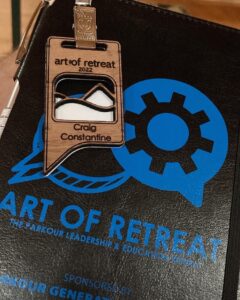
For several years I’ve been attending the Art of Retreat events in North America. Originally they were held in New York City, but the latest three were held outside of Seattle. I’ve been recording conversations for Art of Retreat’s own podcast over the years. If you’re interested in what goes on behind the scenes, I tried to unpack some of it over on a topic in the Podcaster Community, Field Recordings at Art of Retreat 2022.
I have a habit of trying to capture interesting photos from airplane windows. Often it’s solar or weather phenomenon, but on this trip out to Seattle I was surprised to see these forest fires. Fortunately, they weren’t very close to where the event was held, but “fire fog” was thing during much of the time I spent in Seattle and all of the time at the event.
Photos from the flight out to Seattle WA.
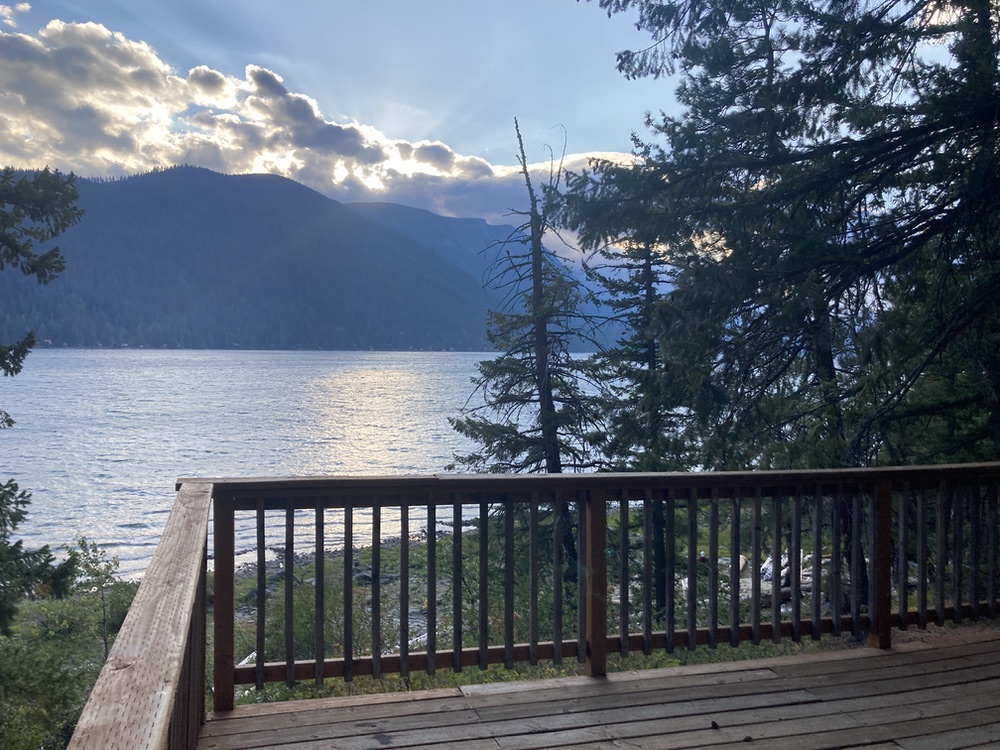
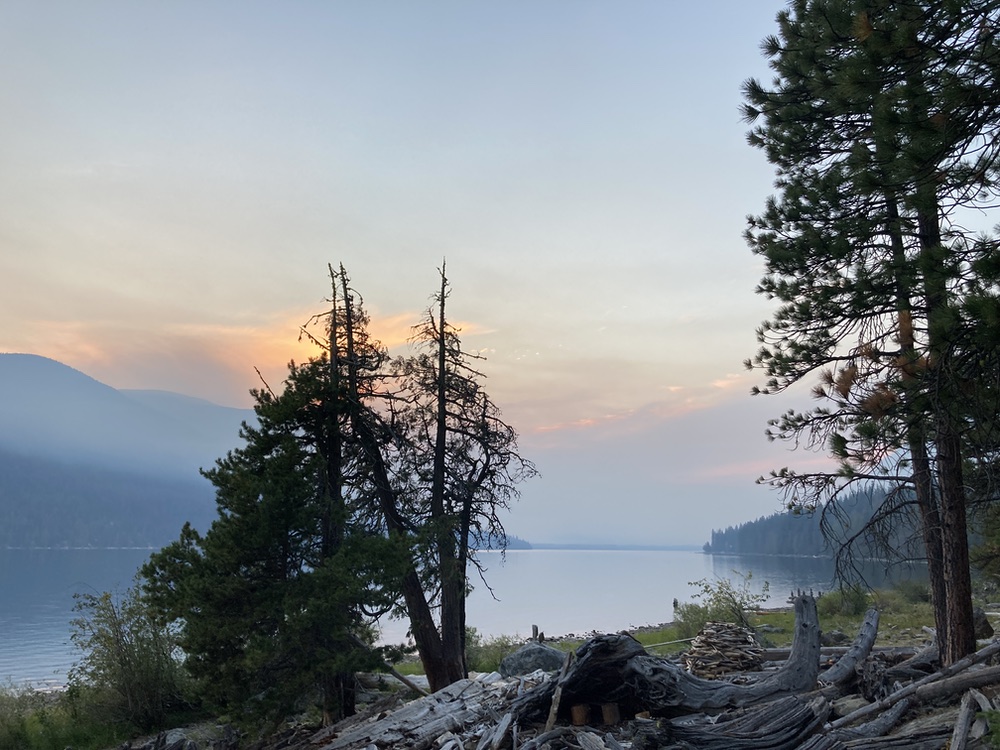
A few shots from the location where the event was held…
View from the bunk-house porch, and from the lake shore.
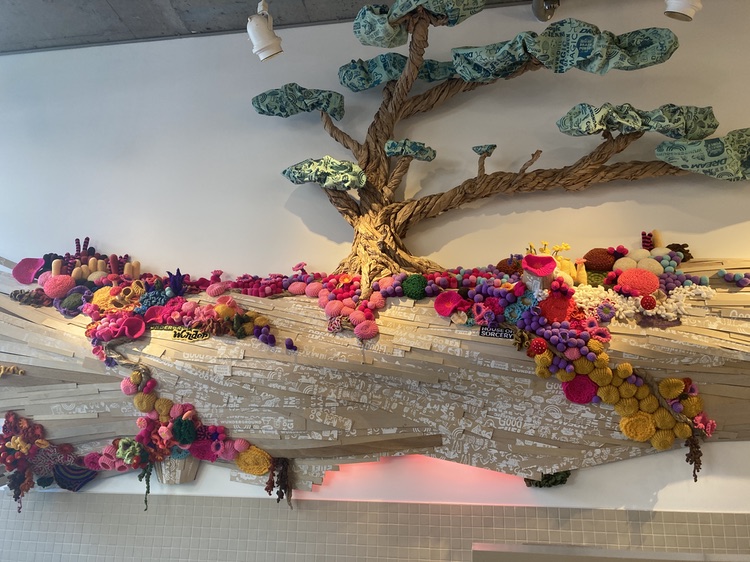
And one last random shot from a cool, mushroom–infused coffee spot in Seattle, Wundergrond Coffee.
The more fun your work, the less likely it is to set off these triggers. You won’t struggle to focus—tasks will attract your attention because they’ll be far less tedious, frustrating, challenging, and so on. There are a lot of strategies for overcoming procrastination. But making a project more fun disables a bunch of procrastination triggers at once, while also making your work more enjoyable. It’s a great strategy.
Great little article from Bailey with great points about the really common things that trigger procrastination, and some ideas on how to beat each one. What’s been working for me for a while is something inspired by Yoda’s comment that, “named your fear must be, before banish it you can.” I can tell when I’m procrastinating; perhaps not always, but definitely often. At the point of realization, I play the name–game: “Craig, what exactly is it that you don’t want to do?” Then like the school guidance counselor always trying to talk me out of sabotaging myself into detention, “Are you sure that’s the thing? Be specific.” Upon realizing I’m still in their office, “I don’t think you’re as sure as you think you are. Can you explain it to me like I’m 5 years old?” Until eventually, it’s so blinding clear what I need to do (or skip, or change, or screw up 3 minutes of courage, or whatever) that I just freaking stomp that procrastination.
When circumstances scare us, our imagination tends to take over, filling our minds with endless anxieties. You need to gain control of your imagination. A Focused mind has no room for anxiety or for the effects of an overactive imagination.
In the military they speak of sleep discipline–meaning it’s something you have to be good at, you have to be conscious of, something you can’t let slip. We only have so much energy for our work, for our relationships, for ourselves. A smart person knows this and guards it carefully. A smart person knows that getting their 7-8 hours of sleep every night does not negatively affect their output, it contributes crucially to their best work.
Know that old trope about if you could go back and tell yourself something, or send yourself a letter? …and most people—including me!—say something like: No I wouldn’t because I’d not be who I am now without those mistakes! Yeah no ima take that back. Note to past self: Yo! Go the f*<k to sleep.
And maybe… just sayin’ spitballin’ here… try gettin’ up early if you really want to jump back on whatever it is you think it’s worth staying up for tonight… ¯\_(ツ)_/¯ what do I know.
You only need that lesson once. That wasn’t the standard, and you know what the standard is. Hold the standard. Ask for help. Fix it. Do whatever’s necessary. But don’t cheat.