Reading time: About 5 minutes, 900 words
Get 7 for Sunday in your inbox. → Subscribe here.
This issue is https://7forsunday.com/79

Reading time: About 5 minutes, 900 words
Get 7 for Sunday in your inbox. → Subscribe here.
This issue is https://7forsunday.com/79
I have had the privilege of standing—not in the exact cedars and mountains you’ll discover below—but nonetheless in cedars, in mountains, in northern Japan. It wasn’t a pilgrimage. But it sort of was. It was a long train ride. A very long walk. A very nearly exhausting long ascent. No guide. Just a curiosity. Just two of us. At the top… I realized that the journey—if we had wanted to continue—had only just begun. Choices about time and commitments to others were made.
As a faint mist settles in among the towering cedar trees (some more than 1,000 years old), our funeral procession slowly ascends Mt Haguro’s stone stairway. It’s summer, but the air here is still cool. When the poet Matsuo Bashō made a similar journey through these holy mountains in 1689, he wrote a haiku describing the summer wind being ‘scented’ with the clearly visible snow of Mt Gassan in the distance. Today, it smells of pine needles and earth.
~ Tim Bunting from, More radical and practical than Stoicism – discover Shugendō
Elsewhere, this is 4upyie4. — slipbox
Is mine a story I’ve shared, or a suggestion?
ɕ
He that loves reading has everything within his reach.
~ William Godwin
Elsewhere, this is 4a1395. — slipbox
Three words matter much: Not me, I’m certain I am uncertain. I’m not simply uncertain. Not simply indecisive, beset by unknowns, nor stymied by possibilities.
The virtue of intellectual humility is getting a lot of attention. It’s heralded as a part of wisdom, an aid to self-improvement and a catalyst for more productive political dialogue. While researchers define intellectual humility in various ways, the core of the idea is “recognizing that one’s beliefs and opinions might be incorrect.”
But achieving intellectual humility is hard. Overconfidence is a persistent problem, faced by many, and does not appear to be improved by education or expertise. Even scientific pioneers can sometimes lack this valuable trait.
~ Michael Dickson from, Intellectual humility is a key ingredient for scientific progress
Elsewhere, this is 4uteie8. — slipbox
The compass for me is, “so what?” When I’m certain of something, I ask myself: So, what? Connecting that which I’m certain of, out into the world via, “so, what?” challenges me to look at the underpinnings of my beliefs, and the integration with my knowledge in total.
ɕ
What is the difference between adversity and challenge in the context of conversations, and how can one navigate these dynamics to foster curiosity and deeper understanding?
Exploring the fine line between adversity and challenge can transform the nature of our conversations.
In the dialogue between Craig Constantine and Jesse Danger, the conversation kicks off with a contemplative inquiry into the nature of conversations themselves, particularly the nuanced differences between adversity and challenge. Craig introduces this theme by reflecting on a quote from documentary filmmaker Errol Morris, sparking a discussion on the dynamics of adversarial interviews versus those driven by genuine curiosity. The duo delves into the observation that adversarial interactions, often characterized by a gladiatorial theater, tend not to be fruitful in learning or uncovering new insights. This discussion underscores a mutual agreement on the importance of fostering conversations that are alive with exploration and inquiry rather than contention.
I agree with everything you’re saying. I think from Errol’s quote, my first reading, I was like: Well, of course, there are adversarial interviews. But as soon as I thought about it more, then I came to this idea of adversity versus challenge. [The next] thought I had was, you know, alright, what’s the opposite of adversity? […] And I feel like the opposite of adversity should be challenge.
~ Craig Constantine 2:30
As the conversation unfolds, Jesse shares personal reflections on the moments within dialogues when he finds himself opposing someone else’s thoughts or statements. He notes the standstill that arises from such opposition and shares his strategy for softening the moment to realign on common ground, emphasizing the importance of maintaining curiosity over the need to be right. This introspective sharing leads to a broader conversation about the potential for growth in challenging conversations and the difference between encountering adversity and engaging in a challenge with a mindset geared towards understanding and respect.
What I’m noticing is that adversity—maybe by definition, at least in a lot of cases—it’s a zero-sum game. “Yes, I’m right, and you’re wrong.” And, it doesn’t hold the space. I mean, this is what [Errol was] saying in the quote, it doesn’t hold the space for both of us to come to a deeper, richer conclusion or understanding about what it is that we’re saying. I think creating this as more of the Infinite game of learning… and I think that conversation is an infinite game. At the very least the conversation is, or often is, a game of trying to uncover something new and co-created together.
~ Jesse Danger 9:50
Craig and Jesse both ponder the role of the conversationalist’s stance—how one’s openness or perceived openness to challenge and adversity can significantly influence the depth and quality of the dialogue. Through their exchange, they touch upon the idea that avoiding adversity might also mean missing out on meaningful challenges, suggesting a delicate balance in aiming for conversations that are both engaging and profound.
(more…)
“Show your work” isn’t about showing the finished work. It’s about being open and honest about the work you do. I hope that showing my work inspires others to dig into whatever it is they are passionate about. The photo the final bunch of things, all finished today, after many months of hard work… a new podcast is launched. openAndCurious.org ;)
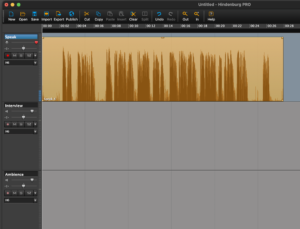
Back in… not sure, 2020? I started a daily podcast of me simply reading quotes from my collection. Last year I decided to slow down to only 3 quotes per week. I record and schedule them in batches. Screenshot of episode 1,399 being recorded. o_O
Am I too often seeking the sense of safety or control? (And it is indeed only a sense-of. It is only an illusion.) What happened to the simple feeling of joy in being?
What this means, as I understand it, is that when we let go of all attachment to the outcome of our novel publication/album release/opening of our Thai Fusion restaurant … we shift the locus of our enterprise from the ego to the Self (or the soul if you prefer.)
The Muse likes this. Heaven likes this.
We are now operating on the plane of the soul, not the plane of the ego.
~ Steven Pressfield from, “Start the next one today”
Elsewhere, this is 4usesa1. — slipbox
Sometimes an outcome is important; the measurements, the color, the specific dimensions. When the idea began with the intention of trading the outcome with another. But not every waking moment. Too much of that is obviously an imbalance.
ɕ
I always tell young people to find a path in life that you can embrace and enjoy rather than something that you’re expected to do. That’s what makes life interesting. And once you achieve a certain level of success, no matter where you are, what you’re doing, don’t be content with that level. Push yourself to another level. People that are successful are always pushing.
~ Ed Viesturs
Elsewhere, this is 4a1393. — slipbox