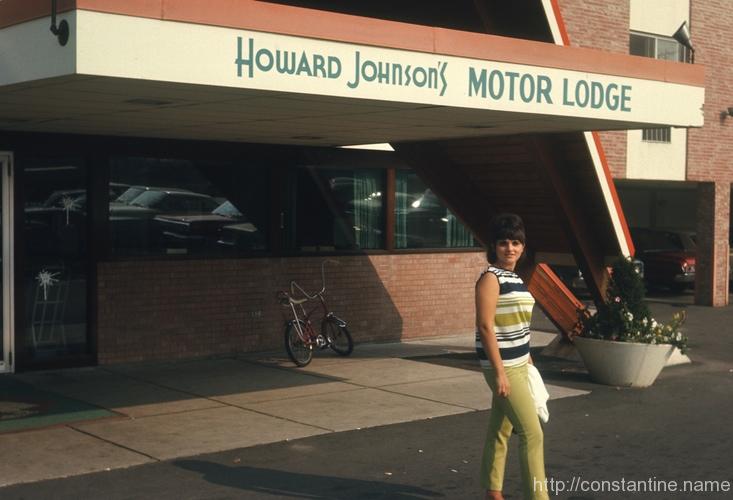
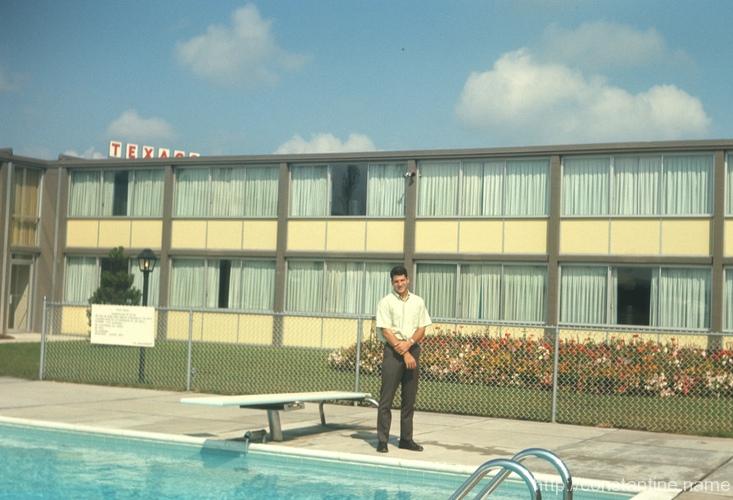
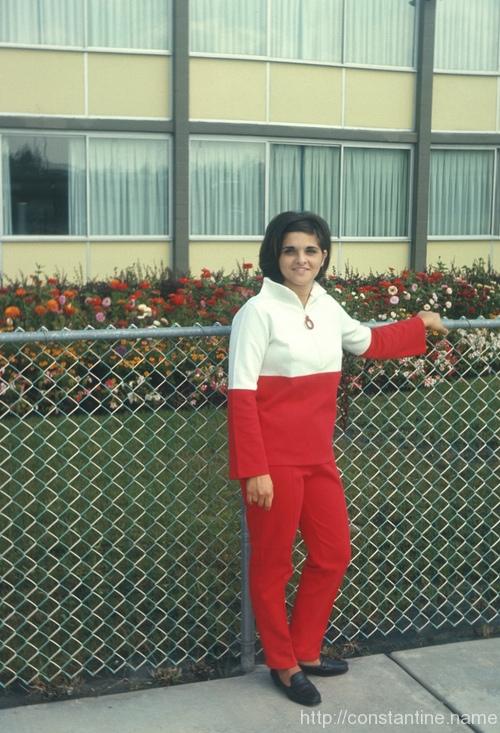
This was my dad’s 1957 Austin Healey.
(These slides are from 1968.)
ɕ
I distinctly remember:
So yeah, back in the day we had Mosaic. Then these guys hit it out of the park with:
Navigator was the way millions of people around the world were introduced to the web. Many web technologies and standards, such as as SSL, Java, Javascript, open APIs and support for online media, were innovations that Navigator made mainstream.
~ Brian McCullough from, On the 20th Anniversary
slip:4uieoe1.
ɕ
Life is not always a matter of holding good cards,
~ Jack London
but sometimes, playing a poor hand well.
slip:4a62.

These plans are for building a vault box. This is not easy. You’ll need some good circular saw skills, patience and a lot of labor. Read on!
The original, in case you have a hardcopy, is online at
http://constantine.name/vault-box-build/
Drop me an email: Comments, questions, and suggestions for improvements are welcome. Best of all would be if you sent me some photos of what you built, preferably a big group photo of you on them, or using them or whatever. My email is my first name, craig, at this domain. (Yes, this is a “.name” domain.)
(The original design of this project is still available at, How NOT to build a vault box.)
(more…)We live in an economic world. Economic models that were developed years ago were created based on observations of how the economy seemed to work at the time. As time goes on, it is becoming clear that early economists missed important connections. The most important of these is the role of energy and its connection to the economy. It takes energy to make anything, from a piece of steel to a loaf of bread. It takes energy to transport anything. Humans need energy in the form of food to continue to live. Clearly, energy should have a place in economic models.
~ Gail Tverberg from, Energy and the Economy
slip:4uouee1.
I find this stuff fascinating; It’s this giant, emergent phenomenon. Billions of individual people going about their daily lives create such a whirl of activity and action. But the ultimate result is what… an “economy”? A path to “enlightenment” for humankind? Meaningless in total, but meaningful at the individual’s level of experience? Perhaps it’s simply [on the whole] incomprehensible. If you study a little chaos theory, you learn: The butterfly’s beating wings have ZERO affect on the weather. Instead, the fully understood system, (“stochastic”) is truly unpredictable.
ɕ

I do NOT recommend using these plans to build a vault box. I’m putting this up for a historical record of what we did (so I don’t have to remember.) I’m already writing another article explaining a better way to build a vault box.
Really. Don’t build vault boxes using these plans.
Here’s the other design: LVPK vault box – second design.
Here’s the PDF: LVPK vault box – first design PDF.
We, (Lehigh Valley Parkour) built 8 of these vault boxes. They are rock-solid, portable, stackable, etc. They’re great! …but you can do better. So I’m creating another set of plans from a slightly modified second design.
You can get the materials for less than $100 per finished box. We collected $100 from everyone, up front and bought everything together in one go.
We built 8 of these. We started by building one box from start to finish. It was the worst box, but we learned a lot. Most importantly, you need one person who understands how the whole box should go together so you can make sure it goes correctly.
We had so much material, we rented a cargo van, (it was winter and we didn’t want to deal with unexpected bad weather messing up our scheduled “buy everything” date) to haul the 1,000+ pounds of lumber and plywood to where we were going to build. We had four people on the “buying night”, and then several 6-hour DAYS of 4, 6 and even 8 (on one day) people working on building these.
We had all the right tools. This is a lot of cutting and screw driving… circular saws are dangerous, second only to chain saws. We had people with safety glasses, ear plugs, work gloves. One guy working the circular saw with two helpers moving plywood. Other people with a battery drill to drill pilot holes, another person with a corded drill driving deck screws. People with orbital sanders and files, someone drilling the large holes and cutting the hand-hold slots. It was crazy.
The root of the problem is that the design is sloped in both directions; There is a 15° lean from vertical on the “fronts”, (the bigger faces you’ll approach most often) and 7.5° on the “sides”, (the more narrow faces where the hand-holes for lifting are located.) This is simply too difficult to get it to work out correctly with rough lumber and basic building skills.
The biggest problem is that the corners are compound miters. In each corner there is a piece of 2×4. When you put a 90° angle (the corner of a 2×4) into the compound miter at the 15°/7.5° corner, you find out that you really need about a 93° corner on the 2×4. It almost works. The 2×4 goes in, but when you screw the faces together, it “pulls” the big face inward, making the plywood bow concave. That messes up the bottom of the box’s fit onto the next box below. I ended up adding some additional 2×4 strips near the bottom of the box front to straighten the faces… but it’s fiddly to get it to come out right.
When I was coming up with this design, I tried combinations of different angles and eventually settled on 15°/7.5° because:
I also spent a lot of time adjusting dimensions to make the box as large as possible from only two sheets of plywood. There is very little scrap material left over.
When building, getting the box to work out right is difficult; If anything is off by even ONE-QUARTER of an inch, then the box isn’t perfect. If anything is off by HALF an inch, you may not be able to get the box together at all. Every cut on the plywood has to be perfectly straight, which means you have to use a clamped straight edge to guide the saw on every cut and you must always get the bevel correctly arranged. So sometimes you have to cut “backwards”, (the opposite way from the normal, safe way you’d cut with a circular saw.)
Also, near the end of the plans it describes a little about how to put the top-piece of plywood on each box. It works fine for the top/smallest box. But for the middle and bottom, the way to do it is: measure the opening of the box above, then cut the plywood sheet and screw it to the box. It might not look perfect, but if you put the plywood on so it fits nice, the box above isn’t likely to fit correctly over it.
Finally, the plans, (in the notes near the back of the PDF) show how to figure out how much paint you need to paint them. We used a grey outdoor deck/porch paint, and we mixed in fine sand to give the box some traction. If you’re making artificial obstacles, may as well make them friendly too.
The PDF document above has notes added in red pencil:
Pages 1 and 2:
Page 2:
Page 3:
Page 4:
Page 5:
Pages 10 etc:
These are just some notes from figuring out how many boxes of screws we needed. (We didn’t put the exact number of screws in. We just went with “that’s probably enough”. And we ended up using only half the deck screws.) Also some calculations of how much paint we needed to buy.
"Vault box design 1, sloped sides"
Copyright (C) 2014 Craig J Constantine This information is free; you can redistribute it and/or modify it under the terms of the GNU General Public License as published by the Free Software Foundation; either version 2 of the License, or (at your option) any later version. This work is distributed in the hope that it will be useful, but WITHOUT ANY WARRANTY; without even the implied warranty of MERCHANTABILITY or FITNESS FOR A PARTICULAR PURPOSE. See the GNU General Public License for more details. You should have received a copy of the GNU General Public License along with this work; if not, write to the Free Software Foundation, Inc., 51 Franklin Street, Fifth Floor, Boston, MA 02110-1301, USA.
ɕ
It is not necessary for a man to be actively bad in order to make a failure in life; simple inaction will accomplish it. Nature has everywhere written her protest against idleness; that which remains inactive, rapidly deteriorates. It is the struggle toward an ideal, the constant effort to get higher and further, which develops manhood and character.
~ James Terry White
slip:4a158.
The new research, recently reported in PLOS ONE, builds on previous Oxford University research showing that elephants call ‘bee-ware’ and run away from the sound of angry bees. Whilst the ‘bee’ and ‘human’ rumbling alarm calls might sound similar to our ears there are important differences at low (infrasonic) frequencies that elephants can hear but humans can’t.
~ from, Do elephants call ”human!”?
slip:4upyne4.
Seems pretty logical to me that elephants would have different sounds for alerting to different threats. The big question, for me, is how much of a threat do they perceive humans to be; Do they actually understand how dangerous humans are/can-be?
Update:
And someone emailed me to point out, that yes, elephants can distinguish a lot about humans; from, Elephants recognise human voices.
ɕ

Many people have asked about “the trains”; If you knew my father, then you know that most of the 20×30 upper room in the garage was a model railroad. This is but a tiny glimpse of what he created.
I saved only a few pieces of rolling stock from the train layout before we sold the house. These now have a permanent home in this little display case in my office.
“Model railroad” as in: It was a model. Of a railroad. Not “toy trains” by any stretch of the imagination. He took the rolling stock apart, rebuilt them, detailed them (rust, markings, dull coat so they aren’t shiny plastic, etc), added little people, scratch built buildings, setup little scenes all over the railroad, little guys in rowboats fishing, people on benches, everything lit and remote controlled. You could run multiple trains at the same time, assemble trains in the yard, stage them out of sight… so a train rolls by and then you don’t see it again, and then a different train appears a few minutes later.
Some of the details in the photo: There are “live load” logs on the flat cars — if I get ambitious I could add the tie down cables to the logs. The ore cars (the short brown ones) have properly colored and scale-sized loads… he sifted “speedy dry” (like cat litter, but for cleaning up oil) into different tiny grain sizes, then spread it out and spray painted it, in batches of different colors, then mixed it back together… So it looks like the iron ore that goes in the cars in real life. Then he individually relabeled the 30, (40? I didn’t count) ore cars so they all have unique numbers and markings. Every piece of rolling stock was converted to Kadee couplers — which look and act like real train couplers and can be remotely decoupled with magnets hidden in the track. He would replace the tires (the part that rides on the rails) with metal ones if the kits had inferior plastic ones. He’d add weight to cars to make them move more realistically on the layout. And on and on.
30 years of work.
ɕ