ɕ
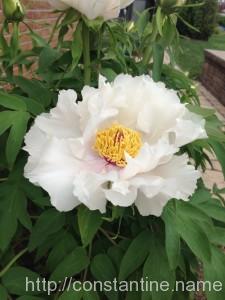
Paeonia Ostii →
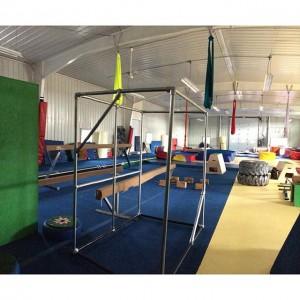
Innate Movement →
Gee, what could we do in here??
ɕ
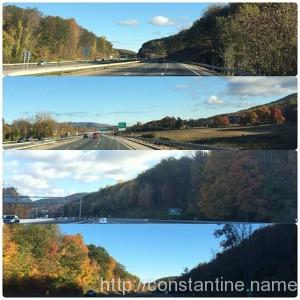
Heading to Kingston →
Heading up to Kingston NY for Dylan’s new gym’s open house. Selection of some early fall foliage from this morning’s drive!
ɕ
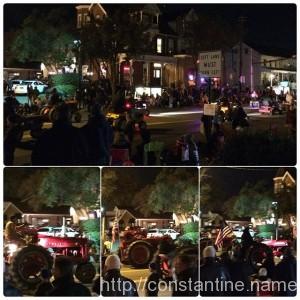
Tractors →
Yeup, they get out all the farm tractors for the Halloween parade.
ɕ
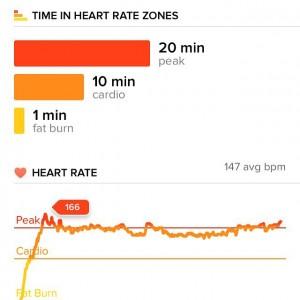
Bam →
5k like a machine! 31:20-ish for total… GREAT for me :D
ɕ
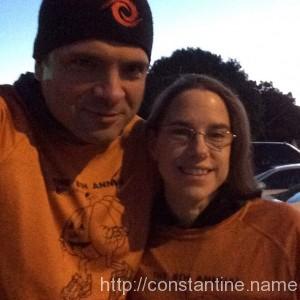
Emmaus 5k →
The parade before the Halloween parade! Ten minutes to go…
ɕ
Practicing mindfulness →
Mindfulness is an inward directed practice of contemplation. It is a continuous process of being present. For me, because it was initially unfamiliar, it was more difficult to approach than the obvious physical activities such as running, jumping, and climbing. But after some practice, it became a critical part of the foundation on which I’ve placed many other parts of Parkour.
There are many ways to practice mindfulness at large in one’s life. For example, Leo Babauta, of Zen Habits, has a great piece titled, 9 Mindfulness Rituals to Make Your Day Better I am a firm believer that mindfulness across the full breadth of daily life yields big benefits. But in this post, I’m focusing on the practice of mindfulness within Parkour.
In many ways, mindfulness is like any other skill that you can practice intentionally. But unlike other skills, failing to be mindful leaves me with blindspots. These blindspots, which are closely related to the Dunning Kruger Effect, create space for “unknown unknowns” to lay hidden.
Worse, lack of mindfulness is akin to: Failure of attention, which leads to injury; Failure to notice moods and emotions, which leads to loss of interest in the short term and training plateaus in the longer term; Failure to notice signals from my body, which leads to chronic injury and developmental imbalances.
Options for practicing mindfulness
One option would be to set out explicitly to practice mindfulness. (“Today, instead of practicing vaults, I’m going to practice mindfulness.”) Unfortunately, I would need to be highly mindful in order to stay on task working on being mindful. But, if I could be that mindful, I wouldn’t need to practice being mindful. (Which is a Catch-22 that makes my brain hurt before I even start doing anything.) In the end I find that saying, “I’m going to practice mindfulness,” is simply too vague to be motivating.
Another option is to passively rely on fellow traceurs, or coaches, to call me out for “not being mindful”. (Or for them to set up specific “mindfulness practice.”) But mindfulness is too important for me to simply rely on other people to hold me to it. It’s much better for me to practice it intentionally.
To make the options more complicated, it is not at all clear how I switch from being NOT mindful to being mindful enough to notice that just-a-moment-ago I was NOT being mindful. Heavy stuff that. In reality, I usually notice my mind has wandered, (“I’m paying attention to irrelevant things around me,”) or I notice my practice has become unmotivated, (“When did this get boring?”)
Shoelaces
So how do I practice mindfulness? I think of it like tied shoelaces. It’s important my shoelaces be tied, but I don’t obsess over them by constantly checking my shoes. I simply tie them when I notice they are untied.
I practice mindfulness when I notice I’m not being mindful.
My mindfulness drill
So when I notice, what can I do, exactly?
I locate a small jump. The jump needs to be well within my ability; not something risky or overly tiring. I want a relatively easy jump that I know I can do without thinking. It must be any easy jump, because there can be no nervousness or doubt. I’m purposely selecting a jump to set myself up to be lulled into NOT being mindful.
I physically prepare to jump. I position myself, arrange my limbs, engage muscles, etc. Eventually I arrive at that point in space and time which would normally be the last point before I jump. At this exact point, I wait. I am poised, comfortable, ready, willing and perfectly able to jump. I know I’m in at the correct point when I suspect that if someone startled me, I would jump involuntarily.
I find my thoughts are like birds flitting around a cavernous room. Some thoughts are on-task as they seem related to the jump: The way my body feels; The anticipation of being in the air; The expectations of the landing. But depending on how mindful I am, there are more or less other “off-task” thoughts flitting about the room.
The sky is blue.
How much time is left?
I’m thirsty.
There’s an ant where I’m going to land.
What’s for dinner?
People must be looking at me funny.
…and on and on and on.
I am alone with my thoughts, and I am simply an observer in a room with these harmless, incorporeal, flitting birds. I notice as many of the thoughts as I can, taking special notice of the ones that I believe are related to the jump. I don’t fight with the thoughts, because I cannot catch nor chase away any particular bird. In fact, chasing them is worse than useless because they simply loop around to become “the thought about the thought I just tried to chase away.”
Gradually, some of the extraneous birds fly away. When I think the number of extraneous thoughts in my head has reached a point where it’s as good as it’s going to get . . .
I jump.
ɕ
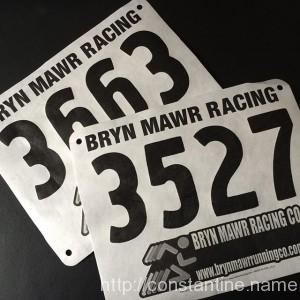
Emmaus Halloween parade 5k →
They call it “The parade before the parade.” :D anyone I know running this tomorrow?
ɕ
Bad decisions →
Everything happens for a reason, but sometimes things happen because you are stupid and make bad decisions.
~ unknown
Elsewhere, this is 4a63. — slipbox
§5 – Moment to moment →
I reached section 5, and got stuck.
It’s obvious the key idea of section 5 is mindfulness. So I started by thinking about “mindfulness in Parkour practice.” But I wasn’t able to find a compelling thread to unify my thoughts. I came away from a few writing sessions with nothing of value. Eventually it occurred to me to circle back and reconsider my writing process.
I reread this whole series and — aside from, “Wow, I suck at writing!” — it struck me that I have been “unpacking” each of the first four sections. My process has been to sift each section for a key idea, and then simply spend time thinking about that specific idea:
What exactly does the idea mean?
Do I already know and understand the idea?
How does it relate to my Parkour practice?
What other areas of knowledge does it relate to?
But section 5 is already short and to-the-point and doesn’t need to be unpacked.
I’m so META Even This Acronym:
Stop the presses! It seems I have just discovered the concept of being mindful of the writing process. /sarcasm
Next up:
I am actually writing something about section 5 now that I have a different plan.
ɕ