You just can’t beat a person who never gives up.
~ Babe Ruth
slip:4a531.
You just can’t beat a person who never gives up.
~ Babe Ruth
slip:4a531.
What is the unique role of Parkour in fostering mindfulness, community, and personal growth?
Max Henry shares his introduction and journey into parkour, and how he’s gotten to where he is. He unpacks his book, the Parkour Roadmap, explaining what it is, and why he wrote it, before delving into his work on the Water Project with Know Obstacles. Max discusses his thoughts on the infrastructure of parkour, the changes parkour could undergo as it evolves, and the responsibility he feels to preserve the heart of parkour as it grows.
The story that you tell people is the story that they’ll believe, and that’s the story that you become.
~ Max Henry (18:20)
This conversation explores Max Henry’s journey in Parkour, detailing his early fascination with movement and the philosophy underpinning the discipline. Max shares how his diverse background in sports and music influenced his approach, and he reflects on the role of mindfulness in overcoming physical and mental barriers in training. The conversation highlights his dedication to the global Parkour community, as seen through his coaching work and involvement in projects like the Copper Water initiative in Africa.
The discussion goes into the maturation of Parkour as a sport, addressing its increasing accessibility, media portrayal, and potential future directions. Key themes include preserving the spirit of Parkour while embracing its growth, the challenges faced by professional athletes in the field, and the importance of community-driven efforts to ensure its sustainable development.
(more…)Three weeks from now, I will be harvesting my crops.
~ Maximus, in Gladiator, (2000 film)
Imagine where you will be, and it will be so.
If you find yourself alone, riding in the green fields
with the sun on your face, do not be troubled.
For you are in Elysium, and you’re already dead!
Brothers, what we do in life… echoes in eternity.
slip:4a520.
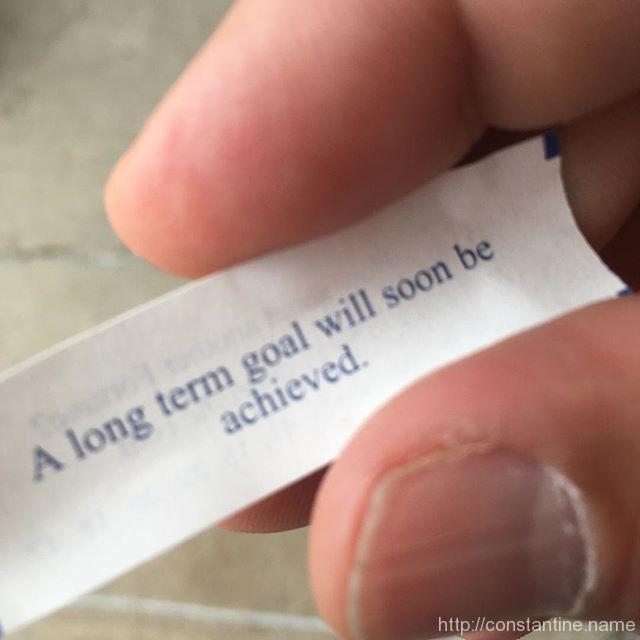
apropos
ɕ
The first step towards getting somewhere is to decide that you are not going to stay where you are.
~ unknown
slip:4a356.

Came into the NYC for an interview and ended the day in Central Park with great challenges with the @themovementcreative , thanks!
ɕ
Feel all the things. Feel the hard things. The inexplicable things, the things that make you disavow humanity’s capacity for redemption. Feel all the maddening paradoxes. Feel overwhelmed, crazy. Feel uncertain. Feel angry. Feel afraid. Feel powerless. Feel frozen. And then FOCUS.
~ Wendy MacNaughton, and Courtney Martin
slip:4a886.
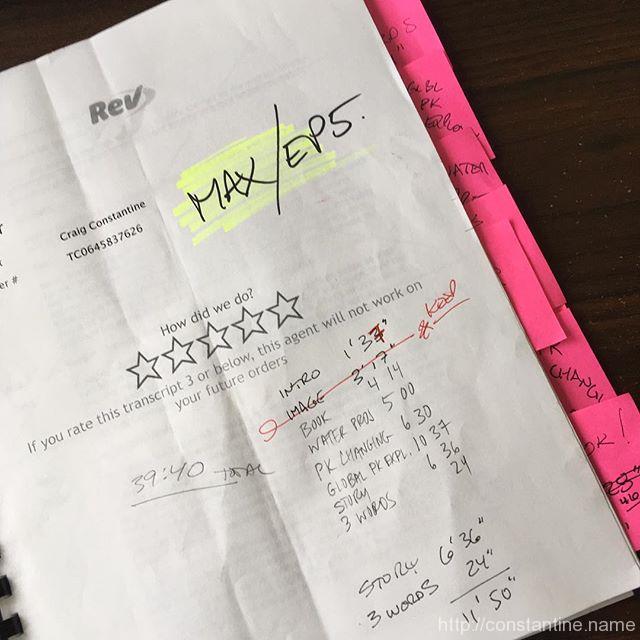
Fifth episode of the http://parkour.theysaid.world/ podcast is off to sound editing!!
ɕ
Thibault uses the phrase, “mindful resource management,” which resonates with one of my frequent avenues of thought.
Today, I can easily take one thousand steps without risk of injury, and I could take one thousand steps every day without developing chronic injury. In fact, such regular walking is improving my general health. (Although I expect that at some point it will simply be maintaining my general health.) Clearly then, these resources are well-spent on walking. But what about some specific running precision? How many can I do well? How many can I do before I’m tearing down my tomorrow-self more than will benefit my next-week-self? What about some other challenge? Where is the tipping point where I go from, “sustainable growth,” to “acute or chronic injury?”
To answer my own questions I must apply mindful resource management and calibrate my efforts. These concepts are important, explicit and obvious in Parkour. With movement, success or failure is usually obvious, and I can continuously calibrate my movements as I over-/undershoot. Initially I “throw myself at it” with flat trajectories and smash-crash-bang landings, but eventually I learn to “float in” with higher trajectories, more power, and more control.
In a larger sense, this applies not only to my Parkour efforts, but to my everyday life. Much of what I do could be calibrated: Food consumption; Listening skills; Speaking skills; Time spent interacting with others versus time spent alone; Self-reflective thought versus philosophical discussion; Mindful meditation and recovery work versus high-intensity physical training.
In the largest sense, this calibration tracks a life-span.
Beginning with the frenetic activity of youth, actively trying to carve my life through the universe: Overshooting. Then comes the inevitable, timorous, mid-life reversal to a hyper-aware, hyper-reflective approach: Undershooting. And then finally — hopefully! — a calibrated, broad, world-view.
A balance of give and take.
Power and control.
Life and death.
Yin and yang.
ɕ
The size of your problems is nothing compared with your ability to solve them. Don’t overestimate your problems, and underestimate yourself.
~ unknown
slip:4a528.