Knowing others is wisdom, knowing yourself is Enlightenment.
~ Lao Tzu
slip:4a204.
Knowing others is wisdom, knowing yourself is Enlightenment.
~ Lao Tzu
slip:4a204.
I earn my living in comedy, but science is my hobby. I’m a fan of science: I hang out with scientists at science places and I read about science and scientists. My mom always says, “If you walk like a duck, talk like a duck, and hang around with ducks, people will start thinking you’re a duck.” This may be true for juvenile delinquents and waterfowl, but, unfortunately, if you walk like a scientist, talk like a scientist, and hang around with scientists, people will still know you’re a dumb-assed comedian.
~ Penn Jillette from, NASA’s Successful Quantifying of Comedy Timing
slip:4utupo2.
When you get there, you will learn that SYMFTR is an acronym.
The piece begins with an apologwarning about it being long. It is not. …and if you have trouble reading pieces of this length — I weep for your soul and you really need to read more.
I once stood in the VIP area, 3.7 miles from a space shuttle when America EXPLODED HUMANS INTO SPACE. It was everything Penn describes. I should probably write about it, but it was so soo long ago.
¯\_(ツ)_/¯
ɕ
This includes people who get angry, which is why Seneca calls anger a “temporary madness.” This class of individuals can certainly be held morally responsible for their actions, since they are perfectly capable of reason, they just don’t use it well.
~ Massimo Pigliucci from, Stoicism and Emotion, V
slip:4uwoso2.
Once more, louder for those in the back: Stoicism is not about suppressing emotions. It is about [among other things] having appropriate emotional responses.
ɕ
These are questions this manager has homed in on during his decades-long career at a high-tech company. Here they are…
~ Chris Bailey from, The 3 questions managers should ask in every one-on-one meeting
slip:4uaite2.
A short article listing the 3 questions managers should ask in every one-on-one meeting.
Meanwhile, separately, I have recently realized that I’ve started frequently asking, “How can I help?” (It seems to be my version of the advice to ask, ‘Why?’ five times.)
ɕ
The catch is that we are too close to the “edge” to be testing an increase in interest rates. Economies, below a certain “stall speed,” cannot repay debt with interest, and cannot hope to provide entrepreneurs with an adequate return on investment. Our low rate of growth is already close to this stall speed.
~ Gail Tverberg from, Raising Interest Rates Is Like Starting a Fission Chain Reaction
slip:4uoura1.
There’s a graph early on in this article that is, frankly, alarming.
ɕ
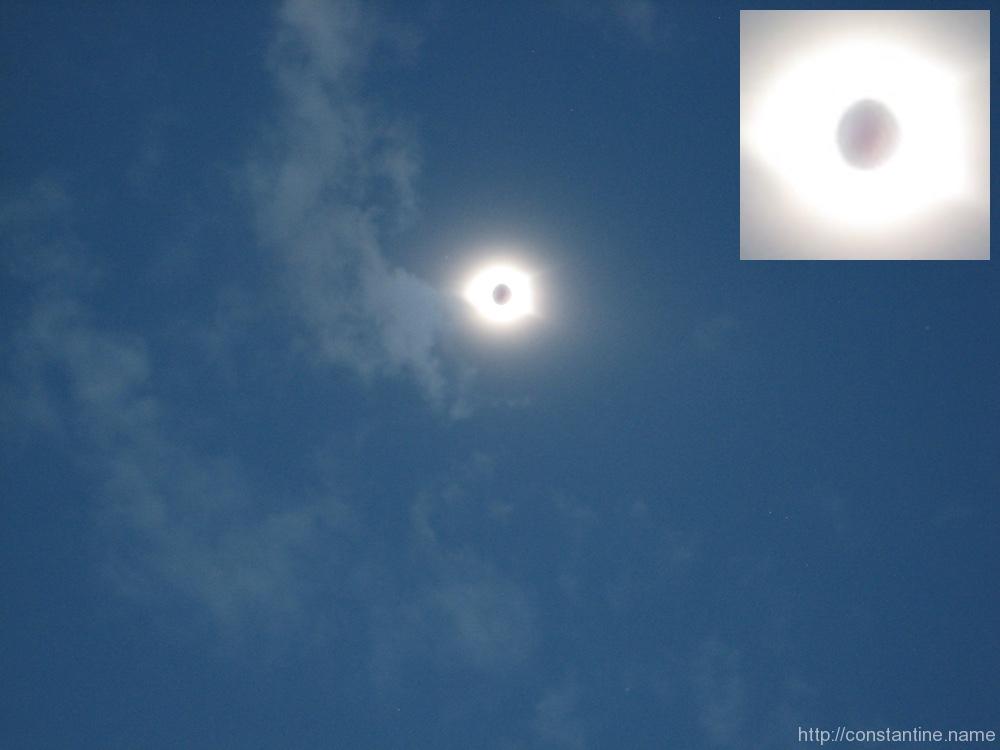
My previous post, Eclipse photography 3/4, is more philosophical.
This is simply one more for those in the back: “OMG! THIS WAS AWESOME!”
The main photo is just my 10 year old Cannon point-n-shoot. Which has just every so slightly better optics (including optical zoom) than my iPhone 5s. So the main photo is just optical zoom (shot off a tripod.) And the inset is a 4x digital blowup of the main photo. (No adjustments were added to the inset.) I’m not much of a photographer, and Astrophotography is a whole other kettle of fish I’m not prepared for. But we spent a few days preparing for what each of us would be fiddling with and trying so I had a plan for my little cameras and I got some terrific memories.
I hope you enjoyed these!
ɕ
Clearly there’s a tradeoff to be made here. In order to learn about the world, you need to let ideas in. But the more ideas you let in, the more bad ideas you let in. You can (and should) set up border controls, but you can’t achieve perfect truth-filtering any more than you can turn your house into a cleanroom or ride the subway in a hazmat suit.
In order to get any thinking done, you have to accept some probability of being wrong. The question is, how much?
~ Kevin Simler from, Border Stories
slip:4umebo1.
If you’ve been following me a while, you’ve been exposed to Melting Asphalt and know what to expect if you follow that link.
…but especially if you don’t know what to expect, you should click that link and go have your horizons broadened, and your borders strengthened.
ɕ
Along with the pathologies there were the ill-advised adventures. “I’m going to be a great person by…um…exercising an hour a day, from now on, all the time, and eventually becoming really buff.” Lasted a month. Then “I’m going to be a great person by…um…learning to speak ten languages, one at a time.” Lasted until first encounter with the Finnish case system. “I’m going to become a great person by…” The problem with all of these were that none of these were things I actually wanted to do (cf Randall Munroe, “Never trust anyone who’s more excited about success than about doing the thing they want to be successful at.”)
~ Scott Alexander from, Growing Old
slip:4usago1.
I’ve said before that this year [2018] will be a year of “Hell yes!”, or “no” for me.
Life goes by in a blur. The older I get — I won’t dare say “wiser” anywhere in this post — the more it seems to me, that maybe, just possibly, you know maybe I should consider that the problem could just possibly MAYBE be that I’m the IDIOT WHO TOOK ON ALL THIS CRAP THAT’S STRESSING ME OUT.
:^P
ɕ
Something a little different today: I’ve been considering switching to heating with gas and I recently ran some numbers.
tl;dr: I will be continuing to heat with solid fuel.
Preamble: We have already deeply insulated our attic, upgraded insulation in the walls which were opened during some remodeling, and replaced all windows and doors with modern versions. (Our house was originally built in 1954.) This is the obvious first place to begin improving heating your home.
Electricity: My electricity costs $0.0758 per kWh. I can basically turn on my electric baseboard heaters and this is what I’d pay (per kWh) to heat our house.
Methane: This is the proper way to heat a home in northern climates. Unfortunately, “street gas” is not present in my neighborhood. One block over, yes, here, no. They would install it for me… if I’m willing to pay the entire cost to rip up the street and put in the gas main.
Propane: Chemistry geeks know that propane has about 12% less energy per molecule compared to methane. But generally speaking, appliances (my gas cooking stove, a gas heating appliance I would need to buy/install) can be adjusted to burn either fuel. Anyway. I already have a small propane tank that serves my cooking stove, so I would “just” need a larger tank — possibly MUCH larger, possibly so large that safety ordinances would require me to put it underground. Anyway. My propane costs me $5.999/gal — if you know about petroleum, this is an incomprehensibly high number. Meanwhile, 1 gal propane = 27kWhr of energy. And a gas heater (I’m imagining replacing my wood stove with an appliance that sits in the same space) is effectively 100% efficient at turning that gas into heat. So simple math shows that propane would cost me $0.222/KWh — about THREE times the cost of electricity.
Firewood: This is MUCH harder to compute. First off, I have to estimate how much energy is available in the wood I’m burning; that’s affected by species of wood, and how it’s seasoned and stored (because the MORE water in the wood, the more heat is “lost” to vaporize that water and send it away up the chimney.) Some factors to consider: Where I live, there are several readily available “fuel” species of trees that are sustainably available. I’ve found a reputable supplier who is not hauling it long distances and provides me the right sizes etc for what I want. I also have the absolute best imaginable way of storing the wood in “cribs” that expose it to air drying while having it under cover.
So I’m guessing 20 million BTU per cord. (A cord is a stacked, pile 4 feet tall, with a foot print of 4×8 feet. Technically, it’s a pile of 4-foot LONG logs, 4 feet high and 8 feet wide on the ground. A true wood heating system is a separate unit outside that is meant to take 4 foot long logs. I purchase ~16″ pieces split, which still makes the 4×8 foot print computable. I digress.) Good fuel species can be up to 30MBTU/cord. So I’m being conservative with 20.
20M BTU is 5,861 KWh. I pay $300 per cord (fellow Pennsylvanians just twitched because that is pretty expensive — 225 or 250 is typical — but this is excellent wood species, all cut and split to the correct sizes for stove fuel, delivered early in the season, and dumped exactly where I want it. As usual, I digress. So math happens leading to $0.0512 / KWh. Even if I figure-in that the wood stove is only 80% efficient (we have a great stove made in Scandinavia which really does exceed 80% efficiency when operated correctly), that only bumps the cost up to $0.0639 / KWh.
Update in 2019: My electricity costs $0.07039 per KWh. (That’s down about 1/2 cent.) I’ve a new firewood supplier, with the price down to $225 per cord. That’s $0.038 / KWh, and still only $0.048 / KWh at 80% stove efficiency.
And finally some references…
http://www.propane101.com/propanevselectricity.htm
http://worldforestindustries.com/forest-biofuel/firewood/firewood-btu-ratings/
ɕ
Begin the morning by saying to yourself, I shall meet with the busybody, the ungrateful, arrogant, deceitful, envious, unsocial. All these things happen to them by reason of their ignorance of what is good and evil. … I can neither be injured by any of them, for no one can fix on me what is ugly, nor can I be angry with my kinsman, nor hate him.
~ Marcus Aurelius
slip:4a309.