‘Think’ breaks

Conduct shorter think breaks. Even a few hours can be extraordinarily helpful. This can be as simple as leaving the office at lunch in order to have a phone-free reflection period at a nearby coffee shop.

~ Chris Bailey from, How to Take a Think Break

slip:4uaiho1.

The quote is a from a list of “Do’s,” so it may feel a bit odd. If you don’t immediately know what a think-break is, stop and go read that short article. (Which also contains a link to a longer article. :)

Some people famously take week-long, totally-disconnected (from people, technology, routine, everything,) think-breaks. I suppose I could do that—I mean I know it would be possible, but I feel that I don’t need an entire week to think.

All I do is come to a stop and start thinking. After a few minutes I’ve 11 new ideas—or worse, ideas that have been rattling around in my head—that I can either decide to outright kill immediately, or work into things that need to be done. I don’t need to spend more time thinking, I need to spend more time anti-doing things. Do one thing, cross off two, or better yet, three things from my literal or ephemeral lists.

ɕ


Time management

As addicting as it is, desire is the enemy to proper time management. Poor sleeping habits, unhealthy lifestyle choices, and just plain dissatisfaction are all byproducts of a poorly managed life.

~ Ryan Holiday from, 5 Stoic Lessons On Time Management

slip:4udaso2.

Time management is the only thing—the only major skill critical for leading a good life… Time management is the only thing which no one ever attempted to teach me explicitly. Everything else was covered to some degree: science, religion, morality, philosophy, work ethic, hygiene, sexuality, language, geography, personal finance, and more, depending on how you want to subdivide all the stuff in my head.

Time management isn’t the most critical thing to know. Language and critical thinking are the top two, because with those two and sufficient time you can bootstrap everything else. However, things would be far better for everyone, if the third item on the list of must-have skills to be Human was a basic grasp of Time Management.

For me, I was trying to fix my sleep when it became obvious that I needed to arrange my day around sleeping. That lead immediately to an entirely new need for time management. “I need to be at work by 8,” is not Time Management (with capitals.) I then took a circuitous route discovering the needs and methods of Time Management.

But where do I wish I had actually started? That’s an excellent question. Right around 18 years old, I wish someone had handed me a copy of this tiny book: How to Live on 24 Hours a Day by A Bennet.

ɕ


Practice practice practice

Depending on your own personal history, there isn’t necessarily a lot at stake in how you conduct yourself at a cash register. What I’m trying to get at with my idiosyncratic cashier-focused story is this: there’s a vast difference between the habit of getting by, and the habit of getting better, and you may, without realizing it, be free to choose between them.

~ David Cain from, The Difference Between Getting By and Getting Better

slip:4urage1.

I’ve not gone down the exact same rabbit hole as Cain. However, being intentional with my work on the podcast interviews is amazing—it’s the same iterative path of discovery as he’s describing.

I’ve done well over 100 interviews—indoors, outdoors, quiet spaces, noisy spaces, while healthy, while sick-ish, with shy people, with insanely energetic people, during the day, at night, across sunsets with natural light, English-speakers and English-as-second-language speakers, old-ish, young-ish, men, women, couples, teams, while working alone and with an assistant, sleep-deprived and well-rested, with the occasional tech problem, in comfy chairs with tea, in an unpadded folding chair for 12 interviews in a row, well-fed and ravenous, . . .

None of that matters.

The conversations are always amazing. Time after time, once we get into the flow state, it turns out that people are interesting— most of the time surprisingly interesting. The more I work at this, the more I’m coming to believe that the art of communication, and in particular conversation, is the single most important skill for a human to possess.

ɕ


Reality check: A public service announcement about passwords

If anyone ever says to you, “your password must contain one capital, a digit,…”, you can be certain that they are an idiot, and that they do not understand security. If you encounter such requirements in software, then it was written by an idiot—or it was written to a standard which was written by an idiot.

I’m serious. This is not hyperbole. Anyone who says such things truly has not even the most basic understanding of computer security. You should immediately stop trusting them with anything related to computer security.

To begin to understand why this is true, please enjoy this wonderfully explanatory cartoon from XKCD: Password Strength.

The cartoon is fun, but its core point about the critical feature of your passwords being the amount of entropy they contain will make you smarter than the vast majority of people.

ɕ


Kyle Koch | Nature Health and Movement

On Castbox.fm — Kyle Koch | Nature Health and Movement

How can connecting with nature through movement and sensory experiences improve overall well-being and personal growth?

Connecting with nature can transform your health and mindset by simply spending time outdoors without distractions.

I believe in becoming the more heroic version of yourself. Movement and nature are key.

~ Kyle Koch (6:09)

The conversation highlights the importance of reconnecting with nature and movement as pathways to physical and mental well-being. It explores how modern life often limits sensory engagement and dynamic movement, which can negatively impact health. Simple actions such as stepping outside, observing greenery, and allowing oneself to be present can lower stress and improve eyesight.

The discussion touches on how nature remains present even in urban environments, subtly integrated into cityscapes. Practices such as walking, sitting in outdoor spaces, or even engaging in Parkour within natural settings can reshape awareness and resilience. Kyle emphasizes that movement in unpredictable outdoor environments fosters adaptability and enhances physical health.

Takeaways

Movement through nature — Engaging with natural environments fosters adaptability and resilience.

Outdoor sensory experience — Simple exposure to greenery can lower stress and improve health.

Urban wildlife — Nature adapts to cityscapes, remaining present even in unexpected urban spaces.

Restoring eyesight — Looking at distant natural views can reduce nearsightedness.

Small consistent practices — Spending 15 minutes outdoors daily can yield long-term health benefits.

Resources

Trotting Sparrow @trottingsparrow

Art of Retreat — The event where the conversation took place, focusing on Parkour leadership and education.

(Written with help from Chat-GPT.)

ɕ


Single-serving sized visits with books

Imagine you have a book problem. (Don’t judge me, please.) You’ve read countless books. You’ve given away countless books in an attempt to get the foundation of your house to stop settling to one side. You’ve gone through your to-read book shelves and culled as many as you can bear over to the normal shelves, resigned to being okay with never reading them.

…and you still have hundreds of books that you really want to read.

There are two common ways that people recommend reading books: One-at-a-time, (whether thoroughly and carefully cover-to-cover or by breezing through them more quickly,) and multiple-at-a-time. In both ways however, you intend to pick some book and to completely, (whatever that means to you,) read the book.

I want to explain a third way: Single-serving sized visits.

Begin by allocating a set amount of time. Something like 45 minutes seems to work well for me, but it can be any amount that you can do in one sitting. Extra bonus points if you can make this a recurring thing you do regularly.

You will need post-it notes and a writing instrument. You will not need a bookmark.

You’re going to pay a short visit, (say 45 minutes,) to your book collection by picking one book. Take the book (and your post-its and your writing instrument) and head for your reading spot. (You do have a designated reading spot, right? :)

Spend 45 minutes reading the book however you wish. Skim it. Read the prologue. Dig deep into chapter 4. Start reading at page 88. Turn it upside down and read it [upside down] backwards. Whatever. If you really don’t like the book, you can walk out on the date and put the book on your read pile.

As you read it insert post-its…

  1. …on the upper edge of pages whenever you find a reference to any other book. It doesn’t have to be a book you have, or have read, or even want to read. Just start leaving “top” post-its referring to books. Write the name, (and author, etc., as much or as little as you like—”I have this”, “I want this book”, whatever) on each note.
  2. …on the outer edge of pages whenever you find something interesting. A quote, an idea, killer prose, whatever. Write a note explaining the reason you like what you’re noting, maybe try to position the post-it, and include a little arrow that points to the part—Or just a blank post-it, and write directly in your book if that’s your style.

After the allotted time, your visit is over. Put the book back, either in the to-read area, or maybe in the read-these area. (If you bother to distinguish.)

Over time, you will slowly get to know more and more of your books. You won’t feel like you need to read the books—you already know you can’t possibly finish them all. At least this way you’re going to have hundreds of great little visits with these ideas you’ve collected.

Over time, you’ll find more and more top post-its as you build mental links to other books. You’ll find all those side post-its marking ideas you like. You can also pick up a book and see what you think of it— I’ve never touched this book. [It has no post-its.] I clearly love this book. [It furry with notes.] When you want to recommend a book, you are likely to have post-its that have the good bits you’ll want them to see first. The top post-its are going to suggest other books in your collection you might want to visit next.

…and on and on.

ɕ

Put a price tag on it

Yet that insidious voice keeps whispering. “But this is an opportunity, man! You gotta network. Get out there! Everybody promotes their stuff. Be a pro. Seize the moment, dude!”

One way to look at it is through the prism of money. If someone wants you to do something and the remuneration is “exposure” or “opportunity” … you have answered your own question.

~ Steven Pressfield from, Opportunities Are Bullshit

slip:4useoo3.

It’s important to learn to avoid the siren-call of such “opportunities.” I’m scare-quoting because, as Pressfield points out, they’re not actually opportunities. They are in fact a siren-call attempting to lure your ship onto the rocks. They’re a siren call because the message is exactly what you want to hear: “Your work is good. Your work is valuable. We want you to succeed.”

Actual opportunity sounds different. The message is just off to the side from what you wanted to hear: “What you’re doing is interesting. It makes me think of this thing I’m doing over here. It occurs to me that we might work together on it.” You’re left thinking about some interesting tangential idea. Instead of thinking, (as with the siren-call,) “is this going to be worth it,” you’re thinking, “that’s interesting, I’d like to be involved in that.” Certainly, true opportunities may come with money, but in your own thinking that’s an interesting nice-to-have; but it’s secondary. Take opportunities where the opportunity itself interests you. Don’t take “opportunities” where the potential, down-the-road benefit interests you.

ɕ


Turn it to advantage

Without an antagonist prowess fades away. its true proportions and capacities come to light only when action proves its endurance. You must know that good men should behave similarly; they must not shrink from hardship and difficulty or complain of fate; they should take whatever befalls in good part and turn it to advantage. The thing that matters is not what you bear but how you bear it.

~ Seneca

slip:4a440.


The force of your mind

I can say the same of a good man whom no difficult conjuncture has afforded an occasion for displaying the force of his mind. “I account you unfortunate because you have never been unfortunate. You have passed through life without an adversary; no one can know your potentiality, not even you.” For self-knowledge, testing is necessary; no on can discover what he can do except by trying.

~ Seneca

slip:4a437.


Yosemite valley

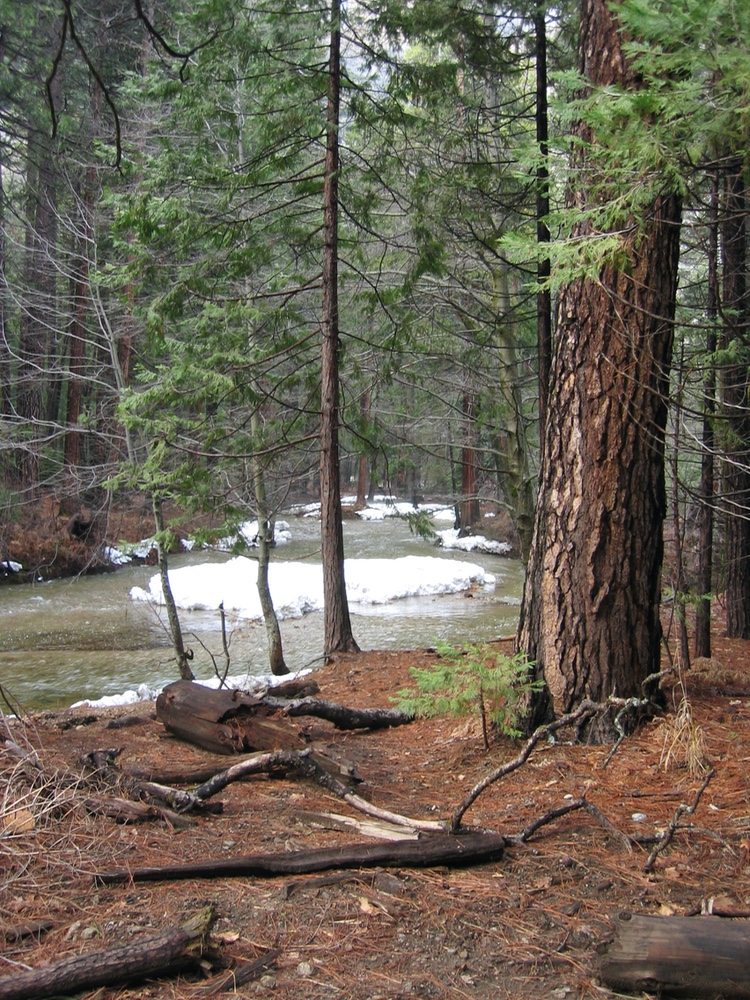
Random photo from an early morning stroll in Yosemite valley.