And say while you are training yourself day after day, as you do here, not that you are pursuing philosophy (to claim that title would surely be pretentious), but that you are providing for your emancipation. For this is true freedom.
Some time around 2005—if memory serves, which it probably doesn’t—I discovered the work and blogging of Merlin Mann. Back then, he was neck-deep in a project called 43 Folders: Time, Attention, and Creative Work. It’s self-described as, “[a] website about finding the time and attention to do your best creative work.” The first post there is dated 2004, and the last is gloriously frozen in place from 2011.
There are so many things to mention about that project. Ahhhhhhh, the halcyon days when we all thought “website” was a cool word. (I’m now in the “web site” encampment.) Mann is the guy who, for better [my opinion] or worse [many others’ option], brought “inbox zero” to everyone’s awareness. He also spent years experimenting with processes, and I went on a magical, multi-year journey experimenting with something called the “hipster PDA.” If forced to choose, I’d say Mann is the guy who most greatly influenced my process thinking.
There’s a phrase in cooking, mise en place, meaning to have everything in its proper place before starting. (The classic example of failure in this regard is to be half-way through making something only to realize you’re missing an ingredient and having to throw away the food.)
Well Mann is the guy who—in my opinion—has done the most to improve processes for knowledge workers and creative people. I’m not sure if he’s ever said it explicitly, but a huge part of what he did was to elevate knowledge workers and creatives by cultivating a mise en place mindset.
Like as the waves make towards the pebbled shore, So do our minutes hasten to their end; Each changing place with that which goes before, In sequent toil all forwards do content.
But then I realized a larger, unsettling truth: Much of the food grown in this country isn’t the medicine it should—or used—to be. We’re collectively getting sicker, not healthier. And for others to have the same healing I was privileged to experience; we must start with the soil.
When you’re growing up, you don’t really notice where you are doing it. Your parents, (or legal guardian(s) or perhaps even the State,) chose where you were planted. Bereshith, you’re planted in a very tiny space, then gradually moved to progressively larger spaces with fewer physical boundaries. Until one day you realize there’s basically no one left telling you what to do nor where to do it. If you never really thought about it, and nothing forced you to move, you’re probably still close to that original very tiny space, and probably still close to the progressively larger spaces too.
Then one day—I really do hope—you start to wonder what’s happened before, in the wherever you are now. I’ve a litany of, “woa, that’s cool!” historical bits and pieces found in my surrounds. But that the idea of “organic”—all of it, the word, the principles, everything—originated with one guy, within walking distance of my home, that’s sort of amazing. Rodale, (the family members, and the eponymous companies,) have done a lot—some good, some bad—but I find it unsurprising they did it here, in the Lehigh Valley. There’s a lot this area has going for it.
How does the creative process of hosting a podcast foster meaningful connections and insights for both the host and listeners?
The exchange examines the balance between preparation and spontaneity in meaningful dialogue.
The intention of the podcast was always just listening to flow. Let’s allow the creativity to flow through us. So now sometimes when we are so focused on our mind about what is next, what’s going to be said next, and planning ahead, we close ourselves to the possibility of allowing for the insights that can come from a deeper place, more wisdom that can bring more light to the conversation.
~ Claudia Velandia (1:46)
The conversation explores the creative dynamics of podcasting, emphasizing the role of flow and intentionality. Claudia describes how her podcast began as a way to capture the insightful, spontaneous conversations she shared with friends. Over time, the podcast evolved to include guests whose journeys provide value to listeners. She reflects on the challenges of staying present and resisting the urge to overly plan, as such planning can limit the emergence of deeper insights and wisdom.
Claudia shares how setting intentions before recording helps create an open and authentic environment. She discusses how mindfulness practices, such as meditating and grounding oneself, foster connection and creativity. The discussion also touches on broader themes of success, which Claudia defines as staying aligned with her purpose and enjoying the process. She emphasizes that even a single listener connecting with the podcast’s message makes the effort worthwhile, reinforcing her commitment to creating meaningful content.
Takeaways
The importance of flow in conversations — Allowing spontaneity and creativity to emerge can lead to deeper insights.
The role of intentionality — Setting clear intentions shapes the tone and outcome of interactions.
Staying present — Being mindful during a conversation creates a stronger connection with guests.
Evolving creative projects — Starting with personal inspiration can lead to broader engagement and impact.
Redefining success — Success can be measured by alignment with one’s values rather than external metrics.
Mindfulness practices — Techniques like meditation help in grounding and setting the stage for meaningful work.
The power of small audiences — Even reaching a single person meaningfully validates the effort of creation.
I have known days like that, of warm winds drowsing in the heat of noon and all of summer spinning slowly on its reel, days briefly lived, that leave long music in the mind more sweet that truth; I play and rewind.
And when you are thus prepared and thus trained to distinguish what is not your own from your own, what is subject to hindrance from what is not, to regard the latter as your concern and the form as not, and carefully keep your desire directed toward the latter, and your aversion directed towards the former, will there any longer be anyone for you to fear?
We tend to think that what we see is all there is — that there is nothing we cannot see. We know it isn’t true when we stop and think, yet we still get lulled into a trap of omniscience.
Admiral Ackbar called it correctly in Return of the Jedit, and this too is a trap. There are many paths to the top of the mountain, but they are generally of two types: the harder, science ways, and the softer, experiential ways. Both of those types have their traps. If one is strictly a follower of the hard, science paths up the mountain, one will be lulled into this trap of faux omniscience. And if one is a strict follower of the soft, experiential paths, one will be lulled into a trap of… well, I’ve not travelled much on those paths. My prescription is those travelers would do well to try these hard, science paths more. Therefore, I should try those soft, experiential paths more.
Which path are you currently on, and do you have a pattern of choosing one type over the other?
Further, then, answer me this: Do you think freedom to be something great and noble and valuable? — “How should I not?” Is it possible, then, that he who acquires anything so great and valuable and noble should be mean-spirited?
Sometimes I take photographs, but usually not many.
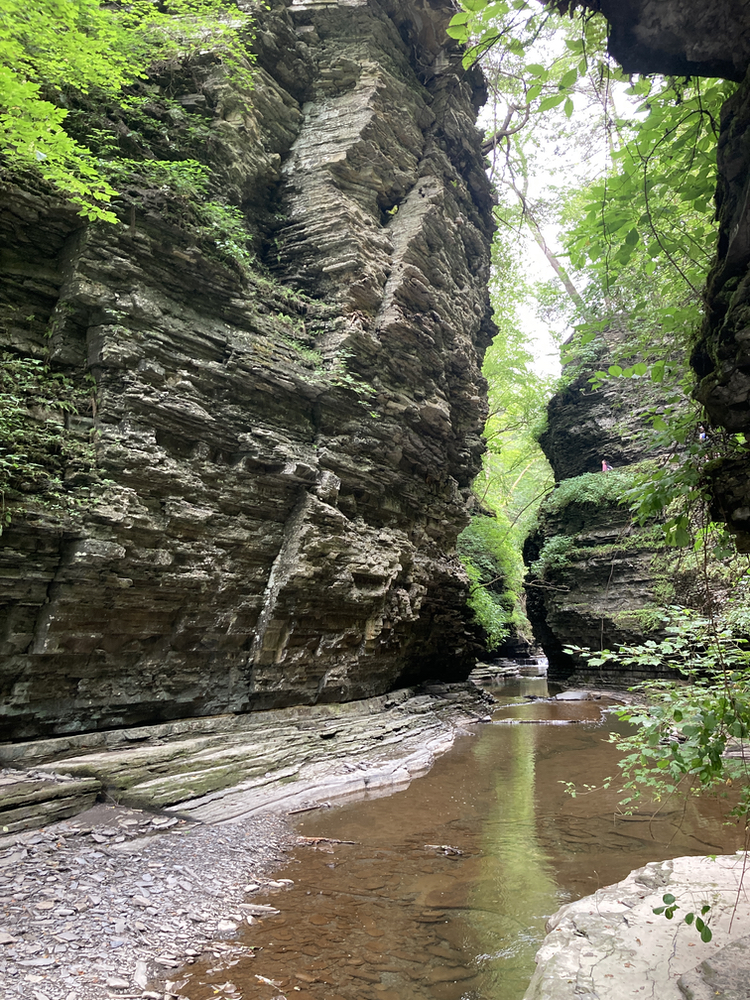
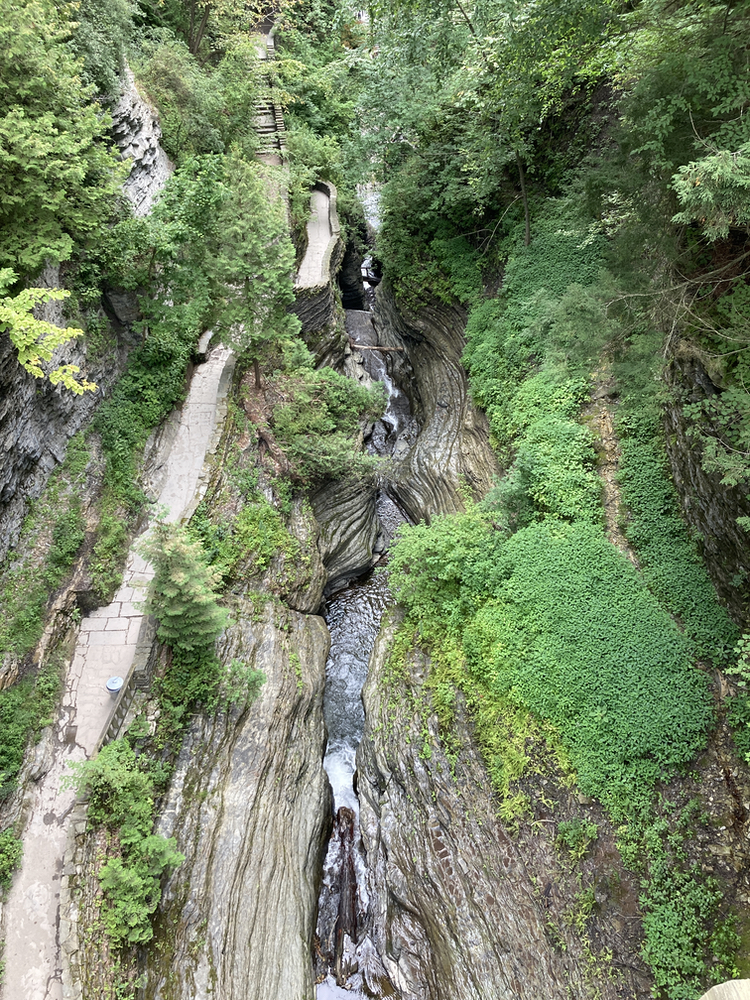
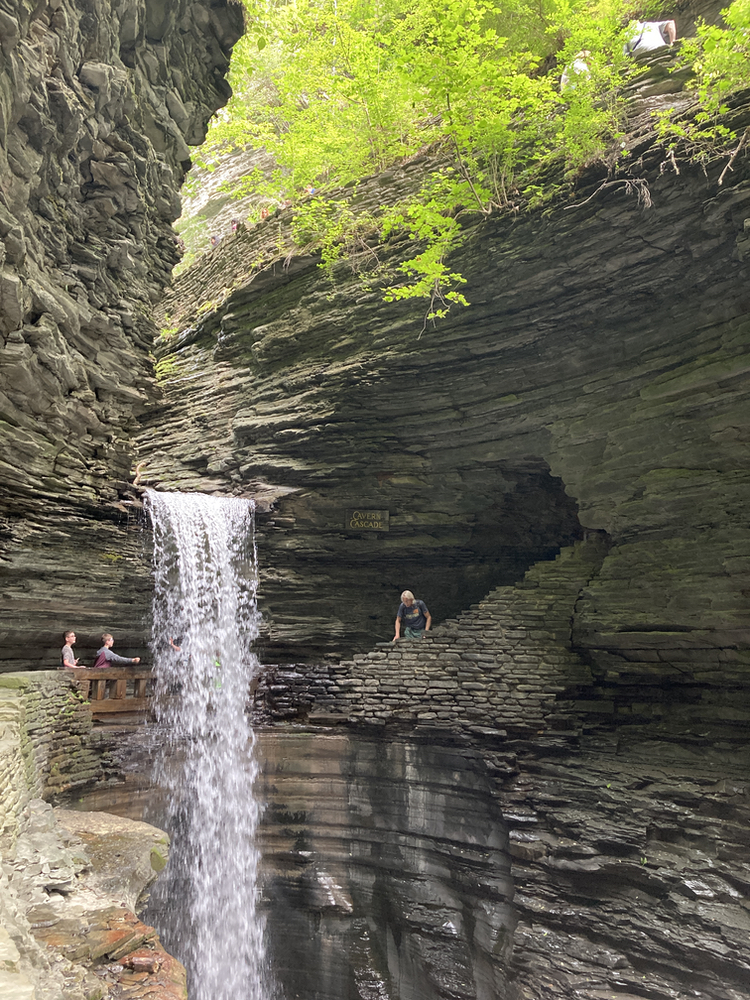
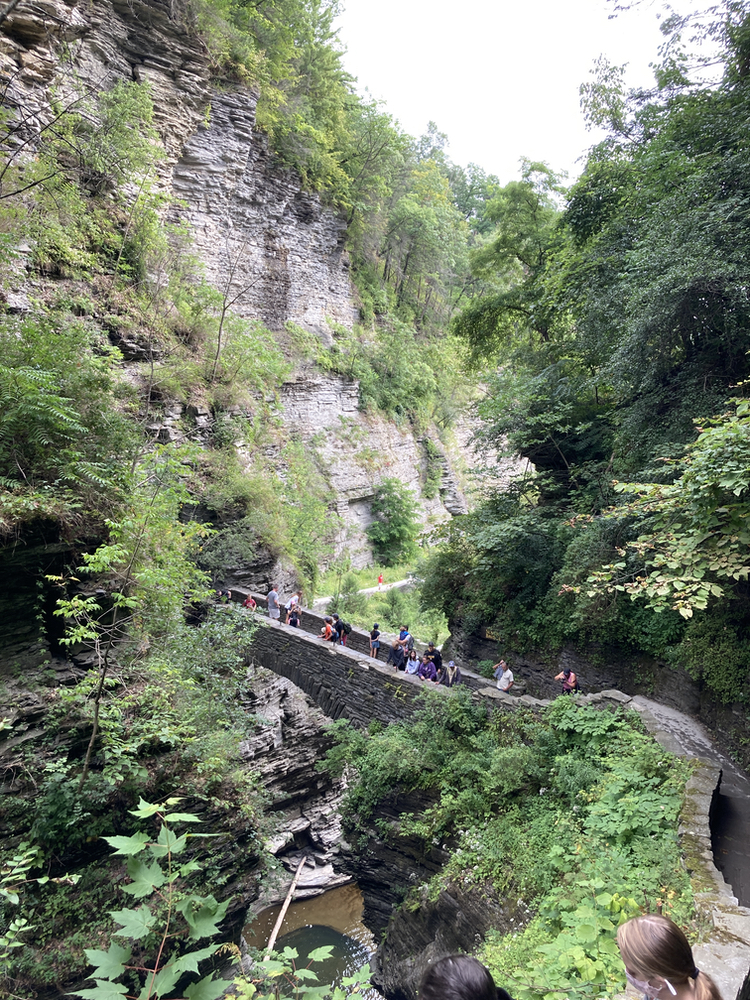
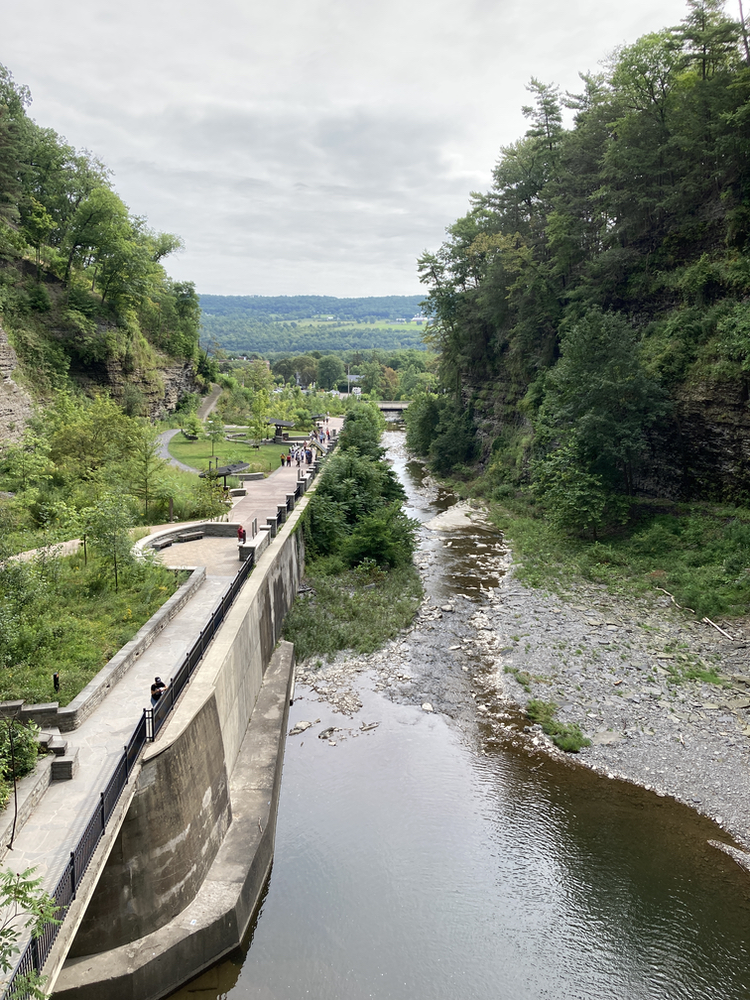
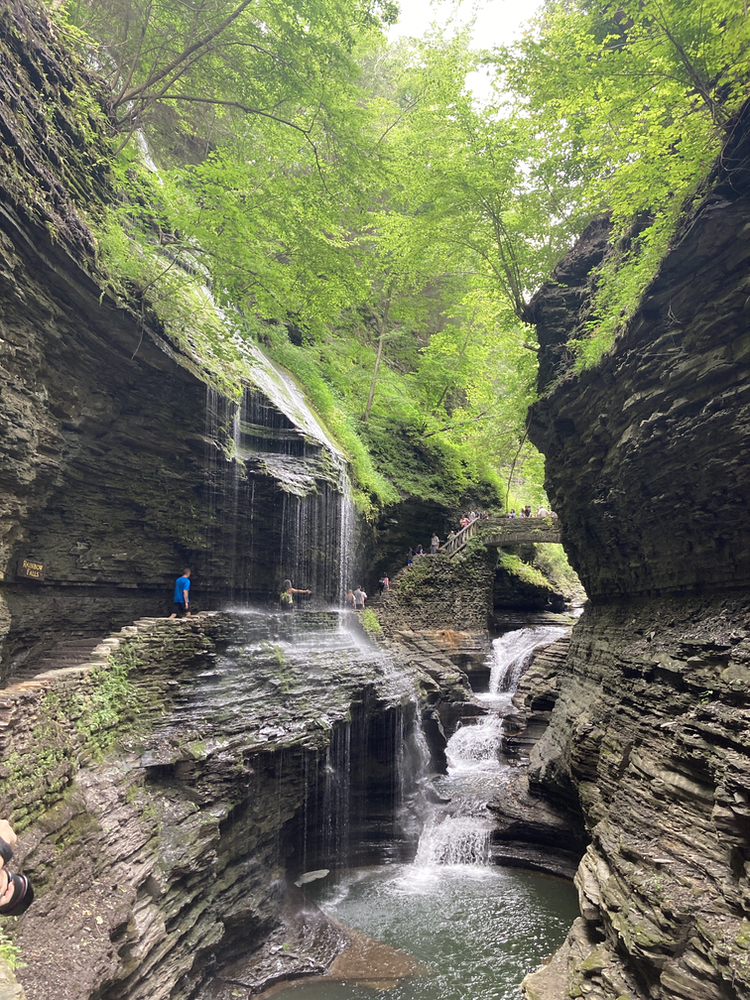
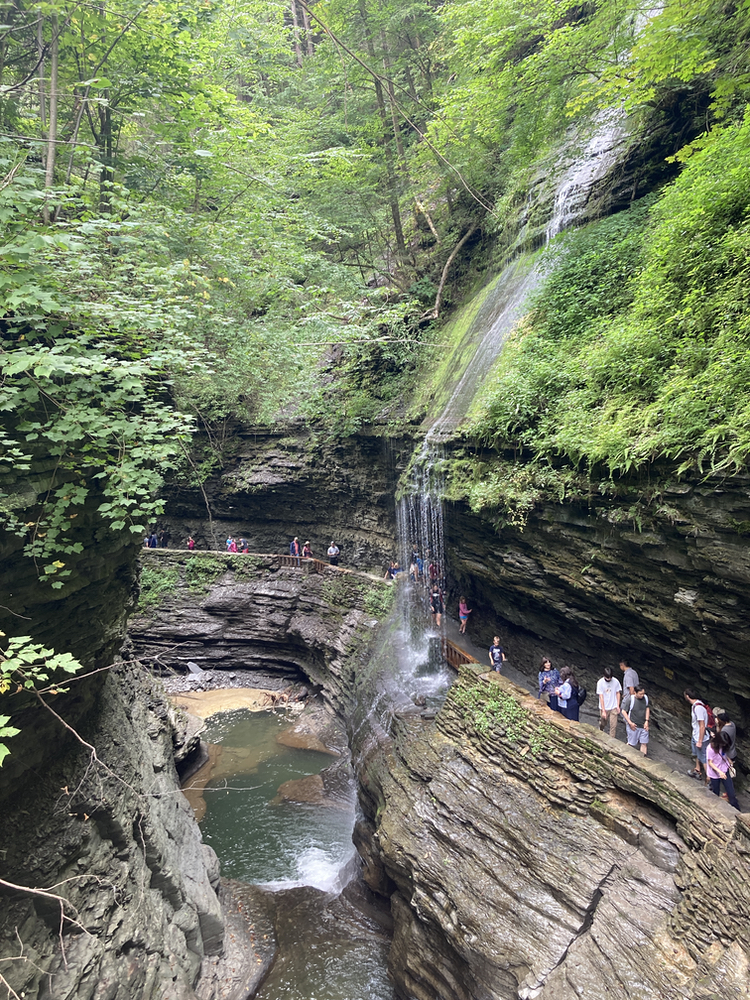
A few photos from Watkins Glen, NY.
I flipped over the way I think about taking photographs: I only take a photograph if I have a plan for doing something with it. When I took these, I was thinking that they would be good to share as a blog post—if you’re far away from Watkins Glen, you’d enjoy a bit of a virtual visit. I’ll also capture a photograph if I know someone would appreciate receiving it; at someone’s 90th birthday party, I corralled 50 people into a group photo—and then had it large-format printed, framed and delivered as a gift. …and I printed smaller copies for others, and one is framed and hanging in our house. I’ve set up multiple digital photo-frames, to which images are added by my emailing them to special addresses. The one in my sight has 500+ images that span my photography as well as selections from my father’s vast slide-film collection. There’s an enormous collection on my blog in the Photos category posts, and the best-of-the-best are on my featured photography page.
I have vast processes for everything related to my images. Custom software for managing them in archives, including automagic duplication and checksumming to protect against data degradation. (Hint: A backup of a corrupted image is also corrupted.) I have backups to the “cloud.” I have a recurring “maintenance” todo item that prompts me to go through the photos I’ve taken and move them through all my processes.
And I’m fully aware, that shortly after I die, this small eddy of organization where I’m pushing away entropy will be swept away. That’s precisely why I work so hard (although not actually that often) at doing something with the images.