Calmness with Tori Kubick

How does practicing contortion influence mental calmness and overall life perspective?

Contortion is not just about physical flexibility but a mental practice of finding calmness.

The only way to do it, was to be calm. You can’t— It’s physically impossible to do it anxious. There’s just no way. So you have to [find] calmness or… or nothing.

~ Tori Kubick (11:33)

The conversation explores the transformative aspects of contortion, emphasizing how the practice fosters mental calmness alongside physical flexibility. Tori shares how she transitioned into contortion as an adult and describes it as a discipline that connects mind and body. She highlights the need for internal calmness, which allows practitioners to push beyond perceived physical and mental limits.

Other topics include the parallels between contortion and problem-solving in other movement practices, such as parkour and aerial arts. Tori discusses the importance of strength complementing flexibility and explains how contortion helps practitioners discover new ways to navigate challenges, both physically and mentally. The conversation also touches on the introverted nature of many contortionists and the rare sense of community they share.

Takeaways

Courage in movement — The willingness to challenge oneself physically and mentally is essential for growth.

Calmness as a necessity — Contortion requires a deep state of calmness to achieve its intricate movements.

Physical and mental synergy — Practicing contortion merges physical effort with mental focus.

Adapting perspectives — Observing challenges from different angles can reveal solutions.

Strength paired with flexibility — Building both attributes in balance leads to greater movement capacity.

Impact on everyday life — Lessons from contortion apply to real-world challenges like stress management.

Shared practices — Contortion creates connections among its niche community of practitioners.

Misconceptions about contortion — Many people wrongly view it as solely innate or purely aesthetic.

Resources

Tori’s Instagram @con_tori_tion — Features content related to her contortion practice and performances.

Tori’s Website — Contains her TED talk, writings on movement, and event details.

Move NYC — An event hosted by The Movement Creative for exploring movement practices.

(Written with help from Chat-GPT.)

ɕ

Chase with Frank Mejia

How has participation in World Chase Tag and related activities influenced the personal training practices, community dynamics, and professional development of its participants?

World Chase Tag is transforming the perception of traditional playground games into a high-stakes global sport.

It definitely feels like it feels like 3D Chess, but just at a very rapid pace, just because of that other individual in you, you will get feedback from them, regardless of what they do.

~ Frank Mejia (6:53)

The conversation explores the evolution of World Chase Tag (WCT) as a burgeoning professional sport and its impact on participants. The discussion highlights how WCT has shifted from casual beginnings to a structured and competitive framework, requiring athletes to qualify and adopt advanced training regimens. This transformation has made WCT a unique intersection of traditional playground games and professional athletics.

Another focus is on the interplay of individual and community dynamics. Frank describes how engaging in such sports fosters creativity, camaraderie, and personal growth. The conversation also goes into the mental and physical challenges of maintaining focus and adaptability in high-intensity environments, as well as the broader implications of competitive tag on the Parkour community.

Takeaways

World Chase Tag as a professional sport — An evolution from casual games to competitive global events.

Parkour’s role in WCT — How foundational Parkour techniques are adapted for competitive tag.

Training adaptations — Shifting from power-focused to reactive and dynamic movements.

Community influence — How competitive events inspire collaboration and cultural exchange.

Mental challenges in competition — Balancing focus, strategy, and flow states under pressure.

Cultural impact of WCT — Bridging playground games with professional athletics.

Resources

World Chase Tag official website — Information about competitions, teams, and events.

Frank Mejia’s Instagram (@frnkmche4) — Updates and insights from a WCT athlete.

Move NYC — Community-centered events involving tag and movement.

(Written with help from Chat-GPT.)

ɕ


Exploration with Matthew Jensen

What insights can be shared about the dynamics, challenges, and benefits of podcasting with a cohost?

Exploring the chemistry between cohosts unveils the intricacies of dynamic podcasting.

I think that I like to push Mike a little bit more, to share what he thinks about, because Mike views himself as maybe more the host that ask the questions and I like the back and forth. Just because he’s not necessarily a subject matter expert— I think that brings out kind of our best conversations when he’s actively learning something or has a different perspectives on stuff.

~ Matthew Jensen (12:41)

The discussion focuses on the dynamics of cohosting a podcast, highlighting the challenges of adapting to another person’s style while discovering the benefits of shared perspectives. Topics include how collaboration shapes the content, from deciding themes to incorporating listener questions. The importance of free-flowing conversations that capture authentic dialogue is emphasized.

The podcast’s community engagement is also explored, with feedback from listeners and support from fellow podcasters enriching the creative process. The conversation includes reflections on rapport-building, fostering shared learning experiences, and leveraging tools like question submission forms to drive interaction. The role of community in demystifying podcasting and offering practical support is acknowledged as a valuable resource.

Takeaways

The benefits of cohosting — Sharing perspectives can enrich podcast discussions.

The value of preparation — Expertise and curiosity create a balanced dialogue.

Listener engagement — Feedback and questions enhance content relevance.

Community support — Connecting with fellow podcasters provides inspiration and solutions.

Improvisational dynamics — Spontaneous discussions foster authentic interaction.

The importance of rapport — Strong interpersonal relationships add depth to conversations.

Technological challenges — Audio quality and video complexities impact production.

Experimentation in format — Trying new approaches, such as live Q&A, expands possibilities.

Resources

The New Next — A podcast discussing current events and their future implications.

Knowledge for Caregivers podcast — A podcast offering insights and tips for caregivers, referenced for its quality and feedback value.

Libsyn — A platform used for hosting podcasts, such as “The New Next”.

(Written with help from Chat-GPT.)

ɕ


Amusements

Let us read, and let us dance; These two amusements will never do harm to the world.

~ Voltaire

slip:4a897.


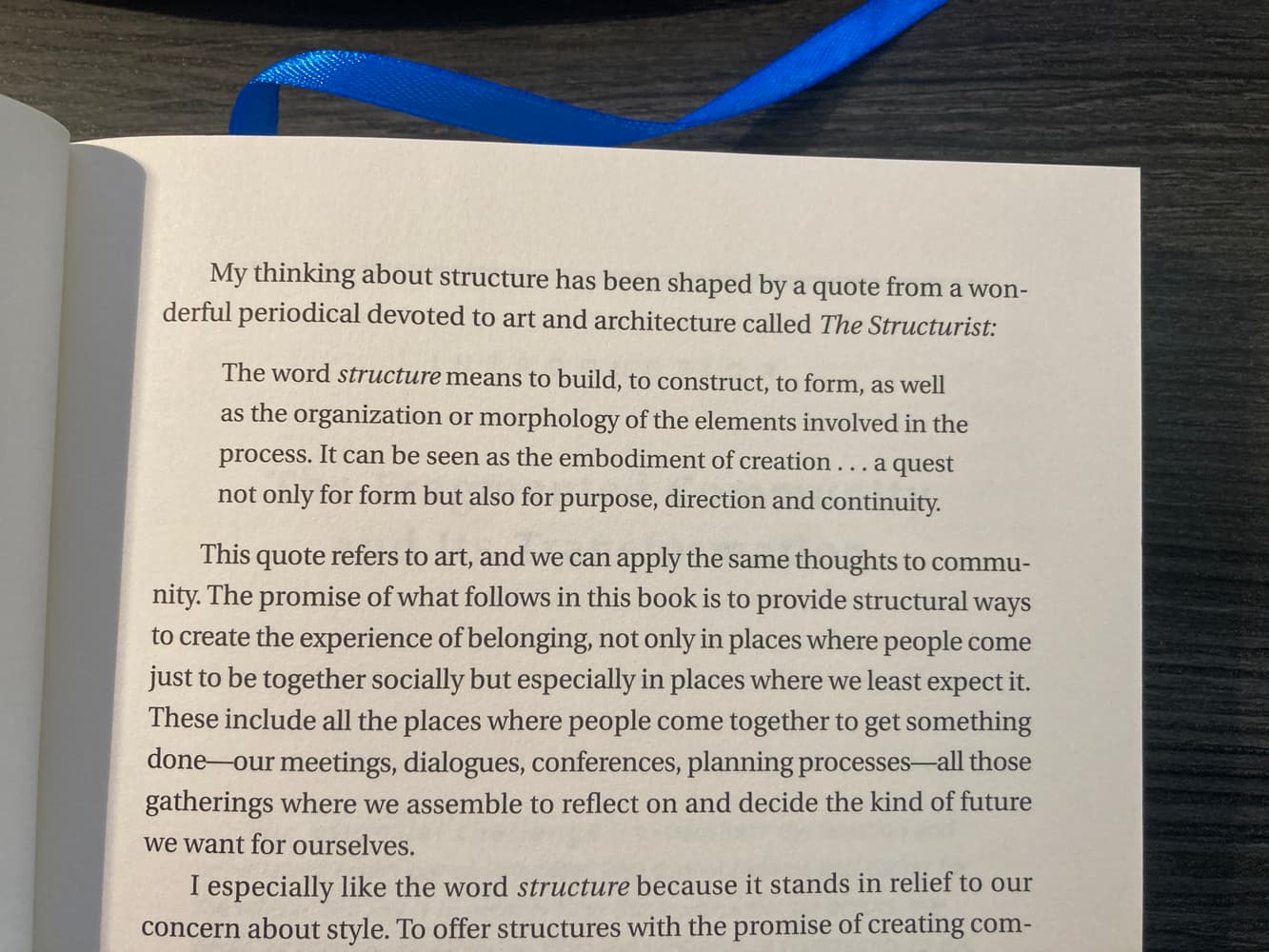
The Structurist

Sometimes I have a “thread of interest” that I simply know I will never have the time to do anything with. Instead of simply ̄\_(ツ)_/ ̄ing and letting it go, I’m sharing this here so I can feel like I did something with it.

The what now? Oh, this periodical…

https://artsandscience.usask.ca/structurist/

…but the links on that page itself are broken. More searching did lead me to find at least some issues in U Sask.’s online store. But they are not cheap. (If they were single-dollars-each, I might just buy them all.)

They are available on ABE Books…

https://www.abebooks.com/book-search/title/structurist/

Open questions I had:

Does anyone within the sound of my voice have any issues?
Anyone have any commentary about the periodical at large?
Does anyone’s closest library have any of them?
Is anyone near the University of Saskatchewan?
…have a contact there?
…or any in-real-life means of getting more information?

And also, why aren’t the contents of these online? They seem to be culturally significant.

ɕ


Play with Nick Anastasia

What motivates and shapes the approaches and philosophies of movement practitioners in how they train, coach, and engage with spaces?

Designing obstacles and spaces inspires exploration and unique physical expression.

It’s just a more, sort of complicated way of, hanging out with your friends and playing with blocks when you’re a little kid.

~ Nick Anastasia (21:10)

The conversation explores the philosophy and practice of movement through structured play, improvisation, and coaching. Nick reflects on his evolution from exploring movement instinctively to intentionally designing spaces and challenges that inspire others. By creating unique and engaging setups, he aims to foster creativity and adaptability in movement.

Topics include the contrast between indoor and outdoor training spaces, with built environments offering dense opportunities for creativity and flow, while outdoor environments encourage exploration and adaptability. Improvisation plays a crucial role, with games and unstructured activities helping practitioners engage with their surroundings in new ways. Coaching philosophies emphasize introspection and learning, not just for the student but also for the instructor.

Takeaways

Movement in dense indoor setups — enables continuous exploration with minimal steps between challenges.

Outdoor training spaces — encourage discovery and adaptation to changing environments.

Improvisation in movement — develops adaptability and creativity in both planned and reactionary scenarios.

Coaching methodologies — focus on fostering individual growth and introspection for both students and instructors.

Space design and construction — inspire movement by offering unique challenges and creative opportunities.

Play as a philosophy — serves as a foundation for exploring movement, creativity, and collaboration.

The role of discovery — highlights the evolving nature of how practitioners see and use their environment.

Resources

The Movement Creative — A Parkour organization hosting events like Move NYC, focusing on creative and adaptive movement.

Parkour Generations Boston — A community that trains and coaches Parkour with temporary and permanent setups in Boston.

Harvard Square (Boston) — A location used for varied outdoor Parkour classes and exploration.

American Rendezvous — An annual Parkour event mentioned as an example of discovering changing training spots.

(Written with help from Chat-GPT.)

ɕ


Illusion

The self, the place where we live, is a place of illusion. Goodness is connected with the attempt to see the unself… to pierce the veil of selfish consciousness and join the world as it really is.

~ Erwin Schrödinger

slip:4a896.


Dopamine

I’ve put forward a physiological hypothesis to explain the psychological Opponent Process theory, which I call the Receptor Control Theory. In essence, our pleasure set point or baseline “happiness” is determined by the density and sensitivity of dopamine receptors in the brain (and elsewhere). In this view, obesity and addiction result from a process of “dopamine resistance”, whereby receptor down-regulation impairs satisfaction and drives cravings. Conversely, high receptor density and sensitivity promote satisfaction and dampen cravings.

~ Todd Becker from, Retraining the limbic brain to overcome obesity and addiction

Phone use might rise to the level of a literal addiction. Its use can certainly cause dopamine release, which is a strong motivator that plays a role in addiction. I used to think that wasn’t true… That my phone didn’t cause dopamine release… That my phone wasn’t causing manipulation of my motivations… then I tried to put my phone down for an entire day.

And then I set about separating using my phone as a tool—which I can do a lot without it being addictive—from my phone’s use of me as a tool.

ɕ


MaryBeth Gangemi: Environment, ‘Natural Movement’, and Breathing

What are the key insights into natural movement, breathing, and how they connect to overall well-being?

MaryBeth Gangemi’s experience as a social worker has had a profound affect on how she approaches her movement practice and working with clients. She shares her own movement journey, from city to country side. MaryBeth discusses the importance of environment, breathing, and play on our ability to move well and ‘naturally.’ She unpacks her thoughts on the connections between social work and movement, as well as creating spaces accessible to all.

So you could say, is walking natural movement? […] But what if you’re walking with your head down looking at your phone, with your mouth open breathing heavy, is that? […] If we want to focus on return to nature type of idea […] how about like, really walk with posture up and look where you’re going and look around and see what’s ahead of you? […] Just not letting all of it pass you by.

~ MaryBeth Gangemi (39:34)

MaryBeth Gangemi is a breath, strength, and natural movement coach, in addition to being a wife and mother. She has certifications in many different areas, including MovNat, Kettlebells, Original Strength, and Buteyko Breathing Method. MaryBeth owns and runs Kairos Strong, where she teaches students to develop quality movement to support all areas of their life.

The conversation explores the profound relationship between natural movement, breathing, and overall well-being. Topics include the importance of posture, awareness, and incorporating nature into daily practices to foster mindfulness. Breathing techniques, such as the control pause, are discussed as vital tools for improving health and managing stress.

There’s an emphasis on rediscovering play, curiosity, and sensory experiences, like walking barefoot or engaging with different textures in the environment. The dialogue also examines the role of environment in shaping movement habits and encourages listeners to explore new activities when their current routines become monotonous or unfulfilling.

Takeaways

Breathing awareness — Understanding breathing patterns can improve oxygenation and reduce stress.

Natural movement — Everyday movements like walking and crawling can be made more mindful and enriching.

Environment’s role — The physical and social environment significantly influences movement habits.

Rediscovering play — Adults can benefit from integrating playful and exploratory elements into their routines.

Mindfulness in motion — Focusing on posture and surroundings enriches movement experiences.

Breathing practices — Simple techniques like the control pause provide tangible health benefits.

Flexibility in routines — Movement practices should be adaptable and enjoyable to sustain long-term engagement.

Resources

MaryBeth Gangemi’s web site

MaryBeth Gangemi on LinkedIn

Original Strength — A movement system mentioned for its effective breathing exercises.

Buteyko Breathing Method — A technique discussed in the context of improving breathing efficiency.

Julie Angel — A person referenced for their work in showcasing diverse movement practices.

(Written with help from Chat-GPT.)

ɕ


Sculpting

The sculptor must paint with his chisel: Half his touches are not to realize, but to put power into, the form. They are touches of light and shadow, and raise a ridge, or sink a hollow, not to represent an actual ridge or hollow, but to get a line of ight, or a spot of darkness.

~ John Ruskin

slip:4a894.