I was hustling from point A to point B when I rounded the corner and saw this.
ɕ

I was hustling from point A to point B when I rounded the corner and saw this.
ɕ
The problem facing knowledge work in our current moment is not that we’re lacking sufficiently powerful technologies. It’s instead that we’re already distracted by so many digital tools that there’s no time left to really open the throttle on our brains.
Cal Newport, from https://calnewport.com/forget-chatbots-you-need-a-notebook/
This is something I’ve been thinking about for a few months. I recently went back to my lab notebook habit from 30+ years ago. It’s like discovering a bicycle for your mind: It multiplies the power of what my mind is good at. But not too much. (like a car where you’re completely cut off from the world.) Using a notebook I can hold thoughts outside my mind, return to them, and see them.
There’s also the magic that happens when you hold onto a thought long enough to write it down. That’s much longer than we usually hold on to any thought.
ɕ
Whatever you can do, or dream you can, begin it. Boldness has genius, power, and magic in it.
~ John Anster
Elsewhere, this is 4a1565. — slipbox
Philosophy demands self-restraint, not self-abnegation—and even self-restraint can comb its hair. The limit I suggest is this: Our habits should mingle the ideal with the ordinary in due proportion, our way of life should be one that everyone can admire without finding it unrecognizable.
~ Seneca, Moral Letters, 5.5
Elsewhere, this is 4a1564. — slipbox

I’m a little behind :) this episode of The Creatively Engaging is from 4 years ago, but is worth listening to.
About halfway through Anna and Monika start talking about what it was like to play the specific piece of music. There’s an interesting discussion about staying in the tension of being out of perfect timing… which all struck me as related to doing work as a creative in general.
@brucedevereux was also on Podtalk back at, https://forum.podcaster.community/t/persistence-with-bruce-devereux/540
ɕ
I saw this the other day (via https://podnews.net/ ). A process for adopting new podcast standards…
https://podstandards.org/2025/10/21/a-process-for-adopting-new-podcast-standards/
ɕ
Clearheadedness and action are not always enough, in politics or in life. Some obstacles are beyond a snap of the fingers or novel solution. It is not alway possible for one person to rid the world of a great evil or stop a country bent toward conflict. Of course, we try—because it can happen. But we should be ready for it not to. And we need to be able to find a greater purpose in this suffering and handle it with firmness and forbearance.
~ Ryan Holiday, from The Obstacle is the Way
Elsewhere, this is 4a1563. — slipbox
I saw this magazine a year (or more?) ago and seriously considered subscribing.
Has anyone read any of them?
Recent PodNews post has discount subscription pricing (and more details)…
https://podnews.net/press-release/good-tape-threat
ɕ
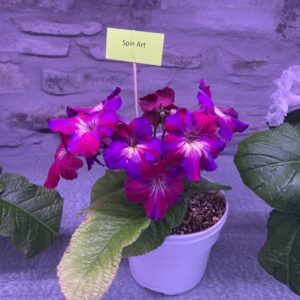
And this final one is unlike any Iris I’ve ever seen.
ɕ

Second of three from a recent trip to a grower who specializes in them.
ɕ