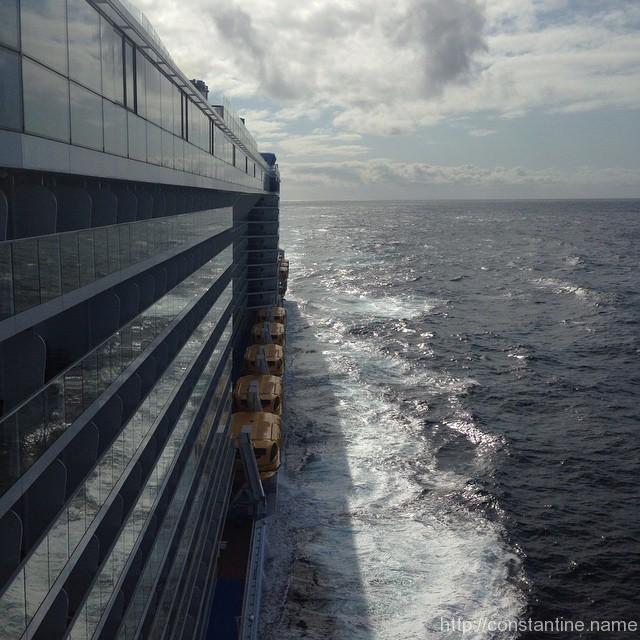
Port Side Observation deck 
Sunset with a glimpse of Africa from Quantum of the Seas 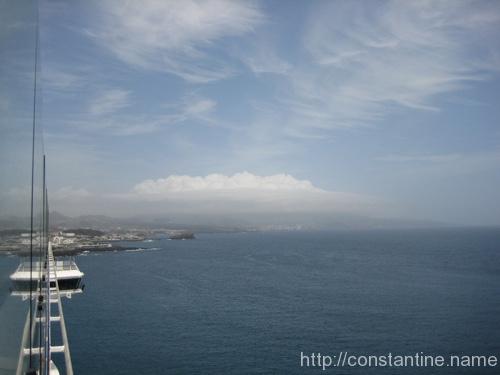
Ponta Delgada 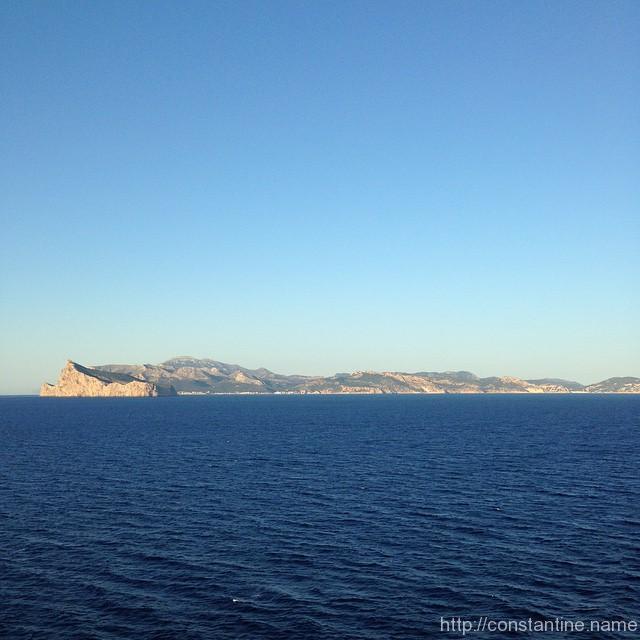
Mallorca 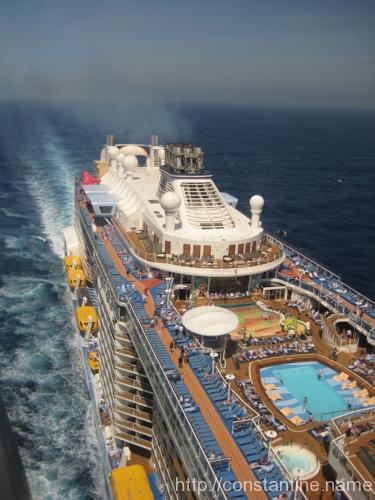
A rare point of view 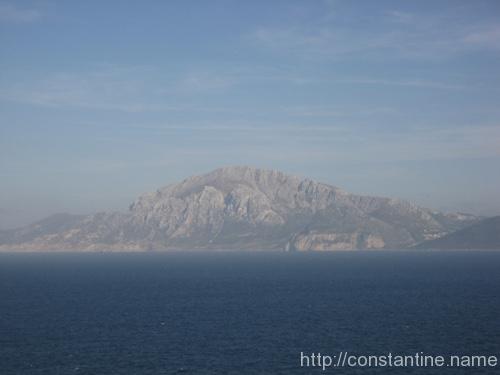
North Africa 
The Rock at sunset 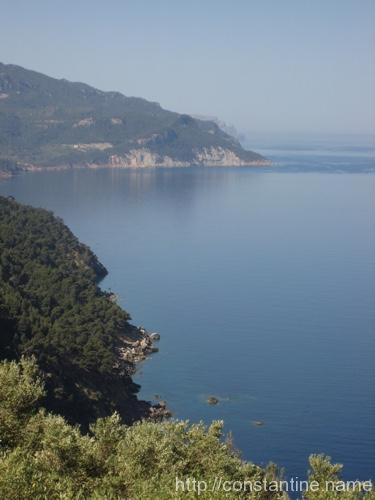
Picturesque mediteranean island
Photography from Atlantic cruise →
The paradox of barefoot running →
So the explanation here is clear: Our skeletons, musculature and nervous systems are highly refined and well-coordinated adapative systems which adjust both instanteously and by means of longer term adjustments to in order handle the terrain. These “proprioceptive” adjustments take place virtually beneath the level of consciousness, through the exquisite feedback systems of our body and brain. Try to circumvent these systems, and the protective mechanisms will weaken, exposing us to injury.
~ Todd Becker from, The paradox of barefoot running
ɕ
Sorry, no actually I’m not →
So this happened in Cartegena.
This is funny, but that’s not why I posted this. See the bottom.
Imagine if you will, a bus load of 45 tourists — a perfect stereotype bus tour from a cruise ship. We all walk up a hill/road to see the Castillo overlooking Cartegena. (Very nice by the way! Photos coming soon.) Then we walk all the way back down. We reach an intersection, near our bus in the home stretch, and across the street is a small park with one of those long railings meant to keep people from J-walking.
The cross-walk says “go”, so there’s no traffic. Without thinking, I J-walked straight across and vaulted the rail.
…and I hear 44 people do a group groan. They had all followed me across the intersection and everyone had to walk all the way around the railing. (My mom shouted out, “Brat!”)
SO? Well, I did it without thinking, but FORGET ME.
Imagine what YOUR LIFE would be like if you vaulted a little railing after a long walk AND THOUGHT IT WAS FUN. What, really, is your excuse?
(…and if you’re in shape, or under 20, or can already vault a rail. Kudos to you! …but I’m not talking to you.)
ɕ
Secret society of … adults →
Postman argues that our modern concepts of childhood and adulthood (and the gulf between them) were birthed by the printing press. Literacy became the dividing line between these stages of life; adults were competent readers, children were not, and they thus had to become adults by mastering written language.
~ Brett Mckay from, The Printing Press, Literacy, and the Rise and Fall of the Secret Society of Adults
Elsewhere, this is 4uaose1. — slipbox
ɕ
Our oil predicament →
A person might think that oil prices would be fairly stable. Prices would set themselves at a level that would be high enough for the majority of producers, so that in total producers would provide enough–but not too much–oil for the world economy. The prices would be fairly affordable for consumers. And economies around the world would grow robustly with these oil supplies, plus other energy supplies. Unfortunately, it doesn’t seem to work that way recently. Let me explain at least a few of the issues involved.
~ Gail Tverberg from, Eight Pieces of Our Oil Price Predicament
Elsewhere, this is 4uouei1. — slipbox
ɕ
Carbohydrates are addictive →
You think carbohydrates aren’t addictive? You think it’s easy to give them up? You don’t think it possible that people might prefer carbs to life?
Think again.
~ Michael Eades from, «http://www.proteinpower.com/drmike/ketones-and-ketosis/carbohydrates-are-addictive/»
ɕ
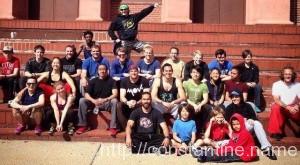
Boston Gauntlet 2015 →
Group photo from the end of the “Gauntlet” event in Somerville.
I think my biggest accomplishment was the “didn’t hurt myself.” I certainly did a lot of physical things that were impressive (for me, and my ability.) But just being able to continue to ‘dig deep’ for hours on end — that was great.
As usual, I want to avoid name-dropping. But we did this one neat turn-vault landing on one foot and continuing on to step down and off the wall… that was something very different! Also, one of the first times I’ve EVER just “done” something and actually felt like I was really moving simply.
ɕ
Thriving in uncertainty →
Yet from the first encounter, the theories unraveled in the face of situations that could never have been predicted. The most respected generals in the world were made to look like amateurs. Their faith in abstract planning blinded them to the reality of the situation. It took years of conflict before they began to really adapt to the reality of their situation.
~ Kyle Eschenroeder from, 5 Tools for Thriving in Uncertainty
Elsewhere, this is 4uaoto1. — slipbox
ɕ
Genius versus talent →
…a genius is simply a person who originates something never known before. Nobody but Melville could have written Moby-Dick, not even Whitman or Shakespeare. Nobody but Whitman could have written Leaves of Grass; Whitman was born to write Leaves of Grass and Melville was born to write Moby-Dick.
~ Jack Kerouac from, Are Writers Born or Made? Jack Kerouac on the Crucial Difference Between Talent and Genius
Elsewhere, this is 4ubaae1. — slipbox
ɕ
Bespoke, hand crafted engineer →
There are ramifications to my job not being done correctly, and there are ramifications to your, as well. They’re probably not always (or even usually) dire, but how many times does it have to be?
~ Matt Simmons from, Bespoke, Hand Crafted Engineer
Elsewhere, this is 4uuebo1. — slipbox
You can, and should, also follow Matt directly on Twitter @standalonesa and on his blog.
ɕ