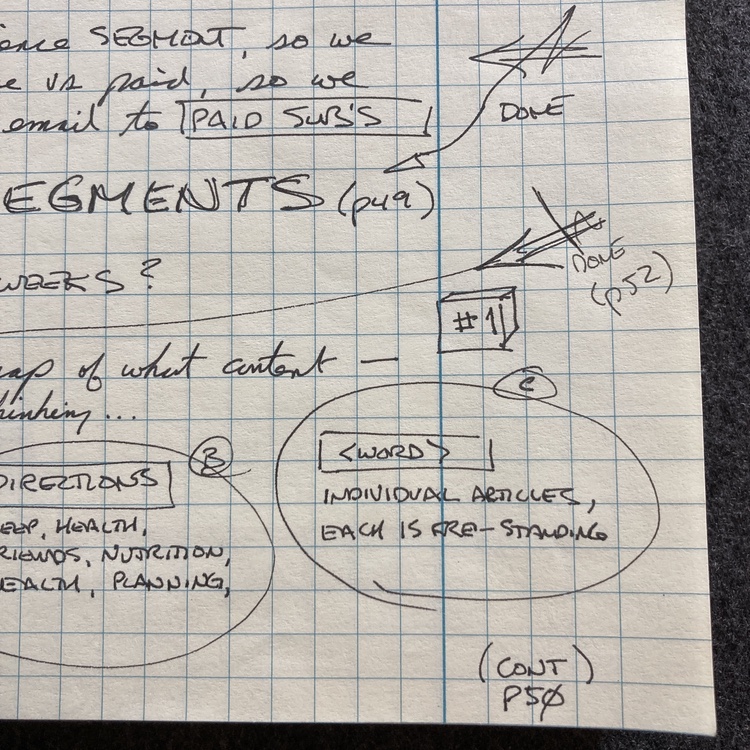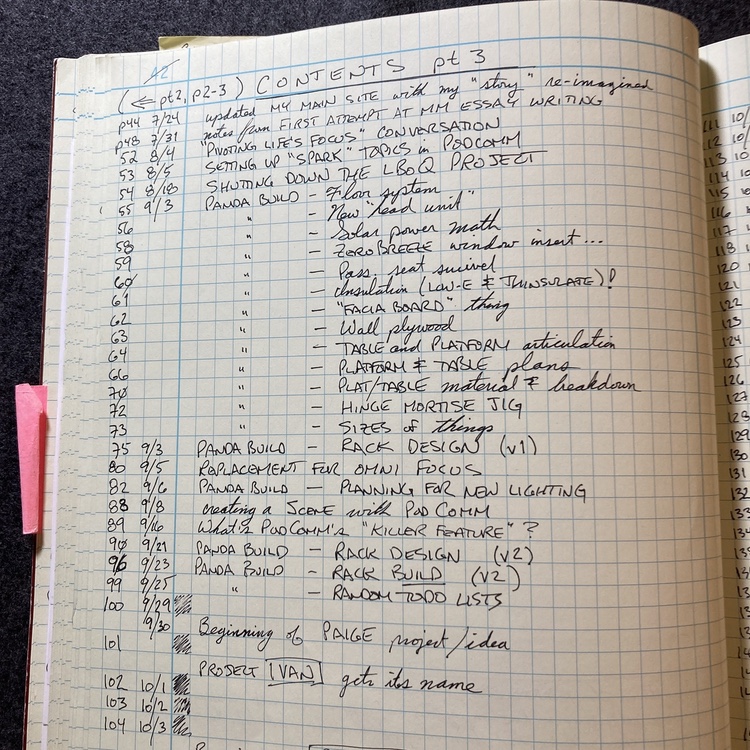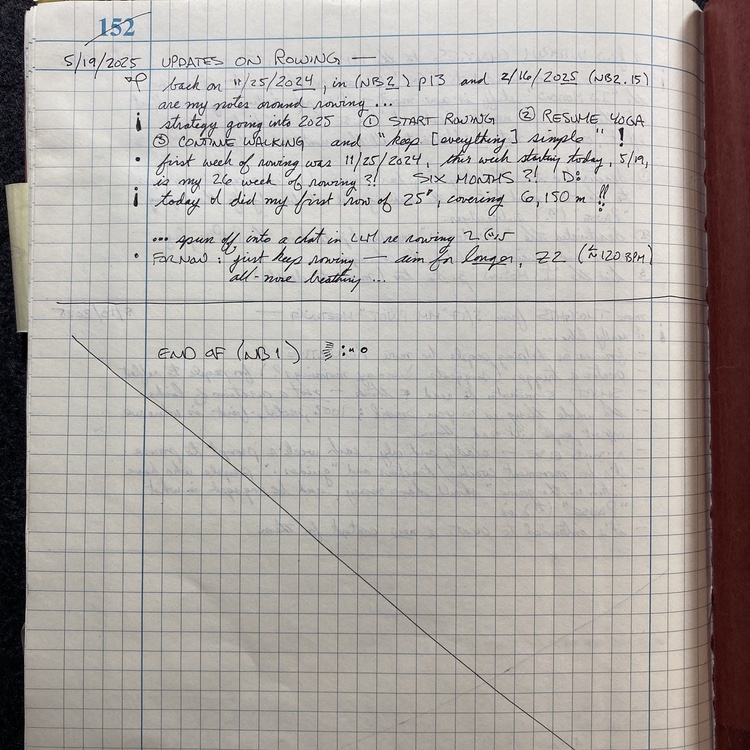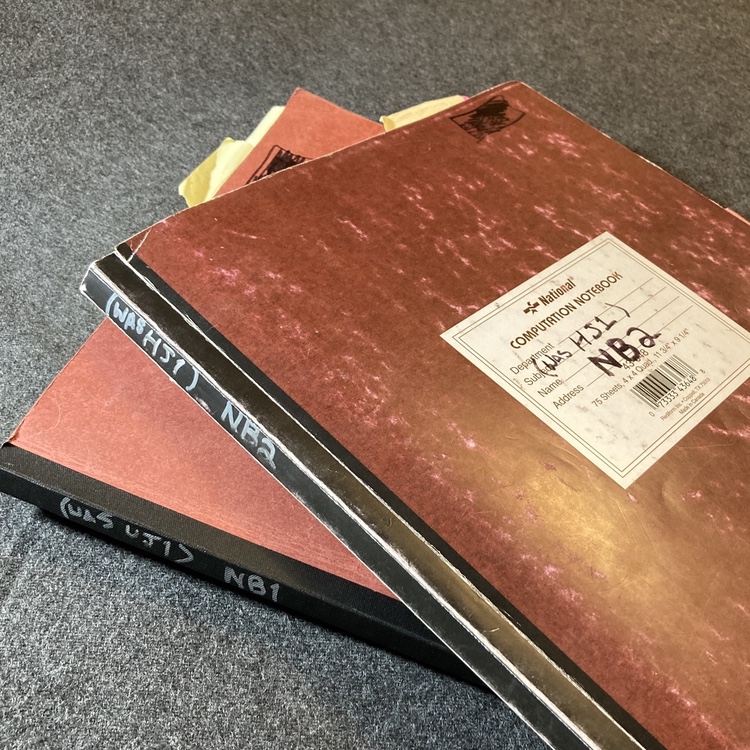
One Notebook. Not Two. Not Three. One.

The decision about where to write something is friction. Friction is the enemy.

You want zero decisions between “I should write this down” and actually writing it down.

I know it’s tempting: one notebook for work, one for personal, one for that side project. That’s three decisions you have to make every time you want to write something down. Three opportunities to just… not write it down.

What actually matters is having something you can write in without thinking about whether this thought “belongs” in this particular notebook.

One notebook. Everything goes in it.

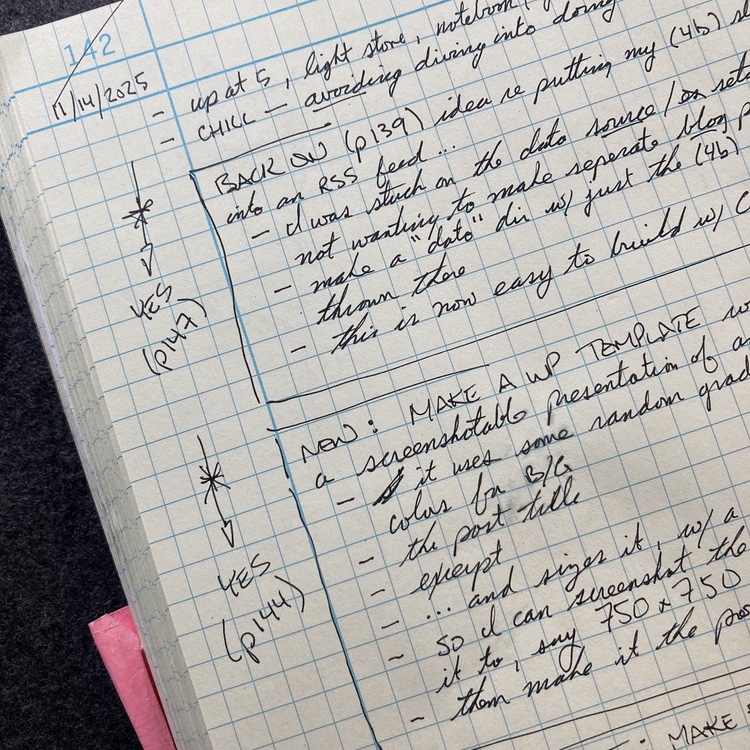
Work stuff, personal stuff, ideas, questions, whatever. It’s all part of figuring out what you’re trying to do. The notebook doesn’t care about categories. Neither should you—at least not at the moment of capture.

Organization can come later. Capture has to happen now, or it doesn’t happen at all.

ɕ

This is part of a series about Hand-Write. Think Better.—a method for using paper to think more clearly. Get the book → or grab the free quick reference →
The Backwards Productivity Hack

Here’s what sounds wrong but turns out to be true: writing more actually creates less work.

When you feel overwhelmed, the last thing you want to do is add another task. Writing things down feels like more work piled on top of everything else you’re already not getting done.

But here’s what actually happens when you don’t write things down: You think about the same problem multiple times. You have the same realization three different times and forget it twice. You start working on something, realize you don’t know the next step, stop, and come back to it later only to re-figure out where you were.

That’s exhausting. And it’s way more work than writing things down.

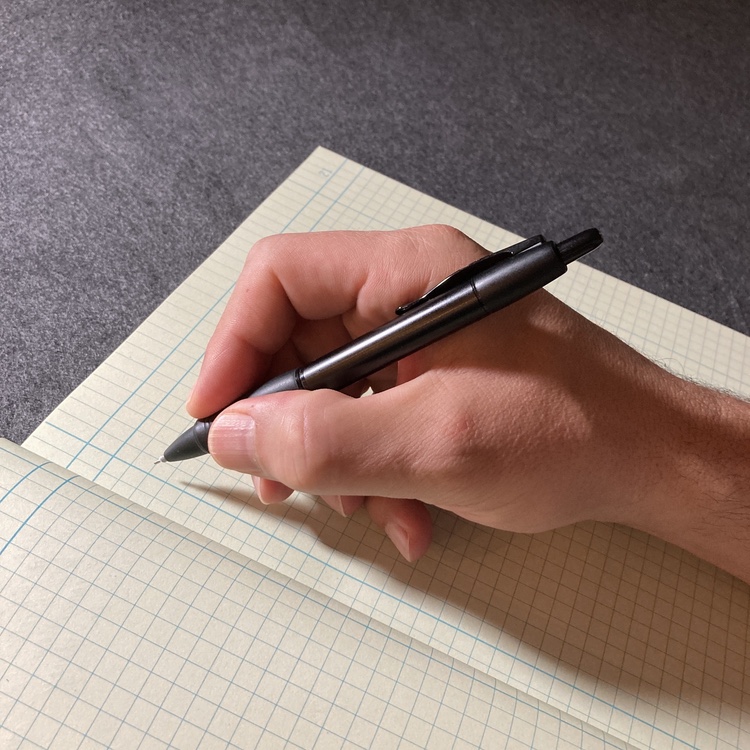
Writing is slower than thinking. That’s actually the point. When you write, you can only hold one thought at a time. You have to finish the sentence before you start the next one. This forced slowness makes you think more clearly about what you’re actually trying to say.

And once it’s written down, you don’t have to hold it in your head anymore.

More writing = clearer thinking = less total effort.

It sounds backwards until you try it.

ɕ

This is the first in a series of posts about Hand-Write. Think Better.—a method for people who feel overwhelmed to start simply writing more on paper. Get the book →

Not ready for the book? Grab the free one-page quick reference—it covers the entire method on a single sheet. Download the PDF →

About notebooks

The problem facing knowledge work in our current moment is not that we’re lacking sufficiently powerful technologies. It’s instead that we’re already distracted by so many digital tools that there’s no time left to really open the throttle on our brains.

Cal Newport, from https://calnewport.com/forget-chatbots-you-need-a-notebook/

This is something I’ve been thinking about for a few months. I recently went back to my lab notebook habit from 30+ years ago. It’s like discovering a bicycle for your mind: It multiplies the power of what my mind is good at. But not too much. (like a car where you’re completely cut off from the world.) Using a notebook I can hold thoughts outside my mind, return to them, and see them.

There’s also the magic that happens when you hold onto a thought long enough to write it down. That’s much longer than we usually hold on to any thought.

ɕ