Reading time: About 3 minutes, 600 words
Get 7 for Sunday in your inbox. → Subscribe here.
This issue is https://7forsunday.com/81
Reading time: About 3 minutes, 600 words
Get 7 for Sunday in your inbox. → Subscribe here.
This issue is https://7forsunday.com/81
I like to think that there’s nothing new on my blog. (That’s not a typo.) Rather, this is all just me working with the garage door up. I enjoyed this article from Holiday and it’s wonderful advice, which I need to hear much much more often.
Say no. Own it. Be polite when you can, but own it.
Don’t say maybe. Don’t give a bunch of reasons (which invite an argument). Don’t push it until later.
Say NO.
~ Ryan Holiday from, This is Your Reminder to Say ‘NO’
Elsewhere, this is 4uryti3. — slipbox
My intention here with 7 for Sunday is to give you interesting things to ponder. Sometimes I worry that I might be making your life worse by enticing you with even more rabbit holes than you’d otherwise stumble upon. This item is a sort of penance then, as I hope you have built up your nope-muscle sufficiently to get through 6 more items today.
ɕ
Words are sacred. They deserve respect. If you get the right ones, in the right order, you can nudge the world a little.
~ Tom Stoppard
Elsewhere, this is 4a1401. — slipbox
Be sure that you’ve first fully assimilated the idea of ‘no’, above. For if you don’t, you risk the mistake I make of reflexively saying ‘yes’ to the next thing that comes up.
We do it because to stop (or pause) after Project number-1 means we are one-hit wonders. We are dabbling. We are amateurs.
To continue, on the other hand, means we are pursuing our calling as a practice.
~ Steven Pressfield from, Having a Practice
Elsewhere, this is 4useha1. — slipbox
We do, in fact, want to—we must—say ‘yes’ to some next thing.
First, master the wonderful, short, complete sentence: No. Second, immediately say yes to the correct, next thing.
ɕ
The most reliable way to change your entire life is by not changing your entire life… Improve the whole by mastering one thing.
~ James Clear
Elsewhere, this is 4a1400. — slipbox
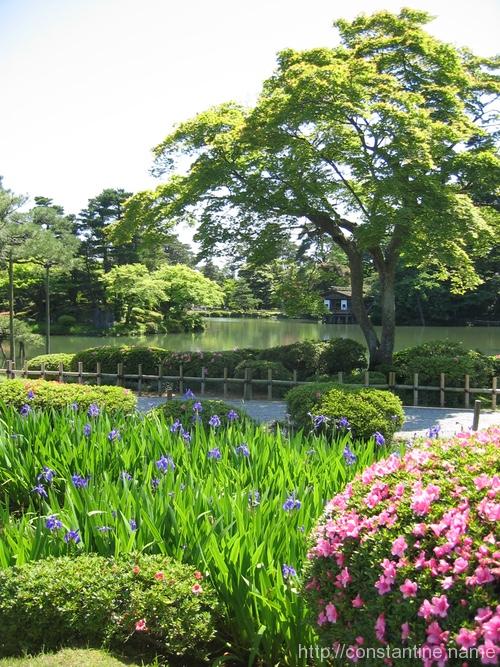
It’s nice to find little oases of respite. It doesn’t have to be a Japanese garden, of course. You can find respite nearly anywhere.
In the 1960s, the city of Portland converted an old zoo into a 12-acre garden as part of an effort to promote peace and cultural exchange between the U.S. and Japan. The grounds have been called the most beautiful and authentic Japanese gardens outside of Japan by luminaries like Nobuo Matsunaga, the former Japanese ambassador to the United States. The teahouse, the Umami Café, strives to bring the same authentic flair to their fare. While their grassy matcha and roasted-rice teas are always on the menu, their wagashi changes with the turning of the seasons.
~ Roxanne Hoorn from, The Woman Putting a West-Coast Spin on Japan’s Traditional Tea Sweets
Elsewhere, this is 4uaaai3. — slipbox
Even better, you can create little spaces of your own.
ɕ
Man has only to sink beneath the surface and he is free.
~ Jacques Yves Cousteau
Elsewhere, this is 4a1399. — slipbox
There are two really important parts to good advice: The advice, and the taking of it.
Head high and […]
~ Nick Cave‘s mother, from The Red Hand Files – Issue #14
Elsewhere, this is 4uteyo1. — slipbox
As Cave briefly explains, his mother had previously been a font of advice, but he’d not listened. Or perhaps he wasn’t ready to listen? Either way, I’ve totally nope never nuh-uh not me ever failed to heed words of wisdom from my mother.
What’s that? What advice has she given? I think the best would be her diet book: If it tastes good, spit it out. (That’s the whole book, not the title.) And her mother’s best advice was: Let the young ones do it.
ɕ
Reading time: About 4 minutes, 900 words
Get 7 for Sunday in your inbox. → Subscribe here.
This issue is https://7forsunday.com/80

Suppose you wanted to be surprised and delighted (and possibly intrigued and befuddled) in some field. You could start with the Top 10. Today, I’m talking about movies, so find some list of the 10 Greatest Films. This sort of listing is ubiquitous: 10 Greatest Dramas, 100 Films preserved by the U.S. Library of Congress, The British Film Institute’s (BFI) 100 Greatest Films, and on and on.
The following list from BFI is not that sort of list. Not at all.
Each of these films is one of the greatest according to just one voter in our recent Greatest Films of All Time poll; they are some of the hidden gems among the more than 4,300 films voted for by more than 2,000 participants. (For the pedantic reader, the films that got one vote each – more than we can fit in here – are all technically joint 1,956th greatest film of all time, combining the tallies of our critics’ and directors’ polls.)
~ from 101 hidden gems: the greatest films you’ve never seen
Elsewhere, this is 4uousi2. — slipbox
Effectively, that’s a list of 101 movies which all tied for last place, in list of the top 2,000-or-so movies. Above, the BFI is showing an entirely different way to be surprised and delighted (and possibly intrigued and befuddled): Find one person who is into the thing way more than you, and ask them for a list of the greatest. On their list, it is likely there will be one which they recommend, that no one else would recommend. What is up with that one recommendation?
Any big list is created by many people collaborating and, in the end, averaging out their individual tastes. But if you ask that one really-into-it person, you’ll get a very surprising and delightful (and probably intriguing and befuddling) opinion.
ɕ