Everyone here has done this, of course. But it hasn’t yet been part of you graduates’ actual life routine, day after week after month after year.
But it will be. And many more dreary, annoying, seemingly meaningless routines besides. But that is not the point. The point is that petty, frustrating crap like this is exactly where the work of choosing is gonna come in.
It occurs to me that I’ve no idea who gave the commencement address at my graduation. After a bit of digging…
Robert W. Galvin, chairman of Motorola, delivered the main address yesterday to the 1,150 graduates at the 125th commencement of Lehigh University in Bethlehem, Pa.
Mr. Galvin received an honorary Doctor of Engineering degree.
Everyone here has done this, of course. But it hasn’t yet been part of you graduates’ actual life routine, day after week after month after year.
But it will be. And many more dreary, annoying, seemingly meaningless routines besides. But that is not the point. The point is that petty, frustrating crap like this is exactly where the work of choosing is gonna come in.
Nothing in this world can take the place of persistence.
Talent will not; nothing is more common than unsuccessful people with talent. Genius will not; unrewarded genius is almost a proverb. Education will not; the world is full of educated derelicts.
Persistence and Determination alone are omnipotent. The slogan “Press on” has solved and always will solve the problems of the human race.
I’d venture that the vast majority of regular, everyday people working in technology related jobs are not actively trying to do evil. People go to work, make the best decisions they can and then go home. If that’s true, then it’s going to be nigh impossible to change the momentum of how things (e.g., NSA surveillance) are going. Because in order for it to change, we need to start thinking bigger.
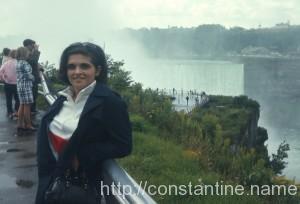
Here’s a shot my dad took in 1968 when they were at Niagara Falls for their honeymoon. I have two galleries coming soon; the rest of their honeymoon photos, and the photos from our (Tracy and I) trip to Niagara Falls in 2011.
This model “works” fairly well, as long as the economy is growing fast enough–population continues to grow and resource extraction continues to grow as planned. In a finite world, we know that this model cannot work forever. At some point, we can expect to start reaching limits.
What do these limits look like? I would argue that in the case of resource extraction, these limits look like increasingly high cost of extraction.
You should also read “Quantitative Easing (QE)” (the first three, short paragraphs on WikiPedia summarize it neatly.)
My opinion: We need to start seriously talking about a STEADY STATE ECONOMY. What would that look like? How would it work? How do we get to that? Seriously. We simply CANNOT have a growing and expanding economy forever on a finite planet with finite room and finite resources. What part of “finite” don’t you understand?
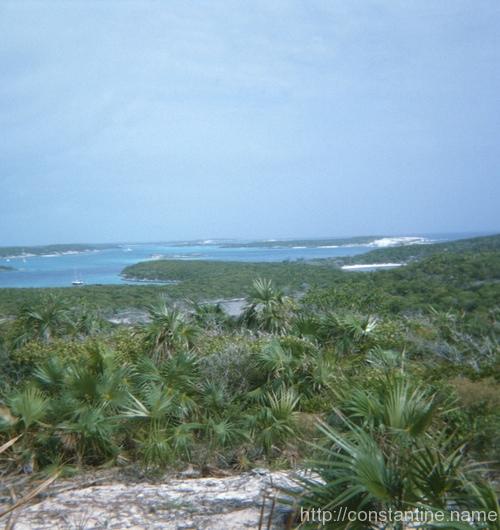
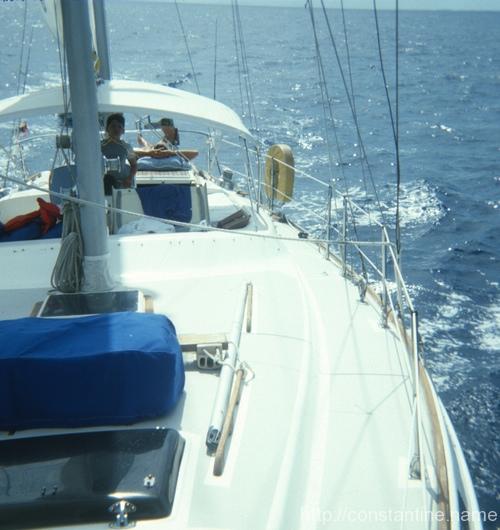
Way back in 1980, my dad arranged to help a friend (a navy buddy if I recall correctly) named Drew move his yacht from Cat Island (in the Bahamas) to Miami.
It was as much a vacation for us, as it was us helping Drew and his wife move their boat. We took a commercial flight to Nassau and spent a day or two there. From Nassau, we took this little charter plane to Cat Island… which is just a spit of sand with nothing on it other than a tiny “runway”. From there we sailed the 200+ miles to Miami.
To make the “crossing”, my dad and Drew had to stay up in shifts sailing through the night. Although it does take some attention to detail to navigate, the real concern is that the area is thick with commercial shipping and the “rule of gross tonnage” suggests it is unwise to assert right-of-way (any sailing vessel has the legal right-of-way over any powered vessel.) So we prudently dodged enormous ships who couldn’t see us (visually) and probably didn’t care even if they did notice us on radar (via Drew’s radar reflector.) Anyway.
Do I remember anything in particular? Absolutely. I remember staying up all night, on the open sea, in the pitch black. You couldn’t see your hand in front of your face… nothing but star-light. And the stars… The constellations looked to fall out of the sky onto your head.
Nassau from waaaaay up.
Cat Island. Our ride is the anchored yacht; Start walking.
A classic shot from ‘Dr. No’ !
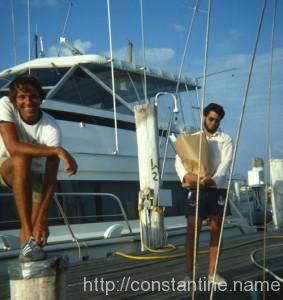
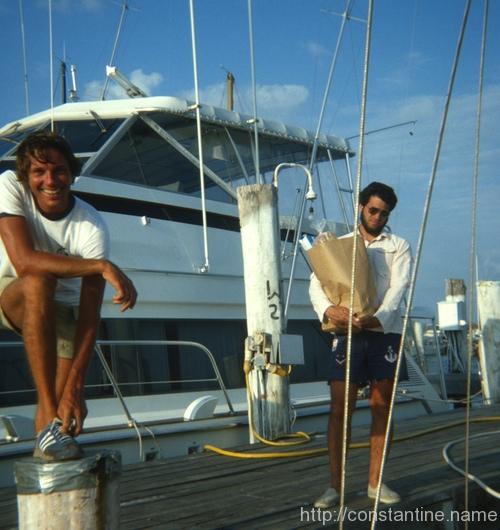
Drew (left) and my dad schlepping provisions aboard.
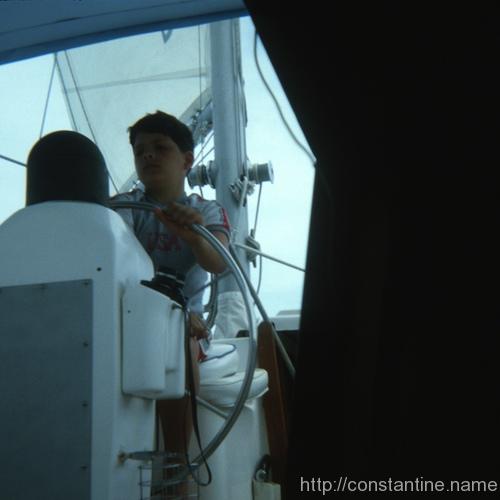
Yes, they really left the 9-year-old at the helm.
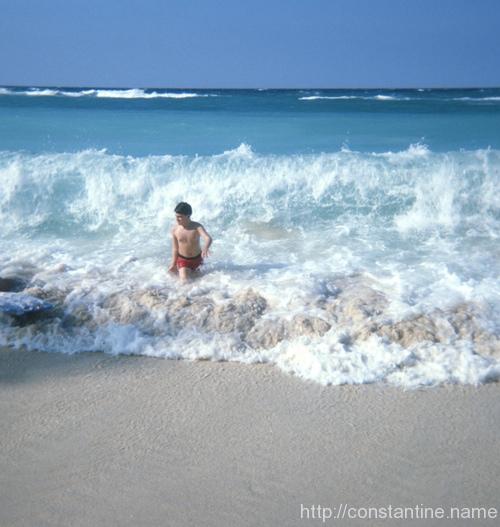
Safe bet: Just moments before I got into trouble.
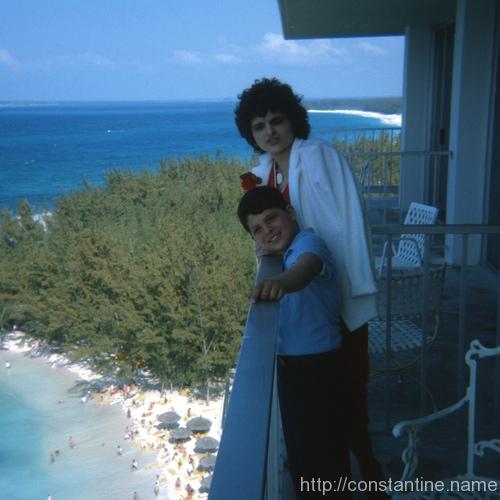
One of my all-time favorite shots because it’s probably the first photo I ever took of my parents.
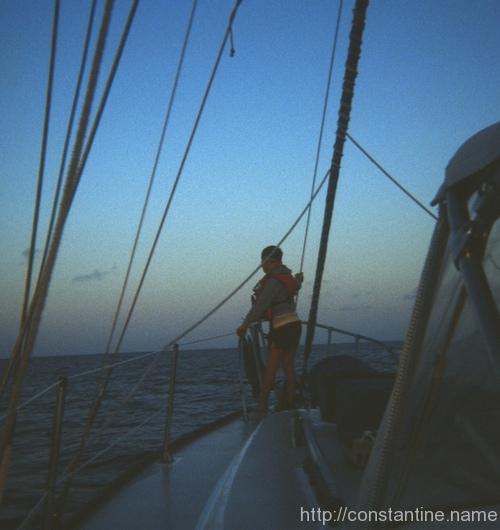
There’s nothing like standing on the bow of sailboat underway. (srsly)