The pessimist complains about the wind;
~ William A. Ward
The optimist expects it to change;
The realist adjusts the sails.
slip:4a137.
The pessimist complains about the wind;
~ William A. Ward
The optimist expects it to change;
The realist adjusts the sails.
slip:4a137.
But why do women make less? Is it for reasons we can all live with, or is the pay gap an injustice that needs fixing? Several reasons are frequently offered, together with explanations why we can live with those reasons. (Never forget that those are two separate conversations. Even if the whole pay gap could be boiled down to something as simple as “Girls don’t like math”, we’d still need to discuss whether that’s a problem we can or should fix.)
~ Doug Muder, from 77 cents, part II
slip:4uwece1.
VERY interesting gender/salary math.
ɕ
Many seem to believe that if we worked our way out of debt problems in the past, we can do the same thing again. The same assets may have new owners, but everything will work together in the long run. Businesses will continue operating, and people will continue to have jobs. We may have to adjust monetary policy, or perhaps regulation of financial institutions, but that is about all.
I think this is where the story goes wrong. The situation we have now is very different, and far worse, than what happened in the past.
~ Gail Tverberg, from Debt
slip:4uoude1.
ɕ
Anyone who works with computers learns to fear their capacity to forget. Like so many things with computers, memory is strictly binary. There is either perfect recall or total oblivion, with nothing in between. It doesn’t matter how important or trivial the information is. The computer can forget anything in an instant. If it remembers, it remembers for keeps.
~ Maciej Cegłowski, from The Internet With A Human Face
slip:4uieaa1.
…from his talk at Beyond Tellerrand
ɕ
True friendship develops not as a result of money or power, but on the basis of genuine human affection.
~ Dalai Lama
slip:4a279.
This tweet appeared the day I returned from training at the Académie Québécoise d’Art du Déplacement. Clearly I’m becoming a softie in my middling years, but I felt a real connection to the many people I had the privilege of training with. They were strong, humble, joyful, welcoming, and so much more.
On commence ensemble; On finit ensemble.
Art du Deplacement – Force, Dignite, Partage
ɕ
Put it all together, and even a student who works part-time and attends a second-rate state university can easily graduate owing over $100,000.
Welcome to the professional class, kid. Just don’t expect to keep any of the money you make. And I almost forgot to mention: We’ve let public transportation go to hell, so you’ll need to buy a car. (Here’s another loan.) We’re letting public schools fail, so if you have kids and want them to stay in the professional class, you’ll need to send them to private schools (Here’s another loan.) And we’re going to toss that national-health-care idea out on its ear, but don’t worry, if you get sick you can put it on your Visa.
~ Doug Muder, from Student Debt
slip:4uwesu1.
ɕ
This change really seperates people. It’s not going to be like it used to be. You can’t ‘go back to training’ as you once did. That one Jam that you remember is a small part of your whole experience that you remember fondly. It’s one highlight in a long journey, which isn’t just highlights. What’s the constant in these memories?
It’s Parkour.
~ Chris Grant, from Change
slip:4uwoca1.
ɕ
No character can be simple unless it is based on truth — unless it is lived in harmony with one’s own conscience and ideals. Simplicity is the pure white light of a life lived from within. It is destroyed by any attempt to live in harmony with public opinion. Public opinion is a conscience owned by a syndicate — where the individual is merely a stockholder. But the individual has a conscience of which he is sole proprietor. Adjusting his life to his own ideals is the royal road to simplicity. Affectation is the confession of inferiority; It is an unnecessary proclamation that one is not living the life he pretends to live.
~ William G. Jordan
slip:4a540.
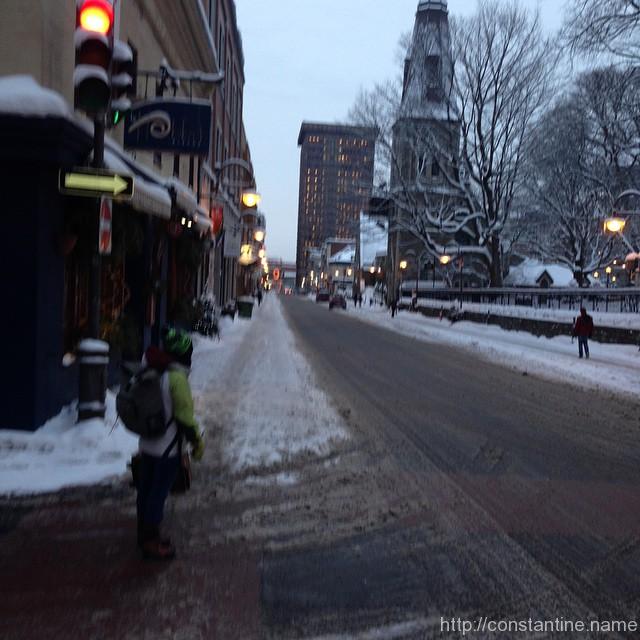
Relax, find a croissant…
ɕ
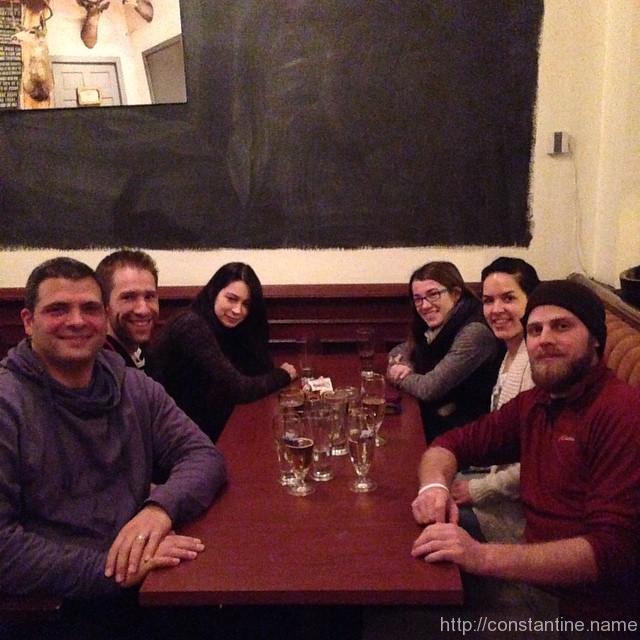
Wonderful food and laughter with new friends after our last eve at ADD Quebec!
ɕ