Network Theory applied to altitude sickness

They then mapped out the correlations between the various symptoms, creating a network. An increasingly standard tool in network theory these days is cluster detection–the ability to spot parts of a network that are more strongly linked together than others.

~ «http://www.technologyreview.com/view/512986/network-theory-approach-reveals-altitude-sickness-to-be-two-different-diseases/»

Acute mountain sickness (AMS) is a common problem among visitors at high altitude, and may progress to life-threatening pulmonary and cerebral oedema in a minority of cases. … These results challenge the accepted paradigm that AMS is a single disease process and describe at least two distinct syndromes following acute ascent to high altitude. This approach to analysing symptom patterns has potential utility in other clinical syndromes.

~ [1303.6525] Network analysis reveals distinct clinical syndromes underlying acute mountain sickness

ɕ

The obstacle is the path

The examples can go on forever, but the principle becomes clear: when there’s an obstacle, don’t go around it. Don’t run from it. Go into it. Work with it. Explore it. Learn how to be with it and deal with it, and you’ll have a skill for life.

And what’s more: you will no longer be limited by obstacles in your path.

~ Leo Babauta from, The Obstacle is the Path – Zen Habits Website

slip:4uzeoa1.

ɕ


It’s just a ride

The world is like a ride at an amusement park. And when you choose to go on it, you think that it’s real because that’s how powerful our minds are. And the ride goes up and down and round and round. It has thrills and chills, and it’s very brightly coloured, and it’s very loud and it’s fun, for a while. Some people have been on the ride for a long time, and they begin to question – is this real, or is this just a ride? And other people have remembered, and they come back to us. They say ‘Hey! Don’t worry, don’t be afraid, ever, because, this is just a ride.’ And we… kill those people.

~ Bill Hicks

slip:4a1000.


Organizational skills for the win

When it comes to writing code, the number one most important skill is how to keep a tangle of features from collapsing under the weight of its own complexity. … [T]here’s always lots of state to keep track of, rearranging of values, handling special cases, and carefully working out how all the pieces of a system interact. To a great extent the act of coding is one of organization. Refactoring. Simplifying. Figuring out how to remove extraneous manipulations here and there.

~ James Hague from, Organizational Skills Beat Algorithmic Wizardry

slip:4udaaa1.

ɕ


It is use cases all the way down

The center of your application is not the database. Nor is it one or more of the frameworks you may be using. The center of your application are the use cases of your application.

~ Bob Martin from, Clean Coder Blog

slip:4utiue3.


What it means to be mortal

We, like all living things, want to live on — we want to project ourselves into the future, we have this will to live. And yet, unlike other living things, we have to live in a knowledge that this will is going to be thwarted, that we’re going to die. And so we might have to live with this sense of personal apocalypse — the worst thing that could possibly happen, will. This is what it means to be mortal.

~ Maria Popova from, The Philosophy of Immortality – The Marginalian

slip:4ubaie7.

ɕ


Work mind and vacation mind

They are two different things, and yet, what if we could have the vacation mind while working? We’d have to toss out the lazing around and the margaritas, but the mindset could be the same. The result would be a saner way of living, where we aren’t “working for the weekend” or looking forward to the little vacation time we have, but instead are happier throughout the week.

Leo Babauta from, The Practice of Work Mind & Vacation Mind, Simultaneously – Zen Habits Website

slip:4uzeze1.

ɕ


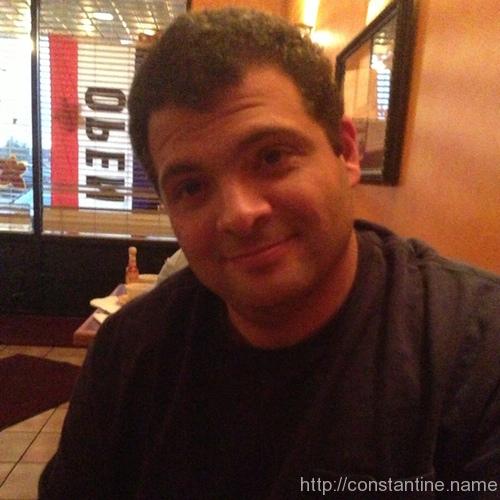
Craig sans mustache

Yes. No mustache.

…and no, you have never seen me without a mustache.

ɕ


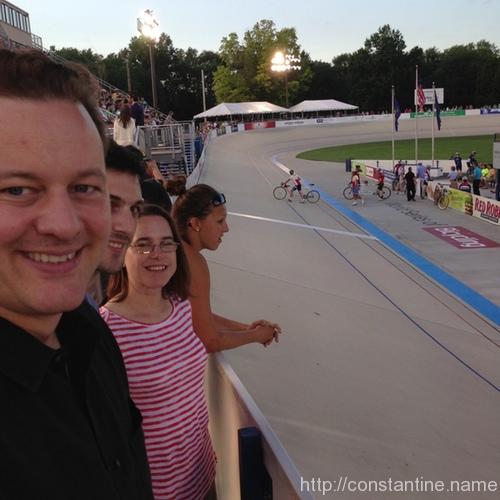
Velodrome

Friday night races!!

ɕ


Craftsmanship

As aspiring Software Craftsmen we are raising the bar of professional software development by practicing it and helping others learn the craft. Through this work we have come to value…

~ Manifesto for Software Craftsmanship from, http://manifesto.softwarecraftsmanship.org

Over time, the ideal of craftsmanship was cordoned off to just the technical arts. Physicians and legislators no longer thought of themselves as craftsmen, but as philosophers and natural scientists who were more concerned with the theoretical as opposed to the practical. Such a shift is a shame, for the principles of craftsmanship truly do apply to every man, whether he makes furniture or crunches numbers.

~ Brett McKay from, Applying the Ethos of the Craftsman to Our Everyday Lives | The Art of Manliness

slip:4uaome1.

Try to ask a doctor or any engineer to do a crappy job in order to reduce costs. Engineers can change product’s materials to cheaper ones, they can change product’s final characteristics, but they don’t change their level of attention and their process of doing things the way they think it’s right. Doctors can perform simpler or different procedures by patient request, impacting somehow on the final result, but the attention, caring and cleanliness will be the same.

Caio Fernando Bertoldi Paes de Andrade from, Perception that high quality equals Rolls Royce

slip:4ugodo1.

ɕ