So it turns out you can get FedEx to deliver scotch #dropsTheMic
ɕ
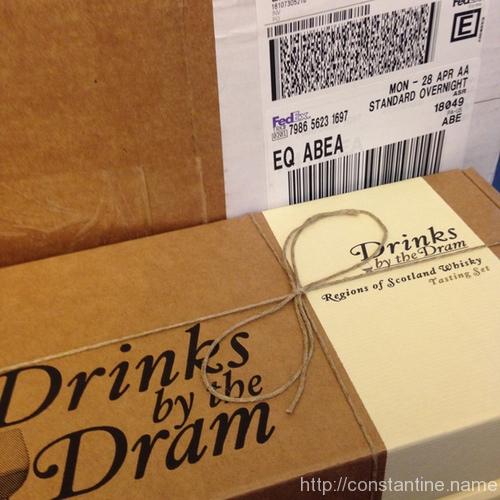
So it turns out you can get FedEx to deliver scotch #dropsTheMic
ɕ
Progress is impossible without change, and those who cannot change their minds cannot change anything.
~ George Bernard Shaw
Elsewhere, this is 4a39. — slipbox
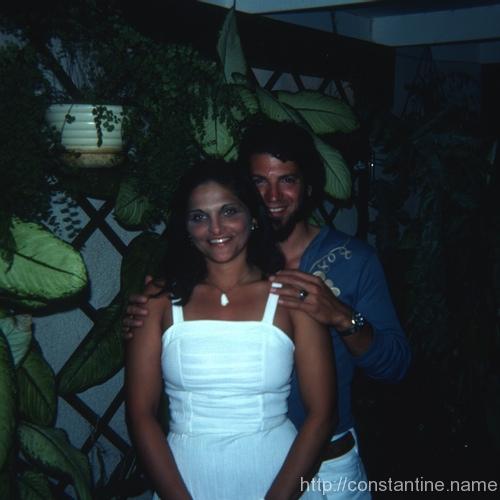
“Who are these people? …and what are they doing in our photographs?!”
This one is from a “Highlights of the Caribbean” carousel tray of a 100 slides. I’m guessing the 70s from the outfits.
ɕ
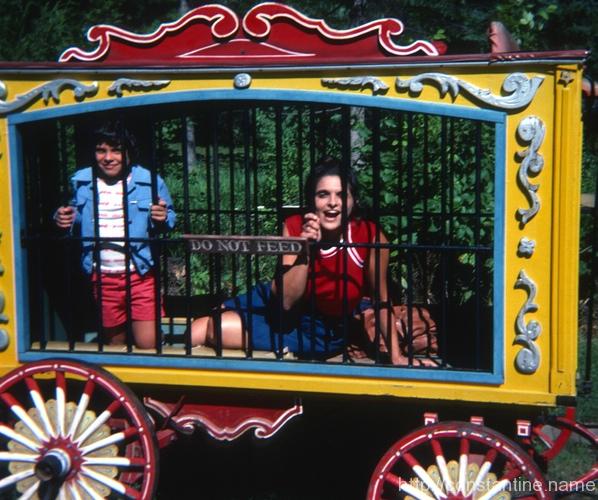
Mom and I in 1977, taken at The Land of Make-Believe.
…and the Internet knocks another one out of the park. This place we visited when I was six; Right, how could any of us possible remember where it really was. <type type type> “oh! There it was!”
ɕ
I mean to make myself a man, and if I succeed in that, I shall succeed in everything else.
~ James A. Garfield
Elsewhere, this is 4a141. — slipbox
Especially for complex, multi-purpose systems, the gap between how things are supposed to work and how they actually work can be quite large. (Ask any police sergeant about the difference between policing in theory and policing in practice!) A primary function of operators is to bridge this gap in ways that result in better rather than worse outcomes. The capacity of systems to be operated is what allows operators to perform this valuable function, sometimes called technical work.
~ Richard Cook from, «http://programming.oreilly.com/2013/10/making-systems-operable.html»
Elsewhere, this is 4uoema1. — slipbox
More and more I’ve been getting a lot mileage from this idea: Make things easier TO USE, rather than trying to fully automate (i.e., so I don’t have to use them.) One cornerstone to accomplishing that is creating “affordences“.
ɕ

In 1977, Bruce Constantine and Rick Hollister took these photographs using a mast-mounted camera on a Hobie 16.


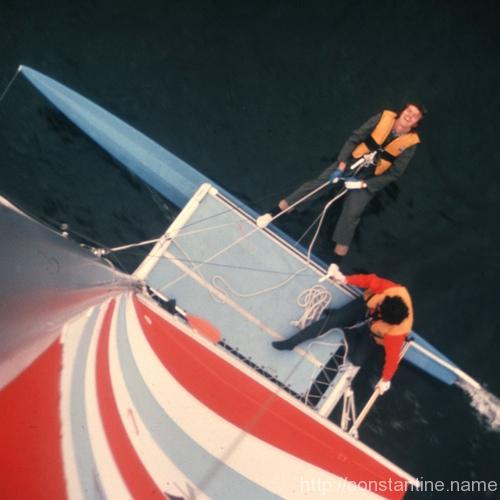
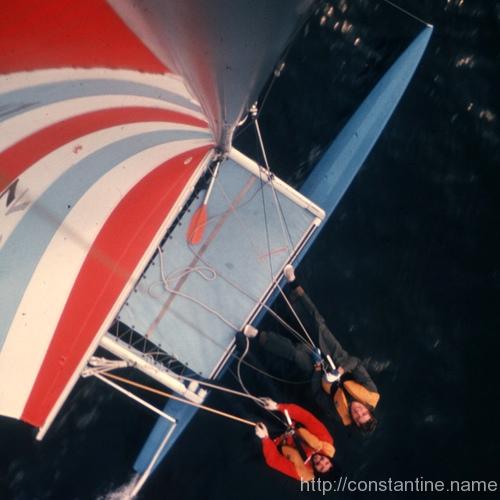
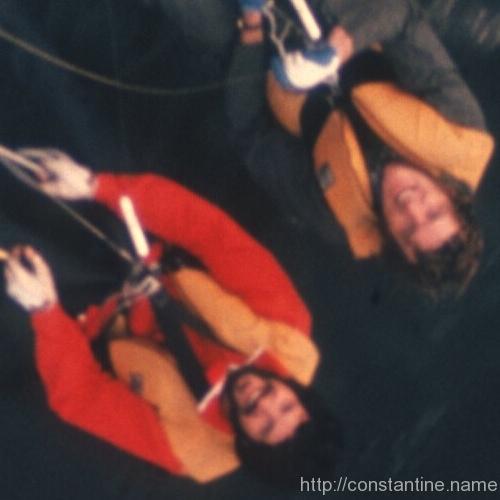
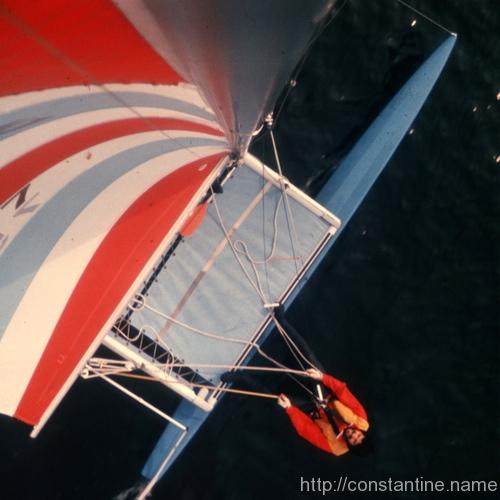
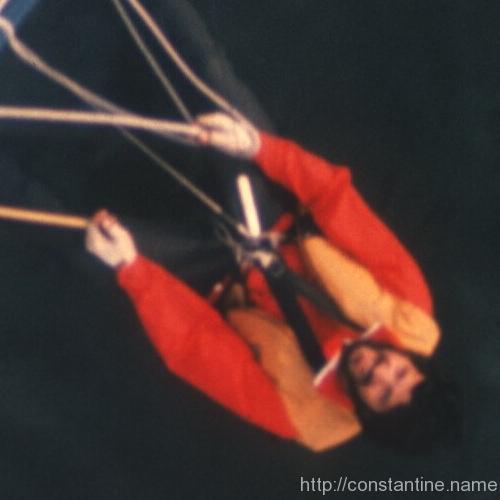
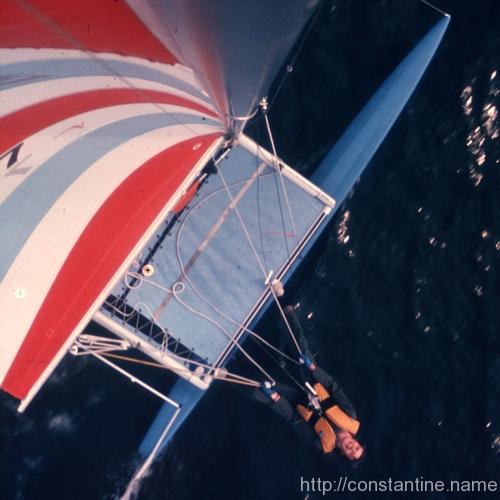
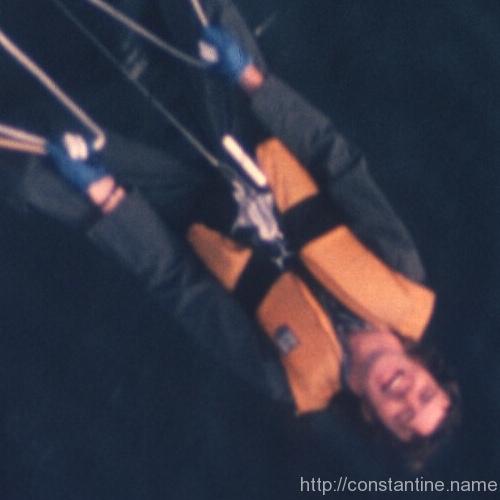
These guys were fast friends from high school, and Rick was a wizard at machining, model making, and miniature domithinguses. Rick built a camera mount for the Hobie Cat mast complete with remote controls.
The Cat in the photo is my dad’s, hull number 7557. Rick had hull number 718, and I’m guessing they used my dad’s Cat because it had tricolor sails; Rick’s 718 was a snappy, all-white. (At the time, these tricolors were the MOST colorful you could get. So my dad named her “Spectrum.”)
Bruce passed away in 2011, and Rick passed away in 2012. And particularly poignant, Hobart Alter just passed away on March 29, 2014.
First in the world! These guys did this in 1977. Nearly 40 years ago. Bring it Internet; Who did this before ’77?
These Cats — these specific two Cats — were tuned. Noone, and I mean NOONE ever beat them on boat speed. Yes, these guys raced them for realsies. (Hat tip to Jim and “Budda”!) If memory serves, Rick was a better yachtsman, and used to beat my dad on average.
Tuned? We’re talking about: file-shaped rudder trailing edges, tuned battens (i.e. sanded specifically to control how and where they flexed to control the sail shape), altered rigging mast-attachment-height, extended tracks for jib/main sheets, adjustable mast rake. FAST. I was told they once pulled a water skier. From a standstill.
In later years, my dad and I used to go sailing for fun, and other Hobie 16s — Hobies with SIX-digit sail numbers would slide over to say hello. We regularly met Hobie sailors who’d think we had lost numbers from our sail. Anyway. These newbs would slide up on us as we’re farting around. My dad would snicker quietly, and then yell, “Go!” So they’re already up to speed, moving faster than us. We’d flatten out on the trampoline, tweak this, adjust that, and SPECTRUM would smoke. their. NEWBY. ASS*S!
Bonus round: My dad used to say he had a drink with Hobie Alter at a bar. (But now I’m just showing off.)
I need to start writing my memoirs. I think I just might…
ɕ
Commitment means staying loyal to what you said you were going to do long after the mood you said it in has left you.
~ unknown
Elsewhere, this is 4a67. — slipbox
The first Earth-sized exoplanet orbiting within the habitable zone of another star has been confirmed by observations with both the W. M. Keck Observatory and the Gemini Observatory. The initial discovery, made by NASA’s Kepler Space Telescope, is one of a handful of smaller planets found by Kepler and verified using large ground-based telescopes. It also confirms that Earth-sized planets do exist in the habitable zone of other stars.
~ from, First potentially habitable Earth-sized planet confirmed: It may have liquid water
Mark you calendar: April 17, 2014. First confirmation of the existence of a HABITABLE planet… Temperature, gravity, rocky (like the Earth)… A. HABITABLE. PLANET. I got chills reading this.
ɕ
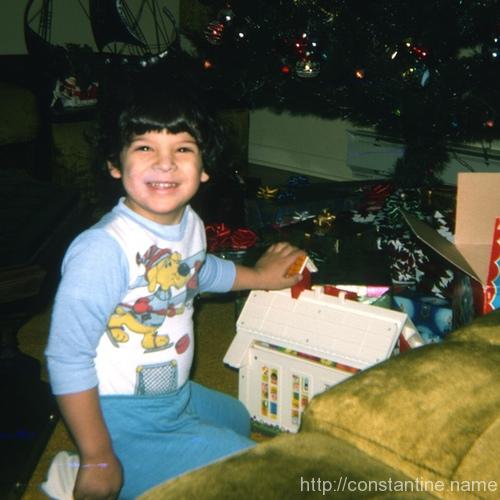
Living large Christmas morning 1974. (That would make me 3 years old in the photo.)
ɕ